Excerpt


Excerpt
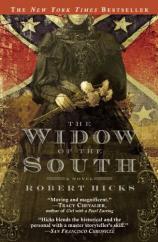
The Widow of the South




Prologue
1894
Carrie watched him go and then turned to Mariah, whom she had once owned, a gift to her from her father. She was a gift, whatever the meaning and implications of that word. Mariah had been her tether to the earth when things had spun away, when Carrie wasn't sure if there remaineda real and true life for her, and then when she wasn't sure if she wanted that life even if it existed. Things had been different once. She couldn't believe that she had ever been so . . . what? Weak? No, that wasn't it. She'd never been weak. She'd been buffeted and knocked down, like grass bent to the ground by the wind preceding a thunderstorm. She'd been slow to get up. But she did get up, eventually. There had been no choice. She was not afraid of much, and she especially wasn't afraid of God. Not anymore, not for a long time.
"Mariah, what do you see?"
A mockingbird chased a hawk across the width of the cemetery, diving and chattering at the black shadow until it was banished from whatever bit of territory the smaller bird claimed for its own.
"I see a mockingbird. And some of them yellow birds. Finches. Big old bird with claws, too."
Mariah looked past her mistress, across the field of tall grass.
424 Killed at Franklin/Mississippi
"You know that isn't what I mean."
Carrie could see the markers and the grass, and the iron fence ringing the graveyard. She could turn and see the back of her house and remember the beards on the dead generals laid out on the porch below and the keening of the wounded on the balcony above. She could see just fine. But there was more to seeing than that, she thought. It was either a failure of imagination or a slight by the Lord Himself, but in any case she could not see the things Mariah could see. Mariah could tell her about things that gave her comfort, and Carrie cared not a whit about how she came upon the knowledge.
She pointed at a grave marker in the Tennessee section. MJM, it read. In places, twigs leaned against the stones. She made a mental note to tell the yard boy about them.
"What about him? That one."
"Miss Carrie, please, ma'am. This ain't right."
Carrie stared hard at the seam of her dress, where the new thread of her latest mending stood out like a long dark cord against the faded black of her ankle-length dress. She hadn't known how to sew before the war, and she still wasn't very good at it. They would have to dye the whole thing soon.
"I would like to know about that man."
Mariah wasn't sure that what she saw in her mind was real, just the product of a fevered imagination, or maybe the work of the devil himself making her play games with the white woman whom she loved in a way she could not describe. Fragments of light and sound came to her when she let her mind drift, and the words Carrie craved formed on Mariah's lips unbidden. It was a thoughtless exercise, a pastime to while away an afternoon. The thing she did know, the only thing she knew for sure, was that Carrie believed. Mariah could feel that on her.
"I don't know what to say, ma'am."
"Yes, you do. Don't play. We're too old for that. Tell me what you see when you stare into the earth right there. Don't hold back. I know when you're holding back."
Mariah closed her eyes and went silent, hoping Carrie would forget her little obsession and keep walking. But Carrie stayed put, so Mariah began to speak.
"There a man and a boy. It sunny. They ain't working, so maybe they just home from church."
"How old?"
"The man, he a man. Got a beard. Dark, strong. He ain't old or young. The boy, he just a little one, though he think he bigger. Maybe ten. He got a fishing pole in his hand. They going to catch fish."
"Is there a woman?"
"She dead."
"How do you know that?"
"'Cause they going out fishing in they church clothes."
******
She heard him before she saw him. A small cough, followed by a louder, deeper cough that he tried to swallow back. She turned toward the house and there, in the path between the gravestones, stood an old man. A surprisingly old man. He was thin and pepper-haired, and his eyes were too dark for her to see where he was looking. They were set back too far in his head to distinguish them from the shadows. He stood up tall and held his old bowler in his hand. She could see him nervously massaging his knuckles under the hat, which caused a little halo of dust to rise up off the felt. He wore a long coat that was slightly too short and scuffed boots. His mouth was twisted up in what appeared to be a smirk, but which she knew was not. He watched her closely and walked toward her with the faintest hint of a limp, enough to make her heart break. The twisted and dried-out parts of him still contained just the memory of his old beauty—all the parts of him were still there, they'd just been used up. He stood before her, so close she could hear the air whistling in and out of him. She knew him immediately, as if he'd left only the day before.
"Why'd you scare that boy, Mrs. McGavock?"
"I love that boy."
"He one of yours?"
"Do I look like he could be my child?"
"I meant, is he your grandson or something? That's possible, ain't it?"
"No, he's not my grandson, just a stray off the street."
"Just a stray," the man repeated.
They paused and looked at each other, and Carrie felt angry that he'd come without warning. The feeling passed. She pushed a stray lock of hair behind her ear and squinted hard at him.
"I didn't mean to insinuate anything," she said.
"I reckon I ain't had anyone insinuate anything about me in a long time. I didn't take no offense."
"But none was meant."
The old man stopped and toed at the grass with his foot. He looked around at the grave markers like he had misplaced something. He started to sway a little, and Mariah moved quickly behind him, ready to steady him if she had to, but not willing to speak or acknowledge him. He spoke again.
"I thought we decided a long time ago that folks don't always know what they mean. Or what things mean, for that matter."
Carrie considered this. "I suppose we did."
The old man bent over in a fit of coughing, slapping at his breast pocket until he found an old handkerchief to spit into. Mariah bent over him with her hand on his back and looked up at Carrie like she'd just seen something she wished she hadn't. He stared at his handkerchief, snorted dismissively, and put it away, all the while bent over like he was catching his breath.
Carrie had the feeling that she was falling. How could he be like this? This was not the man she'd known, not the man she remembered. The air spun and hummed around her.
She walked to his side and took his chin in her hand, hard, and pulled until he was looking her in the eye. Mariah cried out and tried to stop her, but Carrie waved her off. She saw him fully for the first time and reached with her other hand to wipe rheumy tears from the corners of his eyes and to feel the loose drape of his skin over sharp cheekbones. He struggled to keep from coughing in her face.
"What's the matter with you, soldier?"
She let him go, and he slowly stood up straight. He held his bowler near his mouth, just in case.
"Well, I reckon I can guess, but I ain't seen anyone who could tell me straight. Can't afford such a person. I've been thinking that, after all these years, I might finally die and not know for sure what killed me. That makes me laugh some."
Carrie said nothing, and then: "If I were to guess from your past history, I would say you'll outlive us all."
"I once thought I was cursed that way, yes, ma'am. But no more. There ain't no more curses out there. My history don't mean nothing. Not anymore, thank God."
She could picture him as a younger man, lying bleeding on the floor of her parlor and then sitting up in one of the chairs of her husband's study, staring out the window. She remembered his nose and how sharp it was in profile, how the light seemed changed after passing over it. He was like a cameo; at least that's what her mind remembered. She'd become used to him quickly, and back then she thought he'd be there forever. Then he was gone. She closed her eyes.
"If you're going to die, there's a place for you here."
"That's what I meant to ask you about."
3
Sergeant Zachariah Cashwell, 24th Arkansas
We were marching up that pike, and everywhere you looked there were things cast off by the Yankees littering the sides of the road, and it was everything our officers could do to keep the young ones from ducking out of formation and snatching up something bright and useful-looking, like crows looking to decorate their nests. The old ones, like me, we knew better than to pick up anything, because you'd have to carry it, and we knew that our burden was heavy enough. But, hell, the Yankees had thrown away more than we'd laid our eyes on in months, maybe years. There were pocket Bibles and little writing desks, poker chips and love letters, euchre decks and nightshirts, canteens and pots of jam, and all kinds of fancy knives. It looked like a colossus had picked up a train full of things, from New York or one of those kinds of places, and dumped it all out to see what was what. And I'm just mentioning the things that you might want to pick up and keep. There was a lot more, besides. There were wagons left burning on the side of the road, crates of rotten and infested meat, horses and mules shot in their traces. I reckon those animals weren't moving fast enough, and you couldn't blame the Yankees for lightening their loads if they could, but it was a sorry sight. Even so, all that gear gladdened my heart because it seemed so desperate. They were running, by God. They were running from us, the 24th Arkansas, and all the rest of the brigades ahead of us and behind us. The columns stretched far as I could see when I wiped the sweat from my eyes and got a good look around. But mostly I just kept my head down and put my feet down, one in front of the other, the way I'd learned to do.
The officers rode up and down the column on their horses, saying all sorts of things to keep our spirits up. I'd learned that if you needed an officer to pick up your spirits, you were in sorry shape. But some of the younger boys listened, and they were heartened by it. The officers talked about the glory of the South and about how our women would be watching and how they would expect us to fight like Southern men—hard and without quitting. I wanted to say, Until that bullet come for you, but I didn't. Those officers were getting a whole lot of the men riled up for a fight, and I figured that was good no matter what else I had to say about it. Some of our boys had their homes around there, and you could just tell they were itching to get going. You had to hold them back, tell them to pace themselves, or else they'd start running and whooping and getting all lathered.
One big hoss in the company ahead, a man with a full beard and a neck like a hog's, started yelling for the band to give us a tune. He stomped his feet and rattled the bayonet he had at his side, and then some other of the boys did the same thing, and pretty soon we were all yelling at the band to play "The Bonnie Blue Flag," to give us a tune and be useful for once. The band even got a few notes off before one of the company commanders rode by, snatched up a trumpet, and threatened to beat them with it if he heard another note. That was funny to watch, and it was about as good a morale lifter as hearing "The Bonnie Blue Flag" straight through, on account of our band wasn't very accomplished.
The thing I kept thinking about was the nightshirts and the pots of jam, lying there on the roadside. They made me wonder whether we'd been fighting in the same war.
And then the order went out to get on line. They just up and stopped us, and I couldn't help running into the man ahead of me and getting a whiff of the sweat and stink rising up off his homespun shirt. The men quit jabbering, and then the thousands of us were moving to either side of the road, all bunched up at first but then thinning out as the line got longer and longer, like a ball of twine unwinding. There wasn't any stomping of the feet then, no bayonet rattling. We picked our way across the hills, some units stopping at the edge of a tree line, most of us out in the open. It took me a few moments to realize we were going to stop and fight right here, rather than chase the Yanks all the way to Nashville. It looked like a mighty long way to the Union lines, which were up on a rise. I could see men way up there in town tossing dirt around. The sunlight flashed off their shovels and picks, and sometimes it seemed like you could actually pick out the sound of their work a few seconds after you'd seen their tools go chunking into the dirt. It was so damn hot for late November. What had General Hood said when we crossed the river into Tennessee? No more fighting on the enemy's terms. I looked at those battlements up ahead over a mile distant, and I thought, We must be the greatest army in the world if these are our terms.
I'd been fighting for three years by then. I'd been shot once, and my left arm still didn't feel right. Sometimes I had a hard time lifting my rifle and keeping it steady. I thought about this and began flexing my arm to get it limbered up. We sat down in place and began the long wait.
It always seemed a long wait before the fight, no matter how long it took. Officers rode here and there conferring with one another, and then they'd come back and huddle with their sergeants, and word would come down about what was happening, and then they'd do it all over again and the word would change. This drove some of the men crazy every time. Shit, let's just go, they'd yell to no one in particular, and they'd jump up and pace around and kick a tree or something. Sometimes you didn't know what they meant by "go": fighting or running. I'm quite sure that both options crossed the minds of most men. It crossed my mind every time, and I'd been in a lot of fights and hadn't run yet. Well, I hadn't run until everyone else was running. I had that rule.
The thing I'm about to say, you might not understand unless you've been in war. But in those moments before the fight, if you were a smart man, you'd figure out a way to convince yourself that it didn't matter to you if you lived or died. If you're safe in your house, with your children running around underfoot and with fields that need to be worked, it's an impossible way of thinking unless you're sick or touched in the head. Of course it mattered if you lived or died. But if you went into a battle caring what happened to you, you wouldn't be able to fight, even though you knew you were as likely to die as the next man whether you cared or not. There wasn't any logic to who got killed and who didn't, and it was better that your final thoughts not be of cowardice and regret. It was better not to care, and to let yourself be swept up in the rush of the men beside you, to drive forward into the smoke and fire with the knowledge that you had already beaten death. When you let yourself go like that, you could fight on and on.
Everyone had their own way of getting their mind right. We lingered there on the outskirts of Franklin, and I could see each of the men in my company going through their little rituals. There were two ways of getting ready. Most of the new men, unless they were unusually wise or strong-minded, went about tricking themselves into forgetting the possibility of death. One youngster in an almost clean uniform took a couple pieces of straw, stuck it in his hat, and began to loudly tell every joke he could remember to no one in particular, as if everything would be all right if he could keep laughing right up until the bullet got him. A few people were listening to him, but that wasn't really the point.
Listen here, I got another one. Three old men come courting a young lady, and she says, "What can I expect from a marriage to you?" And the first old man, he says, "I've got a big ol' . . ."
Other younger ones paced back and forth, hitting themselves in the chest, shaking their heads like bulls, and cursing. These were the ones who were trying to make themselves so angry and riled up that they'd run like they had blinders on and rush wherever someone pointed them without thinking about anything except throttling something or somebody. Some of these boys picked up rocks and threw them as hard as they could at the confused rabbits, squirrels, and coveys of quail flushed out of their hiding places by our noise. I caught one mountain boy with stringy auburn hair and no shoes punching and kicking at an old locust tree behind us, and I yanked him around and sat him down before he hurt himself.
Me and some of the other veterans, we had different ways. We'd all been in battle, and you couldn't go through such a thing more than a couple times without it becoming impossible to forget death. The boy I'd joined up with three years before, my best friend from Fayetteville, he'd gotten a minié ball through the eye at Atlanta. In my dreams I still see his pink round face thrown back on the ground, his mouth open and his crooked teeth bared, his straw-blond hair matted with blood. After that, I never forgot about death.
The way I prepared myself was to sit down on my pack, pick out a point on the horizon, and stare at it. This is what I did that day at Franklin. I stared and stared at what appeared to be a church steeple on the edge of the town, just at the limits of my vision, and I took stock of my place in the world. My father had died young, and my ma ran off when I was about ten. I didn't have a girl, I had no one to go back to. I was just a man, and even if I'd lived to be a hundred, I'd still be forgotten someday. Men die, that's how it is. I had lost my faith by then; otherwise, I guess I would have prayed for my safety, but I didn't. I took deep breaths, stared at that steeple, and convinced myself I didn't matter in this world. I was an ant, a speck of dust, a forgotten memory. I was insignificant like everyone else, and it was this insignificance that made me strong. If my life was insignificant and my death meaningless, then I was free of this world and I became the sole sovereign of my own world, a world in which one act of courage before death would be mine to keep forever. I could keep that from God.
When they called us up to get on line again, this time for keeps, I was ready. Men dusted themselves off, tightened their belts, and obsessively checked their cartridges and ammunition, just in case. I stood there, staring forward, silent, looking out over the rolling land, hearing the pop pop pop of pickets firing their first shots, and thinking I could almost see around the bend of the earth if I looked hard enough. It was so pretty. The hills were glowing and soft-looking, and I saw a couple of deer scatter out of the woods and leap across the fields as we moved out. I could have seen myself living in that little town in front of me, in a proper house, under a different set of circumstances and in a different lifetime. Before we stepped off, I thought, I wonder why they chose this place for me to die.
And that, finally, was my real strength: I knew I was going to die. I wasn't happy about it, but I felt relieved to know it.
Excerpted from THE WIDOW OF THE SOUTH © Copyright 2005 by Robert Hicks. Reprinted with permission by Warner Books, an imprint of Time Warner Bookmark. All rights reserved.


The Widow of the South
- Genres: Fiction, Historical Fiction
- paperback: 448 pages
- Publisher: Grand Central Publishing
- ISBN-10: 0446697435
- ISBN-13: 9780446697439