
Latest Reviews


Kate Willis, a consultant for the Division of Perceptual Studies at the University of Virginia, is tasked with interviewing six-year-old Henley Haskell about the girl’s alleged past-life recollections. The evaluation also marks a return for Kate to Stockbridge, Massachusetts. Here, 24 years ago, Kate’s friend, Becca McGuire, vanished from her bunk at a now-shuttered summer camp and was never seen again --- presumably drowned in Lake Sauquamet. But Henley’s memories of her “other life” are ones that could only belong to Becca. For Kate, Henley’s recurring, suffocating nightmares and her disturbing illustrations of places she has never been seem to spell out the unbelievable. Somewhere, somehow, the truth about what really happened to Becca is locked inside this little girl.

1962. An aspiring reporter in DC, Judy Greenberg is aiming for journalistic greatness --- not finding a husband. Just don’t tell her mother. Then one day, she answers her boss’s private line. The message is curiously cryptic. It’s also delivered in a Russian accent. Judy is certain she has stumbled upon a scoop. Charming reporter Jack Fields isn’t one to dismiss Judy’s instincts. Perfect. A seasoned ally she can trust, not to mention pass off as a pretend boyfriend around her relieved parents. Together, they’re following the leads. Now Judy must choose between the safe life expected of her or one hell of a dangerous story that could make her career. She might even fall in love for real. If her ambitions don’t get her killed.

1987: After a childhood trauma and years in and out of the care system, 16-year-old Ursula finds herself with a new job delivering mail at a local art school, a bed in a halfway house, and some new friends, including wild-child Sue. When Ursula is invited to join a squat at the Underwood, a mysterious house whose owners met a terrible end, she can’t resist this hodgepodge family. But as Sue’s behavior and demands become more extreme, Ursula carries out her friend’s terrible dare. Thirty-six years later, Ursula is a renowned but reclusive sculptor living under a pseudonym in London when her identity is exposed by a true-crime documentarian researching an unsolved disappearance. But the filmmaker is not the only one who has discovered Ursula’s whereabouts.

Eve is at a breaking point. Alone with her two children in Massachusetts while her husband pursues his music career in New York City, she’s frustrated, bored and, above all, lonely when she runs into Demeter, a childhood friend with whom she shared one transformative summer. Demeter’s daughter, like a growing number of others, cannot go outside during the day. No one knows why, and doctors are skeptical that these people --- soon dubbed Emilys, after the famously reclusive local poet --- are telling the truth. But Eve believes Demeter and will help him --- if she can just figure out how. When Eve unites with an unlikely band of fellow detectives, she feels a clear sense of purpose for the first time in years. But what is she willing to risk to find a cure?
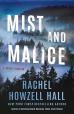
Private investigator Sonny Rush, the newest resident of Haven, California, knows that this fogbound coastal hamlet is every bit as dangerous as her hometown of Los Angeles. And when teenager and repeat runaway Honor Butler shows up at Sonny’s door with terror in her eyes, Sonny is immediately pulled into a new case that lands close to home. Honor tells Sonny a horrifying story about where she’s been --- and what she’s been forced to do. Then, hours later, the forest near Sonny’s cottage yields the remains of a missing day laborer. Soon, coincidence sharpens into conspiracy. As Sonny digs deeper, the threads of these cases twist together into something horrifying: a ruthless network preying on the vulnerable, protected by the very people meant to uphold the law.

For over a century, Alfred Hitchcock has remained one of cinema's most influential directors. Known as the Master of Suspense, this visionary filmmaker directed more than 50 films over six decades. Drawing on new archival research, previously unpublished interviews, and a rigorous examination of key biographies, A CENTURY OF HITCHCOCK challenges the long-standing narratives that have shaped Hitchcock's legacy. Tony Lee Moral revisits controversial claims regarding Hitchcock's alleged abuses, scrutinizing biographer Donald Spoto's interpretations --- particularly Spoto's portrayal of the director's relationship with actress Tippi Hedren. With his analysis of Spoto's 1980 interview of Hedren, Moral reveals for the first time how one key document contradicts decades of exaggeration.

In a darkly brilliant thriller set in Maine’s rural Kennebec River Valley, the body of a young runaway from a “troubled teens” school has been found in the water, seemingly drowned, while a teenage girl has gone missing, believed dead. Now it is up to one man, private investigator Charlie Parker, to find the connection, and bring two evils --- one new and one ancient --- to an end.

It’s late October 1962. The Cuban Missile Crisis has just concluded. The Russkies blinked and pulled their ICBMs out of Cuba. Attorney General Robert Kennedy fears reprisals from seething commies. He orders a red probe and puts the LAPD on the job. Freddy Otash is injudiciously named the lead investigating officer. He’s a stone-cold criminal with police sanction and a harrowing dope habit. He homes in on a red-front trade union. There’s a murder on Halloween night. It may link to ex-VP and current gubernatorial candidate Richard Nixon and two commie snuffs from eight years back. Freddy is overworked and overamped. He’s running the probe, and Bob Haldeman and John Ehrlichman --- Tricky Dick Nixon’s head goons --- have hired him to keep Nixon away from the smear-minded press.

Famed children’s author Dame Eleanor Kingman has summoned her family and friends to her exquisite manor house on the cliffs. They're celebrating her birthday --- and her latest #1 bestseller in her series of books based on a mother fox and her cubs. But the night before the party, Eleanor receives an email that threatens to expose the lie she’s kept up for over half a century. Someone knows her secret. Is it her estranged literary agent? Is it her ex-husband? Is it the nanny she fired all those years ago? Or is it one of her three daughters, all of whom have a stake in the publishing empire she has built...With a television crew arriving to film a documentary of her life, Eleanor needs to find out who sent the email --- and preserve her legacy and multimillion-pound career. But when push comes to shove, and it's time to tell the truth will anyone actually believe her?

Abandoning college plans to work a dead-end job, Stevie can’t wait to move away from L.A., and her mother’s orbit, to start over. Reeling in the aftermath of her lover and TV husband’s death, out-of-work actress Moon struggles to process her grief. And the last thing she expects is for Stevie to leave her too. Now, neither Stevie nor Moon can afford to quit each other. And their cost of living forces them into a glass-walled pool house in the backyard, while their home is rented out to pay the bills. But when Adam, Moon’s former TV son and Stevie’s forever crush, arrives for the funeral, the three are pulled into a messy orbit, moving back into the “Big House” and play-acting a picture-perfect family even as tensions rise and relationships unravel.

