|
George Pelecanos
BIO
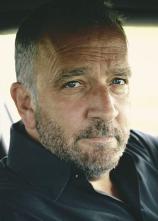
George Pelecanos is an independent-film producer, an award-winning journalist, a producer and writer on the HBO hit series The Wire, and the author of a bestselling series of novels set in and around Washington, D.C., where he lives with his wife and children.
His books include A FIRING OFFENSE (1992), NICK'S TRIP (1993), SHOEDOG (1994), DOWN BY THE RIVER WHERE THE DEAD MEN GO (1995), THE BIG BLOWDOWN (1996), KING SUCKERMAN (1997), THE
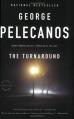
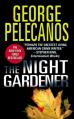
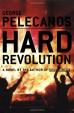
SWEET FOREVER (1998), SHAME THE DEVIL (2000), RIGHT AS RAIN (2001) and HELL TO PAY (2002), SOUL CIRCUS (2003), HARD REVOLUTION (2004), DRAMA CITY (2005), THE NIGHT GARDENER (2006) and THE TURNAROUND (2008).
Back to top.
AUTHOR TALK
March 2004
In this interview George Pelecanos, author of HARD REVOLUTION, explains why he chose to write a novel set in the year 1968 and the effect that his growing popularity has had on his career as a novelist and as a screenwriter/producer.
Q: You have indicated that HARD REVOLUTION may be the best book you have ever written. Why do you think this is true?
GP: I'm certainly pleased with it. HARD REVOLUTION is big in terms of scope and ambition but doesn't lose sight of its characters. It's the book I've always wanted to write.
Q: Journalists have commented that crime fiction is one of the only genres that provides a setting in which writers can deal with social issues. HARD REVOLUTION is set during one of the most difficult times in the history of Washington D.C. Why was it so important for you to write this particular novel and what are the issues you hope will come across to readers?
GP: I was eleven years old in 1968. Two months after the riots, I took a bus every day down to my father's lunch counter, where I worked as a delivery boy. The D.C. Transit passed through parts of town that had been completely destroyed. Some of the people on the bus had lost entire neighborhoods, but clearly they had won something too. I could see it in their posture, style of dress, and attitude. But it registered with me on a gut rather than an intellectual level. Since then, I have always wanted to find out "what happened." Writing a novel set during the riots afforded me the opportunity. Know the past and maybe the present starts to make some sense, right? I hope readers will find some interesting parallels between our country in '68 and America today.
Q: For the past three years you have worked your way up from writer to story editor and now producer on the hit HBO series The Wire. The Wire seems to be more like a novel made for TV than most episodic television. What are your thoughts about how The Wire stands out from most shows on television?
GP: We are, in fact, taking a novelistic approach to a television series. The episodes are chapters. We can stretch out in terms of detail and character. We are very interested in presenting a true, full-bodied world, rather than a television world. And each season is "about" something. It's really exciting to be a part of it.
Q: In a Newsweek interview you talked about how you have reached a point in your career as a novelist and as a screenwriter/producer where you have "access" to people and places you never had before. How has this affected your work?
GP: Many doors have opened for me as my career has progressed. To put it another way, my phone calls are returned more often these days. That means access. In the research phases of my books, I routinely ride with police, private investigators, humane society officers, and parole officers. For HARD REVOLUTION, people who had participated in the riots, both police and rioters alike, were eager to speak with me. On The Wire, we have shot on the docks, in prison, and in the projects in the middle of the night. I recently went out with the undercover narcotics squad to do jump-out busts. These experiences are essential to my writing, given the subject matter and milieu I am attempting to describe. It's part of the job. Also, undeniably, I'm having fun.
Q: Many reviewers and interviewers have remarked on your uncanny ability to create atmosphere with musical references in your books. How do you do it? And, if you could choose which decade or genre you would live in musically, which would it be and why?
GP: Each period novel I write affords me the opportunity to explore that era's music. It is one of the perks of my job. With HARD REVOLUTION, for example, I immersed myself in Deep Soul of the Stax/Volt variey. I discovered a bounty of beautiful, passionate music.
I would of course live in the music of the 1970s if I had to make a choice. The rock, soul and funk movement of the '70s will never be duplicated and never be equaled. And don't even talk to me about disco or ELP. There was so much more to that decade. We had big fun. Why the '70s? I was a teenager, and music has meaning when the hormones start to rage. I remember watching the older sister of a friend dancing in her lingerie at the top of the stairs to "Whole Lotta Love." She was dancing with abandon, and the music was turned up loud. At that moment, my life changed.
Click here now to buy this book from Amazon.
Back to top.
PAST INTERVIEW
March 1, 2002
George P. Pelecanos has already established himself as the new master of noir crime fiction with ten outstanding novels to his credit. His latest, HELL TO PAY marks the return of the Derek Strange/Terry Quinn team that grabbed readers' attention in his preceeding bestseller, RIGHT AS RAIN. In this interview with Bookreporter.com's Ann Bruns, Pelecanos expresses his honest opinions on leading urban issues, violence being portrayed in literature and film, the music that punctuates his prose --- and more.
TBR: In HELL TO PAY, Garfield "Death" Potter is the street tough who epitomizes the rotten layer of society, but there are moments when we're given a somewhat sympathetic glimpse into his personal history. How would you respond to people who point out that not every kid from an environment like his ends up choosing the same direction in life?
GP: There are all kinds of kids in HELL TO PAY. Some are going to make it and some are not. Their chances of getting through to the other side increases, obviously, when they are helped by mentors, church groups, coaches, teachers, and parents. Whether or not they make it is also determined by their own strength of character and desire to overcome the conditions around them. I address your question directly in the scene between Granville Oliver and Strange, when Granville is blaming his criminal life entirely on institutional racism and his ghetto environment. Strange agrees with some of what he says but not all; Strange's internal monologue suggests that Granville's fate does not take into account the other kids just like him who have risen above their backgrounds and led good, honorable, productive lives. But the fact remains, ghetto kids are put behind the eight ball from day one and have less of a chance to succeed than their privileged counterparts across town, all because of an accident of birth.
TBR: HELL TO PAY brings back the two chief protagonists from RIGHT AS RAIN, Derek Strange and Terry Quinn, who have formed a loose alliance in their personal and professional lives. What do you see as the essential factor that makes their relationship work?
GP: Despite their differences, these are two decent men, and they recognize this common decency. Their friendship is real.
TBR: Strange and Quinn are both working with the neighborhood PeeWee football team, and their efforts to instill values in the kids they work with are admirable. But isn't Strange's reluctance to commit to marriage and family a reflection of one of the key problems in these kids' lives?
GP: Yes. The irony isn't lost on me, nor is it lost on Strange. It is the central conflict of the book, and it drives him towards his personal resolution. To me, Strange is a hero, but he is far from perfect. He's just a man.
TBR: Strange has earned some respect in the community for the fact that he built an honest, successful business in the area but to many of the young boys, money and power is the standard measure of a man. How can urban neighborhoods hope to win the battle against the more lucrative lure of criminal enterprises?
GP: Your question is complex, but I'll offer a few basic suggestions. Good public education and facilities should be a right, not a privilege, regardless of where you live. I'm talking about schools that are equipped with supplies, computers, and working bathrooms, just like those on the high ground. Up the pay and incentives for qualified teachers, who do the most important work in this society for the least amount of money. Implement job training and government sponsored job programs, similar to the WPA programs of the Depression, so that the adults who have already slipped through the cracks can get meaningful, honest work. As for parenting, children need a mother and a father at home to make them whole and to show them, by example, what it means to be a responsible adult. Finally, we need to decriminalize the buying, selling, and use of drugs. And that's not some crackpot, left-wing notion coming from a dilettante with his head in the sand. Most cops on the street will tell you the same.
TBR: "There are eight million stories in the Naked City... this has been one of them." With a change of venue that memorable line would be so applicable to your character-rich storylines. Do you have to resist the urge to make all the supporting characters a feature story, in and of themselves? Do you know when you start writing which minor characters will be a focal point?
GP: My novels do contain many characters. That's what happens, I guess, when you're trying to create a complete fictional world. I don't outline, so it often happens that a minor character will end up getting more "screen time" than initially intended. That's where the fun kicks in: finding out who and what will rise up out of the mix.
TBR: Of the two young prostitutes in HELL TO PAY, Stella was the most tragic figure --- and the most fascinating. Forced to be a recruiter, she seemed to have the strongest survival instincts, yet her need to be loved was so poignant. Where did the idea for Stella originate?
GP: I've gotten to know both prostitutes and their pimps in this city, going back to when I sold omen's shoes downtown. When I see a hooker I always think that this was a person who was and is somebody's daughter. It makes me sick and sad. That's where Stella came from. I don't know how to explain it any better than that.
TBR: There's such a genuine feel to the neighborhoods and the people in HELL TO PAY; does the setting bear a resemblance to the area where you grew up?
GP: Only in the sense that my neighborhood was working class, but the similarity ends there. In no way was my life anything like the lives of the kids I'm writing about. I do, however, live ten minutes away from the setting of HELL TO PAY, so I'm down there often doing research. These days I try to be smart about it. I'm on my own during the day, but when I go into the projects at night I ride with cops.
TBR: What research went into the portrayal of the two investigators, Karen and Stacey, who were hired by the parents to bring back their runaway daughter? Have you had the opportunity to meet with people who operate as snatch and retrieval teams?
GP: I work closely with a private detective who has done those types of jobs. The characters of Karen Bagley and Sue Tracy are loosely based on a group of women here, some licensed and some not, who aid prostitutes in peril and have made it their specialty.
TBR: Tracy tries to defuse Quinn's anger over the plight of the teenage prostitutes by reminding him: "You can't save them all in one night." But the case takes a heavy toll on him that eventually unleashes his violent nature. How realistic is it for us to expect a police force to maintain personal control when they're exposed to ever-increasing doses of perversion and violence?
GP: It is totally unrealistic. Cops aren't pacifists by nature and we shouldn't expect them to be. As many police officers are fond of saying, "We fight what you fear." Think of your high school classmates who went on to become police officers. Chances are they were badasses who dug the adrenaline rush of a good fight. But the best cops I went out on patrol with had a special knack for defusing a situation without even the suggestion of violence. They seemed to have zero insecurity about who they were. That's a perfect marriage of temperament to job.
TBR: Your portrayal of Washington, D.C. in your novels is, to say the least, a grim example of a city in decay and mirrors the headlines that have become so prevalent in recent years. How do you feel about the criticism that's been leveled at literature, movies and television that they are contributing to the problem by pandering to their audiences' fascination for violence?
GP: That criticism is not entirely misplaced. But for every moronic Rambo movie or the latest serial-killer-as-folk-hero film you have a TAXI DRIVER: hyper-violent, thought-provoking entertainment that is also, yes, art. Who's gonna decide what I can and cannot see? Sure, some popular art exploits violence, and in that way it's like porno --- you know it when you see it. And by the way, you can always turn it off. The answer is, I'm against any kind of censorship. And what really gets me hot is when some cowardly politician, in the pocket of special interest groups, blames a Columbine tragedy on video games, Marilyn Manson, or that all-purpose villain, Hollywood. Those killers in Colorado were weak, ineffectual kids who'd still be cowering in their rooms if not for one fact: they had easy access to guns.
TBR: Your biographical information states you've been an independent film producer. Is this something you'd like to continue doing? One of your earliest novels, KING SUCKERMAN, was optioned for a movie. Are you involved in the screenwriting or production?
GP: I'm no longer involved in producing. For nine years I was a full-time independent film producer and wrote novels at night. Then I started to get offers to write for film and television, and I had to give something up. So here I am. Life hasn't slowed down for me. If I'm not writing a novel or a film I'm doing magazine or newspaper work, or writing a short story. I work seven days a week, and that's fine. Retirement scares me more than death.
TBR: RIGHT AS RAIN and HELL TO PAY would seem to be the books that finally brought your name into a well-deserved spotlight. Will we be seeing more of Derek Strange and Terry Quinn?
GP: I recently completed the third Strange and Quinn book, called SOUL CIRCUS. Some of my old-school readers might want to know that the novel also features the return of a guy named Nick Stefanos. It will be published by Little, Brown in 2003.
TBR: Your writing is gritty and may be tough for women to read until they wrap their arms around the characters where some of the edge then disappears. Is this something you have given thought to as you write? Who is the reader you write for?
GP: What I'm shooting for is honesty, whether I'm exploring issues of masculinity, race, class, or basic human politics. The idea is to present the world the way it is, rather than the way people want it to be. Basically, I write the kinds of books I want to read.
TBR: Music strikes such a chord (pardon the pun) in your writing. Do you listen to music as you write? And does what you are listening to find its way onto the pages? Is there a place where readers can get a listing of all the music you talk about in each book?
GP: I listen to jazz and film soundtracks (Lalo Schifrin, Morricone, Elmer Bernstein, and others) while I'm writing. Anything with vocals tends to collide with the dialogue running through my head. I often give shout-outs in the books to music I like. Just as often the music is mentioned because it's organic to the situation or the character who is listening to it. No one has yet memorialized the musical selections from the various novels. Several people have suggested packaging my books with a soundtrack cd. It sounds like a bright idea on paper, but another publisher tried it recently with a line of urban pulp novels. The rumor was that the cds were being stolen and the books were tossed onto the salesfloor and left unread. So much for that.
TBR: With this book you will be launching your website GeorgePelecanos.com. What can readers expect to find there?
GP: An early Playgirl pictorial from my youth, a list of crime novelists I really hate, and before-and-after photos of my recent plastic surgery. Okay, here's what I would like it to be: a cool site where I can talk about books, movies, music, cars, sports, and whatever else I'm interested in, with original short stories and reprints of articles I've done on blaxploitation, film noir, westerns, Mickey Rourke, Chandler, you name it. My publisher is spending real money to build it, and the idea of course is to promote my books, so you'll get your share of that. But I hope it'll be fun and different, and demystify the usual celebrity nonsense in the bargain.
TBR: Can you tell us what project you're working on right now?
GP: I just completed a screenplay for HBO Films about a team in the American Basketball Association called THE SPIRITS OF ST LOUIS. When I return from my book tour I will write an episode for the upcoming dramatic television series THE WIRE, produced by David Simon of "Homicide" fame, also for HBO. I'm stoked to do this because the early scripts I've read have been novelistic and excellently done. As a bonus, the shows will be shot in Baltimore, which is forty-five minutes from D.C. Also, I'll be working for Simon, who is to television drama as Kobe is to basketball. After that I will start working on another novel. My father, a Marine (there are no ex-Marines), used to describe how he'd run with his M-1 from foxhole to foxhole, zigzag style, when he was under enemy fire in the Philippines. His point? It's very tough to hit a moving target. One thing I do not plan to do is slow down.
Back to top.
MORE THAN BOOKS
George P. Pelecanos, author of SOUL CIRCUS, the latest in a series of bestselling series of novels set in and around Washington, D.C., enjoys listening to music while on book tours. He tries to select a variety of tunes that he can be play on long drives, in airports, on planes and in hotel rooms. Read on as Pelecanos talks about some of the music he will listen to during his month-long tour promoting SOUL CIRCUS.
If you would like to learn more about George P. Pelecanos and his books, be sure to visit his website.
Tour Music 2003
It's time to break out the cd Walkman again. I will be on tour to promote my new novel, SOUL CIRCUS, for the entire month of March, listening to music in airports, train stations, rental cars, and hotel rooms. Astute readers will notice that this year's list is heavy with '60s soul. The reason is simple: I have been working on a new novel set in 1968, and as is my habit, I immersed myself in the soundtrack of the period as I wrote. Anyway, here is this year's lineup:
Otis Blue and The Great Otis Redding Sings Soul Ballads
Here are the two essential Otis long players, on Atco. The greatest soul vocalist of all time, backed by the greatest of all studio bands, recorded in Memphis, Tennessee. These are the core albums for your 60's soul collection.
Also: Wilson Pickett's Greatest Hits (Atlantic).
Sea Change, by Beck
Beck's new one is a departure from the folk-hop of Odelay and the "ironic" funk of Midnight Vultures. Sea Change has been called his breakup album, his Blood on the Tracks, and his most personal work to date. I also think it's his best. After a few listens, you cannot get these songs out of mind. Don't expect a "Where It's At," don't expect to dance, and don't blame me if it's not your thing (I liked Mutations, too.) This is just Beck, deadpanning, crooning, and growling against stately arrangements and insinuating melodies. The strings are straight out of Madman Across the Water (a nod to Paul Buckmaster, who also put his stamp on The Stones' "Moonlight Mile"), the pedal steel is pre-alt-country country, and the vocals channel John Martyn and Nick Drake. Buyer beware: this is definitely not the record you want to put on to get your party started; rather, Sea Change is the last set of the night, to be played (loud) after the guests have gone home. As for me, I'll be listening to it in hotel rooms as I criss-cross the country. What's a one-word synonym for genius?
Backup: Veedon Fleece, by Van Morrison.
The Complete Goldwax Singles, by James Carr
James Carr is perhaps soul's most under-appreciated artist. This might be due to the fact that he recorded for the tiny Memphis label Goldwax and was not a hitmaker on the order of a James Brown or Wilson Pickett. His biggest record, "You've Got My Mind Messed Up" (a prophetic title, given Carr's "problems" and bouts with depression), peaked at #7 R&B and #63 Pop. Despite his relative obscurity, some think he was the epitome of Deep Soul. This collection, compiling all 28 of his singles and B-sides for Goldwax, makes a very good case for such a claim. Includes the classic Chips Moman/ Dan Penn composition "The Dark End of the Street" (later recorded by Gram Parsons and The Flying Burrito Brothers), "These Ain't Raindrops," "A Man Needs a Woman," a great cover of the Bee Gees' "To Love Somebody," "Pouring Water on a Drowning Man," "Love Attack," and "That's the Way Loved Turned Out for Me." With incisive liner notes and fine packaging from the Kent Soul line out of the UK. James Carr died in 2001.
Backup: Chronicle, by Johnnie Taylor (Stax).
Different Damage, Q and Not U.
In the tradition of Mission of Burma, pre-Fear of Music Talking Heads, and Dischord's own, late great Circus Lupus, D.C.'s Q and Not U is jagged, angular art-punk, with an added dose of go-go and dub injected into the mix. From the opening spell-lesson of "Soft Pyramids" to the gear-shifting "Black Plastic Bag," Different Damage challenges and excites. Check out the drumming of John Davis, one of the most inventive stickmen on the scene, and, if you can, see them live. For more info, go to www.qandnotu.org. Produced by Ian MacKaye and Don Zientra.
Or: Soda Pop*Rip Off, by Slant 6.
The Lost Tapes, by Nas
These are the legendary tracks rejected from the sessions of I Am and Stillmatic, downloaded by Nas fans off the internet in MP3 format for years, now available for the first time in one high-quality sound collection. Every track here smokes, proving conclusively that Nas is the true King of New York (and that's no cut on his most famous adversary; The Blueprint caught heavy rotation in my stereo, and in the stereos of my sons, all year long). What sets Nas apart from the rest of the pack is his lyrics. This guy is a poet, journalist, and natural-born fiction writer, all in one. I'd like to see what he could do with a novel. The verdict: his best since Illmatic.
Alternate: Phrenology, by The Roots.
The Rising, Bruce Springsteen
I'm not a rock critic, so I don't have to protect my street credentials by denying the merits of certain artists just because the unwashed masses happen to like them. The Beatles, The Stones, Al Green...all were tremendously popular. Does that mean they weren't "any good?" This lame logic has often been applied to Bruce Springsteen. To wit: one of the rock writers from a New York alternative weekly recently belittled Springsteen's music because his fans are bridge-and-tunnel people, the ultimate in uncool. Meanwhile, my hometown-paper critic first informed us that Springsteen was "discovered" by Clive Davis--it was John Hammond, pal--and then went on to pan The Rising because it lacked, he said, "permanence." Well, I've got news for both of you: out here in the actual world we're laughing at you. Not only because you don't get it, but also because you know jack about music. Having gotten all that off my chest, I have to admit, I was a little cool to The Rising the first few times I played it. But after a while, nearly every song burned itself into my head like no other set from the last year. As in all good records, it was the music itself, and not the lyrics, which initially hooked me in (the hairs on the back of your neck will stand up on "Countin' On a Miracle," when, after the bridge, The Big Man steps up and blows from here to eternity). The ballads haunt, the rockers rock hard, and the E Street Band has not sounded this tight, nor has Springsteen sung with this kind of passion, in years. And now the lyrics have got me, too. I have no doubt that The Rising will continue to elicit feelings about September 11th and its aftermath for years to come. In other words, this is a record with permanence.
The Magnificent Seven, by Elmer Bernstein (James Sedares, conductor, The Phoenix Symphony)
With all due respect to Ennio Morricone, this is the greatest single soundtrack ever composed for a western film. No other record in my collection can bring tears to my eyes (r.i.p. James Coburn) and chill my spine in one sitting. The film itself is the perfect marriage of image, sound, writing, acting, and directing, to my mind the apotheosis of cinema (take that, you arthouse snobs). MGM recently released their own, handsomely packaged reissue of the soundtrack, but I like this digital recording (on Koch International) by the Phoenix Symphony, which Bernstein himself called the definitive interpretation.
Alternate: The Great Escape, by Elmer Bernstein (MGM).
Border Songs, compiled by Ed Mattingly
This was handed to me by a friendly guy named Ed Mattingly while I was doing a signing at Bouchercon 2002 in Austin, Texas. It's a compilation of Tex-Mex songs, sometimes known as Conjunto, Tejano, or just plain Border Music, and it has quickly become one of the most played discs in my collection. Includes selections by Marty Stuart (the theme from All the Pretty Horses), Flaco Jimenez ("Across the Borderline," "Carmelita"), Freddie Fender, the Texas Tornados, Ted Roddy and the Tearjoint Troubedors, Dave Alvin ("California Snow," "Border Radio"), Joe Ely ("She
Never Spoke Spanish to Me"), William James IV, Tom Russell ("The Gardens"), and others. Like the man on your television says, you can't buy this compilation in a store, but you can purchase the full-length work of any of these artists, and you will be satisfied. Have a few friends over, throw a couple of steaks on the grille, crack open those beers, and turn it up.
Aftermath (UK), by The Rolling Stones
ABCKO has begun to re-release the Stones catalogue in the hybrid SBCD/CD format, a layered remastering process involving DSD encoding that for once really does deliver greatly improved sound quality. Here for the first time is the UK release of the classic Aftermath, the first record to contain all original Jagger/Richards compositions. The difference? You lose "Paint it Black," which originally kicked off the American release, but you gain three very good tracks. The first four cuts alone--"Mother's Little Helper," "Stupid Girl," "Lady Jane," and "Under My Thumb"--should clue you into the essential nature of this record. Also includes "Out of Time," "I Am Waiting," and "Take It Or Leave It." With Brian Jones still an integral part of the lineup, this is The Stones finding their full-blown voice. Which is just another way of saying that Aftermath is their Revolver--and if you don't own it, you need to.
Or: Between The Buttons. Yes, a more "British," (read: Kinks-like) sound, dabbling in psychedelia, with little of the r&b influence of their earlier records. But it grows on you, and contains two of the Stones finest songs: "Back Street Girl," and my personal favorite, "She Smiled Sweetly." (Beware: the UK version omits "Ruby Tuesday.")
Shakara/London Scene, Fela and Africa 70
Fela Anikulapo-Kute, a native Nigerian raised in London, returned to his country in the early 1960s as a highlife artist and became radicalized to the struggles of Africans around the world as he continued to develop his musical craft. In one way or the other, he would be in conflict with his government for the rest of his life. An extended stay in Los Angeles in the late 1960's brought a change to his sound, an amalgamation of his roots and American funk, r&b, and jazz. The result was called Afrobeat, extended jams that took African rhythms and call-and-response vocals and married them to the JB-style horns and the rubber band bottom of the Parliament/Funkadelic axis. These two records, sold in one package, represent the Fela Kuti experience at its hypnotic best. The cover art of Shakara features 48 topless women with a smiling Fela seated amongst them, a frozen moment of happiness for a man who saw much pain. Fela died in 1997, of AIDS-related causes, weakened, some say, by the repeated beatings he incurred at the hands of the authorities, whom he fought with until the end. Thanks to my pal Dave Slater, who turned me on to this.
Alternate: Up For the Down Stroke, by Parliament.
The Soul of O.V. Wright
Overton Vertis Wright, the self described "Ace of Spades," was born in 1939, and spent much of his early career singing in gospel groups before switching from the spiritual to the secular, enjoying modest success recording for the Back Beat label. Wright's first record, the Roosevelt Jamison stunner, "That's How Strong my Love Is," should have made him a star, but a contractual dispute stifled its release (both Otis Redding and the Stones covered it later, to excellent effect), and he remained a marginal but highly respected figure to the end. Many have made note of the curious combination of muscularity and shrillness in Wright's voice, famously described by Peter Gurlanick as "intense, whippet-thin," and "emotionally wracked." Also, the Back Beat records are unique: the bottom is fat, the female background singers sound like they're down on something, and the subject matter of the songs is histrionic and often morbid. Which is to say that Wright is a genuine original in the soul cannon. If the later songs have a familiar, Al Green-style sound, it is because of the production of Willie Mitchell and the Hi Records rhythm section. Includes "You're Gonna Make Me Cry," I'd Rather Be Blind, Crippled and Crazy," "Eight Men, Four Women," and one of the greatest soul sides ever recorded, "A Nickel and a Nail." Eerily, one of his last singles was called "I'm Going Home (To Live With God)." Wright died in 1980, at the age of 41, in Birmingham, Alabama.
Alternate: The Best of Solomon Burke (Rhino)
Go My Way, by Robin Trower
In the early 70s, after a stint in the group Procul Harem, guitarist Robin Trower formed a band that bore his name and cut a series of stunning blues rock records on the Chrysalis label, complete with hole-in-the-world covers that kept the heads talking into the night. Trower always carried the burden of the Hendrix-clone tag, but he was, in fact, one of a kind. Listen to the classic Bridge of Sighs, then go to Twice Removed From Yesterday and For Earth Below, to experience the unique Trower sound at its mind-melting best. Robin's most recent album, Go My Way, works on your head the same way. He doesn't speed-burn the frets as he did thirty years ago, but his guitar work is fluid, inventive, and comes with more subtle emotion than ever. The title cut alone is worth the price of the cd. And, in addition to the rockers here, you get several of the trademark, tripped-out ballads that are a Trower specialty. Light the candles and light one up.
Alternates: any of the first three, punk-before-punk Blue Oyster Cult records (Blue Oyster Cult, Tyranny and Mutation, and Secret Treaties), released on Columbia, recently remastered with extra tracks. Caveat: if helps if you were "there."
The Spotlight Kid/Clear Spot, by Captain Beefheart
Here are two records from 1972 sold in one cd package, perhaps the best music bargain you'll ever find. The Spotlight Kid is a kind of cracked blues album, focusing on the Captain's famed multi-octave range, complete with Howling Wolf-style vocals. The sound mix is dirty, but somehow fits. This is my favorite Beefheart, perhaps because it was my first, like reading your first Chandler and experiencing that never-to-be-duplicated shock of the new. Contains "I'm Gonna Booglarize You Baby," "White Jam," "Blabber 'n Smoke," "Click Clack," "Grow Fins," and "Alice in Blunderland." Clear Spot, produced by Ted Templeman (who would go on to produce Van Halen, among others), is a much more commercial record with a cleaner sound. "Rock" and r&b arrangements (complete with horns and backup singers) dominate the mix, and there are even a couple of potential singles in the set. This is Beefheart at his most accessible (that is not a backhanded complement; you have been instructed by rock critics to buy Trout Mask Replica, but you will not play it as often as Clear Spot, guaranteed). Contains "Nowadays a Woman's Gotta Hit a Man," "Too Much Time," "Long Neck Bottles," "Her Eyes Are a Blue Million Miles," "Big Eyed Beans From Venus," and the title track, which finds the singer "sleepin' in the bayou in an old rotten cot." As a bonus, the booklet displays several of the original paintings of Don Van Vliet. Thanks to my friend, Sushant Sagar, for turning me on to Beefheart twenty-seven years ago. "Mr. Zoot Horn Rollo, hit that long lunar note, and let it float."
Alternate double: #1 Record/ Radio City, by Big Star.
Maladroit, by Weezer
What a concept: thirteen short, guitar based pop songs, complete with hooks, solos, and a fat, live sound. Some Weezerheads don't like their latest, but I like it fine. I need one tour cd that rocks out from start to finish. This is the one.
Backup: Fun House, by The Stooges.
© 2003 by AOL Time Warner Book Group
© Copyright 1996-2010, Bookreporter.com. All rights reserved.
Back to top.
|