Bookrepoter.com Click Here Click Here Click Here
Home Reviews Features Authors Quote Books Into Movies Book Clubs Awards Coming Soon
Search Contests WOM Bestsellers New in Paperback Newsletter Bibliographies Blog

Neil Gaiman

BIO

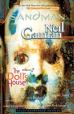
Neil Gaiman is the critically acclaimed and award-winning creator of the Sandman series of graphic novels, author of the novels ANANSI BOYS, AMERICAN GODS, CORALINE, STARDUST, and NEVERWHERE, the short-fiction collection SMOKE AND MIRRORS, and the bestselling children's books THE DAY I SWAPPED MY DAD FOR TWO GOLDFISH and THE WOLVES IN THE WALLS (both illustrated by Dave McKean). Originally from England, Gaiman now lives in the United States.

Back to top.


PAST INTERVIEW

June 29, 2001

Neil Gaiman stirs something up deep within people, exploring as he does the subconscious and its power. From the early days of his now-legendary SANDMAN comic books, Gaiman's writing has crossed the divide between fantasy and reality, dreamtime and the waking hours. Now in his latest novel, AMERICAN GODS, Gaiman has set his sights on America and its own particular brand of folklore and heroes. Bookreporter.com editors Jennifer Abbots and Sarah Brennan entered into Gaiman's world, unafraid, to talk with him about his fascination with the world of dreams, The United States and road trips.

TBR: Shadow in AMERICAN GODS finds himself in places far off the beaten American path. I kept expecting Martin Milner and George Maharis to come motoring over the hill in some places. While that didn't happen, what did happen is that your descriptions of some of the locales, such as Rock City, were so vivid that I could almost see your shadow (no pun intended) just off of the page, not so much as a narrator as an observer. Did the genesis of AMERICAN GODS result from your travels through the United States, or did you choose your locales based on the repute, and then go research them?
NG: A combination of the two, plus, an awful lot of serendipity. There were places I had gone with my family, having no idea what to expect.  A perfect example being the House on the Rock, were we went simply because we were down in that part of Wisconsin for a couple of days. I was absolutely dumbfounded that such a place actually existed. When I saw it I thought, "One day I'm going to put this into a book…this place is completely fictional; I have to tell the world."

So, there was a certain amount of that even before the book began --- knowing that I really just wanted to try and put some of the weird little American things that I had seen, felt and observed as a continually surprised Englishman into a fictional context. I could have written one of those Bill Bryson travel books or whatever, but that wouldn't have been as much fun for me…

When I went to work on the book, I wrote the first chunk of it in Florida, and I took a rode trip from Florida to Minneapolis, trying to hit the places that I knew I wanted to send Shadow to. And some of the things that happened on the road trip went into the book -- Rock City is a perfect example of that. I vaguely knew that Rock City existed, but it wasn't until I was somewhere crossing over from Kentucky into Tennessee that I saw a sign painted on the side of a bar: See Rock City, The World's Wonder. Thinking, "this might be cool," I decided to go see it (thinking it was a couple hours away…it was, of course, a four day journey). But as soon as I saw it, it became part of the book.   

I knew that AMERICAN GODS had to be a road novel because America is one huge road novel -- you have to get into a car and you have to go places. In England, a road novel wouldn't really work. In England, you can go as far as you need to by staying in the same place, just going back in time. In America, the journey is the destination. And with Shadow, the journey really was the destination.

TBR: From a literary standpoint, what do you enjoy the most about the U.S. and what do you miss the most about England?

NG: Radio. I miss English radio because they do radio plays --- good ones. They do radio plays not in the way American radio pretends to do radio plays --- which is a kind of weird retro thing. There isn't an awful lot of stuff about books. True, you can go and find NPR, but NPR has to be an awful lot of stuff to an awful lot of people. It's just as likely to be broadcasting a program about cows as it is to be actually broadcasting something that a writer would like to hear.

TBR: Many American heroes owe their origins, directly and indirectly, to British mythology. What historical and contemporary British authors have been your major influences?

NG: There was an author named Roger Lancelyn Green who wrote these wonderful books for kids on mythology. They're enormously fun --- Tales of the Norseman, Tales of the Egyptians, etc. I loved that stuff as a kid, I couldn't get enough of it.

TBR:  A theme of your work either as a focal point or as a secondary plot vehicle from THE SANDMAN to AMERICAN GODS has been dreams and the power thereof. Where does your fascination with the dreamworld come from? Do you think there is any validity to dream analysis?

NG: I don't really know. Dreaming is such peculiar thing. We lead these completely normal, rational lives (or we kid ourselves that we do), and then every night we close our eyes and go stark, raving mad for eight hours. I love that. It's a level of reality that I've always thought is every bit as important and interesting as the life you live by day.  

My problem with dream analysis I summed up in an old issue of SANDMAN. When this girl says to Morpheus, the Lord of Dreams, "You know what Freud said about flying in dreams?" And he says, "No, what?" Then she says, "Well, when your flying in dreams it means you're actually dreaming about having sex." And he says, "How interesting. What does it mean when you dream your having sex?" That, for me, said it all.

TBR: A couple of decades ago Hawkwind did some projects with Michael Moorcock. John Mellencamp and Stephen King are presently collaborating on a musical. And you just read at a Magnetic Fields concert here in New York. What do you think of the music/literature collaboration? If you had the inclination to work on a project with a musician(s), living or dead, who would it be?

NG: I just think it's really, really cool that there are writers out there who do interface with musicians, and that there are musicians out there who read. Me reading at The Magnetic Fields concert seemed like the perfect thing to do because we both have a quirky and brilliant set of fans. It was more that the thinking that Neil Gaiman fans who haven't heard the Magnetic Fields would probably love them, and Magnetic Fields fans who have no idea who this British guy is would probably love it too.

I love music. I always have music playing when I'm writing. I know a lot of writers say they can't have any music with words playing while they are writing, but I can. I love words. I would love to do a musical with Magnetic Fields. Every now and then I write songs. I'm very lucky as my assistant Lorraine has a small band and every now and then they make an album and they'll stick a couple of my songs on there.

TBR: Can we expect any of your work to be made into a movie? What do you think about the books to movie trend?

NG: I just had breakfast with a director who might be turning one of my things into a movie. But, of course, he is currently fighting with the studio because everything he wants to do they are opposed to. The studio wants to turn it into a normal, boring movie. It's par for the course, I suppose. Every Hollywood experience people say you're going to get, you really get.

Having said that, I kind of like Hollywood. Hollywood I always think of as this entity that subsidizes the fact that if I want to spend three days writing a poem, I can spend three days writing a poem. It gives me a financial freedom I wouldn't otherwise have.

TBR: Of the two primary media which you have worked in --- novels and comic books --- which do you find the most challenging?

NG: Comics are often the hardest. But right now, I think prose is the most difficult because I'm still trying to figure it all out. I've written three novels now and people love them, but I think the first one I am in any way satisfied with is AMERICAN GODS. I still have a long way to go till I get good by my own standards.

TBR: Have you read anything in the past six months that you would recommend to your readers?

NG: Currently, I am completely addicted to the novels of a man named Harry Stephen Keller, which have been out of print since he wrote them in the 1930's and 40's. They are magnificently awful and they have just been brought back into print by the company Ramble House, at www.ramblehouse.bigstep.com. They are brilliant in an absolutely awful, mesmerizing kind of way.

TBR: What are you working on now?

NG: I am working on my signing tour. Am I actually writing anything? Nope. Just the tour.

TBR: Do you enjoy being on book tour?

NG: I don't think book tours are things you enjoy, I think they are things you survive.

© Copyright 1996-2008, Bookreporter.com. All rights reserved.

Back to top.


Home - Reviews - Features - Authors - Daily Quote - Books to Movies - Book Clubs - Awards - Coming Soon
Search - Contests - Word of Mouth - Bestsellers - New in Paperback - Newsletter - Author Bibliographies - Blog
For Librarians - Submitting a Book - Become a Reviewer - FAQ - Contact Us - About Us - Privacy Policy

© Copyright 1996-2008, Bookreporter.com. All rights reserved.
The Book Report, Inc. • 250 West 57th Street • Suite 1228 • New York, NY • 10107

Bookreporter.comReadingGroupGuides.comAuthorsOnTheWeb.comAuthorYellowPages.com
Teenreads.comKidsreads.comFaithfulReader.com