|
Mary Higgins Clark
BIO
Born and raised in New York, Mary Higgins Clark is of Irish descent. "The Irish are, by nature, storytellers," says Clark, who considers her Irish heritage an important influence on her writing.
Mary's father died when she was ten. Her mother struggled to bring up Mary and her two brothers. After graduating from high school, Mary went to secretarial school, so she could get a job and help her mother with the family finances. After working for three years in an advertising agency, travel fever seized her. For the year 1949, she was a stewardess on Pan American Airlines' international flights, to see the world. "My run was Europe, Africa and Asia," Mary recalls. "I was in a revolution in Syria and on the last flight into Czechoslovakia before the Iron Curtain went down. I flew for a year and then got married."
She married a neighbor, Warren Clark. Nine years her senior, she had known him since she was 16. Soon after her marriage, she started writing short stories. She sold her first short story to Extension Magazine in 1956 for $100, after six years and forty rejection slips. "I framed that first letter of acceptance," she recalls.
Mary was left a young widow with five children by the death of her husband, Warren Clark, from a heart attack in 1964. She went to work writing radio scripts and, in addition, decided to write books.
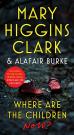
Every morning, she got up at 5 and wrote until 7, when she had to get the kids ready for school. Her first book was a biographical novel about the life of George Washington, ASPIRE TO THE HEAVENS. "It was remaindered as it came off the press," she says of her first try. Next, she decided to write a suspense novel, WHERE ARE THE CHILDREN?, which became a bestseller and marked a turning point in her life and career.
Mary decided to take time for things she had always wanted to do. So far, she had put all her energies into her children's education. Now she was going to catch up on her own. In 1974, she entered Fordham University at Lincoln Center and graduated summa cum laude in 1979, with a B.A. in philosophy. In May 1988, she returned to her alma mater as commencement speaker. She is a trustee of Fordham University and a member of the Board of Regents at St. Peter's College. She has thirteen honorary doctorates.
After many years of widowhood, she married John J. Conheeney, retired Merrill Lynch Futures CEO, on November 30, 1996. They now live in Saddle River, New Jersey; they also have an apartment in Manhattan and summer homes in Spring Lake, New Jersey and Dennis, Massachusetts. Between them, they have a large family -- Mary Higgins Clark has five children and six grandchildren, and her husband has four children and nine grandchildren.
Among the many honors she has received are The Women of Achievement award from the Federation of Women's Clubs in New Jersey, the Irish Woman of the Year award from the Irish-American Heritage and Cultural Week Committee of the Board of Education of the City of New York, the Gold Medal of Honor from the American-Irish Historical Society, the Spirit of Achievement Award from the Albert Einstein College of Medicine of Yeshiva University and the National Arts Club's first Gold Medal in Education. In April 1997, she received the Horatio Alger Award. She is an active advocate and participant in literacy programs.
Mary was made a Dame of the Order of St. Gregory the Great, a papal honor. She is also a Dame of Malta and a Dame of the Holy Sepulcher of Jerusalem.
She was awarded the Grand Prix de Literature of France in 1980. Her books are published in translation around the world and are world-wide bestsellers. She is a #1 bestseller in France.
She was Chairman of the International Crime Congress, held in New York in May 1988. She was the 1987 president of the Mystery Writers of America and, for many years, on the Board of Directors of the Mystery Writers of America.
Back to top.
PAST INTERVIW
May 5, 2000
Bookreporter.com's Senior Writer Ann Bruns was thrilled to interview the prolific and beloved suspense writer Mary Higgins Clark. In a recent phone interview the two chatted about Mary's new book, BEFORE I SAY GOOD-BYE, and Ann took down as many of Mary's stories as she could. A conversation filled with laughter and anecdotes, this interview is by far one of our most intimate. Read on to find out more about Mary's new book, how she feels about psychics, ESP, eBooks, self-publishing and more. You'll even get a sneak preview of her next book's setting!
TBR: The original working title of BEFORE I SAY GOOD-BYE was "If Ever I Would Leave You," in keeping with your recent use of song references. But "Before I Say Good-Bye" was not listed in the credits --- is it from a song?
MHC: It's not from a song. We were a little concerned that it would be too long for the book cover. There was a short story that I wrote years ago that I liked a lot, and seemed to have this same theme, called BEFORE I SAY GOOD-BYE. It appeared in an obscure little magazine, but I always liked that story and decided I'd use that title for this book. I'm glad I did --- two Lerner and Lowe's in a row might have been too much. The joke is, the next book's title is going to be ON THE STREET WHERE YOU LIVE. I know it's a long title, but it's so perfect for the book it just has to be.
TBR: In BEFORE I SAY GOOD-BYE Nell believes she has experienced contact with the spiritual world as a child. How did you go about researching the paranormal aspects of your story line? Have you or someone you know attempted to contact, or been contacted by, loved ones who have died? MHC: People do have a sense of the death of someone they love. Arthur Godfrey always told the story about when he was a 17- or 18-year-old kid on a boat during the war; and he dreamed so clearly of his father standing at the foot of his bed smiling. The next morning the captain called him in and said: "your father died." It was the exact same moment as his dream. There are many documented experiences like that where someone knew at the moment of death.
I went to a session once, conducted by a woman who was a psychic and very spiritual. She had a theology degree and the things she was talking about any priest, minister or rabbi would have said. But then she told us she'd like to speak to each of us alone. My sister-in-law had just been diagnosed with leukemia. I told her my sister-in-law was ill and asked if she could see anything. She said: "her aura is very dark. Her journey on this plane is completed. I think we're talking months." It was three weeks later, just last November, that she died. I used the psychic's lines exactly as she spoke them in my book.
TBR: When Adam's secretary comes to their apartment on that fateful night, Nell has a strong premonition of Winifred's death. Yet, despite childhood experiences with the supernatural --- which she clearly believes happened --- she seems unwilling to accept that she has a psychic gift. Why is she an adamant believer one moment and skeptical the next?
MHC: She is skeptical. Nell has the ability, but she doesn't consider herself psychic. She doesn't like the fact that she has a certain finely attuned ability to sense that kind of thing.
TBR: BEFORE I SAY GOOD-BYE poignantly portrays a woman who struggles with loneliness and isolation --- feelings which you suggest are particularly attributable to only children. Since you had two brothers and five children of your own, how did you manage to tap into the emotions of an only child?
MHC: I think writers have an intuitive sense. And I've seen this kind of isolation. There was a girl in our neighborhood, in fact, she still lives in the same house. Her mother was the dragon lady. The girl never married, never even dated. Her mother always spoke for her. This is the way I see Winifred.
As for Nell, I think Nell loved her grandfather and was happy. But to justify her marrying Adam, I think of him as having surface charm. She hadn't met anyone yet. She'd just been to a wedding and friends were showing pictures around; and she had this moment of thinking that when Gert and her grandfather were gone she'd be alone. I think that happens to too many women. I think there is a time when all women are vulnerable, even very smart women. There is that moment when the right person comes along --- or the wrong person --- and they're charming, they fill that need. Later on, you try to make it work.
TBR: In your recent Today Show interview, you were asked if you had any apprehensions about a story focusing on events of psychic phenomena. Your response was that you tried to maintain a balance between skepticism and the premise that there are things that we just can't explain. Is this middle ground basically where your own beliefs tend to fall? Is there any aspect of it that you firmly believe in?
MHC: I firmly believe in ESP. Sometimes there is thought transference --- you're thinking of someone you haven't spoken to in 10 years and the phone rings. I do believe that some people get a glimpse into the future --- precognition. I don't believe in channeling. Supposedly we all had much more ESP years ago and then we lost it just like the appendix, because it's not being used. People still have it and I think we can develop it.
In the beginning when cave men couldn't talk, they communicated by thought, by memory. For instance, in the book, THE CLAN OF THE CAVE BEAR, that was wonderfully researched. They really communicated with their thoughts.
There are many books on it...you should see the number of books I have. I read many books by psychics where they tell about your ESP, your ability to sense things in a much clearer way. Twenty-four years ago I went to have my palm read with some friends. The woman told me I'd be very well known all over the world, make a great deal of money, live to be very old, and die abroad. At that time WHERE ARE THE CHILDREN had come out in hardcover, sold nicely; but wasn't out on the list. As my friends and I left I thought: what was that one smoking! But just in case she was right I told them I'd stop traveling when I'm 80. The next week, WHERE ARE THE CHILDREN came out in paperback, went on the list and everything just exploded after that. So she did hit it, I have to say that.
On the other hand you get these phone psychics. One of the things that set me to writing this book was because our housekeeper has an 18-year-old daughter who quit college and went to work in a restaurant. She ran up a $450 phone bill, phoning one of these psychics. If that woman had only told her to go back to school, it would have been worth the money. I had a book signing in Florida and my driver turned out to be a temporary whose real job was as a psychic. I asked if she had training in ESP. She said: "Oh, you don't need that. You can tell what they want to hear and you feed it to them." That's the flip side of it --- they take advantage of people.
TBR: In that same interview, you remarked that good characterizations require that "characters have a cadence...," a recognizable voice that doesn't require identification each time they speak. Have you ever had a character that you just couldn't "get a handle on?" How did you resolve the problem?"
MHC: If I had a character I couldn't get a handle on, it would be because he or she didn't belong in the book. There's a certain point when the characters take over. They're well grounded and they know where they're going and they do things I did not expect them to do. That's when a book becomes exciting for a writer to write. If they won't get off first base, I revise or I say it's because I'm trying to make them do something that is out of character for the way I've portrayed them.
TBR: When you begin a new novel, do you establish an outline of the "big picture" first then create the various characters and sub stories to weave it all together? Or do you begin with one or two characters, flesh out their story and work outward to the overall plot?
MHC: I have to have the big picture. I have to know where it's set, what the problem is and I have to know whodunit. Then I start to do character sketches of the people who will be in the book. And I do background material. For example, for the last scene in this book I needed an apartment building that had an outside fire escape, so I went up to the neighborhood where they have them. These are things that are important. Little details start to make a story valid. I do my absolute, absolute best never to make a mistake; but, of course, sometimes I do. Usually they're very small mistakes and it's something I thought I knew.
TBR: Do you sometimes go back and rewrite because you've gone in a different direction and a character no longer works?
MHC: I rewrite all the time almost to a fault. In this book, I spent three weeks on the prologue and it's three pages! I finally decided to go back to it later. I do a great deal of rewriting but chapter by chapter. I have a very happy situation --- I send Michael Korda and Chuck Adams, my editors, every 20-25 pages; so they're editing as we go along. That works wonderfully for me.
TBR: Over the years, were there any story lines or characterizations that you and your editors seriously disagreed on? If so, do we dare ask who won?
MHC: On this book Michael said don't show that a particular character is still alive, it would be a mistake. But the funny thing was, I'd blown up so many people at the beginning of the book; I thought: why did I blow them up so fast! Now you have to see them through other people!
TBR: In these days of frugal publishing, even bestselling authors are facing limitations on hardcover editions and many of their older books going out of print. Yet, not only are your previous 19 novels still in print; they are all still available in hardcover! That must be immensely satisfying. Would you credit your 25 year association with the same publisher as the reason for this continuing availability?
MHC: Well, actually, the reason is because they still sell. Of course when one publisher has the entire line, it is very beneficial. Fortunately, I've been blessed. If they read one of mine, they pick up the others. But it's just too difficult to store all those hardcovers. The publishing houses just can't do it.
TBR: What are your thoughts on eBooks? Are they the wave of the future? We will ever see a Mary Higgins Clark book or novella as an e-only title?
MHC: Nobody really knows about eBooks. I think there's definitely a place for them, but they won't ever be cozy like curling up with a book. I don't think they will ever replace books. As for doing a book as e-only, I don't think the publisher would do it. However, they have just announced that they are going to release my entire line of novels in eBook form.
TBR: You worked hard and wrote for a long time before having a book published. These days it is far easier to be published as there are online self-publishing sites everywhere. What is your advice to authors who consider being self-published? What is your advice to writers taking the more old-fashioned route?
MHC: There is more self-publishing going on. I really don't know enough about it. There was a time when there was just one or two vanity presses. But are the books picked up? Everything is distribution. You can write WAR AND PEACE, but it won't matter if it's not carried in the bookstores.
TBR: We've recently featured several authors who write young adult fiction that crosses the line into the adult market as well. Your novels have accomplished the reverse --- written for adults but being read by children as young as 12. Did you start out intentionally writing for such a broad-based audience? What special difficulties does this present?
MHC: The reason is that I don't use the explicit sex or violence in my books. I don't criticize those who do, but I'm just not interested. I think "footsteps on the stairs" are scarier than the actual confrontation. "The door opening slowly, the horrified look" --- I find that scarier. I think the sexiest line of the century was "you'll not shut me out of your bedroom tonite, my dear." I think that's more interesting than all the "how to."
TBR: In the past, you've voiced your criticism of the violence on television and in movies, and the effect this has on younger viewers. With several of your books being made into films, do you retain any control over how those will eventually be presented?
MHC: I'm technically an advisor but you can advise just so much. The producer can't turn it over to you. But generally when they've bought my book, it was because they liked the story. They're not gonna go nuts with them. I've had books made into two feature films and the rest on television. I've been pleased --- I think they've done a good job with them. But I'm not violent or sexy enough for them now. Mine are more psychological.
TBR: Many authors are also screen writers these days. Have you ever been approached to write scripts for movies or television? Would you want to explore that at some point?
MHC: I don't EVER want to write a movie script. They do 6, 7, 8, 9 revisions ... I don't know how they stand it. And then the guy who wanted the revisions gets fired, and they start over with somebody else.
TBR: There have been some very heated battles recently over the banning of particular children's books like Harry Potter. As both a writer and a parent, do you feel schools and communities have any right to exercise control over what books are made available for children to read?
MHC: I frankly haven't read Harry Potter. I wish I'd written it! You've gotta go by community standards. One woman tried to get me banned in Boston, because WHERE ARE THE CHILDREN dealt with a child molester. There was nothing in that book that even uses the word, but she objected to it. But if the community as a whole wants to do it, then I think they have the right. I think the community's standards give people the freedom to do what's appropriate. There are some very, very conservative communities --- just as there are some very liberal ones --- and they have the right to be conservative.
TBR: Your novels have incorporated a number of topics that often spark controversy in real life: parapsychology, fertility clinics, capital punishment, multiple personalities. Is there any issue that you would be reluctant to tackle in fiction?
MHC: There isn't any topic I would consciously not tackle. If I had a list, I would go down it and say there are some topics that are just not for me. I write about very nice people whose lives are invaded; so I wouldn't want to write, for example, a main character who was murdering old women. There are some things we would all automatically reject because we know it's not our type of story.
TBR: Do you have your next novel already roughed out in your mind? Can you tell us anything about it?
MHC: Yes I have and I love it. It's set in Spring Lake, New Jersey. We just bought an 1890s house there that we're renovating and the story line is set there. I think it's darn good and it's going to be a lot of fun to write. It's called ON THE STREET WHERE YOU LIVE --- that's firm --- and it's a psychological thriller.
© Copyright 1996-2008, Bookreporter.com. All rights reserved.
Back to top.
|