
Excerpt


Excerpt
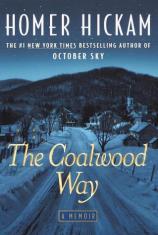
The Coalwood Way (The Coalwood Series #2)




• Read a Review
• Reading Group Guide
Excerpt
OF ALL THE lessons
I learned when I built my rockets, the most important were not
about chemistry, physics, or metallurgy, but of virtues, sins, and
other true things that shape us as surely as rivers carve valleys,
or rain melts mountains, or currents push apart the sea. I would
learn these lessons at a time when Coalwood, the mining town where
I had lived my entire life, was just beginning to fade away. Yet,
as the fall of 1959 began, and the leaves on the trees in the
forests that surrounded us began to explode in spectacular color,
Coalwood's men still walked with a trudging grace to and from the
vast, deep mine, and its women bustled in and out of the company
stores and fought the coal dust that drifted into theit homes. In
the dark old schools, the children learned and the teachers taught,
and, in snowy white churches built on hillside cuts, the preachers
preached, and God, who we had no doubt was also a West Virginian,
was surely doing His work in heaven, too At the abandoned slack
dump we called Cape Coalwood, rockets still leapt into the air, and
boyish voices yet echoed between ancient, worn mountains beneath a
pale and watchful sky. Coalwood endured as it always had, but a
wheel was turning that would change nearly everything, and no one,
not even my father, would be able to stop it. When that brittle
parchment autumn turned into our deepest, whitest winter, this and
many other lessons would be taught. Though they were hard and
sometimes cruel things to learn, they were true, and true things,
as the people of Coalwood saw fit to teach me, are always filled
with a shining glory.
To me, there was no better time to launch a rocket than in the
fall, especially a West Virginia fall. There seemed to be a cool,
dry energy in the air that filled us with a renewed sense of hope
and optimism. I had always believed that our rockets were lifted as
much by our dreams as burning propellant, and as the lazy summer
faded and a northerly wind swept down on us with its lively breath,
anything seemed possible. It was also when the school year started
and I always felt an excitement stir within me at the thought of
learning new and wonderful things. Fall had other marvels, too. At
the Cape, we were often treated to V-shaped flotillas of migrating
Canadian geese, bound from the far north to places we had only read
about or imagined. We always stopped our rocket preparations to
gaze longingly at the great creatures as they winged their way high
overhead, and to listen to their joyful honking that seemed to be
calling us to join them. "If only we could," Sherman said once to
my comment. "Even for just a moment, to look down on our mountains
and see them the same as angels." Sherman always liked to remind us
that we lived in a beautiful place and I guess we did, although
sometimes it was easy to forget, especially since we'd never known
anywhere else.
Once, a rare snow goose, as purely white as moonbeams, landed on
the old slack dump, perhaps fooled by the reflection from the slick
surface of the coal tailings. We gathered around the great
strutting bird, awed by the sight of her. Then I noticed that her
wing tips were as black as the faces of Coalwood miners after a
shift. O'Dell said the reason for the black tips was so the geese
could see each other inside a white cloud. O'Dell knew a lot about
animals so I believed his explanation, but it got me off to
thinking. How did the snow geese decide what colors their feathers
would be? Did they all get together up north somewhere a million
years ago and take a vote? It was a mystery and the snow goose made
no comment. She just looked annoyed. When she tired of us gawking
at her, she flapped her wings and continued her journey, and I
confess I was relieved. I knew the snow goose did not belong in
Coalwood. Some people, especially my mother, said neither did
I.
Our first rocket of the fall was Auk XXII-E. A serious little
rocket, it began its journey with a mighty spout of flame and
tur-moil and its shock wave rattled our wooden blockhouse as it
climbed. I ran outside with the other boys, but no matter how much
I strained my eyes, I couldn't see it. All I could see were clouds
that went, as far as I knew, all the way up to heaven. The seconds
ticked by. We had never lost one of our rockets, but I was
beginning to wonder if maybe this one was going to be our first. If
it had fallen on Rocket Mountain, buried itself into the soft black
West Virginia loam up there, maybe we had missed it. "Time,
O'Dell," I called nervously.
O'Dell looked at the stopwatch he'd borrowed last year from one of
the coal company industrial engineers and forgotten to give back.
"I think it's still flying," he said.
"Then where is it?" I demanded. We couldn't lose it. Like every
rocket we launched, it held answers we had to know.
Excerpted from THE COALWOOD WAY (c) Copyright 2000 by Homer Hickam.
Reprinted with permission from Dell Publishing Co. All rights
reserved.


The Coalwood Way (The Coalwood Series #2)
- Genres: Autobiography, Nonfiction
- hardcover: 336 pages
- Publisher: Delacorte Press
- ISBN-10: 0385335164
- ISBN-13: 9780385335164


