
Excerpt


Excerpt
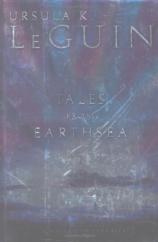
Tales from Earthsea (The Earthsea Cycle, Book 5)




Chapter One
The Finder
I. In the Dark Time
This is the first page of the Book of the Dark, written some six hundred years ago in Berila, on Enlad: "After Elfarran and Morred perished and the Isle of Sol"a sank beneath the sea, the Council of the Wise governed for the child Serriadh until he took the throne. His reign was bright but brief. The kings who followed him in Enlad were seven, and their realm increased in peace and wealth. Then the dragons came to raid among the western lands, and wizards went out in vain against them. King Akambar moved the court from Berila in Enlad to the City of Havnor, whence he sent out his fleet against invaders from the Kargad Lands and drove them back into the East. But still they sent raiding ships even as far as the Inmost Sea. Of the fourteen Kings of Havnor the last was Maharion, who made peace both with the dragons and the Kargs, but at great cost. And after the Ring of the Runes was broken, and Erreth-Akbe died with the great dragon, and Maharion the Brave was killed by treachery, it seemed that no good thing happened in the Archipelago.
"Many claimed Maharion's throne, but none could keep it, and the quarrels of the claimants divided all loyalties. No commonwealth was left and no justice, only the will of the wealthy. Men of noble houses, merchants, and pirates, any who could hire soldiers and wizards called himself a lord, claiming lands and cities as his property. The warlords made those they conquered slaves, and those they hired were in truth slaves, having only their masters to safeguard them from rival warlords seizing the lands, and sea-pirates raiding the ports, and bands and hordes of lawless, miserable men dispossessed of their living, drivenby hunger to raid and rob."
The Book of the Dark, written late in the time it tells of, is a compilation of self-contradictory histories, partial biographies, and garbled legends. But it's the best of the records that survived the dark years. Wanting praise, not history, the warlords burnt the books in which the poor and powerless might learn what power is.
But when the lore-books of a wizard came into a warlord's hands he was likely to treat them with caution, locking them away to keep them harmless or giving them to a wizard in his hire to do with as he wished. In the margins of the spells and word lists and in the endpapers of these books of lore a wizard or his prentice might record a plague, a famine, a raid, a change of masters, along with the spells worked in such events and their success or unsuccess. Such random records reveal a clear moment here and there, though all between those moments is darkness. They are like glimpses of a lighted ship far out at sea, in darkness, in the rain.
And there are songs, old lays and ballads from small islands and from the quiet uplands of Havnor, that tell the story of those years.
Havnor Great Port is the city at the heart of the world, white-towered above its bay; on the tallest tower the sword of Erreth-Akbe catches the first and last of daylight. Through that city passes all the trade and commerce and learning and craft of Earthsea, a wealth not hoarded. There the King sits, having returned after the healing of the Ring, in sign of healing. And in that city, in these latter days, men and women of the islands speak with dragons, in sign of change.
But Havnor is also the Great Isle, a broad, rich land; and in the villages inland from the port, the farmlands of the slopes of Mount Onn, nothing ever changes much. There a song worth singing is likely to be sung again. There old men at the tavern talk of Morred as if they had known him when they too were young and heroes. There girls walking out to fetch the cows home tell stories of the women of the Hand, who are forgotten everywhere else in the world, even on Roke, but remembered among those silent, sunlit roads and fields and in the kitchens by the hearths where housewives work and talk.
In the time of the kings, mages gathered in the court of Enlad and later in the court of Havnor to counsel the king and take counsel together, using their arts to pursue goals they agreed were good. But in the dark years, wizards sold their skills to the highest bidder, pitting their powers one against the other in duels and combats of sorcery, careless of the evils they did, or worse than careless. Plagues and famines, the failure of springs of water, summers with no rain and years with no summer, the birth of sickly and monstrous young to sheep and cattle, the birth of sickly and monstrous children to the people of the isles all these things were charged to theractices of wizards and witches, and all too often rightly so.
So it became dangerous to practice sorcery, except under the protection of a strong warlord; and even then, if a wizard met up with one whose powers were greater than his own, he might be destroyed. And if a wizard let down his guard among the common folk, they too might destroy him if they could, seeing him as the source of the worst evils they suffered, a malign being. In those years, in the minds of most people, all magic was black.
It was then that village sorcery, and above all women's witchery, came into the ill repute that has clung to it since. Witches paid dearly for practicing the arts they thought of as their own. The care of pregnant beasts and women, birthing, teaching the songs and rites, the fertility and order of field and garden, the building and care of the house and its furniture, the mining of ores and metals-these great things had always been in the charge of women.
A rich lore of spells and charms to ensure the good outcome of such undertakings was shared among the witches. But when things went wrong at the birth, or in the field, that would be the witches' fault. And things went wrong more often than right, with the wizards warring, using poisons and curses recklessly to gain immediate advantage without thought for what followed after. They brought drought and storm, blights and fires and sicknesses across the land, and the village witch was punished for them. She didn't know why her charm of healing caused the wound to gangrene, why the child she brought into the world was imbecile, why her blessing seemed to burn the seed in the furrows and blight the apple on the tree. But for these ills, somebody had to be to blame: and the witch or sorcerer was there, right there in the village or the town, not off in the warlord's castle or fort, not protected by armed men and spells of defense. Sorcerers and witches were drowned in the poisoned wells, burned in the withered fields, buried alive to make the dead earth rich again. So the practice of their lore and the teaching of it had become perilous. Those who undertook it were often those already outcast, crippled, deranged, without family, old-women and men who had little to lose. The wise man and wise woman, trusted and held in reverence, gave way to the stock figures of the shuffling, impotent village sorcerer with his trickeries, the hag-witch with her potions used in aid of lust, jealousy, and malice. And a child's gift for magic became a thing to dread and hide.
This is a tale of those times. Some of it is taken from the Book of the Dark, and some comes from Havnor, from the upland farms of Onn and the woodlands of Faliern. A story may be pieced together from such scraps and fragments, and though it will be an airy quilt, half made of hearsay and half of guesswork, yet it may be true enough. It's a tale of the Founding of Roke, and if the Masters of Roke say it didn't happen so, let them tell us how it happened otherwise. For a cloud hangs over the time when Roke first became the Isle of the Wise, and it may be that the wise men put it there.
Excerpted from TALES FROM EARTHSEA © Copyright 2001 by Ursula K. LeGuin. Reprinted with permission by Hartcourt Brace. All rights reserved.


Tales from Earthsea (The Earthsea Cycle, Book 5)
- Genres: Fantasy, Fiction, Young Adult 12+
- hardcover: 320 pages
- Publisher: Houghton Mifflin Harcourt
- ISBN-10: 0151005613
- ISBN-13: 9780151005611


