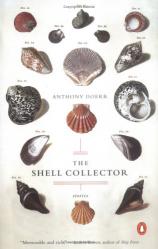
The Shell Collector


Review
The Shell Collector




Tabloid journalists try to unravel the mysterious healing powers of
the Kenyan cone shell. A hunter from Montana finds his estranged
wife of 20 years mystically soothing the bereaved. A Spanish girl
finds love while fishing in Harpswell, Maine, while eons away in
Boise, a state champion volleyballer runs off with the carnival.
Doerr travels around the globe in this collection of eight
unrelated stories to offer glimpses into the lives of people with
odd powers --- side show freaks, avid fishermen, and country people
living by the philosophies of the wild, a few foolish enough to try
to tame it.
Winner of the Black Warrior Review Literary Prize, Doerr seems most
at home when his characters are wading through international rivers
seeking that grand, prize-winning catch --- whether the catch is a
fish or true love. Love is found, lost, and found again while
Doerr's simpletons and scholars seek other natural treasures in the
woods and waters from Great Falls to the Lamu Archipelago. The book
takes its name from the opening story of the shell collector, a
retired Canadian nature professor and writer whose life becomes the
search for rare shells shortly after cataracts blind him as a boy.
His studies span the tropics, finding him at 65 touring the
Archipelago with two New York journalists named Jim, detailing the
story of Nancy, an American Buddhist who is suddenly cured of
malaria by a bite from the deadly lagoon cone shell in the
collector's kibanda. A brief love affair with the healed, yet
married, woman helps spread the word internationally that the shell
collector can tap into the untold power of the sea, placing him in
the uncomfortable position of attempting to heal others, including
a village girl and, eventually, his own son.
Doerr dazzles in "The Hunter's Wife," one of the most powerful of
the eight, narrating for Dumas, a Montana hunter, chronicling the
love and marriage to magician's assistant Mary Roberts. Just 16 at
the time of her meeting with 30-year-old Dumas, Mary discovers her
ability to communicate with the dead --- see, experience a dying
animal's (or human's) pleasant, anguished or fleeting final
thoughts --- a talent she will use after leaving Dumas for wealthy
stardom as a "seer." Doerr is at his most penetrating when giving
the ambivalent hunter a taste of his own fresh killing. Just before
deserting him, Mary grabs Dumas's arm and the foreleg of a doe the
hunter has just killed:
"Oh, he whispered. He could feel the world --- the grains of snow,
the stripped branches of trees --- falling away…The buck was
raising its head, meeting his eyes. All the world washed in
amber…No he murmured. No. He rubbed his wrist where her
fingers had been and shook his head as if shaking off a blow. He
ran."
Another shining star is "For a Long Time This Was Griselda's
Story," the tale of a high school girl jock who falls in love with
a metal eater in a carnival and leaves Boise for an exotic life
with him on the road as his sexy assistant. Griselda's chunky
sister Rosemary is left to care for their mother and earn an honest
living, while also yearning for a life outside of the Midwest.
Griselda and Rosemary have a showdown years later when the metal
eater's show returns to the girls' hometown.
"Mkondo" is the tale of historian Ward Beach and his obsession with
Naima, a unique beauty he meets on an archaeological dig in West
Africa. He chases Naima so far and for so long that they both wind
up losing themselves, yet are reborn in a surprise ending as
romantic and chaotic as the currents of the Nile.
While Doerr's solemn philosophies and grim truths are rescued from
pious modernity in each tale by the brightness and infinity of
unlikely romance, this humorless collection is seriously marred by
its longest story, "The Caretaker," a tirade --- told in more
repulsive and brutal detail than a CNN report --- of Liberian civil
war, that is hardly readable. "The Caretaker" is so visually
violent and out of place with the underlying and perfectly
developed themes of the other stories that it anchors the book.
Most stories in the collection were previously published in
respected literary journals, from The Atlantic Monthly to
Doubletake, yet there is no publication history listed for
"The Caretaker," other than here. It is a thorn in the side of an
otherwise delightful and thought-provoking debut.
Reviewed by Brandon M. Stickney on January 23, 2011


The Shell Collector
- Publication Date: February 15, 2003
- Genres: Short Stories
- Paperback: 224 pages
- Publisher: Penguin (Non-Classics)
- ISBN-10: 0142002968
- ISBN-13: 9780142002964