Bookrepoter.com Click Here Click Here Click Here
Home Reviews Features Authors Quote Books Into Movies Book Clubs Awards Coming Soon
Search Contests WOM Bestsellers New in Paperback Newsletter Bibliographies Blog

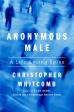
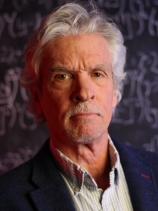
Christopher Whitcomb

BIO

Christopher Whitcomb, a 15 year veteran of the FBI, serves in the Critical Incident Response Group's Strategic Operational Intelligence Unit. In this role, he oversees FBI intelligence gathering and information management operations during weapons-of-mass-destruction attacks, terrorist threats, and exotic criminal cases. He also coordinates media operations and serves as FBI spokesman during high-profile FBI investigations.

Whitcomb began his FBI career in 1987, as a Special Agent in the Kansas City Field Office, Springfield, where he distinguished himself as an assaulter and sniper, winning the FBI's Medal of Bravery for exceptional courage in the line of duty. He has participated in nearly every high-profile federal investigation over the past 10 years, including the L.A. riots, shootings at Ruby Ridge, the Branch Davidian standoff, the World Trade Center and Olympic bombings, the Montana Militia standoff, overseas fugitive apprehensions, high-risk dignitary protection details, witness protection assignments, investigation into the war crimes in Kosovo and the Cole bombing in Yemen. In 1997, Whitcomb was promoted to supervisor and became an interview/interrogation instructor at the FBI academy in Quantico, Virginia. He created and scripted NACBOMB: Integrated Case Scenario, an elaborate 16-week curriculum that serves as the basis for all FBI new agent training. He has instructed hundreds of different local, state, federal, and foreign law enforcement agents/officers, including UNSCOM weapons inspectors in Iraq.

Prior to joining the FBI, Whitcomb worked two years as speechwriter and press secretary to U.S. Representative Silvio O. Conte (R-MA), the ranking member of the House Appropriations Committee. He is a former reporter and feature writer and is currently working on a novel to be published by Little, Brown and Company in the Summer of 2002. Chris is an accomplished musician and can often be found sitting in with local bands and performing at open mics. Chris lives in Virginia with his wife Rose and their four children.

Back to top.   


INTERVIEW

May 28, 2004

Carol Fitzgerald and Joe Hartlaub of Bookreporter.com talk to Christopher Whitcomb about his debut novel BLACK, a thriller that delves into the world of counter-terrorism. Whitcomb, a former member of the FBI Hostage Rescue Team, speaks candidly about how aspects of the book parallel his experiences, the role that black operations play in combating terrorism and the significance of the title.

BRC: What does "black" mean? And what specifically does it refer to?

CW: "Black" is slang for counter-terror operations that fall outside traditional government oversight. As President Bush said shortly after 9/11, the United States is fighting a "shadow war" that extends far beyond traditional law enforcement, intelligence gathering and military operations. Although you see a great deal of activity on the news every night, there is a very complex world behind the headlines. Black operations, also known as the "wet side," do not appear in any budget, they are not discussed in Congressional hearings and they are not open to public debate.

The world of black operations covers everything from sophisticated technologies to overseas "renditions" (top secret terrorist snatches) and what sometimes falls within "military operations other than war." Its players include military special operations warriors, CIA non-official cover officers, FBI HRT agents, business people, "special interest" scientists and many other brave professionals you will never hear about in Pentagon news conferences. It is a confusing, obtuse world where identities, rules and allegiances sometimes seem like a big confusing game.

BRC: The narration in BLACK notes that there is a sign bearing the Spartan motto EXO TES THYRAS OUDEN --- "Out of these doors, nothing" --- above the classroom door within the Hostage Rescue Team (HRT) headquarters. A number of the operations described in BLACK appears to be based, at least in part, on "real world" occurrences. Did your separation from the FBI require that you had to have BLACK vetted before publication?

CW: The FBI vetted my first book, COLD ZERO, because it was a nonfiction memoir and I was still a government employee. BLACK is different. Though the FBI can investigate unlawful disclosure of classified information, they have very limited means of censoring publications by private citizens. Particularly with fiction. BLACK is a novel that contains almost nothing that I couldn't reference on the Internet.

Ultimately, my years in government service gave me extraordinary insights into how black operations actually work, but I know the line between what is classified and what is not. I present ideas and situations and relationships in BLACK, hoping to create a sense of the "wet side" without actually divulging classified information.

I want to point out that the FBI has been extremely generous and helpful with all my publications as well as with my television and radio commentary. Secrecy has its place, but there is also benefit in a fair representation of the people, agencies and events wrapped up in it.

BRC: How much of Jeremy Waller is you?

CW: Most of Jeremy's experiences are based on my own, but he is a fictional character built out of fascinating people I have worked with over the years. I borrowed the name from a good friend of mine, but the HRT sniper in BLACK is simply my nod to a dozen heroes you will never know.

BRC: There is a scene in the book where Waller is coaching his daughter's softball team when his beeper goes off and he immediately must leave on an assignment. Your writing in this scene suggests that you are familiar with it. How often did something like this happen to you when you were on FBI Hostage Rescue Team (HRT)?

CW: That scene has happened many, many times to me and everyone else who works in that world. Birthday parties, school plays, Christmas morning, anniversaries --- when the bell sounds, you go. No questions, no regrets. Your family and friends usually don't know where you are going (sometimes you don't either!) or when you will get back, but they accept it as part of the job.

And then there are those whose families don't even know what they really do for a living. That's when it gets really complicated.

BRC: You allude to the strains that a job like HRT will put on Waller's spouse and family. How tough was it to balance work and family when you were part of a unit like this?

CW: Very tough. You have to compartmentalize the two. When I was home, I was home. When I was gone, I was gone. It sounds odd, but assignments can put you in life or death situations. In order to do your job and survive, you have to focus completely on the mission. Same thing for time at home --- I tried my best to enjoy my family when I was with them; to keep work a long ways away.

BRC: Is it tough to return to the "real world" after being in a situation where adrenaline is running as high as what you see on a mission?

CW: Yes. Lots of things can happen during missions, including loss of life. It's not like what you see in the movies. Killing someone --- even in the line of duty --- has lasting repercussions.

Also, when you add several layers of secrecy, the whole process gets very confusing. Classifications limit who you can talk to and what you can say. Remember that black operations are extremely closely held. Even players on the same assignment often don't know what your job is or who you really work for.

I remember standing in the Camp Peary cafeteria line one day. Camp Peary, also known as the Farm, is a CIA training facility in Virginia but many different agencies use its facilities. HRT was training there and we were wearing green Nomex flight suits, which stood out among a large number of academic types. So this woman turns around and asks my buddy who we were. Not daring to state the truth, he told her we were with the Justice Department. She nodded and winked, then said, "Right. Good cover."

That's what I mean. Even among friends you don't always know what to say or who to trust.

BRC: Writing about these moments as fiction, do you see them differently than you did when you were going through them? Has writing helped you work through them?

CW: Yes. Very much so. Like most people who step into that world, I didn't know what to expect. You have grand ideals and a burning desire to do the right thing, but you don't always know what the right thing is, exactly. We used to joke that we would give anything to understand the "big picture." Well, it's a pretty brutal day when you figure out that there is no big picture. It's just politicians and bureaucrats trying to push various policies. Unfortunately, every time one of them changes his mind, the mission changes too. It's the brave, faceless operators who have to pick up the pieces and deal with the consequences.

Writing helps me understand that you can't read too much into the process. You do what you are told to do and pray that the people calling the shots have noble intentions. In my experience, that wasn't often the case.

BRC: Have you known covert agents who would place themselves in sexual roles like Sirad?

CW: Tough question. I never met anyone who would admit that they signed up to use sex as a weapon. On the other hand, motivations are personal. People I worked with used lots of personal assets to accomplish their goals. Men and women use sex to get what they want in the real world. It's not really a stretch to imagine that they use it "over there."

BRC: Do you think the media does a good job of presenting the current political situation to us?

CW: No, but that's not a slap against them. The primary reason is that you simply can't boil events of enormous complexity into a 90-second news item on the evening news. And that's what we demand. We want a paragraph, a photo, a sound bite to inform us on the way from our flight to the next meeting. We want something we can use --- evidence that backs up what we already believe.

Also, the people who generate the stories better understand the process. Media reps and flacks know how to manipulate news cycles and how to spin. I remember how disillusioned I was the first time I heard a national television correspondent refer to a White House press officer as "a high ranking government official." The reporter didn't want to admit that his source was the government mouthpiece and the press officer wanted to get his point across. It's not the Fourth Estate any more. There's a great deal of room for improvement.

BRC: Do you find the media to be biased?

CW: Of course. Who argues that Fox and the New York Times don't have opposite points of view? Look at the success of conservative talk show hosts, the sudden appearance of a liberal alternative, the ratings wars. It's what we want in America today: a choice in perspective. Pick up the remote, point it at the TV and get the news we trust. Having lived overseas, I know that news is treated very differently (for better or worse) in other parts of the world.

BRC: Turning to the conflict in Iraq, do you think the war that we are seeing is the war that really is going on? Or are the Black Ops much more of what the "real" story is?

CW: Black ops are a very big part of both wars: Iraq and Afghanistan. Seymour Hersh has written a good deal about black operations. He's mined a lot of information from a dark hole of secrets.

The "real story," if there is such a thing, is that war is ugly. Don't fool yourself into thinking we fight it any more nobly than anyone else.

BRC: How much are we really told? Do you think more should be told?

CW: Black ops don't officially exist. In the parallel universe of covert operations, that means you don't have to disclose information even to most formal inquiries. To protect those involved, off-line projects are usually "compartmented," meaning very few people know what's really going on. Ultimately, it is very difficult to reconstruct events, authorizations and funding.

As to what most people should know, I see two perspectives. One: war is a brutal, ugly affair that seldom follows war room strategies or administrative protocols. The military has an operations manual for everything imaginable, but when bullets fly and blood flows, there's no time for reading. You need a capacity for dirty work and you need a layer of insulation between the warriors and the second guessers. That's not the politically correct answer, but it is the truth. There are no white hats in combat.

Two: America is a country founded on justice, freedom and equality. The only way to protect against abuse is to give everyone a window on the process. Contrary to what many argue, government is not perfect; it is nothing more than a bunch of people and a whole lot of rules. Both are prone to failure. The best system of checks and balances is accountability of the government to the governed.

Somewhere between these two perspectives falls the answer. I don't know where the line of disclosure lies, exactly, but I'm glad we live in a country that still wants to find it.

BRC: What do you think of the photos of Iraqi prisoners that are all over the media? Should these have been shared with the American people?

CW: I don't like the photos, but I'm glad we saw them. War is a costly business, not just in terms of dollars and human lives, but also in terms of what it does to the people who sit back and watch. I think we'd have less war if we had more photos.

BRC: In war meetings where policy is determined, do you think that politics cloud too much of what goes on?

CW: Of course. Who could argue that Defense Secretary William Cohen would have handled things the way Donald Rumsfeld has? The president is the commander in chief. He is also a politician. Warriors do the dirty work, but politicians will always determine where and when.

BRC: You describe a covert operation in BLACK. Have you ever been on a mission like that, or do you know people who have?

CW: A college professor once told me to write about what I knew. I'll leave it at that.

BRC: You once told me that you were more afraid going to Afghanistan without a gun than you were being there as an FBI agent. Can you share the story of your return to the Middle East as a civilian, in what I think was a piece for GQ?

CW: I went to Pakistan and Afghanistan in November 2001 for GQ magazine. I knew going in that I would face a dilemma. Should I buy an AK in-country (they cost $40 with two magazines full of ammo: bayonet extra) and arm myself against well-known threats? Or should I stand behind a press pass and hope that it alone would shield me? That doesn't seem like a tough question for a former HRT sniper, but in the end I decided not to carry a gun. The reason is that war zones define roles very quickly and those carrying guns are targets. I tried to use my head, and that proved to be the right decision.

BRC: In the Middle East, how much are Americans hated?

CW: In my experience, and I've been to most countries in the Middle East, Americans are hated a lot. There are many obvious reasons, including the widespread belief that our culture threatens Islam. What I have found in most situations, however, is that people get along anywhere, just as soon as you take dogma out of the conversation. I have made friends in places I never suspected, but only after we sat down over a meal and got to know each other.

It's human nature. Think about how a Red Sox fan hates a Yankees fan, how Ford drivers ridicule Chevy types and Democrats fight with Republicans. We all have a tendency to group ourselves and alienate those who don't share our immediate beliefs. Right now, Middle Eastern Arabs feel threatened by the United States. They don't like that.

BRC: Do you think that working at the Agency is a lot different in a post 9/11 world?

CW: No question about it. From the Counter Terrorism Center to the Directorate of Science and Technology; from analysts and translators to non-official cover operatives, everything has changed. The political winds have shifted and many of the restrictions placed on the CIA during the Carter administration have been thrown away. Blown away. They are gone.

I see that as a good thing. You can't tell an intelligence agency to protect you and then tie its hands behind its back. The CIA is better able to do its job today than any time in the past 30 years.

BRC: How do you feel when you hear people coming down on how the FBI "performed" leading up to and after 9/11?

CW: I usually get angry. People think they can read Time magazine or listen to "Hardball With Chris Matthews" and get all the answers. They can't.

John O'Neal, head of the FBI's New York joint terrorism task force, was the U.S. government's foremost authority on Osama bin Laden and al Qaeda in the years prior to 2001. After leading several investigations, including the U.S.S. Cole bombing, he left the Bureau to take a job as director of security for the World Trade Centers. September 11th was his second day on the job, and he died at the hands of his old enemy. If anyone could have known about those attacks, it would have been him. I think that speaks volumes.

BRC: You actually wrote your nonfiction book, COLD ZERO, about your life on the HRT and contracted to write a novel before you resigned from the FBI. COLD ZERO came out the week of 9/11. When did you decide to begin a career as a writer?

CW: I decided on a career as a writer in the 6th grade. That is my life's ambition. Prior to joining the FBI I worked for a magazine, as a newspaper reporter and as a speechwriter on Capitol Hill. I have written plays, screenplays, books, poems, short stories, musicals... just about anything I could get somebody to read.

My career in the FBI came out of nowhere. It was an unexpected gift that ironically gave me the experiences I needed to land a book. Ain't life grand?

BRC: Did your role as a television commentator about terrorist issues happen after 9/11 or were you already planning to pursue this route?

CW: Little Brown had already lined up a publicity tour in anticipation of COLD ZERO's release, which was scheduled for September 14th, 2001. In fact, my first book signing was scheduled for the Borders in the World Trade Centers. Once the tragedy occurred, everyone wanted terrorism "experts" to help sort things out. I just fell into that fire storm. NBC gave me a contract and I have been with them for nearly three years.

BRC: What has it been like making the transition from HRT Special Agent to author and broadcaster?

CW: It's been very easy for me. Anyone who knows me will tell you that the hardest thing to do is shut me up! I love to write and I love to discuss the issues that drive our lives. I have to say that I much prefer writing to the "talking head" game, but both serve important purposes. I feel very fortunate and flattered to have the opportunity to talk in a national forum about some of the most important issues of our day.

BRC: Do you ever miss your old world? Have there been any incidents that made you want to move back into it?

CW: I miss the people. But then again, I still spend a good deal of time with my old colleagues. I feel like I still do my part, though in a different arena. They know what I mean.

BRC: Are there any thriller or military writers, of either fiction or nonfiction, who have influenced your written work? And of the current crop of thriller writers, who (besides yourself, of course!) do you feel presents the most realistic scenarios in their novels?

CW: I've always been a huge fan of the genre. And there are so many great authors. On the fiction side, I love Robert Littell. THE COMPANY is one of the most realistic portrayals of the Cold War spy trade I have read. I also love Frederick Forsythe, Ludlum, le Carre and the great spymasters. I read everything David Baldacci, James Patterson and Nelson DeMille write. I also devour nonfiction by Mark Bowden, James Bamford, Sebastian Junger, Ed Belfour and anyone who captures the essence of the people behind the events. I read voraciously; these are just a few of many writers I look up to.

BRC: Will we see Jeremy Waller in another book?

CW: Absolutely. BLACK's sequel is called NEW WHITE. I've already completed the manuscript and I can tell you that Jeremy's adventures (as well as those of Sirad, Jordan Mitchell and Senator Beechum) have barely begun.

BRC: What are you working on now and when can readers expect to see it?

CW: I'm already on my fourth book, believe it or not. I hope to see NEW WHITE hit bookstores next spring. The book I'm writing now (RUMNEY COMMON) has nothing to do with Jeremy Waller but is a suspense thriller that keeps me awake at night. For better or worse, I've accumulated a few voices in my head over the years. Some are friendly and some are not, but they provide no shortage of compelling stories.

Click here now to buy this book from Amazon.

Back to top.   


PAST INTERVIEW

October 12, 2001

COLD ZERO is a powerful, insightful book, unnerving in its timeliness. A former FBI sniper, Christopher Whitcomb delves into the inner workings of the FBI, explaining them in plain language to civilian readers. Author Dini Von Mueffling spoke with Whitcomb about the recent terrorist attacks and the strain of being an agent and a father.

BRC: While you were in the FBI, did you ever look back and regret that you had joined?

CW: Not for a moment. That isn't to say the job was always easy or enjoyable. It wasn't. Events such as Ruby Ridge and Waco gave me new insights about law enforcement and how it should operate in a free society, but I have never regretted my decision to join. Growth often comes with some pain. That shouldn't make us shy from the journey.

Also, I've always thought that the FBI, like most organizations, is made up of individuals and rules. Both sometimes get broken. What makes the FBI strong is that its people believe in something greater than their own limitations. They learn from their mistakes and try to prevent similar shortcomings in the future. I'm proud of that.

BRC: How did the FBI react to your writing COLD ZERO, since the agency is notorious about discretion?

CW: The FBI was very gracious throughout the process. They vetted my manuscript, checked it for classified information and then offered the publisher a letter of approval. No agent had published a book while still on the rolls, so that created a lot of questions. In the end, the FBI decided that swearing to protect the Constitution doesn't mean giving up any of its protections. FBI agents share the same freedom of speech that all Americans are guaranteed.

On the other hand, the FBI is a pretty closed society. Whenever you step out and write a book like this, it brings a certain amount of personal scrutiny. I have been pleasantly surprised at how many agents have called or written to tell me that they would have told a similar story if given the opportunity.

BRC: How much of what you did as a sniper is left out?

CW: I wrote about much of what I did with HRT, but not everything. HRT has a wide-ranging mission, so I tried to walk a line between giving readers an "inside" look at the sniper trade without giving up classified information or sensitive techniques. Many of the people I wrote about are still doing the job. They are my friends and former colleagues. I wouldn't do anything to intentionally jeopardize their safety.

BRC: While this is a very personal story of the major part of your life, you write very little about the effect of this job on your wife? How did she take the particularly sensitive and dangerous natures of what you did?

CW: This may sound odd, but we seldom talked about "the job." There were lots of things I couldn't discuss and other things I didn't want to discuss. It always seemed easier to leave work at work and concentrate on more pleasant things at home.

My wife and I seemed to deal with this pretty well, but I think it took a toll on our kids. They didn't understand why I kept disappearing without notice or why I was gone half the time (literally).

I remember how, during the Waco siege, my younger son told all his second grade buddies that I was a sniper who made a living shooting people for the FBI. That didn't go over too well with his teachers or with my wife. Unfortunately, you can't just pack up and fly home to deal with things like that. Birthdays, holidays, anniversaries... you miss a lot.

BRC: Are you glad to be out or are you feeling itchy at this particular moment in time in our history?

CW: Leaving the FBI was one of the hardest things I have ever done. I was standing in my boss's office when the first plane hit, and I felt sick to my stomach. I had to sit back and watch while people I had worked with so many times grabbed their gear and got ready to deploy.

Unfortunately, I had already made the commitment to leave and there was no backing out. I realize now that I could never have picked a good time to go. I was in the crisis response business and as hard as it is to accept, there will always be another crisis.

BRC: As an expert in anti-terrorism, are we being alarmist in discussing the potential for biological or chemical warfare by terrorists on our home turf?

CW: No, we're not being alarmist, but I think we have to put things in perspective. No American has ever been killed or even injured in a terrorist attack involving chemical or biological weapons. That means you have a much higher chance of falling victim to a shark bite or a lightning bolt than the ebola virus. There are several reasons for this:

- Most biological agents survive poorly in an open environment.

- Chemical weapons diffuse easily without proper and rather large concentration.

- Both weapons are very difficult to grow or obtain. If someone did obtain them, they
would have to take great precautions not to kill themselves long before they could hurt someone else.

- These weapons are hard to deploy. Many people talk about using crop dusters to dispense biological weapons but they haven't done enough research to understand that aerosol dispersion devices are sophisticated technologies. You can't drop an anthrax pill in a power washer and spray it all over town. It just doesn't work that way.

I think it is important for law enforcement to take all precautions, but the bottom line is that terrorists can ply their trade better with a pipe bomb in a shopping mall than a smallpox offensive. Terrorism is all about giving your enemy an overwhelming sense of vulnerability. We need to understand potential threats but realize that they are an unlikely extension of this war.

BRC: Did the attacks on September 11th surprise you?

CW: Yes. That sounds strange doesn't it? I made my living in the counter terrorism community and knew the potential for violence. I had traveled around the world chasing bin Laden and people like him. My office even spent a considerable amount of time thinking up scenarios for training exercises.

Still, no matter how much you prepare for something like this, you don't want to admit that it could happen. I remember watching the live TV coverage with a total sense of bewilderment. This attack was so simple technologically and so sophisticated logistically, it shocked everyone.

That's the tragic genius of terrorism --- no matter how much you know its out there, how prepared you feel, how much you want to fight it, no one can stop it all. If we're going to win this war on terrorism, we're going to have to engage these people on their own terms and make the consequences too severe for them to accept. Americans are a generous, fair, kind people, but it's time to accept that this truly is a war and that to win it we're going to have to get dirty. If we want our lives back, we'll have to get down in the gutter with these animals and hit them where they live.

BRC: Would you want any of your children to be FBI agents? How open are you with them about the sensitive nature of what you did?

CW: I'd be proud to have my kids join the FBI... as long as they tried being a doctor or an artist or a business executive first! No parent would want his kids to go through some of the things I have, but that's what it takes to keep this country free and I accept that.

I have always encouraged my kids to pursue whatever makes them happy. I remember the look in my own Dad's eye the afternoon I graduated from the FBI Academy. I have to say I'd probably get the same twinkle myself if they decided to pin on a badge. It's a noble profession, but it's not easy.

BRC: One of the more surprising aspects of the book is the revelation that the FBI operates not just on home turf, but internationally, with field offices in myriad nations. Do you think the agency should expand further? What does it do differently from, let's say, Special Ops forces or the CIA abroad?

CW: Just about everyone thinks the FBI works domestically and the CIA overseas, but it's a myth. The primary difference between the two agencies is that the CIA gathers intelligence while the FBI conducts criminal investigations.

In order to effectively represent U.S. interests, the FBI has staffed offices, or "legal attaches" in 44 countries with dozens of agents assigned to all kinds of international task forces, intelligence agencies, law enforcement operations and counter terrorism cells. I think it's important to remember that we live in a shrinking world with ever increasing U.S. interests. The FBI has reached out to address their concerns.

The recent terrorist attack has demonstrated how vital it is to broaden our investigative resources. Louis Freeh started the Bureau's international expansion, but Director Mueller will have to continue it. The CIA can gather all the intelligence it wants, but the FBI will have to investigate crimes, gather evidence and help bring people to justice. The two agencies have a common goal of stopping terrorism and international crime. That means we will have to engage evil where ever it hides.

BRC: What do you envision will happen in the near future? How long will our country be overtly at war?

CW: I think this "war" will go deep in the near future. The Bush administration has to show force with bombs and missiles, but the real work in this struggle will involve special operations agents and troops. We'll hear about terrorists showing up and disappearing from time to time, but I don't think this will look like any war America has seen before.

Civilian law enforcement and military operations have long been considered mutually exclusive. Now we're getting used to the idea of an FBI investigation followed by military prosecution. Law enforcement gathers the evidence and the Bush administration hands out the sentence with military action. That's never happened in this country before. I think it will generate considerable debate once people realize just what is happening.

BRC: Your next two books will be novels. What can you tell us about them?

CW: My next book is a novel called BLACK, which is about the "wet" side of counter terrorism work or "black walled operations." I think this book will give readers a whole new perspective on the traditional spy novel.

I wish I could put the book out right away to give people a look at what is going on behind the scenes, but then again, this sort of thing will be every bit as compelling a year from now. America is about to learn that there is a lot more than meets the eye in the world of counter terrorism.

Some stories you can tell in nonfiction like COLD ZERO. Some you have to tell as fiction. This book is going to walk that line and it is going to raise a lot of eyebrows.

BRC: Thank you so much for taking the time to talk with us. We really appreciate it.

Click here now to buy this book from Amazon.

© Copyright 1996-2008, Bookreporter.com. All rights reserved.

Back to top.   


Home - Reviews - Features - Authors - Daily Quote - Books to Movies - Book Clubs - Awards - Coming Soon
Search - Contests - Word of Mouth - Bestsellers - New in Paperback - Newsletter - Author Bibliographies - Blog
For Librarians - Submitting a Book - Become a Reviewer - FAQ - Contact Us - About Us - Privacy Policy

© Copyright 1996-2008, Bookreporter.com. All rights reserved.
The Book Report, Inc. • 250 West 57th Street • Suite 1228 • New York, NY • 10107

Bookreporter.comReadingGroupGuides.comAuthorsOnTheWeb.comAuthorYellowPages.com
Teenreads.comKidsreads.comFaithfulReader.com