IndieBound Independent Bookstores BRC Facebook Fan Page
Coming Soon Page
Bookreporter.com
Click Here For Librarians Submitting a Book Become a Reviewer FAQ Contact Us About Us
Home Reviews Features Authors Quote Books Into Movies Book Clubs Awards Coming Soon
Search Contests WOM Bestsellers New in Paperback Newsletter Bibliographies Blog

Article

Past Interview - 12/27/00

Books by
Fay Weldon


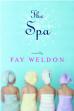
THE SPA

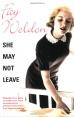
SHE MAY NOT LEAVE

MANTRAPPED

AUTO DA FAY: A Memoir

THE BULGARI CONNECTION

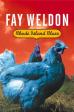
RHODE ISLAND BLUES

BIG GIRLS DON'T CRY

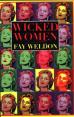
WICKED WOMEN

WORST FEARS

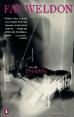
TROUBLE

Fay Weldon

BIO


Fay Weldon was born in Worcester, England in 1933. Her father was a doctor and her mother was a writer of commercial fiction under the pen name "Pearl Bellairs." Her parents divorced when she was five, after which her family moved to New Zealand. She lived with her mother, sister and grandmother until she started college and, as a result, grew up believing "the world was peopled by females." She returned to England with her mother and studied economics and psychology at the University of St Andrews in Scotland. Her actual christened name was "Franklin Birkinshaw." She married Roy Weldon in 1962 and had three more sons in addition to a son fathered previously. Her first novel, THE FAT WOMAN’S JOKE, was published in 1967, but by then she had already written some fifty plays for radio, stage, or television. For the next 30 years she built a wonderfully successful career, publishing over 20 novels, collections of short stories, television movies, newspaper and magazine articles and becoming a well-known face and voice on the BBC. She and Ron divided their time between bucolic splendor in Somerset and a flat in London. Eventually they did divorce in 1994. Fay subsequently married Nick Fox, a poet, and her writing and career continue to flourish. They live in Hamptead, London.

Back to top.   


ARTICLE


For over thirty years, Fay Weldon has been chronicling the adventures of women --- most of them damaged by men in some way --- with spunk and style.  Weldon's characters don't give in, they fight back with spectacular schemes that leave their would-be oppressors sputtering.

Who can forget Ruth, the heroine of LIFE AND LOVES OF A SHE DEVIL, wreaking havoc on the lives of her ex-husband and his new wife?  Or the amazing Alexandra Ludd, who discovers her marriage was a sham and sets out to right some serious wrongs in WORST FEARS?  And in TROUBLE, when Spicer says to his wife, "The important thing for you, Annette, is not to think too much.  Just accept," sparks fly.

Faye Weldon grew up in New Zealand with her mother, sister, and grandmother.  She has said that she "grew up believing the world was peopled by females."  Perhaps it was this experience that gives her such insight into the war between the sexes.
  
In addition to writing twenty novels, Weldon is also the author of a number of short story collections.  Her most recent collection, WICKED WOMEN, is one of her best.  Separate sections entitled "Tales of Wicked Women," "Tales of Wicked Men," and "Tales of Wicked Children," chronicle the ups and downs of modern family life.
  
Her latest novel, BIG GIRLS DON'T CRY, is her best yet.  Weldon follows the lives of four women from 1971 to the present as they build a feminist publishing house that links them through the years.  But, it doesn't matter which novel you decide to read first, you won't be disappointed with any of them.  Weldon's writing is always wicked, wry, and, above all, laced with wit.

   --- Judith Handschuh

Back to top.


PAST INTERVIEW

December 27, 2000

To call Fay Weldon a "prolific" author would be an understatement --- her latest, RHODE ISLAND BLUES, is her 36th book. This story about a British film editor who comes to the States to care for her grandmother takes place in Rhode Island, a departure for English born Weldon. Join Bookreporter.com's Jana Siciliano as she delves into both author and book in this interview.

TBR: Your new book, RHODE ISLAND BLUES, incorporates a lot of different serious sociopolitical issues within the story. Did you find it difficult to organize them into the novel?

FW:
You must understand that I write first and think later. If I address sociopolitical issues in the novel it's inadvertently, and because they arise as I write, and since that's where my preoccupations do tend to lie, in they go. All novels have a different starting point: in this case it's the opening few lines, which reflect a conversation I had with my own mother, now age 93. The novel is "about" how old you have to be before you can speak or perceive or indeed face the truth. Being older, Felicity is better at it than Sophia. I set up Felicity and Sophia and a transatlantic phone call, and then proceeded from there. I knew Felicity was going to fall in love with a gambler and be in a nursing home where this relationship --- indeed any --- would be disapproved of --- but no more detail beyond that, not even Sophia's job.

TBR: Rhode Island is an interesting choice for location of your protagonist's adventures. What is it about Rhode Island that seems eminently American to you?

FW: [I chose] Rhode Island because I have friends who live there and the landscape is so beautiful and I had been to Foxwoods --- how wonderful to live in that Disneyesque hotel, I thought, and write all day and gamble all night. And Connecticut looks down its nose at hedonistic Rhode Island --- the "Better Dead Than Red State." Felicity hovers between the two.

TBR: What is it about your character Sophia, the granddaughter of Felicity, that you most identify with? Do you find that you always identify with your main characters or are they really just an amalgamation of other things from your imagination, not your own experience?

FW: Part of me is Sophia --- of course, the part that deals with fiction and finds it an escape from life. I do mine on the page, she does hers on film. I feel closer to Sophia than I do Felicity, though I'm nearer to Felicity in age. But I'd never dig up Felicity's past, as Sophia rashly did --- though I'd always rashly run off with the gambler, as Felicity did.

It's not that I, the writer, 'identify' --- it's more that you search your own self and find there pretty much all the women in the world, warts and all. It's hard to write fiction and retain a good opinion of yourself. Fictional characters are less complex than real ones --- which is why they end up recognizable from one page to another. I'm sure in real life we don't --- put us in another context and no-one remembers who we are. (See an earlier novel of mine called SPLITTING, about a multiple personality. In the US version if you take away the extra personalities, added trauma by trauma, you end up with a whole, healthy, and forthright personality. In the UK version, if you take them away, you are left with a wraith, next to nothing. I think the latter is more accurate. We are alas the sum of our traumas.)

TBR: In THE LIVES AND LOVES OF A SHE-DEVIL, your most commercially famous work, you deal with the way that women hold themselves up to the mirror of society --- what do you think is the most damaging thing that happens in women's lives as they are growing up?

FW: Too fat to be acceptable, wrong colour, wrong legs --- these are the obvious ones. But these days I think it's young men who get more damaged by the mirror society holds up to them than women --- too much testosterone, too hairy, too obstreperous, too unfeeling and unknowing. In other words, not female. (Men are the odd ones out. We'll see what happens under Bush, but I don't think anyone can put the clock back and re-masculinize society. We are now, both sides of the Atlantic, caring, sharing, feeling societies. The new computer generation may call themselves by traditional men's names, but is more nerd than male.)

TBR: You are a prolific essayist and reviewer yourself. Do you read books that you have to review differently than those for pleasure? And do you find that that helps you grow as a writer yourself, looking at the work of your contemporaries?

FW: Alas, it's mostly books of the past that help me "grow," rather than books by contemporary writers. If only because in reading them you remember how rich and varied vocabulary used to be and notice how limited it has become today. Whatever 'grow' may mean. I think one changes, and possibly improves, by perceiving one's own mistakes and by reading one's own bad reviews, with which I too often agree. But it's not so much growing as moving on to other subjects which seem of interest, and always biting off to the very limits what you can just about chew. I read with great pleasure, all kinds of books --- literary fiction in the bath, thrillers on trains, science books for prizes over meals, and I don't think I read any differently if I know I'm going to have to write about it when I've finished. I turn down corners if I'm reviewing, but that's all.

TBR: You recently contributed what was referred to as a "Canon, Jr." to a magazine, citing your favorite books from childhood. Could you share some of the books that were the most influential in shaping you as a writer?

FW: It is an unconscious process, so I can hardly tell, but I was a voracious reader: Hans Christian Anderson, Tolkein, the Arthur Mee Fairy Books, the entire contents of the children's library in Christchurch, New Zealand: Growing up, Evelyn Waugh, Upton Sinclair, Thomas Wolf, Tolstoy, Graham Greene, Aldous Huxley, Shaw,
Wells.

TBR: What is your writing schedule like? How do you put together a novel?

FW: The writing schedule is uneven and uneasy. I meet deadlines and am always in a state of guilt. I used to write by hand but last year decided it was absurd; and anyway, readers have become accustomed to the very different, more leisurely, stretched out, less complex style which emerges from a computer. Mind you, computers, through the very ease of the writer's own editing process, tend to favour the explicit rather than the implicit. The temptation is always to make things too clear, as you amend and improve, so that only the reader's reason, not imagination, is involved. On the handwritten page, as you cross out and rewrite, it can become evident that the first thing you said was simplest and best --- on the computer you have already lost the evidence! (It makes me tired even to think of it.)

TBR: You write for so many publications --- do you find yourself adopting different voices for each one, or do you only pitch things that you can write in your own "journalism" voice?

FW: Yes, I do pitch things differently. I fear it's because I started out in advertising, with the purchaser's socioeconomic profile before me on the desk. I write the novel I want to read, because no one else has written it, but the article I think readers will understand. This seems no more than my paid duty.

TBR: Is there any subject you would like to tackle in your fiction but haven't quite figured out how yet?

FW: No.

TBR: How do you battle the twin evils of self-criticism and self-editing while you are working on a new book?

FW: By self-editing do you mean self-censorship? Or redrafting? Redrafting is essential but you have to know where to stop. (See above.)  If self-censorship, then it's understandable that you want to be liked by your friends, it's just the results turn out to be rather dull. This seems the problem with the beautifully crafted, elegant, politically and emotionally correct novels which pour out of the creative writing classes: each thought and phrase has been filtered through too many like minds to have any excitement or wrong-headedness left. Dale Carnegie had it wrong. You have to be prepared to lose friends if you mean to influence people. You also have to be brave. I told my family a long time ago they were never to read anything I write. Some do, some don't: but at least we don't have to talk about it.

TBR: What was your experience like with the outrageously successful British miniseries and the film based on SHE-DEVIL?

FW: The TV version of LIFE AND LOVES OF A SHE-DEVIL was fine. The film didn't "work" --- but then sometimes these things don't, though everyone does their best. It all seems to me to be prewritten in the stars, so it's no use getting agitated either way.

TBR: Which of your books would you most like to see adapted at this time?

FW: WORST FEARS would make a really good, smart, witty, painful film. RHODE ISLAND BLUES offers triumphant parts.

TBR: What advice would you give to aspiring writers?

FW: A) If you get to Chapter 3 and are stuck, it's not writer's block. It's just that you've finished. Give yourself enough material to resolve in your first page, paragraph or better still, sentence, and it will take you three hundred odd pages easily to work the thing out.

      B) Don't show work in progress to anyone. What do they know? Go to a writers group, by all means, read out snatches of this and that, and learn, but keep the real stuff secret. And spouses and lovers and friends are worst of all --- they have to say something because you ask them, but just because you love them doesn't make them right. And anyway, they want your full attention --- they don't want you to be a writer and tell tales. The only person whose opinion matters is the publisher's, 'good' or 'bad' is irrelevant until a book is in the shops. And then it's too late. So get it as good as you can, everything finished and tied up to your total satisfaction, in a state in which you can defend every sentence, every word, before you hand it in. Trust your own judgment, no one else's.

TBR: Any hints on what your next book is about?

FW: The next book is an autobiography. It makes one very self-centered. And it's not even as if ongoing life goes on hold. Complain, complain, complain!

© Copyright 1996-2010, Bookreporter.com. All rights reserved.

Back to top.