IndieBound Independent Bookstores BRC Facebook Fan Page
Bookreporter.com
Click Here For Librarians Submitting a Book Become a Reviewer FAQ Contact Us About Us
Home Reviews Features Authors Quote Books Into Movies Book Clubs Awards Coming Soon
Search Contests WOM Bestsellers New in Paperback Newsletter Bibliographies Blog

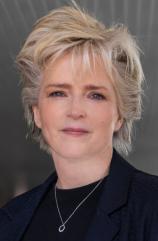
Karin Slaughter

BIO

Karin Slaughter is The New York Times bestselling author of eight novels, including BEYOND REACH and A FAINT COLD FEAR, which was named an International Book of the Month selection; she contributed to and edited LIKE A CHARM. She is a native of Georgia, where she currently lives and is working on her next novel.

Back to top


INTERVIEW

July 17, 2009

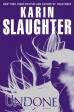
Karin Slaughter's latest novel, UNDONE, features characters from both her Grant County and Will Trent/Atlanta series who come together to solve a grisly murder. In this interview with Bookreporter.com's Joe Hartlaub, Slaughter describes the hardest aspect of this "cross-pollination" and examines the complex relationships shared by the main characters. She also discusses the shocking statistics she uncovered while researching crimes committed against women in the US, reveals her ultimate goal in writing crime fiction, and shares details about her next book, tentatively titled BROKEN.

Bookreporter.com: UNDONE, your latest novel, is noteworthy for a number of reasons, not the least of which is that it brings together Dr. Sara Linton from your Grant County series with GBI agents Will Trent and Faith Mitchell from TRIPTYCH and FRACTURED. Your Grant County series had been going for a while when you introduced Trent and Mitchell. Have you been planning to cross-pollinate the two series since you created Trent and Mitchell, or was this an idea that came to you relatively recently?

Karin Slaughter: I knew when I was writing INDELIBLE, my fourth Grant County novel, that something big was coming --- a change that would completely shake up the series. At that point, I was thinking about the plot of TRIPTYCH, my first stand-alone. I was trying to get inside Will Trent’s head and figure out what makes him tick, and it occurred to me that I could have him show up in INDELIBLE, but I wasn’t quite ready to put him in that world. Instead, I let his boss, Amanda Wagner, show up. It’s a link that helped with the eventual cross-pollination, because Amanda knowing Sara --- and Sara’s story --- legitimizes her in Faith and Will’s eyes when Amanda sees Sara in UNDONE. So, I’ve known for about four years that I was going to bring both series together. Figuring out how was the hard part. (And of course everything I thought would happen four years ago is not going to happen now!)

BRC: In the Prologue, an older couple is driving home from a Sunday visit with their son, daughter-in-law and grandchildren before taking a wrenching right turn that will affect the entire book. One can almost smell the vinyl seating in the car in the beginning; by the end, one can almost see the blood. At what point did you have the Prologue exactly as you wanted it? Did you begin your writing with the Prologue, or was that done later?

KS:
First, thank you --- I am very proud of that prologue! I always write chronologically, from first page to last. I can’t go back and forth like some writers do, though I commend them for their ability. With this particular passage, I had given a lot of thought to how the scene would work. Most of my writing happens in my head first, so that by the time I sit down, the nuts-and-bolts writing process goes fairly quickly. I had thought about Judith, the narrator of the prologue, so much that by the time I sat down to write it, everything was very clear in my head. I could smell the vinyl, too.

BRC: Near the beginning of UNDONE you mention a letter that Dr. Linton receives but does not open. The letter is like a quietly ticking time bomb throughout the book; it does not disturb or interrupt the storyline, yet it sits quietly in Dr. Linton’s pocket, or on the mantel, waiting to be opened and read and its contents revealed. I thought that this was a great secondary plot device. Do you have any plans for Lena Adams to come back into Dr. Linton’s life? Or will you be doing something else with Adams in the future?

KS:
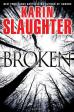
I have lots of plans for Lena in future books. Bringing both women into Atlanta and Will Trent’s world at the same time seemed too coincidental, so I used the letter as a reminder to long-time readers that Lena was still there, and what’s more, that there was still some unresolved anger between the two. The story I am working on now, BROKEN, has Lena in it. She’s a great character, and I think it’s wonderful that some of my readers want to strangle her at times. Lena can be polarizing. She can make some really bad choices. What I hope people have noticed is that she’s getting better. BROKEN is a realization of the emotional journey I planned for Lena from BLINDSIGHTED on. She’s not as willful and angry as she was before. She’s older. She’s trying to build a life. Poor thing --- it won’t be easy.

BRC: One of the key elements of UNDONE concerns body image. You describe a couple of body advocacy websites that had some surprising points of view. Do these types of sites and/or chat rooms actually exist? And did you visit and/or participate in any of them during the course of your research?

KS:
Unfortunately, they do exist. I never participated in any of the sites or discussions because I don’t feel that’s my place. But let’s be honest here: there aren’t many women who are perfectly happy with their appearance. I know that I can pick myself apart with the best of them. I remember watching an interview with Nicole Kidman once, and she was talking about how awkward and gangly certain parts of her body are, and I thought, “Crap, if she can’t be happy, we’re all screwed.” I like to talk about social issues in my books, and body image was one of the themes I was obsessed with while I was writing. Women tend to be our own worst enemies. Girls aren’t taught to get our anger out like boys are --- at least my generation wasn’t. I was in high school by the time Title IX came along, and I never played team sports or learned to get my aggression out physically. (Except for the occasional slap-fight with my older sisters.)

BRC: One of my favorite moments in your book is the way you so exquisitely slice into and out of the layers of relationships, be they friends, lovers, and yes, enemies. You pick up on nuances that are quite real, yet that people don’t normally focus upon until they are brought to their attention. I was particularly impressed with your subtle comparisons of the off-and-on relationship between Trent and Angie, his estranged wife, who share a different kind of passion and special kind of loathing, and Trent and Mitchell, who are not romantically involved and often snipe at each other, but who are in many ways closer to each other than to anyone else. The possibilities for relationships of all types exist among your core characters. Do you have the relationships among the primary characters in your GBI and Grant County novels planned out in advance for future books?

KS:
I love Will and Faith’s relationship. Faith is a woman who has been a mother for the majority of her life, and she doesn’t know how to deal with Will other than to mother him. For Will’s part, he’s never had a mother, so he doesn’t quite know how to behave with Faith, other than to be irritated. I think that the difference between Will’s relationship with Angie and his relationship with Faith is that Angie knows everything about him. This is also what keeps them from being passionately in love with each other. It’s finding out new things about someone that makes them interesting, and while I think both Angie and Will have new things they could share with each other, the point is that they don’t want to. Then throw Sara into the mix, and Lena in BROKEN...sometimes I feel sorry for Will. He’s surrounded by strong women who try to push him around all the time. If you pay close attention, they seldom succeed, but Will manages to make them think they are. Quite a trick!

BRC: One of the most riveting aspects of UNDONE is the grim description of what was done to Anna, the abduction victim whose discovery begins the entire course of events in the book. The description of what was inflicted upon her was almost excruciating in its revelation, though you never descended to the gratuitous. I am going to assume that the things described here were not entirely the product of your own imagination. If I am correct, from what sources of your research were they acquired?

KS: I’m never one to rip ideas from the headlines, but I know of a case where certain elements of the torture Anna endured actually occurred. The revelation during the autopsy --- that was real. And horrifying. I remember reading about it and thinking, “My God, what this man must think of women.” It was on my mind when I was thinking about my bad guy. I am not one to write books where the reason someone does something horrible is that they’re evil, or a bad person. I want them to have motivations that are understood. I used the one horrifying thing I am trying not to give away to people who haven’t read the book to convey his hatred. While I was doing research for UNDONE, I was shocked to learn that, according to the FBI’s crime statistics, 250,000 women a year are raped in America. This is just what’s reported, and only includes women over the age of 18. Can you imagine what the real number must be? We have a real epidemic of violence against women in our country that is not being addressed because people are uncomfortable talking about one of the most horrible acts of hatred: rape.

BRC: Another striking element of your work is your protagonists, who are so true to life. In your afterword to UNDONE, you comment in relation to some liberties you take with roads and landmarks, that “(I)t’s fiction, y’all.” However, your characters are extremely real, for their strengths but primarily for their weaknesses. All of them in some way seem to have deep flaws, even as they struggle --- successfully or otherwise --- to overcome them. Does imbibing your characters with such realism come naturally, or is this an aspect of your writing that requires equal parts inspiration and perspiration?

KS: I think it’s natural for me. Growing up in the South, I learned at my granny’s knee to identify people not by their strengths, but by their weaknesses. The drinker. The man who was cheating on his wife. The mother who didn’t take care of her kids. These were the staples of every good story --- and of course they were embellished. But, as a reader, I’ve never been interested in perfect people. I absolutely love reading series books, but some of them get to the point where the main characters are so perfect that you wonder why you’re still reading. I think it’s much more interesting when people make mistakes. Sara, for instance --- as smart as she is, she made a really big mistake in A FAINT COLD FEAR. She’s not sure if the mistake ended up costing someone their life, and that’s something she has to live with. I think mistakes are what make you interesting. You can say you’re a good person until you’re blue in the face, but the proof comes in your actions when something bad happens.

BRC: You demonstrated in BEYOND REACH that you are not afraid to remove major characters from your storyline. How do you decide who stays and who goes? And do you have any plans to remove anyone in the future?

KS:
That was one of the hardest things I’ve ever done. I’m not much of a crier, but I bawled like a baby when I was working on BEYOND REACH. The decision was very organic for me and happened when I was working on INDELIBLE, two books before BEYOND REACH. Once I’d decided what I was going to do, I had two more books to get through, so it opened up a lot of possibilities. I don’t currently have plans to do anything like that again, though. It was too hard on me!

BRC: I am of the opinion that our greatest authors, contemporary and otherwise, have come primarily from the South. There is a tradition of storytelling that exists in the South that seems unmatched in any other part of the United States and translates well to the written page. What, as a native of the Deep South, do you believe lies within the collective psyche of the American South that lends itself so well to storytelling and writing?

KS: Well, I certainly agree with you, and that’s not just because I’m southern. My favorite authors are all from the South. When Walker Percy was asked a variation on your question, he answered, “Because we’ve experienced the fall.” He of course meant the South losing the Civil War. I don’t want to spread the idiotic stereotype that Southerners haven’t gotten past the war, but I think it’s something that is in our collective memory. The socio-economic impact is certainly still there. The poorest states in the Union are Southern. The worst schools, the lowest paying jobs, the most toxic factories, are all in the South and spread over into Texas (which is not really the South, but it’s close enough to feel the negative effects). I can’t speak to the Northern experience, but I know from my own youth that being close to hardship gives you a certain view on life, and I think that comes out in Southern stories. We’ve historically been a more agrarian society, too. Public schools did not exist in Atlanta until the turn of the last century. Before that, the wealthy sent their children abroad to be educated and poor folk told their kids stories as they sat around the fire at the end of a hard day working the fields. It’s this sense of oral tradition that makes the huge difference. I grew up hearing stories from my dad and grandfather, and I have no doubt that is why I turned into a storyteller.

BRC: What has drawn you to writing thrillers?

KS: I’ve always loved reading thrillers and crime fiction, but I have a broader definition of what constitutes a crime novel than most folks. TO KILL A MOCKINGBIRD, THE GREAT GATSBY, A TALE OF TWO CITIES --- these are all novels about crimes. When I started writing my own stories, I mirrored the themes in my favorite books, so it seemed a natural extension to have crimes in my novels. The author who had the most influence on me was Flannery O’Connor. I remember reading one of her stories when I was 12 or 13. It was a revelation that a southern woman could talk about violence in such a frank way and get away with it. Of course, when I re-read her as an adult I realized that the violence was just a fulcrum she used to pry the scab off the human condition. I think that’s what good crime fiction should always do, and I try to do the same in my own work. Human beings have been writing about crime and violence for a long time. I’m not going to reinvent the wheel. The fresh perspective I can bring is how folks react to crime; how it changes their lives and the way they look at the world. That’s always the goal of my stories --- not the crime, but what the crime leaves behind.

BRC: You’ve been writing for over a decade. Have your work practices changed during that time? How do you schedule time to write? Do you find it easy or difficult to maintain the discipline?

KS:
Good Lord, has it been that long?! I’m sorry to say that my work habits haven’t changed much. Travel is a big issue for me because I tour around the world most of the year, so I have to be very careful about who I say yes to and where I go, because the only reason I do any of it is so I can write for a living. I think it’s very easy to lose sight of your goals when you tour too much. You can start believing the hype, which is never good. I keep a writing calendar and block out time for just writing. I have a cabin in the Blue Ridge Mountains of Georgia and I go up there for a week or two and write all day and all night until my fingers ache. Then, I come home and whine about how tired I am, then I go back up a few weeks later. It’s not a good way to write, but it works for me.

BRC: What have you read in the past six months that you would recommend to our readers?

KS: I just finished the new Anne Tyler that’s coming out in the fall. I love her stories because they seem really simple, but they’re actually complicated in the best way. I loved Lee Child’s GONE TOMORROW --- I think it’s his best book yet. Kathryn Stockett’s THE HELP reminded me of my childhood in a lot of ways. Very bittersweet. I’ve bought about 10 copies of the book to give to friends and they have all loved it. The Columbine book was very interesting to me. Like everyone who watched the tragedy unfold on television, I thought I knew what happened. I was wrong. The scariest part was the way the press bent the facts to tell their story. I can’t watch the news anymore without wondering what truth they’re subverting to make the story more sensational. I am very worried that we no longer can trust the media.

BRC: Looking back on how you initially broke into publishing, is there anything that you wish you had done differently? Is there anything that you did that didn’t seem wise at the time, but that in hindsight you are pleased that you did?

KS:
Everything I did back then --- good or bad --- got me to where I am now. I’d be scared to change any of it because it might cause something crazy to happen in the present. It’s good to make mistakes sometimes, because that’s the only way you learn. But, if we had a wish list, I would be taller and thinner.

BRC: Your biographical material at the end of the book indicates that you are working on your next novel. Can you tell us what we can expect?

KS: BROKEN is the title I’ve come up with --- and will hopefully get to keep! It opens on a rainy morning in Grant County. Lena Adams is watching a body being pulled out of the lake. Meanwhile, Sara is driving down from Atlanta to be with her family for Thanksgiving. It’s her first time back in town in three years. Of course, something really awful happens, and the GBI gets called in, and you’ll have to wait until next summer to find out what happens next!


Click here now to buy this book from Amazon.

Back to top


INTERVIEW

August 26, 2005

Bookreporter.com's Suspense/Thriller Author Spotlight Team (Carol Fitzgerald, Joe Hartlaub and Wiley Saichek) interviewed Karin Slaughter, author of FAITHLESS. Slaughter discusses why she decided to incorporate a number of controversial topics into this fifth installment of her Grant County series, and the importance of maintaining a balance between reality and the sensationalism of violence in her writing. She also reveals her affinity for secondary characters, talks about the significance of a book's title, and explains the international appeal of her novels.

Bookreporter.com: FAITHLESS is noteworthy for many reasons, not the least of which is the ongoing rehabilitation of the relationship between Sara Linton and Jeffrey Tolliver. When you were first developing your series, had you planned on them eventually taking some tentative steps toward reconciliation?

Karin Slaughter: I always knew they would reconcile, so it's a bit shocking when folks ask if it will ever happen. To me, the interesting part is seeing how they're going to work now as a couple. In the opening of the next Grant County book, they're living together. This is when the really hard stuff starts happening.

BRC: FAITHLESS, the fifth and latest of your Grant County series, deals with a number of controversial topics, including fundamentalist religion, abortion, and domestic abuse. We were extremely impressed with the evenhandedness with which you approached these topics and the manner in which your primary characters approached these issues. What was the impetus behind constructing the plot of FAITHLESS around these topics?

KS: Crime fiction has always been at the forefront of social issues, whether it's TO KILL A MOCKINGBIRD or THE LOVELY BONES. The challenge for me was to not paint these issues in black and white. It would be very easy to say "Religion is good!" or "Religion is bad!" but that's never how it is in real life. You have nuts and extremists everywhere, and then you have the average folks in between. Those are the people I'm interested in --- the average folks and what compels them. I want to know about the gray.

BRC: One of the more subtle but very interesting elements of FAITHLESS are the budgetary problems that Jeffery Tolliver deals with while attempting to enforce the law in Grant County. While the CSI labs and their county counterparts on television seem to have a blank check to purchase equipment, Tolliver's problems appear to be more consistent with the real world, wherein he has to rely more upon dogged, solid police work than technological wonders. What made you choose to highlight this in FAITHLESS?

KS: Money has always been an issue in law enforcement because as a society, we seem much more invested in punishment than in prevention. That being said, I find it more interesting as a reader when an actual person solves a crime as opposed to a computer. I like to know what the characters are thinking so when they puzzle it out, it makes sense.

BRC: Lena is another Grant County character we enjoy reading about. One gets the sense that personally and professionally she needs a lot of work, yet she has the potential for improvement. Do you have any plans or intent to feature her more prominently in a future work?

KS: Lena always gets more "page time" than I think she will. She's a very volatile character, very polarizing at times, and she always keeps me guessing. In SKIN PRIVILEGE, the next Grant County book, she goes back to Reese with her uncle Hank and we get to see her in a very different way. She has evolved so much since BLINDSIGHTED, and I like the fact that she's not perfect. Sometimes you root for her and sometimes you want to slap her upside the head. That's fun for me.

BRC: We love the subplots --- and the continuation of plots from previous books --- involving the characters in FAITHLESS, such as Jeffrey's health scare and Lena's personal life. When you begin a new novel do you already have an idea of what you will continue from previous books, or do these stories unfold as you write?

KS: Generally, I plan the character relationships out three books at a time. It's important for me to know where they're going, especially Lena. There have been some clues in the earlier books that will reward people who've been reading from the beginning. I'm very careful with each book to make sure it stands alone as well, because I want folks to be able to pick up any of the books and get a complete story without having to know what came before. I actually think FAITHLESS is a good one to start with.

BRC: You have said that you believe secondary characters "add to the fabric of the story." We agree! To date, which of your secondary characters is your personal favorite, and why?

KS: I have a soft spot for Bill Brock, who runs the funeral home. He's very goofy and he lives with his mama and he has a crush on Sara, yet he seems to still have a very happy outlook on life. Also, old man Burgess at the cleaners is named after a friend of mine and I have great fun giving him new age-related ailments with each story.

BRC: You have mentioned in interviews and on your website the importance of being realistic without moving into sensationalism when there is violence in your novels. How difficult is it to achieve this balance?

KS: The balance is getting easier as I write more books. I really do think this ability is like a muscle that you can train and make stronger. I have the luxury of Sara guiding the moral compass, because she's an incredibly compassionate and honest person. I want to honor that, and I want to be responsible to myself and what I set out to do in the series, which is to use the violence as a springboard to talk about issues that are important to women: child abuse, domestic violence, poverty, etc.

BRC: You have had a great deal of international success with your Grant County series (congratulations on being #1 in London and Ireland!), even though it is set in a rural southern area as opposed to a more panoramic, cosmopolitan backdrop. What elements of your Grant County novels do you feel have the most appeal to the world audience?

KS: Something I've found as I've toured throughout Europe is that small-town life is universal. You'll find the same cast of characters (the busybody, the town slut, the bad seeds) everywhere, whether it's in Holland, Germany, France or good old Grant County, Georgia. I'd also like to add that the world has been fascinated with the American south for a long time. There is a reason that UNCLE TOM'S CABIN and GONE WITH THE WIND are two of the most translated books in the world.

BRC: You have stated that you need to know the title of your work-in-progress before you can begin actually writing the book. How long does it take for you to think of a title? Have you ever had a title change after the book was acquired, either by your choice or the publisher's choice?

KS: I've never had a title change, which is good, because the title does define the story for me and I feel very close to it from a creative standpoint. I tend to think of one-word titles that help convey the purpose of the book. KISSCUT is a good example, because it really plays out in the story. Usually, I'll think of a scene to open the book and then the title will come. Then a week later, I'm at the computer working on it. I consider the title a fulcrum that helps pry the story from my brain.

BRC: You began writing stories as a child. Do you recall what types of stories you wrote and read at that age? Did you see writing as a hobby, or did you know this was the work you wanted to do at that age? What advice do you have for our readers who may have children/younger family members who are aspiring writers?

KS: I never thought I'd be able to make a living from writing, so this has truly been a gift to me. The best advice I can give anyone who wants to write is that they need to read as much and as often as they can --- and not just the genre in which they wish to write. When I was a kid, I read everything, from Encyclopedia Brown to V.C. Andrews to John Jakes to...well, anything they'd let me check out of the library.

BRC: Your next planned novel, TRIPTYCH, is a stand-alone work, but we understand that you then plan to return to Grant County. Do you have several future Grant County novels already outlined, or do you wait until you are actually ready to begin a new work before you plot it out?

KS: I mentioned SKIN PRIVILEGE earlier --- that's what I'll start in January of next year. After that will come GENESIS, then a novel I've tentatively titled BROKEN. There might be one in between those --- it just depends on which story interests me the most. The fun thing about TRIPTYCH is you'll see someone from Grant County in that story, and you'll also see someone from TRIPTYCH join Sara and the gang.

BRC: Are you willing to share a little bit about TRIPTYCH (a June 2006 release)?

KS: I can't say much because it's a very twisty-turny sort of story and I would hate to give away too much. I can talk about the setting, which is very Urban and gritty-Atlanta, my hometown. The characters are a bit rougher in some ways, but I think that makes them interesting. I wanted to make sure I didn't rip off anyone from Grant County (I hate when you read a stand-alone and it's really the series characters with new names and better haircuts), so you'll find that the people you meet in Triptych are very different from anyone you've seen me write about before.

Click here now to buy this book from Amazon.
Click here to get the audiobook from Audible.com.

Back to top


PAST INTERVIEW

September 19, 2003

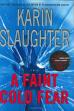
Karin Slaughter has written two thrillers based on the adventures of pediatrician and part-time medical examiner Sara Linton. A FAINT COLD FEAR is the third and latest installment in the series, which is set in Grant County, Georgia. In this interview conducted by Bookreporter.com reviewer Bethanne Kelly Patrick, Slaughter talks about the characters in her novels and the relationships among them, her writing routine, and news about a exciting new work of crime fiction due out in May 2004.

BRC: Your fictional terrain, Grant County, is based on your real-life turf in Georgia. What are the challenges you've faced in respecting your friends and neighbors while creating this novel?

KS: I think that when you're talking about a small town, be it in the American South or Southern Czechoslovakia, you're going to have roughly the same cast of background characters. There's always going to be the town slut, the gossip, the bad families and the good. So, I felt pretty comfortable putting these people into my stories. What you read in my books is stuff I noticed when I was a kid. On the weekends, my dad would take me with him to the hardware store and I'd sit around and listen to the old guys talk. Those old guys are at every hardware store in America. What I hope to bring to these folks is an appreciation for their lives. I also want to honor the South; that's probably the most important thing for me. I don't know when it became unfashionable to be from the South, but I'm extremely proud to be from the same state that gave the world Margaret Mitchell and Flannery O'Connor.

BRC: Lena is a complex and complicated character; you've said that you already know what happens to her. Without revealing too much about her or about the future of Grant County (your next book is set in the past), can you tell us if what happens to her is a result of her own past, her actions, a combination thereof, or something completely different? Can you talk a little about the ways in which Lena has defied you, as you mentioned in the interview with Laura Lippman posted on your website?

KS: Lena is a wily character. As a writer, I like to think in my head that I have control of my stories and where they're going, but she's always going to mess things up. With KISSCUT, I learned to listen to her and let her speak. I know that sounds schizophrenic, but I think we all hear different sorts of things in our head, and for me, listening to the Lena voice has become an important part of writing. I knew her general story before I finished BLINDSIGHTED, and I knew how she would struggle to overcome losing her sister and recovering from the other things that happened in BLINDSIGHTED, but with KISSCUT, I was still surprised by how much of the narrative she got. I think she adds a layer to that story, which is about abuse, and shows the reader what happens to these kids when they grow up.

I wish I could say that Lena is an exception to women who have been abused, but she is more the rule. This is not to say that all women who experience an attack are going to turn into Lena, but the statistic Sara talks about in A FAINT COLD FEAR is true: over eighty percent of all women who are assaulted experience some other form of assault in their lives, be it sexual, verbal or physical abuse. Lena is angry, and she is internalizing that. In A FAINT COLD FEAR, she starts to push some of that anger to the surface, and what she ends up doing is hurting herself. She is not always the character you like or root for --- some people get really angry with her for the choices she makes --- but I never want anyone to give up on her. She's a survivor, but you don't recover from something like that overnight.

I'd also like to add that she does appear in INDELIBLE, the next novel in the series. Most of the story does take place in the past, but she gets the present-day narration. I think people are going to be surprised what she's been up to since we last saw her.

BRC: In this same interview you described writing a book as a short but passionate love affair. At what stage is the affair with the book you're currently writing? Do you work on more than one book at the same time?

KS: Oh, yeah. I'm in the throes of passion right now. I just finished the main part of the story and I'm going back and touching up in places before I send it to my editor. I really am pleased with INDELIBLE. It tells us a lot about Sara and Jeffrey, and why Sara has had such a hard time getting over his betrayal.

As for the second part of your question, I am not a multi-tasker. Chewing gum and walking is a challenge. I like to do one thing at a time, do it as well as I can, then move on. If I leave something half-finished, then I'm incapable of functioning in the real world. I'll miss exits when I'm driving, order too many doughnuts...my life just goes to hell.

BRC: Again and again the capsule reviews refer to how graphic your books are --- "not for the faint of heart," "for readers who like their crime fiction on the dark side," etc. Is this a deliberate choice on your part? Or does it flow from the action as you write?

KS: I don't know that my novels are any more graphic than what is out there. Only one person is murdered in each of the first two books, yet people have this notion of carnage. Jeffrey Deaver's THE BONE COLLECTOR (which I loved) had a woman whose skin was burned off by a steam pipe and I don't remember anyone saying that was particularly violent. I think I get that rap in part because I am a woman, but I will admit that I work hard to keep the details of crimes in there. For me and my work, I feel it is important not to flinch when you write about violence. If those parts are hard to read, then I have done my job. It shouldn't be easy to read about. Especially with KISSCUT, where I was writing about violence against children, I wanted to make sure that no one could read that book and get off on it. I am not here to titillate. I'm here to show the facts, then move on to what happens next. It's never been what people do that interests me so much as WHY.

BRC: In your new book, A FAINT COLD FEAR, sibling relationships, particularly those between Sara and Tessa and between Lena and Sibyl, are very important. What kind of relationships did you/do you have with your own sisters? What intrigues you about siblings, and how do you try to use what intrigues you in your work?

KS: My sister Jatha works in an auto parts department at a Mercury dealership. On the surface, people who meet us think we are absolutely nothing alike. I have a very fair complexion while our grandmother's half-Cherokee roots are extremely evident in her dark hair and olive skin. She is pretty outspoken and I am more quiet. The thing we share is a common upbringing and common values. We have the same work ethic, and most of our conversations center on how startled we both are by the things people do.

I think we show part of ourselves to our families that we would never show another human being. You can't hide your true nature from the people who were there from the beginning. With Sara and Tessa, you see a lighter side of Sara's personality. She is a well-respected doctor, but her family knows she's fairly goofy at times. I would caution people, though, to take with a grain of salt what Lena says about her relationship with Sibyl. You have no way of knowing whether or not she's telling the truth...

BRC: To continue in the same vein, the relationship between Sara and Jeffrey is also very important, perhaps paramount, at least in this new book. And in your next book, INDELIBLE, you'll be describing a time in the past when they were still together. Talk about what they represent, and what kind of people they are (be figurative and literal, as it were).

KS: Jeffrey was a clear response to what I felt was a perplexing trend in crime fiction. I love novels with strong female characters, but I can't stand when the woman's love interest has the spine of a jellyfish. I consider myself fairly strong, and I know that at the end of the day I want someone who challenges me and keeps me interested, not someone who agrees with everything I say. Jeffrey does not always do the right thing with Sara. He does not always anticipate her needs and give her exactly what she wants. That's true of any relationship, and I wanted to show that dichotomy as realistically as possible.

In INDELIBLE, we see the beginning of their relationship and how Sara sometimes puts her own feelings and needs on the back burner for Jeffrey. They are both younger and less experienced, and what we see from them is how their initial attraction blossomed into something larger. I always use them as a counterpoint in my novels, where no matter what horrible thing is happening in the plot you know that they will be there for each other. In INDELIBLE, we get to see how that started and why it means so much to them.

BRC: What is the hardest part of your books for you to write? Violent scenes? Procedural moments? Dialogue? Has this changed over the years?

KS: I don't find one part more difficult than the other. I love writing dialogue, but I also enjoy the research that goes into what you're calling my violent scenes. I guess the challenge is always, "What is the cliché here and how do I avoid it?" When you get right down to it, none of us is telling a new story. There are no new plots. What authors bring to the table is their own perspective. For instance, we could both write a book about a monkey who likes to wear hats, but because we are different people, we would tell a different story. I, for one, would wonder where his cigar is.

BRC: You've said you read a great deal, two or three books a week when you're writing, more when you're not. What do you read for style? For plotting? Etc.

KS: I try very carefully not to pick up anyone's style, which is why when I'm writing I cannot read crime fiction. I know this sounds arrogant, but I have never finished a book and thought, "Wow, I wish I had written that." I know what goes into writing a novel and I would never take that away from anyone.

BRC: When BLINDSIGHTED was first published, it was touted as the first of a three-book series about Grant County. Obviously, that's been extended. . .will you continue to write about Grant County indefinitely, or do you have an endpoint in mind?

KS: You know, I don't know why it was touted as a three-book series. That was never my intention, and when Morrow, my publisher, signed me on they were very keen to make sure I had more. I have plans for another Grant County book called FAITHLESS after this one, and then I will probably write what people call a stand-alone. I want more than anything to honor the characters that I have created, and I never want to get to a point where I'm writing stories because I have to instead of because I want to.

BRC: You're out on tour at the moment, and you've discussed before, there is a pull between your life as a solitary writer and your life as an author who loves to hear from your fans. How's it going? What are the differences between, say, your first tour and this one, now that you're more established?

KS: I think with my first tour I was just terrified that people would throw eggs at me or something. Now, being honest, the travel is so grueling that by the time I get to an event, I just want to talk to the folks who make it all worthwhile. I have met some of the most interesting and energetic people on the road, and we all have this great common bond: we love reading.

BRC: Titles are very important to you, and each of yours has an interesting story behind it. Can you tell us about INDELIBLE, or would that be premature?

KS: It's a little premature right now. I don't want to give too much of the plot away. I can tell you it's about how things in our past never really go away.

BRC: What comes first for you? Setting? A particular murder? Does your title give you your story, or vice versa?

KS: I have to have the title before I can write anything. For me, the title says what the book is about and what the focus of the story will be. Until I get that title, the story makes absolutely no sense to me.

BRC: Can you share anything about LIKE A CHARM: Voices from the New Noir, the crime fiction collection that you are heading the collaboration on? We hear it is due out in May.

KS: Well, first off, I want to say that it's a novel, not a short story collection. I know that sounds hinky, but it really does read like a novel. Basically, I borrowed the idea from one of my favorite books, THE RED PONY. Each story is about the same charm bracelet, and the trick is that by the end of the story, the author has to leave the bracelet somewhere for the next author to find. For instance, Peter Robinson leaves it in a bomb crater in Leeds, and Fidelis Morgan has to have her character find it there and then by the end of the story leave it for the next person. I have been going over some of these stories and I have to say they just blow me away. Laura Lippman, Mark Billingham, John Connolly, Lee Child, Lynda LaPlante --- these are people who know how a story works and they are masters of short fiction.

Click here now to buy this book from Amazon.

© Copyright 1996-2009, Bookreporter.com. All rights reserved.

Back to top.