|
BIO
Daniel Silva is the former executive producer of CNN's Washington-based public affairs programming, including such popular broadcasts as "Crossfire," "The Capital Gang," "Late Edition," "Evans & Novak," and "Inside Politics Weekend."
He began his career in journalism in San Francisco. While pursuing a graduate degree in international relations at San Francisco State University, he was hired by United Press International for a temporary assignment during the Democratic National Convention in 1984. After a week, UPI offered him a job. Silva left graduate school and went to work.
After working in San Francisco for a year, Silva was transferred to UPI's foreign desk in Washington, D.C., where he worked for two years. In 1987, he was named Middle East Correspondent and posted in Cairo.
He traveled extensively in the region and covered the Iran-Iraq war, terrorism and political conflicts. On assignment in the Persian Gulf, he met his wife, Jamie Gangel, National Correspondent for NBC News "Today." The two were married in 1988, and Silva returned to Washington and went to work for CNN.
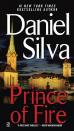
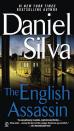
For five years, Silva worked in the newsroom of CNN's Washington Bureau, producing programs such as "The International Hour," "Inside Politics," "The World Today," and "Prime News." In 1993, he moved to the talk show unit and in 1994, began work on THE UNLIKELY SPY, his first novel, which went on to surprise bestsellerdom and critical acclaim. Since then, he has written THE MARK OF THE ASSASSIN (1998), THE MARCHING SEASON (1999), THE KILL ARTIST (2000), THE ENGLISH ASSASSIN (2002), THE CONFESSOR (2003), A DEATH IN VIENNA (2004), PRINCE OF FIRE (2005), THE MESSENGER (2006) and THE SECRET SERVANT (2007).
Silva and wife have twins, Lily and Nicholas, and live in Georgetown in Washington, D.C. Silva left CNN in June of 1997 to concentrate full time on his writing.
Back to top.
AUTHOR TALK
July 27, 2007
Daniel Silva has written 10 espionage thrillers, seven of which feature art restorer
and Israeli intelligence agent Gabriel Allon. In this interview, Silva discusses
the events in his latest novel, THE SECRET SERVANT, that echo real-life occurrences
and sheds light on some of the little-known facts about Islamic terrorism. He
also explains how what he witnessed as a correspondent for United Press International
fueled his novels and shares the advice his fictional protagonist would have given
the President of the United States in the wake of the September 11th attacks.
Question: You had one of last summer’s biggest thrillers with THE MESSENGER,
a story about a Saudi-inspired attack on the Vatican. When you sat down to start
working on the follow-up, did you ask yourself, “How do I top this one?”
Daniel Silva: Because I write and publish a book a year, I generally start
on the next novel before I know how the previous one is going to be received,
so that question really doesn’t enter into my calculus. In all honesty,
the first thing I try to do is forget what I’ve just written. Last year,
when I finished editing THE MESSENGER and getting it ready for publication,
I moved my family to a cattle ranch in the hills of Umbria, where I spent some
time in seclusion, thinking about the kind of book I wanted to write next. The
result was THE SECRET SERVANT.
Q: This is your tenth novel. It’s both deeply provocative and wildly
entertaining. How do you walk that fine line in your work?
DS: I tend to think it comes quite naturally to me. I’ve always felt
that there are two writers living inside me, one with more literary leanings
and another who is unrepentantly commercial. These two engage in an annual struggle
for supremacy, and the result in recent years has been THE MESSENGER, THE CONFESSOR,
and A DEATH IN VIENNA, novels of entertainment that deal with terribly important
topics of today and the past. I like to think of myself as a serious writer
who works in the thriller mode.
Q: THE SECRET SERVANT moves at a blistering clip from beginning to end. One
hates to use clichés when talking to a writer, but this one really is
impossible to put down. Did you consciously try to write a more up-tempo book?
DS: I didn’t, in fact. When I begin a novel, I try to have as few preconceived
notions as possible. I want to bring the characters to life on the page and
then let them lead me by the hand. But there is definitely a ticking clock in
the book, with the life of an extraordinary young woman, and perhaps even the
fate of a nation, hanging in the balance. It means the characters have to make
decisions of great moral significance under conditions of extreme time pressure.
It also means that the novel plunges forward at a breathless pace, particularly
toward the end.
Q: You speak of characters having to make decisions of moral significance under
difficult conditions, and of course that would apply to Gabriel Allon, the hero
of your last seven novels. Tell me about him.
DS: It’s probably accurate to say that no one has been battling Arab
and Islamic terror longer than Gabriel Allon. In 1972 he was a promising art
student at Jerusalem’s prestigious Bezalel Academy of Art, when he was
recruited by Israeli intelligence to hunt down and kill the Palestinian terrorists
responsible for the massacre of Israeli athletes at the Munich Olympics. He’s
worked on and off for Israeli intelligence ever since. He also happens to be
one of the world’s finest restorers of Old Master paintings. As THE SECRET
SERVANT opens, he’s just finished restoring a painting by Giovanni Bellini
for the Vatican. When he returns to his apartment in Jerusalem, he finds Ari
Shamron, Israel’s spymaster and his own mentor, waiting with another assignment.
It’s an assignment that will take him back to Europe, to Amsterdam to
be precise, where an asset of Israeli intelligence has been brutally murdered
by a Muslim immigrant.
Q: The murder scene is hauntingly reminiscent of the killing of the Dutch filmmaker
Theo van Gogh in Amsterdam in November 2004. I assume the echo is intentional?
DS: Of course. In many respects, the death of Theo van Gogh was Europe’s
miniature 9/11. It sent shock waves through the Netherlands and the rest of
Europe. It was a violent wake-up call, as was the rioting that swept France
during the autumn of 2005. Many European countries now contain large Muslim
populations that, for the most part, have not been properly integrated. Many
of the young men in these Muslim communities are unemployed and angry. They’re
fed a steady diet of hatred by their imams and the Internet. They’re trapped
between two worlds, the world of radical Islam on the one hand and the secular,
tolerant West on the other, and all too often they succumb to the siren song
of terrorist recruiters.
Q: You write in the book that “Europe is receding quietly into history.
It’s old and tired, and its young are so pessimistic about the prospects
of the future they refuse to have enough children to ensure their own survival.
They believe in nothing but their thirty-five-hour workweek and their August
vacation.” Are things really that bad?
DS: Those were the rather gloomy observations of a longtime character in the
series named Eli Lavon, but as someone who loves Europe and who has watched
it change dramatically over the last twenty years, I would tend to agree. While
it’s a risk to generalize, I do think that Europe has lost its way a bit;
without question it is facing a looming demographic crisis. In virtually all
the countries of Western Europe, the birthrate of the native population is below
replacement level, while the Muslim population is increasing rapidly. Sometime
in the very near future, Europe will have to confront these facts and make some
difficult decisions about its identity. That process is already under way in
France, Denmark, and Britain. I hope it is a peaceful process. I’m not
at all sure it will be.
Q: One epigraph of THE SECRET SERVANT quotes from the historian Bernard Lewis:
“On present demographic trends, by the end of the twenty-first century
at the latest, Europe will be Muslim.” If that comes to pass, what will
be the consequences for Europe and the United States?
DS: Profound, to put it mildly. I know for a fact that U.S. intelligence agencies
are already thinking about the ramifications of a “Muslim” Europe
for U.S. foreign policy. In the short term, however, the restive Muslim populations
of Europe provide a fertile breeding ground for terrorism, and that’s
the backdrop of THE SECRET SERVANT.
Q: Without giving away too much of the plot: The book deals with a conspiracy
by al-Qaeda and a little-known group of Egyptian extremists to kidnap the daughter
of the American ambassador to London. The goal of this plot is to force the
United States to release an Egyptian cleric jailed in this country on terrorism
charges. It sounds frighteningly plausible.
DS: I was discussing it with a friend who works for the CIA. He nodded and
said, “Well, that’s certainly realistic.” Obviously, it’s
something that I hope never comes to pass.
Q: By now most people know that Osama bin Laden is Saudi, but do they realize
how Egyptian al-Qaeda is?
DS: Many people don’t know that. Egypt is indeed the heartland of Islamic
extremism, and Egyptians are a major component of al-Qaeda. Ayman al-Zawahiri,
the number-two man in the organization and, some would say, the real brains
behind it, is an Egyptian terrorist leader who spent many years trying to bring
down the government of Hosni Mubarak. It’s still one of al-Qaeda’s
ultimate goals, though for now they’re focused on what they call the “far
enemy,” meaning us.
Q: A central theme of the novel is the morality of torture and the practice
known as “extraordinary rendition”: taking known or suspected terrorists
from one country and transferring them in secret to Middle Eastern countries
--- Jordan, Syria, Saudi Arabia, Egypt --- for questioning. Why did you choose
to deal with this in the book?
DS: For me, the rendition program has been one of the most troubling aspects
of U.S. response to the attacks of 9/11 --- and mind you, this is coming from
someone who believes Islamic extremism and terrorism are grave threats to American
security and must be dealt with harshly. But the regimes you mentioned are some
of the most repressive in the world. I believe they’ve helped create and
foster the problem of terrorism by attempting to deflect the anger of their
people outward to America and Israel. Ultimately, they’re part of the
problem, not part of the solution. Borrowing their torture chambers is one of
the big moral lapses of our response to the attacks of 9/11.
Q: There is a wonderful line uttered by the character of Prime Minister Golda
Meir in Steven Spielberg’s film Munich, when she says that every civilization
at one time or another finds it necessary to compromise its values. Wasn’t
the period after 9/11 one of those times for the United States? Weren’t
the president and his men obligated to do everything in their power to prevent
another attack?
DS: Without question, and I think the United States was wholly justified in
enlisting the support and assistance of the Arab security services to scoop
up known or suspected members of al-Qaeda in the days and weeks after 9/11.
These terrorists needed to be taken off the streets and put someplace where
they could do no more harm. But I draw the line morally at transferring someone
to a country for the specific purpose of having him tortured there. We should
be encouraging reform within the Arab world rather than subletting its torture
chambers.
Q. If the president of the United States had asked Gabriel Allon for advice
on September 12, 2001, what would Gabriel have said?
DS: He would have warned the president about the terrible price of climbing
into the sewer with terrorists and fighting them on their terms. He would have
told the president that the fight against terrorism was not only morally just
but also morally imperative. But he would have cautioned the president not to
resort to practices that don’t look terribly flattering with the passage
of time. A few years ago I wrote a book called A DEATH IN VIENNA. It dealt with
one of the more unsavory aspects of the Cold War: the CIA’s use of Nazi
war criminals as paid assets. The novel was really a private plea to policy
makers not to take similar morally questionable steps in the war against terrorism.
Q: THE SECRET SERVANT contains some disturbing descriptions and accounts of
torture as practiced by the Egyptian secret police. Another epigraph cites a
former CIA officer, Robert Baer: “If you send a prisoner to Jordan, you
get a better interrogation. If you send a prisoner, for instance, to Egypt,
you will probably never see him again.” Are the accounts in your book
based on fact?
DS: Unfortunately, they are. I did a considerable amount of research on the
practices of the Egyptian security services, and I heard firsthand accounts
of their work when I was based in Cairo in the 1980s as a correspondent for
United Press International.
Q: That experience must have been very helpful to you when you were working
on this book.
DS: Very much so. I interviewed Islamic militants during that period, men who,
I assume, went on to become members of al-Qaeda. They made it clear to me then
what they wanted to do --- they said they wanted to destroy us --- and I believed
they were serious. During the late eighties and early nineties, I told anyone
who would listen that we would one day face a grave threat from militant Islam,
and my fears were proven correct.
Q: One of the most compelling characters of THE MESSENGER was Sarah Bancroft.
Why did you decide to use her again?
DS: “Back by popular demand” is probably the best way to put it.
Everyone loved Sarah the moment I handed in the first draft of THE MESSENGER,
and the response I received from readers after publication was also overwhelmingly
positive. I needed a CIA component to Gabriel’s team in THE SECRET SERVANT,
and she was a perfect fit.
Q: The book is set in a number of cities: Amsterdam, London, Copenhagen, Cairo,
and Jerusalem, to name a few. Judging from the flawless depictions and other
evidence of the amount of research you must have done, I guess you didn’t
spend the entire summer on that cattle ranch in the hills of Umbria.
DS: As much as I would have liked to, the answer is no. I returned to the States
in July and spent a month on a book tour, then went back to Europe to start
researching my next book. My family jokingly referred to it as the “Summer
Euroterror Tour of 2006.” The first stop was London, where MI5 and Scotland
Yard had just broken up the plot to bomb transatlantic jetliners with liquid
explosives. Then it was on to Amsterdam and Denmark. My children are old enough
to help out now. When their teachers ask them what they did on their summer
vacation, they say they spent it helping their father pick out places to kill
people.
© Copyright 2007, Daniel Silva. All rights reserved.
Click here now to buy this book from Amazon.com.
Back to top.
AUTHOR TALK
July 2006
THE MESSENGER is the sixth installment in Daniel Silva's series of thrillers featuring art restorer and Israeli intelligence agent Gabriel Allon. In this interview, Silva describes the frightening current events and circumstances that served as the inspiration for this latest book, and provides some insight into what he believes is responsible for the global terrorist movement. He also discusses the amount of research and travel needed for his novels, and reveals that writing about art and art history indulges his "guilty pleasures."
Question: THE MESSENGER is the sixth novel featuring Israeli intelligence agent and art restorer Gabriel Allon, a man who has been described as one of the most intriguing and original characters in today's commercial fiction. He's had a long and colorful career, to say the least, and now he's found himself in a fight with a new enemy: Saudi Arabia. What attracted you to the material?
Daniel Silva: The Saudis are, quite simply, the perfect villains. They have a seemingly endless supply of money and hold the economic security of not only this country but the entire world in the palm of their hand. They have been described as one of our closest allies in the Middle East, yet at various times throughout their history, they have behaved more like enemies than friends. I also believe that Saudi Arabia bears a large responsibility for what happened to this country on 9/11 and have never truly been held accountant. The 9/11 Commission described them as "a problematic ally in the war against terrorism," a stunning example of understatement. They are, to a large degree, the ideologues and financiers of global Islamic extremism. Indeed, I believe one can argue it was the House of Saud that started the fire of the global jihad movement in the first place. THE MESSENGER gave me an opportunity to explore some of those themes.
Q: Without giving too much away of the plot, THE MESSENGER deals with a terrorist conspiracy to attack the Vatican --- a conspiracy financed and enabled by a Saudi billionaire and a former Saudi intelligence officer. All of your work has some foundation in fact. I assume this one does, too.
DS: It does, indeed. In fact, the plot of THE MESSENGER was inspired to a large degree by a report produced by German intelligence in 2004. They found that a pair of Saudi companies --- one of them was a hundred-million-dollar-a-year holding company --- were essentially front companies for the Saudi intelligence service, and that these companies had substantial ties to al-Qaeda cells operating in Germany and Indonesia. The report made me think. What if the holding company was owned and operated by a globe-trotting billionaire with close ties to Washington elite? What if he was using his company and his businesses to move men and material around the globe? What if a terrorist mastermind was hidden somewhere within his empire? It didn't take long before I had a frighteningly plausible scenario.
Q: Is there evidence that the Saudi elite have contributed directly to al-Qaeda and other Islamic terrorists?
DS: A great deal of evidence, unfortunately. In many cases wealthy Saudis have given money to Islamic charities that has found its way into the coffers of the terrorist organizations. In others they've given money directly to the terrorists. In 2002, police in Bosnia raided the offices of a Saudi charitable organization and discovered, among other things, a list of al-Qaeda's earliest financial backers. There were twenty names. Six were Saudi bankers, twelve were businessmen, and of those twelve, two had served as Saudi government ministers.
Q: Can we assume individual Saudis are still involved in funding the global terrorist movement?
DS: I asked that question of a very senior American official while researching the novel. He expressed confidence that the Saudi government had managed to stem the flow of money from the official Saudi charities to the terrorists, but he was less confident when it came to individual Saudi citizens. In fact, it was his assumption that individual Saudis were still giving money to al-Qaeda and other terrorist organizations, even though bin Laden and his lieutenants now appear to have the House of Saud clearly in their sights. It's one of the most intriguing aspects of Saudi Arabia and its ties to global terror. The House of Saud helped to inspire and nurture the terrorists with money and ideology, and now those terrorists are calling for its destruction. During a conversation with a senior CIA official, he compared the House of Saud to a man holding a tiger by the ears. The tiger is symbolic of the terrorists, of course, and if the man lets go, he'll be devoured.
Q: Any chance you'll tell us the name of the "very senior" government official to whom you spoke?
DS: None at all.
Q: There's a wonderful line in THE MESSENGER, uttered by the deputy director of the CIA: "There's a pipeline between Riyadh and Washington, and it flows green with cash." You live in Washington, and before becoming a novelist, you were a journalist and television producer. Does this fictitious pipeline exist?
DS: I'm afraid it does. Critics of Israel love to point out the legendary influence of "the Jewish lobby" in Washington, but the Jewish lobby has a rival, and that's the Saudi lobby. Money talks in Washington, and the Saudis have petrodollars to burn. They pour money into the big law firms, and hire the most influential lobbyists, many of whom are former members of Congress or former senior government officials. They give generously to American charities, and fund think tanks and Middle East policy centers that have a distinctly pro-Saudi tilt in their view of the world. Prince Alwaleed, the Saudi billionaire investor, recently gave twenty million dollars to the School of Foreign Service at Georgetown University, where many of tomorrow's diplomats are being trained. Prince Bandar, the roguish former Saudi Ambassador to the United States, used to boast openly about the impact of Saudi money on Washington. He once told the Washington Post in an interview: "If the reputation, then, builds that the Saudis take care of friends when they leave office, you'd be surprised how much better friends you have who are just coming into office." Now that's chutzpah.
Q: There are a number of references in the book to Wahhabi Muslims. What is Wahhabism and what are its connections to Saudi terrorism?
DS: Wahhabism, or Wahabbi Islam, is the form of Sunni Islam practiced by the majority of Saudi citizens. It's puritanical and deeply intolerant of other faiths and even other sects of Islam itself, especially Shiism. The Saudis have spent billions of dollars propagating the faith across the Muslim world, in Europe, and even here in the United States. I've come to the conclusion, after a great deal of thought and research, that much of the Islamic extremism sweeping the Middle East and beyond flowed from the well of Saudi Wahhabism. It's no accident that fifteen of the nineteen 9/11 hijackers were Saudi, or that the majority of those held at Guantánamo Bay are Saudis. I think most Americans would be shocked at the sort of things that are said by extreme Wahhabi preachers during the average Friday sermon --- or at the things that are taught about Christians and Jews in the average Saudi classroom. In the novel, Gabriel Allon tells his American counterpart that the war on terror can never be won unless something is done to stem the flow of hatred in Saudi mosques and schools. I truly believe this. Dore Gold said it best in his groundbreaking book, HATRED'S KINGDOM: "Unless the ideological roots of the hatred that led to September 11 are addressed, the war on terrorism will not be won. It will be only a matter of time before the next Osama bin Laden emerges."
Q: Gabriel Allon has been surrounded by a remarkable cast of characters from the outset of the series, and THE MESSENGER features many of them. But it also stars a new character. Tell me about Sarah Bancroft.
DS: Sarah Bancroft is a curator working for a small museum in Washington who is recruited by Gabriel and his American counterparts for a covert operation. She's young, very attractive, and lost someone close to her on 9/11. She actually tried to join the CIA after the attacks but was turned down because the CIA screeners thought she was too independent-minded. Now she's going to be given a second chance, because she is exactly the sort of person Gabriel needs for the operation he has in mind. She's a deeply symbolic character. In many ways, she's representative of America itself. Wounded by 9/11, well-intentioned, but perhaps in a bit over her head.
Q: Do the Americans and Israelis really conduct joint operations?
DS: I have it on very good authority that the CIA and Israeli intelligence operate jointly on a regular basis. I also have it on good authority that the Americans never come away from those operations without being impressed by the ingenuity and creativity of their Israeli counterparts. I only hope I've done justice to that spirit with the operation at the heart of THE MESSENGER.
Q: It's an operation that involves, of all things, a lost painting by Vincent van Gogh called Marguerite Gachet at her Dressing Table. Does the painting really exist?
DS: No, I'm afraid this canvas exists only on the pages of THE MESSENGER.
Q: It feels like it could exist, though. You must have done a lot of research to bring the painting to life.
DS: I did actually, most of it focused on Vincent's final days. Fortunately for me, there's no shortage of great research and writing on the demise and suicide of Vincent van Gogh, and I have to admit to becoming a bit sidetracked for a few days as I wandered through his remarkable and tragic life. There are three known works depicting Marguerite Gachet. I worked hard to concoct a scenario by which there could have been a fourth painting --- a painting that was sold not long after Vincent's death and kept secret by its owners for a variety of reasons. I enjoy art and art history very much, and it's one of the great guilty pleasures of the series. It allows me to indulge my own passions.
Q: It's very convincing. I suspect it might encourage a few art detectives to start looking for a work just like it.
DS: I'm afraid they'll be searching in vain. But if they should find it, please call me!
Q: As with the best spy fiction, exotic locations abound in THE MESSENGER. Rome, Venice, Tel Aviv, London, and the Caribbean Islands. Did you spend time in each of the places while preparing to write the book, or do you create local color based on research from afar?
DS: It can be a mixture of both, but for this novel I've really been to nearly every place described. There are a couple of exceptions. I've never actually been inside the private apartments of the Pope. Nor have I been beyond the entrance of the barracks of the Swiss Guards. Maybe someday I'll be lucky enough to get an invitation.
Q: Your last two novels, A DEATH IN VIENNA and PRINCE OF FIRE, were serious in their subject matter and somewhat somber in tone. Don't take this the wrong way, but THE MESSENGER is a bit more entertaining, if that's the right word. Was it intentional?
DS: Yes and no. Each novel tends to take on a life of its own, and if I've done my job correctly, the characters really do determine the tone and course of the story. That said, I'm being published in the summer for the first time this year instead of winter, and I wanted to make sure THE MESSENGER was the sort of book one would carry to the beach.
Q: Mission accomplished.
DS: I'll take that as a compliment.
Q: At the novel's outset, Gabriel is wanted for questioning by the French government and more or less resigned himself to a life in hiding. By the end, he's come face-to-face with the prime minister of Israel, the president of the United States, the Pope, and one of the world's most dangerous terrorists in the world. Now that he's the world's most famous terrorist fighter, where else can he go?
DS: I've learned many lessons in the decade I've been writing books, and one of them is that it is never wise to talk about the book you intend to write, because they never come out the way you think they will --- at least mine don't. Suffice it to say that we live in a dangerous world and Gabriel, for all his desire to spend his life quietly restoring paintings, is likely to be drawn back into the fight against global terrorism.
© Copyright 2006, Daniel Silva. All rights reserved.
Click here now to buy this book from Amazon.
Back to top.
AUTHOR TALK
February
2005
In this interview Daniel Silva talks about his interest
in the Arab-Israeli conflict, shares why he chose this moment to write about terrorism
and sheds light on his character Gabriel Allon, as well as revealing some of his
personal reflections on researching PRINCE
OF FIRE.
Question: You described your previous three books as "an accidental trilogy dealing
with the unfinished business of the Holocaust." Could PRINCE OF FIRE be the beginning
of another "accidental" series?
Daniel Silva: When it comes to something as
unpredictable as writing novels, it's generally a mistake to make predictions,
but, no, I don't see this as the beginning of a new cycle of novels. Indeed, quite
the opposite is true. This novel is something of a conclusion to the series. When
I introduced the Gabriel Allon character in THE KILL ARTIST, he was cast in the
unlikely role of safeguarding the life of Yasir Arafat, who was then engaged in
the Oslo peace process. Of course, everything changed shortly after that novel
was published. Yasir Arafat rejected the peace deal he was offered at Camp David
and then launched the second Intifada. In a way, I felt obligated to write this
novel. THE KILL ARTIST was written in a time of hope, PRINCE OF FIRE in a time
of despair and terror, and I think that's reflected in the tone of some of the
book's more memorable passages.
Q: PRINCE OF FIRE offers a virtual history lesson on the Arab-Israeli conflict
during the entire twentieth century. How did you develop an interest in this part
of the world?
DS: I've always been captivated by the history
of Zionism and the conflict between Arabs and Jews in Palestine --- the notion
that history and Providence has thrown these two remarkable peoples together in
this tiny slice of land and bound them in bloodshed. As a writer of fiction, there
is a deep well from which to draw: fascinating characters, a compelling and violent
history, and a starkly beautiful physical landscape. And, of course, it is a conflict
that affects us all. I tried very hard to do justice to both sides and to capture,
in microcosm, the pain felt by both Arabs and Jews. At its core, the book is a
thriller, not a history lesson, but I was careful to include enough history so
that situation can be understood and placed in context. It's amazing how little
many people really know about the history of the conflict.
Q: In PRINCE OF FIRE the action moves across continents, from Rome, Venice,
and Cairo, to London, Paris and Jerusalem. Whether the setting is verdant Celtic
ruins in Provence or the tan hills of Galilee, each location is vividly rendered.
What kind of research did you do to capture each one so precisely?
DS: There's really no substitute for going
to a place and seeing it with your own eyes --- looking at a landscape and imagining
your characters moving across it. The research for this book took me from Israel
to Paris to the south of France. A significant portion is set in Marseilles. It
had been some time since I'd been there. In fact, the last time was before the
attacks of September 11. It was interesting to look at a place like Marseilles
and imagine it as a hub of terrorist activity. In all honesty, it wasn't too difficult.
Q: In the thriller's opening scenes, a massive terrorist bombing sparks an
international manhunt for an elusive Arab terrorist. Was this an unconscious or
a deliberate response to the September 11th attacks in the U.S.?
DS: For a long time after the attacks of September
11, I felt reluctant to touch the subject of terrorism. For me, like most Americans,
the attacks were a watershed event, a tear in the fabric of human history. I still
don't think I'll ever write a book about a terrorist plot against America, but
I finally felt capable of writing about terrorism in the Israeli context.
Q: The terrorist mastermind in your book is a man named Khaled al-Khalifa.
He is the son of the leader of Black September, the notorious Palestinian terror
group of the 1970s that carried out the Munich Olympics massacre. Why did you
choose to resurrect Black September for this novel?
DS: As I say in the author's note of the novel,
the story of PRINCE OF FIRE was really inspired by a photograph taken at the funeral
of Ali Hassan Salemeh, the operations chief of Black September. The photograph
shows Salemeh's young son seated on the lap of a grieving Yasir Arafat. It made
me think: What if the boy had been hidden away by Arafat and trained to carry
on the tradition of his father? As for my interest in Black September, it began
with the Munich Olympics massacre. Like millions of other people around the world,
I watched the drama unfold from beginning to end, and the murder of the hostages
hit me very hard. Although we didn't realize it then, the Munich Massacre was
in many ways the beginning of the modern terrorist age. I believe Black September
and the Palestinians must share some of the blame for the events of September
11. Remember, it was Black September that first demonstrated the utility of carrying
out spectacular acts of terrorism on the international stage. I'm quite confident
that the planners of Al Qaeda have studied their exploits carefully.
Q: Your protagonist, Gabriel Allon, is a gifted art restorer when he's not
involved in international espionage. The meticulous description of his work suggests
that you also have a great appreciation for the Grand Masters. Is painting or
art history a passion of yours?
DS: It is, and I've been able to indulge that
passion with this series. I'm also fortunate enough to have wonderful and generous
friends who know much more about art than I do.
Q: Fidelity and loyalty are prominent themes in your hero's relationships with
his estranged wife, his lover, and his boss in the Israeli Secret Service, as
well as in his adversaries' relationships. Do these issues have special significance
for you?
DS: Something happened inside Israel when
the Palestinian terrorists started setting off bombs on buses, in cafés and even
during a Passover Seder. Israelis set aside their differences and demanded an
end to the violence. A certain tribalism took hold, in my opinion, and Gabriel
Allon was not immune to that. His name is significant. The archangel Gabriel is
the defender of Israel, the angel of vengeance, and the PRINCE OF FIRE. In a time
of terror and bloodshed, Gabriel has no choice but to pick up his gun once again
in service of his country and his people. He does so with a certain reluctance,
because he fears he is a soldier in a war without end, but he does so all the
same, out of loyalty and fidelity.
Q: Your characters offer strong opinions on hot-button issues such as Israel's
Separation Fence. Do you find yourself taking sides as you write?
DS: At the risk of sounding as though I'm
dodging the question, I have sympathy for both parties to the conflict. I believe
that Jews have a right to a homeland. I also believe that Palestinians suffered
terribly as a result of the birth of Israel and that they deserve a state of their
own. That said, I have to say that I am profoundly disappointed, to put it mildly,
in the way the Palestinian side conducted itself after the signing of the Oslo
peace accords. I was a supporter of the Oslo Agreement, even though I had doubts
about the ability of the two sides to reach a final accord. I believed that Arafat
had truly reconciled himself to the existence of a Jewish State in the Middle
East and was committed to peace. That turned out to be wrong. Arafat, I'm convinced,
viewed the Oslo process as part of his "phased strategy" to bring about the destruction
of the Jewish State. He said so many times, in Arabic, when he was speaking to
his own people. I also believe he ended his career as he began it: as a terrorist.
With his passing, there might be a chance for peace, but I tend to doubt it. Arafat
left behind a mess, but then, he always did --- in Lebanon and before that in
Jordan. Still, one has to hope. The alternative is too awful to contemplate: Arabs
and Jews, killing each other in the Promised Land, until the end of time.
Q: Your popular protagonist, Gabriel Allon, is a melancholy man haunted by
his past, or as you describe him, "the eternal wandering Jew." Is the character
based on anyone you've actually known?
DS: Thankfully, no. Gabriel Allon is truly
a fictitious character.
Q: Allon has a tense face-to-face conversation with Arafat. How did you prepare
to write that scene? Did Arafat's death affect what you wrote?
DS: Arafat died as I was finishing the novel,
and I chose not to incorporate his death into the story. As for the preparation,
I've come to know both of these men very well. It was really a matter of putting
them in a room together, along with their terrible history, and letting them show
me the way.
Q: What's next for Gabriel Allon? Can you give us a clue about what part of
the world he'll visit in a future book?
DS: I haven't made any final decisions yet,
but there are a couple books I've been longing to write that don't suit Mr. Allon,
so there's a chance we might be taking a break from each other.
© Copyright 2005, Daniel Silva. All rights reserved.
Click
here now to buy this book from Amazon.
Back to top.
AUTHOR TALK
February 2004
In this interview Daniel Silva talks about his decision to write a series of books based on the Holocaust, the surprising information he learned while doing research for A DEATH IN VIENNA and the unforgettable experience he had visiting Treblinka.

Q: A DEATH IN VIENNA is the third book in what you've described as "an accidental trilogy dealing with the unfinished business of the Holocaust." Nazi art looting and the collaboration of Swiss banks served as the backdrop for THE ENGLISH ASSASSIN. The role of the Catholic Church in the Holocaust and the silence of Pope Pius XII inspired THE CONFESSOR. In the new book, your hero, the Israeli agent Gabriel Allon, pursues a Nazi war criminal living in the heart of Vienna under an assumed identity. What attracted you to the subject matter?
DS: I've always been haunted by the notion that men who committed some of the worst atrocities in human history were never brought to justice for their deeds. While I was researching the book, I read Olga Lengyel's mémoire of survival at Auschwitz entitled FIVE CHIMNEYS. She wrote: "Certainly everyone whose hands were directly or indirectly stained with our blood must pay for his or her crimes. Less than that would be an outrage against the millions of innocent dead." To me her words were made even more moving by the fact her wish did not come true. I think that, subconsciously, I wanted to punish the guilty, even if it was only in a fictional sense, and Gabriel was my tool.
Q: The story plays out in cities across Europe and the Middle East, each with a distinct sense of place. How did you choose these locations for your novel and what helps you capture each one's culture?
DS: I suppose that the story chooses the settings rather than the author. Gabriel lives and works in Venice because, besides being an Israeli agent, he's an art restorer who specializes in Italian Old Masters. Vienna was really the natural backdrop for a story about a fugitive Nazi war criminal because Austria, in many respects, is in denial over its past, and I wanted to explore that in the novel. Austrians made up a disproportionate share of the Nazi SS and the forces that carried out the extermination of the Jews, yet relatively few ever faced justice for their crimes. At the same time, there's a new wave of anti-Semitism in Austria, and the extreme right is once again knocking on the door of political power. As for the research, I travel, I watch, I talk to people, but mainly, I listen.
Q: In doing research for the book, what was the biggest surprise?
DS: The book was really inspired by some of the research I did for my last book, THE CONFESSOR. Perhaps I was somewhat naďve, but I never really understood how deeply the Church was involved with helping fugitive Nazis escape justice. I'd always assumed that something like ODESSA, the organization of former SS officers, was the culprit, but the efforts of ODESSA and the other postwar Nazi organizations were insignificant compared with those of the Vatican. Adolf Eichmann, Franz Stangl, and hundreds of other war criminals were helped by the Vatican. Michael Phayer, who wrote what many people regard as a very balanced study of the Church and the Holocaust, said that "by allowing the Vatican to become engaged in providing refuge for Holocaust perpetrators, Pius XII committed the greatest impropriety of his pontificate." I was also surprised at how quickly the victorious powers lost interest in bringing the murderers to justice after the war. The Cold War changed everyone's priorities.
Q: Are there still war criminals to be captured?
DS: Certainly. Obviously, most of them are extremely elderly, but Italy recently saw fit to indict three former SS men for the massacre of 560 people in a village in Tuscany. Ephraim Zuroff, the primary Nazi-hunter for the Simon Wiesenthal Center, estimates that we have five years before all the war criminals are dead. The Center has launched a program called Operation Last Chance, which offers financial rewards for information on suspected war criminals. And where has the program received the most hostile reception? Austria.
Q: You allude to the Secret Archives of the Vatican and the politically explosive material hidden in them. Do these archives really exist?
DS: They do indeed. In fact, they're called the Vatican Secret Archives, and presumably they contain a great deal of information about the conduct of the Holy See during and after the Second World War. The Vatican has allowed scholars to see some of this material, but most of it remains securely under lock and key. Anyone who's read THE CONFESSOR can probably surmise that I believe the material should be made public.
Q: You devote a chapter to the recorded testimony of a character who survived years in Auschwitz and the Death March from Birkenau. What provided the foundation for the devastating details? Did you read actual testimonies?
DS: I read a tremendous amount of material, not only survivor testimonies but histories of the Holocaust and the extermination camps. It was wrenching, and when I sat down to create a fictitious testimony, I found it to be one of the most difficult things I've ever attempted. It left me physically and emotionally exhausted, and for months afterward I suffered terrible nightmares.
Q: You refer to a German secret operation called Aktion 1005, a plan to conceal the evidence of the Holocaust. Did such a program truly exist?
DS: Yes, and it's one of the least-examined facets of the Holocaust. Without dwelling on the gruesome details, a special SS unit was created to organize and carry out the excavation and destruction of millions of Jewish corpses --- from the killing pits of Russia and the Baltic states to the extermination camps of Poland. The unit was very successful, and unfortunately we're dealing with its terrible legacy today. The pseudo-scholars and anti-Semites who try to argue that the Holocaust never happened --- or say that it has been greatly exaggerated --- like to point out that the remains of six million Jews cannot be produced. That is because so many bodies were destroyed by Aktion 1005.
Q: The climax of the story takes place in modern-day Treblinka. Did you visit the camp?
DS: I did, and it was a day I will never forget. It was a bitterly cold afternoon last October, and when I entered the camp, I was completely alone. I'd studied the operations of Treblinka before I arrived, but I still found it almost impossible to imagine that more than eight hundred thousand people had been murdered there. The Polish government memorial is an effective and moving tribute to the dead. It's not an easy place to get to, but if you care about this issue, as I do, then I recommend trying to see it.
Q: A DEATH IN VIENNA comes across as something of a cautionary tale. Did you form an opinion about the CIA's use of war criminals? Is there a message contained in the novel that reflects upon the times in which we find ourselves now?
DS: Decent nations, when they are frightened, sometimes take actions that don't look so flattering with the passage of time. Most of the men who worked for the CIA in the years immediately after its birth say they have few regrets about utilizing the talents of war criminals who served Hitler's Germany. I suspect there are a great many, though, who wish we hadn't employed such men. I'm sure we'll face many similar questions as the war on terrorism drags on. I only hope that fifty years on, when the archives are thrown open to the light of day, our children and grandchildren be proud of what they find there.
Q: This is your seventh book in seven years, and all of them have been New York Times bestsellers. Did you ever think you'd write so many books?
DS: Not really. I wrote the first one just for fun and would have been pleased just to have been a part-time writer. I was working in television news at the time my first book was published. I tried to do both for awhile, but something had to give. I chose writing. Secretly it is always what I wanted to do.
Q: A reviewer once wrote that he loved your work because you "strike that sweet spot of balance between reality and fantasy." Does it come naturally or do you have to aim?
DS: I like to search for a factual underpinning for all my stories, but once that foundation is in place, I feel free to go wherever my imagination wants to take me. A DEATH IN VIENNA, like THE CONFESSOR, is rooted squarely in fact, but it is also a work of entertainment. I like to think that I write serious novels in the thriller mode, and that's why they appeal to a wide range of readers.
Q: A number of reviewers have suggested that you've joined the ranks of Graham Greene and John LeCarré. Do you feel pressure being in such esteemed company?
DS: I feel flattered by the comparisons. I regard them as two of the most important novelists of the twentieth century. Period. In all honesty though, I think I have a long way to go before I would feel comfortable with comparisons to such literary giants.
Q: Your central character seems like a natural for the big screen. Are we likely to see Gabriel Allon in a screenplay in the future?
DS: One of the Allon books, THE ENGLISH ASSASSIN, has been sold as a film and is currently in development. We've traveled a long road together, Gabriel and I. I must say that it would be very strange to see him on the big screen --- but very exciting too.
Click here now to buy this book from Amazon.
© Copyright 2004, Daniel Silva. All rights reserved.
Back to top.
AUTHOR TALK
April 2003
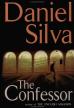
In this interview Daniel Silva discusses the inspiration and historical research behind his latest novel, THE CONFESSOR, and reveals what he hopes to accomplish with his books.

Q: One of the major New York dailies recently described you as someone who has "graduated from being a writer of thrillers that sneak onto the bestseller lists for a week or two to a brand-name author-one of those people like Tom Clancy who can launch book after book onto the charts." What does it feel like to be compared to someone like Clancy? And what was that transition like to "brand-name" author?
DS: (Laughter) That's very flattering, but I'm no where near Clancy's league in terms of sales. Someday, I hope. If, as you say, the brand name has taken hold, that's great, but I don't take anything for granted. When my books become bestsellers, I'm always pleasantly surprised, and it's still a big thrill.
Q: Critics have also praised your "journalistic passion that animates your stories." How have your experiences as a journalist for UPI and then CNN influenced the way you approach your fiction writing?
DS: I always look for a factual underpinning to my stories, and I read and research until I'm blind. THE ENGLISH ASSASSIN dealt with Nazi art looting. I devoured everything I could find on the subject. THE CONFESSOR also deals with the Holocaust and the Second World War, but this time focuses on Pope Pius XII and the role of the Catholic church. I must have read a hundred books and scholarly articles on the topic. And, of course, as with all the Gabriel Allon books, I did tremendous amounts of research on art restoration and, in this case, the artist Bellini. I love it. But no matter how much time I spend conducting journalism-style research on the subjects I'm writing about, I never want the research to get in the way of the imagination. Essentially, I fill up the tank with as many facts and as much history and analysis of the subject as possible, and then I try to walk through a door and create something that's pure entertainment and fun to read. I always try to go just far enough with my research so that the imagination has room to work and spin a story that readers will find entertaining. That's the primary goal.
Q: Where did the inspiration for this story come from?
DS: It's a topic I've been interested in for a long time, but the specific inspiration can be traced back to two incidents. One was We Remember, the long-awaited statement on the Holocaust released by the Vatican in 1998. I felt it came up far short of what it set out to do in terms of reconciliation and atonement and apologizing for the conduct of the Church during the war. The other incident was the squabble that broke out when a commission of six independent historians, which was created by the Vatican in a bid to calm the controversy surrounding Pius XII, requested access to the Vatican's Secret Archives, and the Vatican refused. It was clear that there were things in the Archives they didn't want the world to see. According to sources quoted by a newspaper at the time, access to the Secret Archives was blocked by a cabal led by the Vatican's secretary of state. All these things just started simmering, and a story started to take shape: What would happen if a pope wanted to throw open the Secret Archives?
Q: Aside from all the reading, and your focus on Pius XII, what other research did you do?
DS: The inner workings of the Vatican, of course. I interviewed diplomats, former priests, and reporters who've covered the Vatican and been behind the walls. I made a decision that there would be very little spirituality in the book, if that's the right word. Instead, I choose to write about the Vatican as a political institution and to treat the characters as politicians. Keeping that image in my mind-of Church officials as quarreling politicians in a pressure-cooker atmosphere-helped me get the feel and tone that I wanted.
Q: What makes the spy thriller such a compelling genre?
DS: First of all, I should say that I consider myself a writer of international intrigue stories as opposed to a writer of pure espionage thrillers. I like the genre because it gives you more license. There are no police procedures or rules of evidence to hem you in. Also, I'm a student of twentieth-century European history and politics. That's what interests me. And so the international intrigue genre is where I feel the most at home.
Q: How did you come up with the Gabriel Allon character?
DS: He came as a thunderbolt. I can't describe it any other way than that. I was working on THE KILL ARTIST and doing the initial sketches for the character. My wife and I were walking down the street in Georgetown when she turned to me and said, "By the way, we're having dinner tonight with David Bull." David was the head of the restoration department at the National Gallery. I stopped dead in my tracks and said, "Oh my God! An assassin whose cover job is art restoration."
The character has been such a joy to work with. He's not a person I'd necessarily want to hang out with, but I just find him so compelling. There's something about him that makes him impossible not to watch. He allows me to write the way I want to write. I always thought it strange when writers became so attached to their characters that they'd talk about them as if they were real people, but Gabriel Allon has definitely become a real person for me. He's just there. He is. He exists.
Q: What fascinates you so about him?
DS: The fact that Gabriel is an art restorer and a reluctant assassin allowed me to plumb the two distinct sides of his character that are constantly at war within him: He's a healer, but he's also a destroyer. He finds peace in restoration. He's also attractive to me because so much history and pain and suffering-the Holocaust, the Israeli-Arab conflict-flow through this man. He and Ari Shamron, my fictional spymaster of Israeli intelligence, are at the crossroads of twentieth century Middle Eastern and European history. Who better to investigate the role of the Catholic church in the Holocaust than Gabriel Allon? It's no accident that, when the story opens, Gabriel is living quietly in Venice, restoring churches.
Q: Writers of fiction will often say their characters become so alive that they end up doing things they-as the writer-hadn't intended them to do. Did that happen with Gabriel?
DS: Definitely. What I try to do is create the character first, as opposed to first creating the line I want the character to walk through the novel. If I do it right, I end up with a character who's multidimensional, a character who will lead me by the hand, not through the grand arc of the story but rather through interesting little side journeys. And those are the things that usually make a novel memorable.
Q: Why do so many of your stories center around this notion of history guided by men of the secret world?
DS: Because I think history is about 80 percent classified. I believe that intelligence agencies guide the course of history much more than we'll ever really know. I'm not a conspiracy theorist, but I think men of the secret world really have had a tremendous influence on the course of human history. And when you talk about those kinds of individuals, you can't help but think of the Vatican, the oldest political institution in the western world. The men of the Vatican have been engaging in conspiracies and intrigues for centuries, and they're very good at their craft.
Q: There's been a lot of speculation in recent years regarding what's going on inside the Vatican's walls as the current pope, John Paul II, gets older and ever more enfeebled. What sort of maneuvering do you think is going on as this pope ages?
DS: I'm not convinced he's as feeble as he appears. According to those closest to him, he still has tremendous powers of concentration and intellect. But having said that, the Church is in crisis, and there are certainly people within the Vatican who are preparing for the next conclave. Names are being mentioned as possible successors, and records are being examined. It will be fascinating to watch the next conclave. Will the next pope be an Italian or perhaps a cardinal from the Third World? Will he be a doctrinaire pope, or will he permit change? The future of the Roman Catholic church might rest on the answers to those questions.
Q: One of the central entities of The Confessor is this secret group within the Vatican, Crux Vera, that holds the true power of the Church. Over the centuries the Vatican has seen its share of Machiavellian intrigue. Are there any specific historical precedents for the fictional cabal you describe here?
DS: I looked at all sorts of reactionary Church groups and secret Church societies. Some operate openly --- they even have web sites you can browse --- but many still remain very secretive. There are a number of groups who are opposed to the reforms of the Second Vatican Council and want to reverse them. Some operate quite openly with the tolerance and, some might say, the encouragement, of the Vatican. On other occasions the Vatican has chosen to crack down and punish rebellious leaders. These groups are very conservative, very reactionary, and there have been suggestions that some of them may have been involved in some dirty dealings in the past. What I essentially did was take their worst attributes, magnify them, and apply them to my fictional group, Crux Vera. But as I said in the author's note, Crux Vera is a complete creation on my part.
Q: One of pivotal moments of the story occurs as Hitler's final solution is well underway when officials from Crux Vera meet with the Germans and essentially collude with them --- by their silence about the Holocaust --- to carry out the extermination of European Jewry. Their goal, set forth in the story, was to forestall the creation of a postwar Jewish homeland because it would result in Jewish control of Christian holy sites, and would also leave Jews on an equal diplomatic footing with the Vatican among the world's nations. Notwithstanding that this is fiction, are you suggesting this could have happened?
DS: I set out to answer the question: Why was Pope Pius XII silent regarding the plight of the Jews under Hitler and the Nazi regime? I made a decision early on in the writing process that I would attribute no fictitious actions to the Pope. Out of respect for him and for the papacy, I was not going to create actions on his part. What I did do, however, was put forward a fictional explanation of why he was silent, an explanation that was both historically possible and at the same time compelling and dramatic. Were there priests and bishops within the Church who actually supported the extermination of European Jews and took part in the Holocaust? The answer, unfortunately, is yes. Did the Vatican oppose the idea of a Jewish state in Palestine, even Jewish emigration to Palestine, when it was the only escape hatch available to Jews? Once again, the answer is yes. I basically took those elements and spun them into a fiction that might logically explain why Pius XII failed to speak out.
Q: Were there any surprises for you as you carried on this yearlong running conversation about the Church with various sources?
DS: As I took a hard look at the Church, its long history of anti-Semitism, and its conduct during the war, I guess you could say I was somewhat shocked, but I also felt a great sense of sadness. That same sense of sadness can be found in a lot of Catholic writers --- James Carroll, Gary Wills, John Cornwell and others --- who have explored these subjects. You can feel it in the way they write. One of the things that became clear to me is that there's still a tremendous amount of anti-Semitism within the Vatican, despite all the efforts to improve relations between the two communities.
Q: Most people have this view of the pope as someone who has absolute power within the Church. Is this the case?
DS: The Roman Curia is the oldest court and oldest bureaucracy in Europe. It wields tremendous power even over a pope, who, technically, is an absolute monarch. In order to get things done, like any other head of state, the pope has to work through his bureaucracy. It's a very tough, backbiting, jealous atmosphere. A lot of backstabbing goes on, and apparently it's quite a vicious place to work. What a perfect setting for a thriller: the Vatican in all its power and majesty, and filled with scheming and intrigue. For me, it's impossible to stand in St. Peter's Square and not wonder what's really going on behind those walls.
Q: According to Pius's defenders, he was a friend of the Jews who saved hundreds of thousands of Jewish lives through quiet diplomacy. His critics say he was a calculating politician who displayed a callous and near-criminal indifference to the plight of the Jews. Some even go so far as to say he was actually complicit in the Holocaust. What's your take on Pius XII? Was he as vile as his critics suggest; as virtuous as his defenders suggest; or somewhere in between?
DS: Let's look at this, for a moment, as if it were a court case with prosecutors and defense attorneys. I think even honest defenders of the pope would agree that Pius XII knew about the Holocaust from almost the very beginning; that he said nothing and did very little; that most of the Vatican's efforts were confined to Jews who had converted to Christianity; and that those efforts came late in the war once the tide had turned against Germany. Rightly or wrongly, I think Pius XII had a fear of dividing German Catholics, a fear of German retaliation against the Vatican, a desire to play a diplomatic role as a peacemaker, and that he clearly wanted Nazi Germany to prevail in its confrontation with Communist Russia, which the Church viewed as its mortal enemy. Pius didn't want to do anything to undermine the Nazis, and he apparently was not sufficiently morally moved by the murder of millions of Jews to back away from that course of action. I'm afraid that's about the most positive portrait that one can draw based on an honest appraisal of the facts. But if you look at the case in total: the long history of anti-Semitism within the Church; the fact that Pius never excommunicated a single Nazi leader and yet, in 1949, he excommunicated all communists worldwide; the fact that he opposed the Nuremberg trials and that the Vatican helped thousands of Nazi war criminals escape justice, then a much darker picture emerges.
Q: There's a movie currently playing, called Amen, which explores some of the issues you write about in THE CONFESSOR. Have you seen it and what did you think of it?
DS: I have seen it. I think it's an excellent film. Very powerful.
Q: What do you want readers to get out of this book?
DS: I want them to be entertained. That's the first and primary goal of my storytelling. The greatest compliment readers give me is when they complain that I kept them up all night. If I'm also able to teach them a little something along the way, that's great too.
© Copyright 2003, The Penguin Group. All rights reserved.
Click here now to buy this book from Amazon.
Back to top.
PAST INTERVIEW
March 8, 2002
As a former foreign correspondent and CNN producer, when Daniel Silva stepped into the fiction arena, he brought a fresh new perspective to the espionage thriller. THE ENGLISH ASSASSIN, like his other novels, is more than just a suspenseful story woven into a rehashed history. He creates characters that are riveting and empathetic, that engage the reader in some personal soul-searching as well. In this recent interview with Bookreporter.com's Ann Bruns, Silva reveals his personal theories on heroes and villains, and the unfortunate realities of life in the international spy game.
TBR: As events unfolded in THE ENGLISH ASSASSIN and the morality of personal and political actions was examined, I was reminded of the old adage "Things are not always black and white." Did you have that concept specifically in mind when you began writing this novel?
DS: I try to adhere to that "old adage" with every book I write. Heroes with no personal flaws are cardboard and boring, as are villains with no redeeming qualities. I often consciously attempt to blur the lines between villains and heroes; to assign to each qualities usually reserved for the other. In the first book of the Allon series, THE KILL ARTIST, the Palestinian terrorist Tariq was a somewhat sympathetic character. He had a compelling backstory. His family had suffered terrible indignities. If he had been a raving madman, the book would probably have lost some of its resonance.
TBR: Your depiction of Gabriel Allon, the art restorer and Israeli assassin, as well as others who assist him, are fairly sympathetic characters. Is there a part of you that accepts the Gabriel Allons of the world as inevitable? Even justified?
DS: I believe that democracies have a right --- perhaps even a duty --- to protect their citizenry from terrorist attacks. As we have seen from our own experience, it is oftentimes necessary to take the battle to the terrorist. To engage him on his battlefield. Indeed, to terrorize the terrorist. Because Israel was struggling for her very existence, her leaders understood this long before we did. But when inherently decent countries resort to these tactics --- when they climb into the gutter with the terrorists --- there is often a terrible price to be paid. Britain is certainly scarred from its secret war with the IRA. So, too, is Israel. The terrorists make us behave in ways we would rather not. Gabriel would rather be a painter than an assassin. Terrorism took that from him. I view Gabriel sympathetically, but I do not envy him. In many ways, I feel terribly sorry for him.
TBR: Switzerland is, without question, the central villain of THE ENGLISH ASSASSIN for its past financial affiliations with Hitler and the Nazi looters. Is the Swiss government's continued secrecy about, and denial of culpability in, these events an ingrained response or evidence that its financial institutions are still masters of manipulation?
DS: During the research for the book, I spoke to a man who was the president of a Swiss bank. He gave me a piece of advice that I used to sharpen my thoughts about Switzerland. "What you have to understand," he said, "is that Switzerland is a business and it's run like a business." I loved the line so much that it eventually made its way into the book. If you use that premise as a starting point, many aspects of Swiss history come sharply into focus. The Swiss cooperated with Hitler because it was good business, and now they are attempting to limit exposure of that crime because it would be bad for business. Switzerland is a country with few natural resources, yet per capita it is the second-richest in the world. The men in Bern and the bankers of the bankers of the Bahnhofstrasse are going to protect that at all costs. The villains of THE ENGLISH ASSASSIN are a group of bankers, industrialists and intelligence officers called the Council of Rütli. They are wholly fictitious, but in my opinion, not very far from the truth. Clearly, the Swiss government and Swiss business have worked together to hide the sins of the past or put a more favorable veneer on them. That collusion continues to this day.
TBR: Gerhardt Peterson's role in THE ENGLISH ASSASSIN is the secret service official with connections to the bankers involved with the art looting. Although he is primarily motivated by greed and power, there is a personal history that might leave readers wondering if there is more to Herr Peterson than meets the eye. Were you tempted at some point to take this character even farther than the present storyline?
DS: I liked Peterson very much, but I didn't want him to grow to the point where he crowded out Gabriel and Anna and the assassin. Having said that, he is still a terribly important character, even though he moves through the background of the story until the climax. Allegorically, he represents that segment of Switzerland that struggles to place the past in perspective. He enjoys the benefits of Swiss wealth and influence --- indeed, he struggles to attain more of it --- but at the same time he is haunted by the actions that helped produce that great wealth.
TBR: Although your sources for background material on Swiss law enforcement remain anonymous, how did you manage to find anyone who would give you information in the first place?
DS: Persistence and good fortune.
TBR: The fictional assassin of the title is an interesting character both in terms of his background and his code of behavior --- not entirely the cold-blooded, killing machine that readers might expect. Is he based on any real person in particular? Do you see his characterization as more the norm than the more sensationalized real-life assassins like Carlos The Jackal?
DS: Not really. Christopher Keller is truly cut from whole cloth: a former British special forces officer who lives on the island of Corsica and kills people for a living. I've always been fascinated by Corsica and its history of feuding and bloodletting. It was fun to place an outsider like the Englishman in that setting.
TBR: Anna Rolfe spent a lifetime tormented by her relationship with her father. On the one hand, her mother's death created an irreparable gulf between them yet, at some point, she was entrusted with the secret of his hidden collection. Why would she have continued to protect him, feeling as she did about his past activities?
DS: It's not terribly unusual for wealthy collectors to conceal parts of their holdings. Anna knew her father concealed part of his collection but she didn't know --- or perhaps she chose not to know --- how he obtained those paintings. But when her father was murdered, it spurred Anna forward to finally learn the truth about her family and its tragic history. Interestingly enough, she has to turn to an Israeli agent to help her do that.
TBR: All of your novels, beginning with THE UNLIKELY SPY, have been rooted in historical events to an extent, but THE ENGLISH ASSASSIN seems to have more of a journalist's viewpoint woven into it than the others. Did you set out to write a thriller and then find yourself wanting to dig into the story behind the stonewalling to recover the looted art instead?
DS: I set out first and foremost to write an entertaining and thought-provoking thriller. But I also felt it was necessary to create plausible circumstances by which a Swiss banker could acquire a substantial collection of French Impressionist paintings. Doing that required me to delve into the past. I tried to dramatize that information rather than recite it, and I think anyone who reads the book will ultimately learn something about a terrible chapter of the Second World War.
TBR: Do you feel the Independent Commission of Experts formed by the Swiss government to investigate the accusations about Switzerland's role in the Nazi looting was merely a token gesture? Have there been any recent indications that the Swiss government is willing to assist in restoring the looted art to its rightful heirs?
DS: (((I think the third Q&A deals well with this one)))
TBR: Clearly your background as a foreign correspondent and as an executive producer with CNN in Washington has to be tremendously advantageous in developing your novels. Will you be writing any nonfiction books in the future, or do you find it's more fun to work in a fictional world for a change? Or perhaps, given your vast experience in Washington circles, I should ask if there's much difference?
DS: No way! I'm having way too much fun writing fiction.
TBR: Why do you think after all these years and the wealth of historical events that have followed, stories of World War II and the machinations of the Nazis still remain the most popular topic of international thrillers?
DS: Because the Nazis were the "villains" of the twentieth century. They committed crimes of unimaginable proportions, and we live with the scars of those crimes today. I tried to keep this story small in scale --- you won't find any fanatical Nazis dreaming of a Fourth Reich in this novel --- and I think it's a bit more poignant as a result.
TBR: There have been comparisons made between your novels and Tom Clancy's, ever since THE UNLIKELY SPY hit the bestseller lists. I tend to think your writing is more in the arena of the espionage masters, Robert Ludlum and John Le Carre. Who would you consider your mentors to be?
DS: I've been influenced by writers ranging from Le Carre to Jack Higgins, from Eric Ambler to Graham Greene. I think of myself as being a bit old-fashioned in my approach to storytelling and the style of my prose.
TBR: With its topical content and wonderful characterizations, THE ENGLISH ASSASSIN would seem the perfect novel for Hollywood. Have you been approached about a film version?
DS: Not yet, but fingers are firmly crossed.
TBR: Do you have another novel already on the drawing board? Will we be reading more of Gabriel Allon in the future?
DS: I'm working on the new book now, and I think there's a pretty good chance that Gabriel Allon will be in it.
© Copyright 1996-2008, Bookreporter.com. All rights reserved.
Back to top.
|