IndieBound Independent Bookstores BRC Facebook Fan Page
Coming Soon Page
Bookreporter.com
Click Here For Librarians Submitting a Book Become a Reviewer FAQ Contact Us About Us
Home Reviews Features Authors Quote Books Into Movies Book Clubs Awards Coming Soon
Search Contests WOM Bestsellers New in Paperback Newsletter Bibliographies Blog

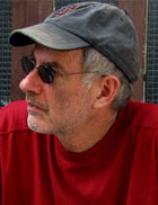
Keith Raffel

BIO

I live in two worlds. Years ago, in the first one, I served as counsel to the Senate Intelligence Committee overseeing the secret world of the CIA, NSA, and other clandestine three-lettered agencies. I worked on legislation with Senators Biden (as he was then), Kennedy, Goldwater, and Bayh. One of our statutes regulated national security wiretapping (which worked pretty well until the Bush administration chose to ignore it) and another gave prosecutors the tools they needed to send spies and rogue agents to prison.

Filled with youthful idealism, I left the Senate and came back home to California to run for Congress. How did that go? Well, I compare the experience to jumping out of an airplane without a parachute. No matter how much fun the ride was, what you remember is the ending. Splat. I lost. Somehow, even as a failed congressional candidate, I managed to talk myself into a job working for the CEO of a hot Silicon Valley high tech firm.

I suppose if you’re from Southern California you can’t resist writing a screenplay. Well, the equivalent compulsion up here in Silicon Valley is starting a company. So that’s what I did next. UpShot Corporation was a pioneer in “cloud computing,” providing software that lives in cyberspace rather than on the user’s PC. I even hold a patent for our graphic user interface. (Not bad for a history major!) In 2003 we sold the company to Siebel Corporation which, in the way of the Valley, was swallowed up itself by Oracle a year later. Encouraged by the success of my first book, Dot Dead, I threw over the corporate job and started writing full-time.

Now let’s talk about the second world I live in. When I was a boy, I adored the Mars books by Edgar Rice Burroughs. In them John Carter is transported from a cave in Arizona to the Red Planet where he beats all comers in swordplay, wins the heart of a princess, and sets off on countless adventures. Something similar happens to me when I sit down with my laptop at the local café. As my hands start moving across the keyboard, I become Ian Michaels who hunts down a murderer, fends off a ruthless billionaire, and uncovers scientific fraud. Like Carter, I am someone who pits his own smarts and resourcefulness against life-or-death threats. But unlike Carter who spends years in each stint on Mars, after five hours or so, the spell wears off and I am again Keith Raffel of Palo Alto, California. The pull of the second world is strong though, and I return there day after day until another book is done.

Back to top


AUTHOR TALK

October 23, 2009

Silicon Valley software entrepreneur turned thriller writer Keith Raffel once again explores the ruthlessness of corporate life in his second novel, SMASHER. In this interview, Raffel discusses how he transitioned between his two careers, and shares some of the imaginary and real-life influences behind the characters in his latest book. He also compares publishing a book to starting a company, sheds light on some of the less-than-glamorous aspects of life as an author, and reflects on how his hometown of Palo Alto, CA has evolved over the years.

Question: How did you get into the crime fiction racket?

Keith Raffel: Way back when I had just one kid and before I started my company, I found myself with some spare time. I signed up for a mystery writing class at the University of California extension taught by Margaret Lucke. We did a classroom exercise and --- poof! --- I had the beginning of a novel. You write what you know and what I knew was the entrepreneurial culture of Silicon Valley. In writing my Silicon Valley mysteries/thrillers, I try to capture the Valley's zeitgeist, the monomania focused on bringing the next great product to the market and making millions along the way.
 
Q: What have you given up to write?

KR: At one time, my main extracurricular activity was betting on the ponies. For six months way back in the eighties, I pretty much lived up at Lake Tahoe. But then I got a job in Silicon Valley, got married, had kids, and took up writing. No more Runyonesque adventures at the track. What else? I don't go to the movies like I used to, but who does?
 
Q: What’s your reaction to the publication of SMASHER?

KR: I’ve been told by literary veterans that the hardest challenge for an author is not to get published --- it’s to stay published. So once Midnight Ink accepted SMASHER for publication, I was delighted. Now having seen the reviews and blurbs, I’m ecstatic.
 
Q: Are you ready to see SMASHER as a movie?

KR: I went down to Hollywood after DOT DEAD was published and talked to agents and producers. It was fun to play what if. Now, though, a team with a track record has done an outline of a script for SMASHER and they’re talking to my agent. Stay tuned. It’s still an incredible longshot, but I’m willing to take a chance on the success going to my head.
 
Q: You've worked in Silicon Valley for over 20 years. Did you base any of the principal characters in your books on people you knew?

KR: I write fiction. My friends are a relatively sedate lot. Nevertheless, I’m accused all the time of basing characters on one of them. One neighbor insisted that Dr. Dubitzky, Ian’s doctor, was based on her dentist --- whom I didn’t know when I first wrote about him. On the other hand, the character of Isobel Marter in SMASHER is partly based on a real person: Rosalind Franklin, who played a key role in the
discovery of DNA. But Dr. Franklin was an x-ray crystallographer in London in the 1950s and Professor Marter was a particle physicist at Stanford in the 1960s.
 
Q: What authors influenced you?

KR: I've been gobbling up mysteries since grade school. But I think the biggest influence of all was the movies of Alfred Hitchcock (the French would call him an auteur) where ordinary people find themselves caught up in extraordinary circumstances. Movies like The 39 Steps or North By Northwest where the hero finds unexpected reserves of grit and moxie.
 
Q: How have things changed since writing became your full-time gig?

KR: When I had a day job, I would write first thing in the morning and last thing at night, and on weekends and especially on airplanes. Whole chapters of DOT DEAD were written on cross-country flights. Maybe the reason airplanes worked so well was that I wasn’t distracted by email or the Web. I’ve definitely learned my productivity goes up at least 2X when I write untethered. So now, when I’m working on the first draft of a manuscript, I walk over to a nearby café where I don’t have Internet access, get loaded on green tea, and float into a fictional world for five hours.
 
Q: Anything bug you about being a full-time writer?

KR: Yes! My friends and neighbors sometimes ask me if I’m going to get a “real job” or even worse, what it’s like being “retired.” I wonder if people ask Stephen King if he’s going to get a real job? Being an author is wonderful, but it’s work. When I’m working on the first draft, I go to my “office” (i.e., the local café) every day. I have an Excel spreadsheet I use to set goals and chart my progress against them. Then there’s editing, doing publicity, setting up book tours, talking over business with your agent and publisher, researching the next book, reading proofs…. I could go on and on. Come to think about it, being an author is more than full-time work.
 
Q: What similarities were there in starting a company and getting a book published?

KR: More than you'd think. In starting a company, you need to find investors who believe in you, who will back your vision, and will put millions of dollars to work on making it a reality. Except that the money at stake is a lot less, that's pretty similar to finding a publisher. In both, you need to believe in yourself and what you're doing because there will be incessant attacks on your ego. Venture capitalists turned down Google and fifteen publishers turned down John Grisham's first novel.

Here's another similarity: Entrepreneurs are extremely generous. When you call another entrepreneur and ask about a prospective hire or about what it's like to have a certain venture capitalist on your board, you get the unvarnished truth. The odds against success are long enough, and we need to stick together. When crime fiction writers get together, it's the same "us against them" fellowship you see among entrepreneurs. They suggest agents, publishers, conferences worth attending, etc. In addition, even best-selling authors like Marcus Sakey, M.J. Rose, Steve Berry, and Cara Black were willing to take the time to read SMASHER and write terrific things about it. I’m very grateful.
 
Q: You grew up in Palo Alto in the heart of Silicon Valley. How has Palo Alto changed?

KR: First of all, it wasn't Silicon Valley where I grew up. It was the Santa Clara Valley, sometimes called "the Valley of Heart's Delight." Orchards abounded. My mother used to dry apricots in the backyard every year. I went to Palo Alto High along with the children of janitors, school teachers, and founders of Hewlett-Packard. People didn't always lock the front doors. My parents' first house cost under $30,000. Of course, the orchards have been replaced by tilt-up buildings. The town is filled with software and network executives. Few houses can be bought for under seven figures. Palo Alto is exciting, dynamic, and the center of world technology, but excuse me for waxing a little nostalgic for the good old days.

© Copyright 2009, Keith Raffel. All rights reserved.

Click here now to buy this book from Amazon.


AUTHOR TALK

August 2006

Keith Raffel, author of DOT DEAD, has worked for 20 years as a software entrepreneur before trying his hand at mystery novels. In this interview, Raffel shares how he began this second career and names an unlikely source of inspiration for his writing. He also describes the parallels between Silicon Valley and the publishing industry, and explains how he has managed to squeeze in penning a novel in between his full-time job and his role as a husband and father of four.

Question: Where did the idea for DOT DEAD come from?

Keith Raffel: Way back when I had just one kid and before I started my company, I found myself with some spare time. I signed up for a mystery writing class at the University of California extension. We did a classroom exercise and --- poof! --- I had the beginning of a novel. You write what you know and what I knew was the entrepreneurial culture of Silicon Valley. In writing DOT DEAD I tried to capture the Valley's zeitgeist, the monomania focused on bringing the next great product to the market and making millions along the way. Do you know what the divorce rate is among entrepreneurs? Giving up a personal life is SOP in Silicon Valley.

Q: You've worked in Silicon Valley for over 20 years. Did you base any of the principal characters in the book on people you knew?

KR: I wrote a work of fiction. My friends are a relatively sedate lot. I do take a few shots at venture capitalists, though. Not any particular one, but as a class. Couldn't resist.

Q: What authors influenced you?

KR: I've been gobbling up mysteries since grade school. But I think the biggest influence of all was the movies of Alfred Hitchcock (the French would call him an auteur) where ordinary people find themselves caught up in extraordinary circumstances. Movies like The 39 Steps or North By Northwest where the hero finds unexpected reserves of grit and moxie.

Q: You have a family with four kids and a full-time job. When do you find time to write?

KR: One of the keys for me has been enrollment in writing classes. Then I have a deadline to get the work done. Some of the people in the class turned into fans (my first ones!) and wanted to see the next installment. You don't want to disappoint them. It's almost like doing a serial. So you write first thing in the morning and last thing at night. On weekends. On airplanes. Whole chapters of DOT DEAD were written on cross-country flights.

Q: Has your family read the book?

KR: I read each chapter aloud to my wife hot off the printer and in return she offered no-holds-barred advice. She's a maven on culture ("a woman like her would not wear that") and relationships ("he wouldn't say something like that to her at a funeral"). My oldest daughter, who was reading Sue Grafton at twelve, is not ready to accept that her father writes books with sex scenes. I've told the other three kids that the book is rated PG-32.

Q: Do you have advice for unpublished writers?

KR: Don't give up. Rejection comes with the territory. What separates published writers from the wannabes is the ability to keep going in the face of lots of noes.

Q: What similarities were there in starting a company and getting a book published?

KR: More than you'd think. In starting a company, you need to find investors who believe in you, who will back your vision, and will put millions of dollars to work on making it a reality. Except that the money at stake is a lot less, that's pretty similar to finding a publisher. In both you need to believe in yourself and what you're doing because there will be incessant attacks on your ego. One venture capitalist might say, "We love the concept, but not the management team." A prospective publisher will tell you that they have no empathy with your book's hero. Well, keep going. Venture capitalists turned down Google and fifteen publishers turned down John Grisham's first novel.

Here's another similarity: Entrepreneurs are extremely generous. When you call another entrepreneur and ask about a prospective hire or about what it's like to have a certain venture capitalist on your board, you get the unvarnished truth. The odds against success are long enough, and we need to stick together. When mystery writers get together, it's the same "us against them" fellowship you see among entrepreneurs. They suggest agents, publishers, conferences worth attending, etc.

Q: You grew up in Palo Alto in the heart of Silicon Valley. How has Palo Alto changed?

KR: First of all, it wasn't Silicon Valley when I grew up. It was the Santa Clara Valley, sometimes called "the Valley of the Heart's Delight." Orchards abounded. My mother used to dry apricots in the backyard every year. I went to Palo Alto High along with the children of janitors, school teachers, and founders of Hewlett-Packard. People didn't always lock the front doors. My parents' first house cost under $30,000. Of course, the orchards have been replaced by tilt-up buildings. The town is filled with software and network executives. Few houses can be bought for under seven figures. Palo Alto is exciting, dynamic, and the center of world technology, but excuse me for waxing a little nostalgic for the good old days.

Q: What have you given up to write?

KR: At one time, my main extracurricular activity was betting on the ponies. For six months way back in the eighties, I pretty much lived up at Lake Tahoe. But then I got a job in Silicon Valley, got married, had kids, and took up writing. No more Runyonesque adventures at the track. What else? I don't go to the movies like I used to, but who does?

Q: Are you ready to see DOT DEAD as a movie?

KR: My wife likes to play the game of which actors would play which roles. So she's in favor. As for me, I guess I'd be willing to take the chance on success going to my head.

Q: What are you reading?

KR: I can convince myself that reading crime fiction is part of working. My accountant agrees and says that what I spend on mysteries is tax deductible. I just finished Cara Black's latest, MURDER IN MONTMARTRE, and KILLING PAPARAZZI, the second of Robert Eversz's featuring punk ingénue Nina Zero. I saw Peter Abrahams recently and have just started his END OF STORY. Stuart Kaminsky says it's sad that more people don't know about Brian Garfield; I listen to Stuart so I've got Garfield's THE ROMANOV SUCCESSION on my night stand along with Nadia Gordon's first Sunny McCoskey mystery. (If there is an earthquake, I'll be crushed to death if the books on my night stand topple the wrong way.) And evenings I am reading THE RETURN OF TARZAN aloud to my seven-year old. I'm having a great time going through the favorites of my youth with him.

© Copyright 2006, Keith Raffel. All rights reserved.

Click here now to buy this book from Amazon.com.

Back to top.