IndieBound Independent Bookstores BRC Facebook Fan Page
Coming Soon Page
Bookreporter.com
Click Here For Librarians Submitting a Book Become a Reviewer FAQ Contact Us About Us
Home Reviews Features Authors Quote Books Into Movies Book Clubs Awards Coming Soon
Search Contests WOM Bestsellers New in Paperback Newsletter Bibliographies Blog

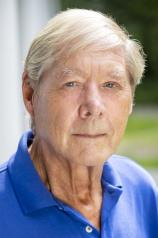
Richard North Patterson

BIO

Richard North Patterson graduated in 1968 from Ohio Wesleyan University and has been awarded their Distinguished Achievement Citation. He is a 1971 graduate of the Case Western Reserve University’s School of Law, and a recipient of their President’s Award for Distinguished Alumni. He has served as an assistant attorney general for the state of Ohio; a trial attorney for the Securities and Exchange Commission in Washington, D.C., and San Francisco; and was the SEC’s liaison to the Watergate special prosecutor. More recently, Patterson was a partner in the San Francisco office of McCutchen, Doyle, Brown & Enersen, now Bingham-McCutchen. In 1993, he retired from the practice of law to devote himself to writing. He has served on the boards of his undergraduate and law schools, the National Partnership for Women and Families, the Family Violence Prevention Fund, PEN Center West, and the Brady Campaign to Prevent Gun Violence, and was chairman of Common Cause, the grassroots citizens’ lobby founded by John Gardner.

Patterson studied fiction writing with Jesse Hill Ford at the University of Alabama at Birmingham; his first short story was published in The Atlantic Monthly and his first novel, The Lasko Tangent, won an Edgar Allen Poe Award in 1979. Between 1981 and 1985, he published The Outside Man, Escape the Night, and Private Screening. His first novel in eight years, Degree of Guilt (1993), and his Eyes of a Child (1995) were combined into a miniseries by NBC TV. Both were international bestsellers, and Degree of Guilt was awarded the French Grand Prix de Littérature Policière in 1995. The Final Judgment (1995), Silent Witness (1997), No Safe Place (1998), and Dark Lady (1999) all became immediate international bestsellers. Protect and Defend (2000), about the controversial nomination of the first woman to be chief justice and her entanglement in an incendiary lawsuit regarding late-term abortion and parental consent, became Patterson’s seventh consecutive international bestseller and received a Maggie Award from Planned Parenthood for its treatment of issues regarding reproductive rights.

Balance of Power confronted one of America’s most divisive political and social issues --- gun violence --- and was chosen by USA Today as its book-of-the-month selection for November 2003. Conviction (2005) focused on the law and politics of capital punishment. Exile (2007) dealt with the Israeli-Palestinian conflict and was nominated for South Africa’s leading literary award. The Race(2007) concerned a dramatic campaign for president and was Patterson’s eleventh consecutive New York Times bestseller. His next novel, Eclipse, deals with human rights, Africa, and the geopolitics of oil, and will be published in January 2009.

Patterson has appeared on such shows as "Today", "Good Morning America", "The CBS Morning Show", "Inside Politics", "Washington Journal", "Buchanan and Press", "Greta Van Susteren", and "Hardball". His articles on politics, literature, and law have been published in the London Times, The Wall Street Journal, USA Today, The Washington Post, the Los Angeles Times, The Boston Globe,the San Francisco Chronicle,and the San Jose Mercury News. A frequent speaker on political, legal, and social issues, in 2004 Patterson spoke at Washington, D.C., rallies in support of reproductive rights and against gun violence. His papers are collected by Boston University.

Patterson lives in San Francisco and on Martha’s Vineyard with his wife, Dr. Nancy Clair.

Back to top.   


AUTHOR TALK

January 16, 2009

Richard North Patterson has made a name for himself in the suspense/thriller and legal fiction genres by centering his novels on contemporary controversial topics, such as the death penalty, gun control legislation and the Israeli-Palestinian conflict. The events that take place in his latest release, ECLIPSE, loosely parallel the real-life experiences of a Nigerian activist caught in the middle of a corrupt government and the world's reliance on oil. In this interview, Patterson recounts Ken Saro-Wiwa's tragic story and discusses both the political and social ramifications caused by the current worldwide energy crisis. He also describes the dangers he encountered while visiting the city of Lagos for research, and shares his thoughts on alternative energy sources and minimizing America's dependence on foreign oil.

Question: You acknowledge in your afterword that ECLIPSE is based loosely upon the life and death of Ken Saro-Wiwa, Nigeria’s courageous human rights and environmental activist who was hung by the country’s brutal dictator fifteen years ago. For those of us who don’t remember that story, please tell us a bit about him and why he remains an important figure.

Richard North Patterson: Ken Saro-Wiwa was a gifted novelist who created a force unique to Nigeria: a mass nonviolent movement among his ethnic group, the Ogoni, to fight the environmental and human rights abuses caused by the alliance between the oil industry and Nigeria’s corrupt autocracy. While the extraction of oil from the Niger delta enriched the government and the oil companies, it left the delta’s people more impoverished and their lands and water despoiled. Saro-Wiwa’s defiance ultimately led to his execution in 1994 by the country’s kleptocratic dictator, General Suni Abacha, after a trial based on dubious charges that Saro-Wiwa had instigated the death of several Ogoni chiefs. A tragic coda is that although Saro-Wiwa was widely admired in the West, the oil-dependent democracies that profess their devotion to human rights did little to save him.

The tragedy of Saro-Wiwa is piercingly salient today. In the years since his death, the industrialized nations have become more desperate for oil to preserve their own power and wealth. Central to my story is that the oil-rich Niger delta is ever more despoiled, and the protest movement of Saro-Wiwa has been replaced by predatory militia who steal oil and siphon it to the black market, while spreading violence throughout the region and maintaining corrupt but shadowy alliances with the government. And our addiction to oil wholly marginalizes any concern we have with the injustices Saro-Wiwa sacrificed his life to fight.

Finally, the courtroom drama that climaxes ECLIPSE is based on the show trial in which Saro-Wiwa was condemned --- a Kafkaesque perversion of the forms of justice.

Q: As America grapples with an energy and oil crisis, ECLIPSE could not be more timely. Here is the vivid story of our lust for oil and its impact on one of the most unstable oil-producing regions of the world --- the Nigerian delta. Why is the delta so important to us, what are the unique circumstances of oil production in Nigeria, and what are the larger geopolitical ramifications?

RNP: Saro-Wiwa’s death, 9/11, the quagmire in Iraq, and the hostility of oil-producing nations like Iran has increased America’s dependence on oil and our preoccupation with securing access to new supplies of oil. Nigeria has become a principal focus of this need, even as a state of semi-anarchy has prevailed in the delta. Pervasive theft and sabotage by militia groups like MEND (Movement for the Emancipation of the Niger Delta, the prototype for FREE in ECLIPSE) have drastically cut the delta’s oil production, further contributing to the rising price of petroleum.

In the delta, the conditions I portray in ECLIPSE are very real: violence, greed, corruption, kidnapping, and massive oil theft practiced in the name of the causes advanced by Saro-Wiwa --- environmental reparations and a redistribution of oil wealth. And this toxic environment directly affects our way of life. ECLIPSE uses the stories of Bobby Okari, Marissa Brand Okari, and Damon Pierce to dramatize what it feels like to risk one’s life in such a treacherous place.

Q: As part of your research for the book, you went to Nigeria. What were your experiences? How do the American oil companies persuade anyone to go work for them over there?

RNP: While the Nigerian people are astonishingly bright, resourceful, and engaging, many aspects of their lives are close to dystopian. Kidnapping and armed robbery are genuine concerns. On the urging of experts, I hired a security firm: on my arrival in Lagos, the country’s principal city, my security term recruited four police to get me forty kilometers from the airport to the hotel, sirens blaring, weaving through anarchic traffic in a chaotic trip akin to a chase scene in a movie. One of the concerns of my security team was to never stop in traffic which, they warned, would expose us to armed robbers. The hotel was also selected for its security --- in the month prior to arrival there had been seventeen armed robberies in Lagos hotels.

As part of my itinerary, I had arranged to meet an expatriate American --- living in the Niger delta --- a longtime Nigerian citizen who, among other things, could take me into the maze of creeks to meet armed military groups. Shortly before my arrival, my security advisers implored me not to go, asserting that conditions in the delta were violent and anarchic; that they could not protect me from kidnapping, a virtual industry that focuses on oil company employees; and that the Nigerian Security Services might view my mission with suspicion. After some argument, I acquiesced. Two weeks later, those security services arrested my putative guide with two German documentary filmmakers, all of whom were jailed. After three months in a Nigerian prison, my contact was expelled from the country.

Lagos itself defies easy description. A city built on islands, its uncontrolled growth has raised its population to more than 15 million. Several million residents live in makeshift boats, floating slums without electricity or potable water that fester with crime, disease, and prostitution. Traffic is so congested that one can be trapped for hours. The roads are rutted, often marked by open sewers, and pass by homes surrounded by walls topped with barbed wire or embedded shards of glass to repel intruders. For the Nigerian people, survival is a daily struggle.

Nonetheless, one can sympathize with the oil industry and its employees. Preyed on by a government that delivers few meaningful services to the people of the delta, the oil companies cannot, by themselves, build or maintain schools, hospitals, treatment plants, or roads. The government, insulated by oil wealth from the necessity to please its people, too often exists to serve itself --- reformers in Nigeria face a road blocked by treachery and corruption. As for the employees of oil companies, they often live in gated compounds, fearful of their surroundings, serving out their time for excess pay. In the end, this environment lessens Nigerians and foreigners alike.

Q: Do Nigerians benefit in any way from all of the profits being made there from oil?

RNP: The vast majority do not. The government is a kleptocracy, stealing or distributing oil revenues among its members --- the chief incentive to seek political power. Years of uncontrolled oil exploration have led to the ruin of land and water, destroying agriculture, fishing, and sources of drinking water. An aging system of above-ground pipes hemorrhages oil and facilitates a system of oil theft by "militias" sustained by a blatant web of bribery that includes the army, navy, customs officers, state and federal officials, and oil company employees who often facilitate the theft.

In short, oil has shriveled the promise and stained the soul of an entire country, empowering autocrats who disdain human rights and are oblivious to the misery of its people.

Q: ECLIPSE draws attention to the humanitarian and security concerns --- as well as moral choices --- that American oil executives must address in a country like Nigeria. What is an oil company’s role in a foreign country, whose laws do they follow, and how much influence do they have?

RNP: It is easy to disdain the oil companies, which for many years trashed the environment while enabling the corruption of the government. It is far harder to argue that they are chiefly responsible for Nigeria’s decline. The chief agent of human misery is the state, which alone has the power to protect the environment, build an infrastructure, and address the health, nutrition, and educational needs of its people. Indeed, the corruption of the government is a moral and physical hazard for oil companies and their employees, exposing them to dangers while forcing them into complicity in governmental corruption.

ECLIPSE focuses on one aspect of this: the dependence of oil companies for protection on a military and police which are often brutal and corrupt, setting themselves up as mercenaries for hire. The central question that arises is the degree to which oil companies, helpless to protect themselves, are responsible for the violence perpetrated by military forces they are compelled to pay and equip but do not fully control.

Q: In ECLIPSE, your hero, Bobby Okari, tries to speak out against the brutal dictator and the oil companies, only to be arrested and ultimately executed. Is there anyone in Nigeria today giving voice to the needs of the people and standing up for their rights?

RNP: Nigeria has a vital human rights community, including reformers, journalists, educators, and others who speak out against injustice, abetted by Americans and Europeans impelled by humanitarian concerns to come to Nigeria. But I am aware of no major nonviolent movement like the Ogoni Movement led by Saro-Wiwa. Instead, MEND and other militia groups have appropriated Saro-Wiwa’s cause to promote a program of kidnappings, theft, and violence which most observers see as a criminal enterprise cloaked in popular grievances. Though Nigeria is now technically a "democracy," the last national election was blatantly rigged through violence, intimidation, bribery, and wholesale fraud --- a tradition in Nigeria. Thus the execution of Saro-Wiwa, like the facts of my fictional Bobby Okari, may have marked a sad crossroads in national history.

Q: No one can read ECLIPSE and not wish for Americans to become independent from foreign oil. What, in your mind, are the best alternatives?

RNP: We need a national Marshall Plan: a concerted effort to gradually replace petroleum with power sources such as wind, solar, natural gas, and biofuels, while reinvigorating our mass transit, reengineering our vehicles to cut oil consumption, and placing conservation practices at the center of our consciousness. This is a daunting task that will take decades, and requires a long-term focus for which our impatient country is not noted (which is why politicians endorse the idea that more drilling will fix our problems). But the alternative is to doom our economy, erode our security, and insure our national decline.

Click here now to buy this book from Amazon.

© Copyright 2009, Henry Holt and Company. All rights reserved.

Back to top.   


AUTHOR TALK

January 12, 2007

International bestselling author Richard North Patterson takes his political and legal thrillers one step further by focusing his latest novel, EXILE, on the current Israeli-Palestinian conflict. In this interview, Patterson shares why he was inspired to write about this timely topic and discusses the extensive research he undertook in preparation for the book. He also describes some of his personal encounters with those experiencing these ordeals firsthand, and explains how his connections in Washington D.C. have aided him throughout the course of his career.

Question: You have had a very successful career and have written quite an impressive list of novels. In what ways does EXILE represent your exploring new territory as a writer? When and how did the idea for the story in EXILE develop? What might you say to your current fans about the direction you are taking, and in general what makes EXILE stand out from your body of work? 

Richard North Patterson: EXILE represents what, to me, is an exciting fusion of my established territory --- legal and political drama --- with a new focus: the conflict between Israelis and Palestinians, and the lethal politics of the Middle East, shadowed by the threat of a nuclear Iran. The result, I hope, is the most compelling fiction of my career.

The stimulus for EXILE is my friendship with two brilliant advocates and experts with very different perspectives. My close friend Alan Dershowitz has long engaged me with his impassioned defense of Israel --- whose survival as a nation I consider to be a moral imperative. And then Jim Zogby, head of the Arab-American Institute and a leader in promoting deeper understanding of Arab-Americans and the Arab world, issued me a challenge I could not resist: to write a novel which combines the absorbing qualities of good fiction with a nuanced portrayal of the tragic conflict between Israelis and Palestinians.

While this may seem a quantum leap from my previous work, in a sense EXILE represents an extension of my belief that courtroom drama can illuminate the important controversies of our time. In EXILE, the engine that enables me to explore the geo-politics of the Middle East is a high-profile trial: the defense by its Jewish-American protagonist, David Wolfe, of his Palestinian ex-lover, Hana Arif, accused of complicity in the assassination of an Israeli Prime Minister who has proposed a last-ditch plan for peace between Israelis and Palestinians. Because of the paramount importance of its subject, I hope the book will not only engage my current readers, but all readers of good fiction who also care to learn more about this terrible dilemma, and the role it plays in the Middle East as a whole.

Q: The research you did for EXILE is extensive, including your trip to the Middle East. For those of us who have not traveled to the region, what was most remarkable about your journey? What are a couple of major things in your opinion that most Americans relying on U.S. government reports and television don't know? 

RNP: During my time in Israel and the occupied territories of the West Bank, I had many illuminating and sometimes harrowing experiences. Among them were meetings in Israel with the survivors of a suicide bombing in Haifa; with an Israeli general in charge of protecting Israel from terrorism; and, memorably, with Vice Prime Minister Shimon Peres, twice Prime Minister of Israel. On the West Bank I experienced at first hand the incendiary fear and anger between the IDF, whose mission it is to protect Israel from violence, and the Palestinian civilians whose lives, and movements, are affected by checkpoints, raids, and the inevitable arbitrary behaviors of a military force that is both fearful and despised. And my meetings with Palestinians from all walks of life left me with indelible impressions. One of these events happened during a trip to Jenin where I met in secret with Mohammad Abu Hamad, the leader of the Al Aksa Martyrs Brigade --- who was, depending on one's point of view, a "terrorist," or a lynchpin of Palestinian "resistance" to Israeli occupation.

The meeting was remarkable for several reasons. Hamad was wanted by the IDF, and it dawned on me that the place where we met could be raided, or bombed.  Hamad certainly acted as if this were a live possibility: he moved virtually every hour; was obviously fatigued; and, as I interviewed him, sat between two apprehensive bodyguards with an M-16 on his lap. Hamad was a man defined by war since he was fourteen, when he was jailed for lobbing a Molotov cocktail at an Israeli tank. But what struck me most was when I noted that the IDF asserted that the Jenin operation was in retaliation for a suicide bombing in Israel. Oh no, he answered without irony --- the suicide bombing in Israel was a reprisal for an earlier IDF operation in Jenin.

In general, all of my encounters in the Middle East made it clear that the most committed antagonists are incapable of seeing this tragedy for the complex thing it is, because they are all transfixed by their own narratives and paradigms.

Q: In addition to Israel and the Palestinians, your book spotlights Iran as a major regional threat to peace. What made you expand the scope of EXILE?

RNP: From the beginning of my research in 2000, my inquiry into the Israeli-Palestinian tragedy was open-ended. And as I interviewed expert upon expert in the Middle East --- including former Secretary of Defense William Cohen, former National Security Director Sandy Berger, former Chief Middle East Negotiator Dennis Ross, and former U.S. Ambassadors to Israel Martin Indyk and Dan Kurtzer --- the shadow of Iran loomed ever larger over my story.

The reasons are now much more widely known than they were in 2000: that elements of the Iranian regime are fanatically dedicated to the erasure of Israel, and to the assertion of Iran as the region's dominant power --- a tendency since confirmed by the accession as President of a fanatic Holocaust denier. For reasons of its own, Iran funds extremist groups like Hamas and Hezbollah, as was vividly illustrated by events that have occurred since the completion of EXILE, including those in Gaza and Lebanon which led to the outbreak of war. Plainly, the Israeli-Palestinian impasse is part of a regional conflict that serves as a distraction from Iran's ambition. And, regrettably, the failure of U.S. policy in Iraq has dramatically strengthened Iran's position.

Q: In EXILE there is a suicide bombing in San Francisco. What is your opinion about how likely this is to happen, if not in San Francisco, then elsewhere in the U.S.? How is the "climate" in the U.S. different from a place like Israel, where they deal with real life suicide bombings everyday? In your opinion do all of our efforts to prepare for such attacks make us feel safer than those in the Middle East? How so?

RNP: To me, suicide bombings in the United States are definitely possible --- indeed, the events of 9/11 can be viewed as suicide bombings on a massive scale. All that is required is for a few terrorists to scale down their ambitions from mass disasters to the more random, perhaps targeted, bombings that plague Israel.

Obviously, Israelis feel much less safe than Americans --- they are, geographically, a tiny country, and their enemies are close at hand. But America's very size is a problem of its own: we are full of "soft" targets, and we cannot protect them all. So even if our security efforts help us fend off another 9/11 --- about which we can hardly feel sanguine --- they certainly do not render us secure.

Q: Politically you are well connected, and you follow American politics very closely. Where did your ties to Washington politicians originate? Do you ever rely on any of your friends on the Hill for information when writing your books? Did you use any notable sources for EXILE? How does your knowledge of how our government and the justice system really works play into the story in EXILE? 

RNP: My friendship with American political figures began with the first President and Mrs. Bush, who were gracious enough to write me a kind note about my first bestseller, DEGREE OF GUILT, and who later helped me with my first explicitly political novel, NO SAFE PLACE. Shortly thereafter, I met then-Senator and soon to be Secretary of Defense, William Cohen, a political leader --- and writer --- I had long admired; Bill became a close personal friend and someone whose advice was instrumental in NO SAFE PLACE (1998) and the political novels which followed: PROTECT AND DEFEND (2000), about Supreme Court politics and so-called "partial birth abortion," and BALANCE OF POWER (2002), in which my fictional president, Kerry Kilcannon, takes on the American gun lobby.

These novels depended on extensive research: as one example, in a single remarkable day of researching for PROTECT AND DEFEND, in 1999 I interviewed then-President Clinton and his 1996 opponent, former Majority Leader Bob Dole, concerning the ins-and-outs of my imagined Senate confirmation fight over abortion and my fictional Supreme Court nominee, Judge Caroline Masters. And in the course of all this research, I have formed continuing personal friendships with senators Edward Kennedy, John McCain, and Barbara Boxer; former National Security Advisor Sandy Berger; and several congressmen, journalists, and consultants. This has given me a particular perspective on politics and politicians: while I deplore our polarized, gerrymandered and money-driven electoral process, I think that a number of our elected officials are far better than we generally appreciate. Public life is hard --- it is not merely a job, but a way of life.

Certainly, I could not have portrayed the political world realistically without knowing politicians, consultants, journalists, and appointed officials. In addition to the Israelis, Palestinians, and Middle East experts I interviewed for EXILE, I consulted numerous other Washington-based experts. In order to understand the ins and outs of a murder trial where the defense seeks to expose information bearing on Israeli and American national security, I interviewed Professors Philip Heymann, former Deputy Attorney General; and Jeff Smith, former General Counsel of the CIA. Others whom I interviewed included a former Assistant Director of the Secret Service, and experts on Hamas, counter-terrorism, and internal security.

Finally, I'm particularly indebted to David Siegel, spokesman for the Israeli Embassy in Washington, for his extensive advice, and for making my trip to Washington as rewarding as it was, and to Jim Zogby for his ceaseless advice and support.

My aim, as always, is to present fiction which is so thoroughly grounded in reality that the story both engages and informs. There is always a first time, but I've yet to be challenged with respect to authenticity of background or material errors of fact --- although given the vehement feelings on all sides with respect to events in the Middle East, it is inevitable that EXILE will stimulate controversy.

Q: What fictional elements of EXILE were, for you, the most challenging and engaging?

RNP: I was immersed in the story of EXILE from start to finish. But a particular challenge was creating the complex romantic relationship between two characters whose backgrounds are very different from my own: the secular Jewish-American lawyer David Wolfe, and the Palestinian militant Hana Arif. Of the two, David was easier for me --- with Hana, I benefited from the sensitive advice of Palestinians, observant Muslims, and other Arabs or Arab-Americans who took an interest in my project. While I'm not the ultimate judge, I'm proud of the nuanced, often wrenching, relationship I portrayed.

A secondary challenge was my portrayal of the failed suicide bomber, Ibrahim Jefar --- particularly in the prologue, which portrays Jefar's thoughts and emotions. It's a myth that suicide bombers are drawn almost exclusively from the poor and less well-educated, and I'm very grateful to several experts who helped me to construct the possible inner landscape of a suicide bomber.

Q: How has the experience of writing EXILE affected you as a person?

RNP: Because of EXILE, I feel deeply connected to the Israeli-Palestinian question, and friends on both sides. This has only intensified my concern, and sadness, about the continuing adverse developments in the region since I completed the novel.

This experience has also deepened my interest in --- and, I believe, my understanding of --- U.S. foreign policy and the complex dynamics of the Middle East. Although I have yet to work out how, I hope to maintain a connection to the region, the Israeli-Palestinian dilemma, and larger questions regarding America's role in the Middle East.

Copyright © 2007 by Richard North Patterson. All rights reserved.

Click here now to buy this book from Amazon.

Back to top.   


PAST INTERVIEW

October 17, 2003

Richard North Patterson likes to grapple with controversial topics, and his new novel, BALANCE OF POWER, is no exception --- this time, he takes on gun control. His timing couldn't be better; the book was published just as the suspects in the DC sniper shootings went on trial and as the Senate was moving toward a vote on a bill that would give gun manufacturers and dealers immunity from civil lawsuits. So as he talked with Jesse Kornbluth, he often left the book behind to deal with politics --- and the political agenda of the National Rifle Association.

BRC: You note that gun shows are a great place for gun dealers to call themselves "collectors" and sell weapons to almost anyone --- with no background checks. As part of your research, you went to a gun show in Nevada. How much of what you saw there did you use in the book?

RNP: Everything. I saw people pushing baby carriages near grenades. I saw bumper stickers that said "You can't shoot if you can't breathe." It was a room filled with raging paranoia --- but that's what the gun culture does: raise fear. One thing wasn't in Vegas --- a cardboard cut-out of President and Mrs. Clinton, with a target circled on them. That I borrowed from a gun store in New Hampshire.

BRC: How did it feel to be doing this research surrounded by people selling guns?

RNP: You feel pretty weird being the only one with a pad and paper. But what's really weird is the sense of being in an alternate reality. These people see themselves fighting King George. They're more like kids in tree forts --- except their guns are real.

BRC: In your novel, the president of a gun company makes the argument that guns never wear out if you treat them right. So gun companies invent more powerful weapons and deadlier bullets not because they want to appeal to criminals, wife abusers and the like, but for a much simpler reason: They want to stay in business. Is there another way for gun manufacturers to prosper?

RNP: Absolutely --- just make safer, smarter guns. Develop technology that responds to fingerprints. Let's be clear: "Anti-gun" groups have no problem with guns that are used for lawful purposes. But there's a big difference between sporting rifles and handguns and sniper rifles, which can kill at 1.5 miles.

BRC: But if you modernize guns and they don't become obsolete, the gun manufacturers will still be unhappy --- their profits will be smaller.

RNP: Sure, if Americans have an alternative to arming themselves, they'll sell fewer guns. But gun companies prospered for 100 years --- they can survive.

BRC: An "alternative" to guns sure sounds scary to more than gunmakers. Could some Americans want to make sure we're at each other's throats?

RNP: Guns and a right wing agenda are first cousins. We're in a culture war. The right says our troubles come from the '60s: women's lib, hippies, drugs. Now, that line of thinking goes, only white males are targeted. So guns take on totemic importance for those men. Create that level of hatred, it's easier to demonize than explore common sense measures.

BRC: The NRA uses the Second Amendment as the basis for all its lobbying. What doesn't it understand about the right to bear arms?

RNP: The right to form a militia does not mean, 200 years later, we need gun show loopholes so a criminal can own an AK-47. Even in the Constitution, no right is absolute. Nothing in the Second Amendment bars us from making laws that keep guns out of the hands of criminals.

BRC: Of the 3 million members of the NRA, how many do you think will read your book?

RNP: Very few. It's too bad. Because the problem is not sensible gun owners --- it's the extremists.

BRC: Do you expect BALANCE OF POWER will be reviewed by America's First Freedom, the NRA magazine?

RNP: No. And while I'm at it, I was devastated I wasn't on the NRA's "enemies list." I hope they'll correct this in whatever way they deem appropriate.

BRC: In the book, there's nothing the gun lobby won't do to win. And in real life. Do you fear that a crazed gun owner will come looking for you?

RNP: In fairness to this debate, the dangerous book was about partial-birth abortion. Pro-choice folks do get killed. I've talked at clinics and met people who have been shot at. Anything that alarms people who aren't rational adds risk --- but I hope people have better things to do than shoot writers!

BRC: You cite some terrifying statistics: half the states have entered less than 60% of all criminal convictions into the computer systems. If we had a state-of-the-art database of criminals, would that make a real difference in weapons sales?

RNP: It would certainly impact the number of situations in which we have a gun sale because three days have passed without negative information about the buyer. And that's just the tip of the iceberg --- 40% of gun transfers occur without background checks because it's not required in the secondary market. This sounds crazy, but you can shoot your wife, go to jail for manslaughter, get out of jail, cross the street and get an AK-47.

BRC: You note that "in over half our domestic violence murders last year, the murderer killed himself." Himself --- it's always guys. What is it with men and guns?

RNP: I don't know. Some say women would be empowered if they carried weapons. But if you take a toy gun from a boy, he goes "kew kew kew" and points his finger. Girls don't.

BRC: What's the case against background checks?

RNP: The NRA says they're an invasion of privacy. They offer a sentimental example: What about a guy who wants to give his 15 year-old his first hunting rifle? I say: when you give a car to your son, he needs a license. Why not when you give him a gun?

BRC: Attorney General Ashcroft is so wedded to the NRA interpretation of the 2nd Amendment he's been protecting the "rights" of dead 9/11 terrorists. Why?

RNP: I don't understand why. But there's so much about John Ashcroft I don't understand. Under the Patriot Act, he's obsessed with reading habits, yet he wants to destroy instantly the record of purchasing habits of gun-buyers. Is "Harry Potter" really more dangerous than a terrorist?

BRC: Do you think that those who have grown up in a home where they knew fear --- like Kerry Kilcannon in your novel --- have a different view of guns and their usefulness than those who do not?

RNP: Those who grew up in those homes do see guns differently --- because they've seen for themselves how a gun in hand can lead to irreversible tragedy. Our problem as a nation is that we suffer from huge doses of failure of imagination; if we don't see gun violence for ourselves, it doesn't register.

BRC: Ohio has just legalized carrying concealed weapons. What's the logic?

RNP: These laws mean you can take guns to hospitals, churches, stadiums, parks and schools. I guess the idea is to pop off your priest before he gets you. What's scary is that this is sheer opportunity theory --- the more of anything, the more it's likely to be abused. I was on a panel recently. And someone on the panel was shocked by a scene in my book in which the President's in-laws are shot at the baggage claim of the San Francisco airport. Her point wasn't the savagery of the shootings. It was: These women could have been armed. But I ask you: In what world do people at airports pack heat?

BRC: When did you first begin preparing to write a book on gun control? What made you sit up and say, "I HAVE to write about this"?

RNP: 1968 changed our history, with the assassinations of Robert Kennedy and Martin Luther King, Jr. But I didn't feel the need to write about guns until the early '90s. Down the street from me is a law firm where a gunman killed eight people, including the wife of a friend.

BRC: Out of all of the political/social topics you have covered over your writing career, which issue is the most important to you personally? Why?

RNP: Hard to chose among babies. Women's choice and guns --- both are compelling. Right now, I'm most disturbed by media intrusion into the private lives of public figures. Call me silly, but oral sex strikes me as less of a problem than the use of preemptive force for reasons that turn out to be pretexts.

© Copyright 1996-2010, Bookreporter.com. All rights reserved.

Back to top.