Bookrepoter.com Click Here Click Here Click Here
Home Reviews Features Authors Quote Books Into Movies Book Clubs Awards Coming Soon
Search Contests WOM Bestsellers New in Paperback Newsletter Bibliographies Blog


Books by
Olaf Olafsson


VALENTINES: Stories

WALKING INTO THE NIGHT

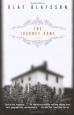
THE JOURNEY HOME

Reading Group Guides

WALKING INTO THE NIGHT

THE JOURNEY HOME

Olaf Olafsson

BIO

Olaf Olafsson was born in Reykjavik, Iceland, in 1962 and studied at Brandeis University, where he received his degree in physics. He is the author of several novels, including Absolution, which was published by Pantheon in 1994. The founder and former president and CEO of Sony Interactive Entertainment, Inc., Olafsson is now Vice Chairman of Time Warner Digital Media. He lives in New York City.

Interview

The founder and former president and CEO of Sony Interactive Entertainment, Inc., Olaf Olafsson is now Vice Chairman of Time Warner Digital Media. Yet somehow he found time to write THE JOURNEY HOME, a quiet but fierce novel about a young woman dealing with profoundly tragic circumstances and her journey back home to find peace amid so much saddness. Equally touched by THE JOURNEY HOME, Bookreporter.com's Jana Sicilano and Carol Fitzgerald were fortunate enough to ask Olafsson some questions about his book, his homeland, the future of the printed book and much more.

BRC: In THE JOURNEY HOME, you trace the arc of a woman's life, and her personal journey. Tell us about Disa, your protagonist.

OO: Disa is born in the northern part of Iceland in the mid 1910s, the daughter of a district doctor and his wife. Together with her sister she is sent to the capital, Reykjavik, to study at a commercial college, as was often customary for daughters of the upper class. In the capital she discovers her love for cooking and decides - against her mother's wishes --- to go abroad to pursue her passion. This is the mid '30s and a couple of years later Disa is back in Iceland, only to leave for England after a brief stay.

It's the early '60s when Disa tells her story in THE JOURNEY HOME. She doesn't have long to live and has decided to go to Iceland for the first time in 20 years to confront her past, much of which she has spent years trying to forget. She has been living in Somerset, England since 1941, running a country hotel, and recounts her life on a car ride from her home to Scotland and subsequently on the ship which takes her from there to her home country.

Disa is influenced by women I knew of that generation, some of whom suffered quiet hardships during the war, and most of whom never said much about their experiences. It took me a few years to write THE JOURNEY HOME and Disa and I "lived together" for quite some time prior to me first putting pen to paper. In my mind, Disa is inordinately sensitive and easily hurt. We witness her rift with her mother and others, her outbursts over people who criticize her cooking; she's proud and sometimes self-deluding; she bears a great deal of sadness and grief yet is capable of happiness and affection, and able to inspire it in all sorts of people. And she is brave in the face of her fatal illness. Disa tries hard to put up a barrier to prevent us from knowing her, but this attempt often reveals more than it hides. In cooking she finds a language she's comfortable with.

BRC: What does Iceland represent for Disa? What does it represent for you?

OO: For Disa, Iceland represents memories she cherishes and others she has tried to escape for years. Her roots are there, and while she describes her preferences for the quiet English landscape to the harsher Icelandic one, she cannot shed her origin. I guess none of us can, whether we want to or not. I've now been living in the United States for 18 years, but I recently bought a house in Reykjavik so that my family and I could spend more time there. The roots pull and voices call you back --- it's comforting at times, but not without its moments of perplexity.

BRC: There's something cinematic about the structure and imagery in the novel, as you cut back and forth through time --- is this intentional, and do you think in cinematic terms at all when you write?

OO: I don't think it's intentional, but then cinema has been a major influence on my generation. I grew up reading a lot and became a movie buff early on. I remember at the age of 12 sneaking away to the cinema to watch one Hitchcock movie after another. I also remember clearly the first Fellini film I saw --- I was probably 13 or 14. Many of these films had as profound an impact to me, I'm sure, as did ULYSSES, or THE MAGIC MOUNTAIN, or LONG DAYS JOURNEY INTO NIGHT, etc. So it's not intentional but it's a part of the mix, however the mix can be analyzed and defined.

Most importantly, though, Disa's story had to be told this way, going a bit back and forth as your mind does when you look back at your life, fluctuating a little, avoiding what is unpleasant, diverting itself, seeking what you believe to be good, confronting yourself in a moment of honesty.

BRC: You use the color red as a powerful image throughout the novel, setting it in sharp contrast to the subdued, gray palette of England and Iceland. What can you tell us about color in your novel?

OO: Since I've always been interested in art but never been able to paint, I try to compensate the best I can. I've always viewed color as one of the fundamental tools one has at one's disposal.

BRC: Tell us about Anthony. How does his sexuality, which becomes an issue later in the novel, affect Disa?

OO: Disa meets Anthony when she's living with Jakob in England in the late thirties, before Jakob goes back to Germany and Disa subsequently to Iceland. He brings her back to England in 1941 after her horrible experiences in Iceland and they've lived together ever since when she tells her story. What would I have done without him? Disa asks herself. He really is her savior. He's gay and one can question whether she is capable of a sexual relationship, but their affection for each other is unconditional and quite beautiful, in my mind.

BRC: Jakob (Disa's lover) and Atli (the man who sexually abused her) both have a connection to the concentration camps. Can you explain how this horrible, shared connection is developed in the novel?

OO: The Nazis and Himmler in particular were very interested in Iceland. They sent scouts there before the war, both to learn about this "only pure Aryan Nation" and to try to influence politicians and men in authority. They had quite a bit of success. There were young men like Atli who went to Germany and became involved with the Nazis.

The British occupied Iceland in May of 1941. Their arrival was unexpected, but welcomed by most, and Iceland became a very important post in the battle of the North Atlantic.

When I was researching in preparation for THE JOURNEY HOME, I came across memoirs by an Icelandic gentleman who had been close to Himmler, in which he describes his stay in Germany, including his trips to Dachau and other concentration camps. It has never been published --- he never finished it and few know about it --- but it provided me with great material and perspective I hadn't anticipated.

BRC: Atli says to Disa, "Germany, we understand what's going on, you and I." Their "understanding" is worlds apart. How does this comment affect Disa?

OO: Jakob goes to Buchenwald and so does Atli, needless to say under different circumstances. Atli's father, a man of influence, is able to get his son back to Iceland through Denmark which was occupied by the Germans. Back in Iceland people in the know are careful not to talk about what Atli was up to in Germany. Disa finds out, but only after having been misled --- and blames herself for having been blind to the truth.

BRC: Unresolved conflict with her mother haunts Disa. Describe their relationship, and their falling out.

OO: Disa's conflicts with her mother go back to her youth. Disa describes the impact on her when her mother was delivering yet another baby whom Disa, being the oldest, knew she would have to babysit. They are much alike, proud and stubborn, unforgiving. Her mother passes away without Disa being able to reach her deathbed and reconcile. It must be one of her great burdens.

BRC: Disa says, "perhaps ignorance and self-deception are the best insurance for a happy life, and so it would be best to leave this world in perfect ignorance of what was true and what false. After all, the truth has often proved a poor provision on my journey." What does she mean by this?

OO: The truth has oftentimes been harsh for Disa but nonetheless she's always sought it. She pushes her doctor to be specific about her illness, she finds out about Atli's doings in Germany, she discovers the truth about Anthony's sexuality, etc. Maybe her life would have been more pleasant had she been more ignorant. But that being said, she isn't capable of the big lies.

BRC: THE JOURNEY HOME is your second novel, but what many readers may not know is that you've had a very successful career in the world of technology and the Internet. How do you balance these two distinct parts of your personality?

OO: It still amazes me sometimes that I actually stumbled into the world of business. I don't think I ever intended to. Growing up, I envisioned businessmen as being rather dull, manipulative old blokes, smoking a cigar and making pronouncements, usually not very smart. So much for that. I enjoy working with people in building businesses, putting ideas into motion --- it's a bit like starting with a blank piece of paper. Writing on the other hand is a basic need. If I don't write, I'm not content. It's pretty simple.

BRC: What do you think about the future of the printed book? Will e-books make them obsolete?

OO: If paper had been invented yesterday, today everybody would be marveling at this terrific, new technology. Imagine what you can do with it! they would say. You can put a book in your pocket, read it in bed, take it on a train; it survives sunshine and humidity, can be pleasant to touch and appealing to look at. It comes in different sizes and shapes, and the battery never runs out. Isn't it also nice on the eyes?

Reference books are more useful electronically, but I don't think e-books will replace, anytime soon, books that people read from start to finish, or actually like touching and browsing.

BRC: What kind of historical research did you do in writing THE JOURNEY HOME? For instance, did "water babies" actually exist?

OO: There was a lot of research, both in Iceland and also in Europe --- England in particular. Anything from running a country hotel in Somerset in the '40s and '50s to traveling from Reykjavik to northern Iceland during snowy days in December 1940.

Yes, the so-called "water-babies" did exist. They were Jewish girls whose husbands were in concentration camps. They were usually affluent and for safety and maybe out of habit had not set foot on land since they escaped from Germany. Instead they went back and forth from Europe to America, sometimes for months on the same ship, making one trip as the First Officer's girl, the next as the Second's, and so on. I came across stories about them traveling on Dutch ships, prior to the Germans occupying Holland.

BRC: The love of Disa's life is a man named Jakob. Tell us about their relationship. The tragedy of knowing she'll never feel love again is so real for her. Would you describe yourself as a romantic?

OO: I'm pretty lousy at analyzing myself, but aren't we all romantics to a certain degree? Disa tells her story more than twenty years after Jakob is sent to Buchenwald. Is he the only reason she's not capable of feeling love as she did before? Probably not. Her episode with Atli certainly has something to do with it. One can also question whether the Jakob of her memories in 1961 is the same as the man she lived with in 1938. So it's not only a question of her relationship with Jakob but also her relationships with other people, some of which were pretty difficult.

BRC: How does your work relate to Iceland's rich literary tradition? Who are your literary influences?

OO: Books and literature are important to folks in Iceland, and have been for centuries. I grew up with books --- on top of the normal reading my father was a writer, so literature was a part of the daily diet. I read the Icelandic Sagas, of course, but began reading foreign literature of all kinds early on in life. When I went to the university, I felt I didn't know enough about science so I decided to study atomic physics. The philosophy of it interested me. But I read literature the whole time as well, on my own, mostly; I couldn't stay away from it and never intended to spend my life as a physicist. I cannot really say who has influenced me most. It's a mix, I'm sure, a cocktail, and probably impossible to be reduced to its elements at this point.

© Copyright 1996-2008, Bookreporter.com. All rights reserved.

Back to top.   


Home - Reviews - Features - Authors - Daily Quote - Books to Movies - Book Clubs - Awards - Coming Soon
Search - Contests - Word of Mouth - Bestsellers - New in Paperback - Newsletter - Author Bibliographies - Blog
For Librarians - Submitting a Book - Become a Reviewer - FAQ - Contact Us - About Us - Privacy Policy

© Copyright 1996-2008, Bookreporter.com. All rights reserved.
The Book Report, Inc. • 250 West 57th Street • Suite 1228 • New York, NY • 10107

Bookreporter.comReadingGroupGuides.comAuthorsOnTheWeb.comAuthorYellowPages.com
Teenreads.comKidsreads.comFaithfulReader.com