IndieBound Independent Bookstores BRC Facebook Fan Page
Bookreporter.com
Click Here For Librarians Submitting a Book Become a Reviewer FAQ Contact Us About Us
Home Reviews Features Authors Quote Books Into Movies Book Clubs Awards Coming Soon
Search Contests WOM Bestsellers New in Paperback Newsletter Bibliographies Blog

Tim O'Brien

BIO

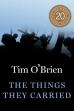
Tim O'Brien is the author of GOING AFTER CACCIATO, winner of the 1979 National Book Award in fiction, and THE THINGS THEY CARRIED, which was named by the New York Times as one of the ten best books of l990, received the Chicago Tribune Heartland Award in fiction, and was a finalist for both the Pulitzer Prize and the National Book Critics Circle Award. In 1993 the French edition of THE THINGS THEY CARRIED received the prestigious Prix du Meilleur Livre Etranger. IN THE LAKE OF THE WOODS was named by Time magazine as the best novel of 1994. The book also received the James Fenimore Cooper Prize from the Society of American Historians and was selected as one of the ten best books of the year by the New York Times. His other books are IF I DIE IN A COMBAT ZONE, NORTHERN LIGHTS, THE NUCLEAR AGE and GOING AFTER CACCIATO. His two most recent novels, IN THE LAKE OF THE WOODS and TOMCAT IN LOVE, were national bestsellers.

O'Brien's short stories have appeared in Esquire, Harper's, Atlantic, Playboy, Granta, Gentleman's Quarterly, The New Yorker, and in several editions of The O. Henry Prize Stories, the Pushcart Prize, and Best American Short Stories. In 1987 he received the National Magazine Award for his story THE THINGS THEY CARRIED, which was also selected for inclusion in the Best American Short Stories of the Century, edited by John Updike. O'Brien has been awarded fellowships from the Guggenheim Foundation and the National Endowment for the Arts.

Back to top.   


PAST INTERVIEW - 1998

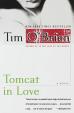
Tim O'Brien, the crafty and talented author of TOMCAT IN LOVE, talks about life, love, writing, and the tomcat within us all.  If you thought that only men could be tomcats, you'd be wrong!  You won't want to miss O'Brien's wry thoughts about his main character Tom Chippering, the disarming protagonist of TOMCAT, or anything else this intriguing and down-to-earth writer has to say.

BRC  You are known for dealing with the Vietnam War in your writing.  TOMCAT IN LOVE takes on the war between the sexes. What inspired this transition?

TO:  Though I'm pegged as a "Vietnam writer," I have never looked at my career in quite that way.  I see myself as a "writer-writer."  And like any novelist worth his or her salt - or worth the high price of a book these days - I try to write about the human heart under stress.  (War is stressful.  Love is stressful.)  In this sense, then, TOMCAT IN LOVE represents no fundamental departure for me.  Granted, I set out to write a book that would make people laugh, and certainly the comedic tone of the novel presented interesting new challenges.  Yet my raw materials remain pretty much the same: the things we will do to win love, the things we will do to keep love, the things we will do to loves ourselves.

BRC  Do you feel any pressure to repeat the success of IN THE LAKE OF THE WOODS?

TO:  The only real pressure I felt in writing TOMCAT IN LOVE was the pressure of trying to write a good book.  Yes, I am proud of IN THE LAKE OF THE WOODS.   But I must confess that I am super-duper proud of the imperious, sexist, oblivious, pompous, charming, disgusting, politically incorrect voice that drives TOMCAT IN LOVE.  (Tom Chippering - the hero of this book - is the sort of person you'd meet at a cocktail party, let's say, and on the drive home you'd turn to your wife and say, "My God, did you hear that guy?  Somebody should write a novel about him!")

BRC  Do you think most men would want to be tomcats if they felt they could get away with it, or do they really crave the love of one ideal woman?

TO:  Well, in my experience both men and women have miniature tomcats purring away inside them.  True, poor Tom Chippering takes this to a ridiculous (and I hope funny) extreme.  But I think all of us, men and women, will recognize the hunger for love that lies beneath much of Tom's behavior.

BRC  Why are men so afraid of intimacy as opposed to sex or love?

TO:  Why are women so afraid of intimacy?  

BRC  There is an obvious question here. What are the parallels between you and Thomas Chippering?

TO:  I guess we've all done contemptible, ridiculous, and sometimes funny things in the name of love. I don't exclude myself.  But if you want the inside scoop, the character of Tom Chippering is actually based on you.

BRC  Your books ask more questions than they answer. Is writing, for you, a vehicle for making sense of things?

TO:  A good piece of fiction, in my view, does not offer solutions.  Good stories deal with our moral struggles, our uncertainties, our dreams, our blunders, our contradictions, our endless quest for understanding.  Good stories do not resolve the mysteries of the human spirit but rather describe and expand up on those mysteries.

BRC  Your books, and their characters, display a certain amount of moral ambiguity --- a sense of this is true but that also is true --- or both could be true at the same time.  Does this reflect your personal philosophy?

TO:  Yes.  Truth evolves.  Truth is fluid.  Truth is a function of language.  (If I were to say to you, "It's now 10:00 A.M.," I would be telling the "truth" of Boston, Massachusetts, but not the "truth" of Tokyo, Japan.)  A lie, sometimes, can be truer than the truth, which is why fiction gets written.

BRC  In "If I Die In A Combat Zone," you write, "Can the foot soldier teach anything important about war?  I think not.  He can tell war stories."  But "The Things They Carried" is largely a collection of stories that personalized the Vietnam war in a way that few other writers were able to do.  Aren't those stories, ultimately, more important than the factual accounts of war?

TO:  Factual accounts of war can be wonderful.  Witness Michael Herr's DISPATCHES.  (The issue of what is "fact" and what is "fiction" may often prove troublesome, of course.)  Ultimately, in my opinion, what matters is not "fact" versus "fiction," but rather the power of good story, well told, to squeeze the reader's heart.

BRC  I know you visited Vietnam a few years ago.  Could you comment on that experience?

TO:  No.  I have said all I wish to say.

BRC  Do you think you will ever have any closure on your Vietnam experience?

TO:  No.  It's a little like asking Joseph Conrad if he will ever find closure on being a sea captain.  Or asking Toni Morrison if she will ever find closure on being black.

BRC  TOMCAT IN LOVE is a very different novel from your earlier books.  What other topics are you planning on exploring?

TO:  I'm superstitious about talking about works-in-progress.  Or even ideas-in-progress.  By saying too much --- or perhaps anything at all --- a writer can "freeze" the development of a story, setting in public concrete.  I'd better stay quiet.

BRC  Are there writers you particularly admire?

TO:  Many.  Problem is, for every wonderful writer I might mention there is one or another I will neglect to mention.  I've stopped making lists.

BRC  Have you been influenced by any writers?

TO:  Yes.  (Borges.  Conrad.  The Brothers Grimm.  Whoever wrote the Hardy Boys series.)  But the huge "influence," finally, is the life that surrounds me - people, places, events.  

BRC  Are you working on anything right now?

TO:  Sort of.  Mostly thinking.  I'll be on a book tour for TOMCAT until November, and for the time being I want to do all I can to ease Tom Chippering into the waking world.  God knows, he needs all the help he can get.

BRC  What are you reading at the moment?

TO:  My tour schedule.

© Copyright 1996-2009, Bookreporter.com. All rights reserved.

Back to top.