IndieBound Independant Bookstores
Bookreporter.com Click Here For Librarians Submitting a Book Become a Reviewer FAQ Contact Us About Us
Home Reviews Features Authors Quote Books Into Movies Book Clubs Awards Coming Soon
Search Contests WOM Bestsellers New in Paperback Newsletter Bibliographies Blog


Photo © David Najfach

Interviews

March 24, 2006

March 4, 2005

Author Bibliography

Click here to find more Richard Montanari on Audible.com.

Books by
Richard Montanari


MERCILESS

THE SKIN GODS

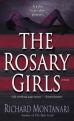
THE ROSARY GIRLS: A Novel of Suspense


Richard Montanari

BIO

Richard Montanari is a novelist, screenwriter, and essayist. His work has appeared in the Chicago Tribune, Detroit Free Press, Cleveland Plain Dealer, and scores of other national and regional publications. He is the OLMA-winning author of the internationally acclaimed thrillers THE ROSARY GIRLS, KISS OF EVIL, DEVIANT WAY, and THE VIOLET HOUR. Visit the author's website at www.richardmontanari.com.

Back to top.   


INTERVIEW

March 24, 2006

Bookreporter.com's Suspense/Thriller Author Spotlight Team (Carol Fitzgerald, Joe Hartlaub and Wiley Saichek) interviewed Richard Montanari --- author of such novels as THE ROSARY GIRLS and THE VIOLET HOUR --- about his most recent endeavor, THE SKIN GODS. Montanari explains some of the technical aspects of writing, such as how a character's point of view can set the tone of the entire novel, and the ways in which he structures multiple plot lines in a single book. He also discusses his lifelong passion for film and its effect on his work, explores the possibility of writing sequels to his previous books, and shares details on the future of the Byrne/Balzano series.

Bookreporter.com: We found the opening chapter of THE SKIN GODS to be bone-chilling --- you immediately pulled the reader in. How much time do you spend on getting the opening scenes of a novel "just right?" What is the most difficult chapter to write --- the opening chapter or the concluding chapter?

Richard Montanari: The hard part, especially in novels that have a number of points of view, is deciding whose point of view launches the story. Hero? Antagonist? Victim? If your killer has a POV --- and all my books do --- it is usually his or her vision that sets the tone. In the opening scene of THE SKIN GODS, the killer is having a conversation with a woman who may or may not end up being a victim, and because it is his point of view --- told in first person, present tense --- I think the reader is drawn into not only his mindset, but the immediacy of the moment. The unpredictability of a scene that lasts just a few pages, in which the whip may come down any second, is, I believe, quite exciting.

And as to time spent, I don't think any other pages of the book are more crucial than the opening and the close. I think most novelists spend a great deal of time on the beginning and ending. If you don't have a compelling beginning, readers will not take the ride with you. If you don't have a satisfying ending, readers feel cheated. And then there's that middle business...

BRC: One of the many impressive aspects of THE SKIN GODS is the way that several different mysteries intertwine themselves throughout the storyline, so that it's almost impossible to stop reading the book at any particular point. Which of the many plots within THE SKIN GODS was actually the starting point for you when you began writing the book?

RM: The starting point was the spine of the story, that being the pathology of the killer. All things revolve around that storyline, and all other subplots converge on it. Every time the narrative returns to the killer's point of view, it is a touchstone --- in other words, where are all the other people in relation to the killer at that moment? I believe it helps re-orient the reader, as well as give clues to the killer's identity. 

BRC: The plot of THE SKIN GODS centers on the film industry. How did you become familiar with it?

RM: I think it began with a lifelong love of film. I lived near a theater when I was growing up, so I would spend my Saturday and Sunday afternoons there, eating Sky Bars and Necco wafers and Raisinets. In summer, while most of the other kids were playing baseball, I was watching movies (although I did have that one shining season as a shortstop for the Lyndhurst Padres). The theater was air-conditioned (our house was not), and I got to sit in the cool, mysterious darkness --- often with just a few other people at the matinees --- and hang out with Lawrence of Arabia and Zorba the Greek and James Bond and Baby Jane and the family of Chuck Jones cartoon characters. To this day, whenever I eat a chocolate covered peanut, I hear the Pink Panther theme. It's an obsession that's never waned in my life. A few years ago I began writing screenplays, and that exercise opened up an area of the business with which I was not familiar. I've heard that the character of Ian Whitestone in THE SKIN GODS is based on a real person. Maybe yes, maybe no. I'll never tell.

BRC: An extremely creepy and disturbing aspect of THE SKIN GODS was the "recreation" of famous murder scenes from classic movies. How did you decide which films to include in the novel?

RM: The murders are based on scenes within those films that have a connection to each other. I believe part of the fun of the book will be for film fans to divine what film is being recreated as it is happening. The puzzle for the detectives and, I hope, the readers, is to figure out how all the scenes are related. It took a little research to find the number of films I needed, but they were all there. The clues are there, too.

BRC: What are your favorite films in the noir genre, or any genre?

RM: That's a tough one. My favorite noir film is The Third Man, in that I can watch it over and over. It is an example of so many people working at the top of their game. Try getting that theme out of your head after you watch it. Noir is such a loosely defined genre that a lot of films fall under its umbrella. I love so many --- Night and the City, Rififi, Notorious, The Asphalt Jungle, Double Indemnity, Sweet Smell of Success, and of course Chinatown. Once we get into mainstream and independent and foreign film, I could probably name a hundred. The Apartment, La Strada, The Bicycle Thieves, Zhang Yimou's To Live, Blue Velvet, Suspicion, Cinema Paradiso, The Wicker Man, City Lights. How much time do we have?

BRC: THE SKIN GODS is your second novel to feature Kevin Byrne and Jessica Balzano. Did you feel more "comfortable" writing this novel, or did you feel added pressure because of the success of THE ROSARY GIRLS? As someone who has now written both stand-alone novels and novels with recurring characters, what are the challenges of writing novels with continuing characters? What are the rewards?

RM: There is indeed a comfort level to continuing a character, as opposed to creating one. Readers have accepted the characters of Byrne and Balzano, and I'm very gratified by that. They have a history now, a set of beliefs and an emotional base from which to work. The good news, as a writer, is that I've found that I don't understand them completely, so they still have the potential to surprise me. The challenges are to have the characters grow and develop. The rewards are having readers feel they know something about them, and to be able to predict, to some degree, how the character will act in a given situation.

BRC: How have readers responded to the character of Colleen Byrne? When you first began developing the characters for the Kevin Byrne/Jessica Balzano novels, did you know right away that you would make Colleen deaf? Have you personally studied sign language?

RM: I've gotten a great deal of mail about her character. Yes, I knew she would be deaf from the very beginning. The idea began as a way to establish Kevin Byrne's character, a man who has struggled with his daughter's “affliction.” I thought it might be a sort of shorthand to his character, in that the reader would know how he got to where he was in life when we meet him at the opening of THE ROSARY GIRLS. Then it occurred to me that Colleen was a fascinating character in her own right. She has developed into a very strong young woman. And yes, I have studied a few of the basics of sign language, but only enough to get myself slapped.

BRC: Last year you indicated to Bookreporter.com that Kevin and Jessica were composites of people you met on the Philadelphia police force and that Jessica was more challenging to create because there are fewer women homicide detectives. Are you still facing challenges with this character as you continue to develop the series? Have you received feedback from female detectives --- or females interested in law enforcement --- since the publication of THE ROSARY GIRLS?

RM: Yes on all counts. Nothing has changed in the two years since I began writing THE ROSARY GIRLS. There has been no great influx of female detectives, at least in the Philadelphia Police Department. So, as a recruitment tract, the book was a complete flop. But I have heard from a number of women officers who've said I got the life right. I was very pleased to hear that.

BRC: A great deal of THE SKIN GODS concerns Julian Matisse, a criminal from Byrne's past who comes back to haunt him in a very personal way. Did you at any point consider writing a novel entirely about the Matisse case, and instead incorporating the story, from a retroactive standpoint, in THE SKIN GODS?

RM: The Matisse case probably could have sustained a full-length narrative. When I began to flesh out his story, I realized it could be a deeply resonant part of the book. I pared it down to where it stands, and as it integrates into the main story, I think it generates a lot of tension. It certainly takes Byrne off on a tangent that ultimately places him back into the center of the whirlpool. I love reading subplots like that, even though they are a challenge to write.

BRC: Atkins Pace is a very minor, but at the same time, a very important character in THE SKIN GODS. Is there any significance to the origins of his name?

RM: I love that guy. He may reappear. And he would definitely go upside for being referred to as “very minor.” As to the origins of his name, I never undermine subtext where subtext appears, whether I intended it or not. Is that cryptic enough?

BRC: Your other novels have been stand-alone works. Have you considered revisiting any of your previous novels for the purpose of writing a sequel?

RM: Besides THE ROSARY GIRLS, the book I've gotten the most mail about over the years is my second novel, THE VIOLET HOUR. It is a stand-alone novel that centers on a freelance writer and suburban housewife who get caught up in some very evil doings. Considering that it is some of the most wickedly perverse prose I've ever written, I've always been a bit surprised how many readers around the world have taken to the budding relationship of Amelia and Nicky, and the things they had to do on their brief interlude in hell. Right now, the characters are on a plane to New York. They may land one day.

BRC: You indicated previously that you had three books planned in the Byrne series. Has this changed? If so, how so? What can you tell us about your next project? If it is already completed, what are you working on now?

RM: I'm working on the third book in the Philadelphia series, as yet untitled. A number of characters return, but this one visits a very dark place, an evil that began 20 years ago and is just ripening into something really bad. I just creeped out my sister with an early scene and, as a younger brother, that is always a good sign.

Click here now to buy this book from Amazon.com.

Back to top.   


INTERVIEW

March 4, 2005

Bookreporter.com's Suspense/Thriller Author Spotlight Team (Carol Fitzgerald, Joe Hartlaub and Wiley Saichek) interviewed Richard Montanari, author of THE ROSARY GIRLS. Montanari talks about the creation of his two main protagonists, the research he conducted for the law enforcement aspects of the novel, his love for Philadelphia, and how his own religious background has influenced his writing.

Bookreporter.com: Your pairing of rookie Detective Jessica Balzano and veteran cop Kevin Byrne makes an interesting matchup. From the start did you see your lead characters as we see them, or did they evolve into the personalities that we are reading?

Richard Montanari: When I began my research into the inner workings of a homicide unit, I realized I had a basic understanding of what they did on a day-by-day basis but no clue as to the challenges of doing such difficult and dangerous work. I created the character of Jessica Balzano, who experiences her first day on the job in THE ROSARY GIRLS, as a way of taking me, along with the reader, by the hand. Kevin Byrne, who has seen it all many times and still believes, was the rock. Although there is an arc to his character --- he is not the same man at the end of the book that he is at the beginning --- it is not quite as profound a journey as Jessica's.

BRC: Are Byrne and Balzano based on anyone you encountered in law enforcement?

RM: Byrne and Balzano are composites of people I met on the Philadelphia police force. Externally, Kevin Byrne was easier --- there are a lot of men in the homicide unit who have more than twenty years on the job. Jessica was more of a challenge because there are not a lot of women homicide detectives.

BRC: Religion has been a theme that you have touched upon in a couple of your novels. In THE ROSARY GIRLS you reference a number of Catholic rituals and practices. What drove your writing in this direction?

RM: Unvarnished, deep-rooted, paralyzing guilt.

Kidding. Sort of.

BRC: What is your own religious background and how did it influence your writing?

RM: I was raised Roman Catholic during the period of transition from Vatican I to Vatican II, and I think a lot of the mysteries of the faith, specifically the mass being said in Latin, fostered an aura of intrigue and mystery that is missing in this era of drive-in churches. I wanted to create a killer who lives in that netherworld created by the melding of ritual and madness.

BRC: Did you have any qualms about writing a book that grappled with religious themes in this raw a manner?

RM: I think any pathology that examines the disturbed mind is nightmare fodder, for both the writer and the reader. I also believe there is a prism through which sociopaths view the world, and whether it is religion, or sexual compulsion, or just garden variety rage, it can be difficult to write about.

BRC: Your writing is both gritty and edgy. Are there times when you are writing where you find yourself going too far and feel a need to pull back? Conversely, when are there times where you find yourself going to a darker place than you personally want to be?

RM: I've never found the need to pull back on the edgier parts of my books. (I once had an agent who wanted me to ratchet it up a bit.) I think the story dictates the level of mayhem, and you have to be true to it. I have found it interesting that some readers and critics over the years have thought that my books described certain crime scenes and murder scenarios in graphic detail, when they have only hinted at it. The power of suggestion.

BRC: You've never had a career in law enforcement, yet THE ROSARY GIRLS is a convincing police procedural thriller. How did you research the law enforcement parts of the book?

RM: I spent a great deal of time at the Roundhouse (the main police administration building in Philadelphia), as well as at their forensic lab. I rode with the detectives in the homicide unit, hung around their holding cells (the worst place in the world) and watched as the DNA team at the lab cracked cases. The PPD has been very forthcoming and welcoming to me, and their advice and patience has been invaluable in the creation of THE ROSARY GIRLS.

BRC: Your earlier novels were set in Cleveland. What made you decide to set THE ROSARY GIRLS in Philadelphia?

RM: I've spent a lot of time in Philly over the years. I have family there. It has everything that Cleveland has, but a lot more of it. More people, more crime, a larger and somewhat more diverse population. Cheesesteaks. If the police department had not welcomed me in as they did, I might not have made the decision. The reception THE ROSARY GIRLS has gotten from readers in Philly has been overwhelmingly positive. I think I have found a new home. Plus, although the city has a lot of great writers, no one is writing the sort of fiction I write. It seemed like a natural to me.

BRC: Is this book the start of a series? If so, what can we expect to see in upcoming books?

RM: I have three books plotted in this series, and then we'll see. There is much material to mine between those two rivers.

BRC: Do you plan to continue writing stand-alone novels as well?

RM: I hope so. I have an outline to a stand-alone ready to go. It's a man-on-the-run story with a number of twists and turns.

BRC: What inspired you to make Kevin's daughter deaf? Will we see this aspect of his daughter's life take a larger role in a future title?

RM: I believe Colleen's deafness speaks to Kevin's character as much as it does to hers. The fact that it has presented more challenges to him over the years than to her informs Kevin's development as a father and a man. Colleen Byrne is a very interesting character to me. She has a bigger role in the next book.

BRC: What's your writing day like?

RM: Up at six, over to my beloved Rancilio Silvia espresso machine (known as bella machina around these parts), check the headlines online, find my glasses, and I'm off.

BRC: Do you outline or just write? Do you create "dossiers" on your main characters or do you flesh these characters out as you write?

RM: Outlines, yes. Dossiers, no. I have characters in mind, and I write down basic information (dates of birth, hometown, family stats, education). After that, I send them off into the world of the story. I follow them, and they quite often take me to places I'd never go alone.

BRC: How do you relax after a day of writing?

RM: I love to cook, so I usually make dinner for friends and family. I polish the day's work, answer correspondence, watch a film or two, and go out to a jazz club.

BRC: Who have your literary influences been? Have there been any influences outside the literary world?

RM: Jim Thompson, Charles Willeford, James M. Cain, James Ellroy, Shirley Jackson, Shane Stevens, Andrew Vachss, Thomas Harris, of course. I'm influenced a lot by filmmakers. The masters: Hitchcock, Lean, Fellini, Kubrick, Kurosawa. The moody: David Lynch, David Cronenberg. The mavericks: David Fincher, Darren Aronofsky, Atom Egoyan. Outside of the literary world: my father. He is a master builder. He taught me order.

Click here now to buy this book from Amazon.

© Copyright 1996-2008, Bookreporter.com. All rights reserved.

Back to top.   


Home - Reviews - Features - Authors - Daily Quote - Books to Movies - Book Clubs - Awards - Coming Soon
Search - Contests - Word of Mouth - Bestsellers - New in Paperback - Newsletter - Author Bibliographies - Blog
For Librarians - Submitting a Book - Become a Reviewer - FAQ - Contact Us - About Us - Privacy Policy

© Copyright 1996-2008, Bookreporter.com. All rights reserved.
The Book Report, Inc. • 250 West 57th Street • Suite 1228 • New York, NY • 10107

Bookreporter.comReadingGroupGuides.comAuthorsOnTheWeb.comAuthorYellowPages.com
Teenreads.comKidsreads.comFaithfulReader.com