|
BIO
Anchee
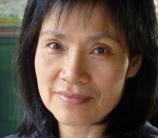
Min was born in Shanghai, China, during the rule of communist leader
Mao Zedong. During the Cultural Revolution, she was chosen to become
a leader of the Little Red Guards. The Little Red Guards were a
group of elementary school children who supported and believed in
Mao's ideas. They actually started from the Red Guards, an older
faction of students. They supported Mao and his Communist views.
Later, she was chosen to play the starring role in one of Madame
Mao's movies. In 1983, Min fled to the United States after the death
of Chairman Mao, the execution of Madame Mao, and the ensuing political
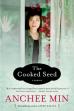
turmoil. When she arrived in the States, she published RED AZALEA.
Also she began to write and finished her most prized novel Katherine.
Like RED AZALEA, Katherine was a story about the terrors and horrors
of the Cultural Revolution. Ironically, when Anchee Min toured China
promoting RED AZALEA, the government used her as an example of what
Chinese women could accomplish. Besides just being an author, Min
is also a known painter, photographer, and a musician.
PAST INTERVIEW
September
29, 2000
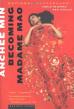
Discover the fiction behind the fact in Anchee Min's heavily researched
novel, BECOMING MADAME MAO. "White-bone-demon" as she is universally
known, Madame Mao is not a very sympathetic character; but Min draws
her as humanely as possible, showing her readers all facets of her
complex personality. Join Bookreporter.com's Writer Jana Siciliano
in this poetic interview with a writer who transplanted herself
into an alien culture and not only survives, but thrives --- in
life and in language, hers and ours.
TBR: With so much having been written already about Madame Mao,
what made you choose her as your subject for your novel, BECOMING
MADAM MAO?
AM: It was the process, the
process of how she, a beautiful woman who once possessed tremendous
innocence, turned into a monster. I hadn't seen that done before.
TBR: What was your research process like? How much of what you
knew of her as a historical figure was correct and what new things
did you learn about her that you found fascinating?
AM: The research process was
long and hard. It took me five years just to get my notes straight.
Most of the crime she was accused of was correct. What's fascinating
to learn was that Mao was behind her in her major moves, i.e. the
Cultural Revolution. I had the idea most people had at the beginning:
that she was simply a power-craver, a White-bone-demon as she is
universally known. I was surprised to discover a lot
of human side to her. The Jiang Ching Madame Mao as a lover, a wife,
and a mother.
TBR: Ultimately, what will her legacy be, as an icon and as a
woman?
AM: To the people of China she
would most likely remain her official title as the White-bone-demon
for quite a time. To me she would be an icon of a very sad time
and a woman who lost her soul to demons as she rebelled against
the society, which treats women as grass to be walked on.
TBR: Is the title also a reference to your BECOMING MADAME MAO
since you wrote the book in the first person and thus created a
voice for Madame Mao --- did you channel her through your own sensibilities?
AM: Not really, although I did
channel her through my own sensibilities. It was not
natural for me to think of her in that way. It was a
difficult writing process. On the one hand I had to do her justice,
which meant that I shouldn't be judgmental; on the other, I had
a hard time comprehending her in many cases. For example, I couldn't
bring myself to justify the lives she had taken during the Cultural
Revolution in order to revenge and protect her career. She was heartless
and purely evil. I hated her.
TBR: How did your writing change after the enormous success of
your memoir RED AZALEA?
AM: The main change was the
self-confidence. I started to believe that I could write. So I pushed
myself to be more original, creative, and to develop the courage
to deal with failure when it happens.
TBR: What was the most difficult thing about writing RED AZALEA?
AM: To live the time over again.
It was painful.
TBR: How was writing KATHERINE, your first novel, different from
your experience writing BECOMING MADAME MAO?
AM: The scale was much larger
both in background and characters. There were four major characters
in KATHERINE while more than twenty in BECOMING MADAME MAO. Also,
I had to follow the record of history tightly in BECOMING MADAME
MAO. It was a totally different experience.
TBR: When did you decide to be a writer? As a former actress,
what skills did you learn in that art form that affected your writing
life?
AM: I didn't decide. The reason
I wrote was to learn English so I could graduate from college and
get a job to be a small firm secretary. I never dared to dream. I
was a new immigrant and survival was the only thing on my mind at
the time. Talking about being a former actress, I was never one
to begin with. Madame Mao's people picked me from a cotton field
for the way I looked --- a proletarian peasant, not that I had any
acting skills. I love writing because I don't have to show my face.
I had a chance to be exposed to a lot of classic monologues while
studying acting. Maybe that affected my writing.
TBR: How do you see the Internet affecting the future of fiction?
Do you read ebooks or books online?
AM: The Internet is affecting
everything on the face of the earth. Future fiction has to be created
unique enough in a non-replaceable form to survive and thrive. I
haven't had the chance to explore ebooks or books online yet.
TBR: Would you ever consider writing a story or book that would
only be available online?
AM: I need to give the idea
some thought before I know what I am talking about on this issue.
TBR: Do you believe that the sharing of history like this can
help to change the contemporary world? By learning from the past?
AM: Definitely.
TBR: What books and authors have influenced you the most throughout
your life?
AM: I have to give you a list
of Chinese names. Most of these authors are unknown to the western
public, i.e. Tang Xian-zu of 1200. I read him when I was 14 in a
dark storage where Red Guards placed their rooted goods.
TBR: What are you reading now?
AM: Historical documents. I
am doing it for my next project. In fact, I just got back from China
last week. I spent my summer digging out books in the basement of
the Museum of History in Shanghai. Every time I got in, I felt like
a cockroach being sprayed --- the book-storage is heavily sprayed
with chemicals in order to prevent the bugs from eating the pages
away. It is a place filled with treasure --- lots of out of print
and lost books. Material that is crucial to my subject. I am reading
everything that interests me around the late Qing Dynasty 1800-1911.
TBR: In one sentence, what is one piece of invaluable advice
you have picked up over the years of writing?
AM: I ask myself, "Will you
still write if this piece doesn't get published?" If the answer
is yes, then I know that I meant to write it.
© Copyright 1996-2010, Bookreporter.com. All rights reserved.
Back to top.
|