|
BIO
A multiple Edgar and Shamus Award winner --- including the Shamus Lifetime Achievement Award --- John Lutz is the author of over 40 novels. His novel SWF SEEKS SAME was made into the hit movie SINGLE WHITE FEMALE, and THE EX was a critically acclaimed HBO feature. He lives in St. Louis, Missouri and Sarasota, Florida.
Back to top.
INTERVIEW
October 30, 2009
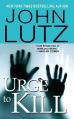
URGE TO KILL, John Lutz's fourth novel to feature protagonist Frank Quinn, finds the former NYPD police detective leaving retirement in order to investigate two strings of serial murders that may have been committed by the same killer. In this interview with Bookreporter.com's Joe Hartlaub, Lutz explains how an observation made during his stint as a civilian employee with the St. Louis PD prompted him to focus this series on older, more experienced members of law enforcement, and why he chose a rather unlikely setting for one of the book's most chilling scenes. He also reflects on the appeal of serial murders for thriller readers, selects his dream cast if the novel were ever to be adapted to film, and shares some of his favorite reads from the last several months.
Bookreporter.com: Your new novel, URGE TO KILL, features the return of one of the more interesting and unusual teams in detective fiction. Frank Quinn, a former New York City police detective, accompanied by Pearl, his former flame --- for whom he still feels a flicker --- and the reliable Fedderman are investigating two sets of serial killings that may, or may not, be the work of the same killer. They are retired law enforcement investigators well into their middle age, past the time when they would be kicking down doors and rousting suspects. What spurred you to decide to write a series around a trio for whom age and guile were assets and not liabilities, and for whom retirement was simply the beginning of a new career?
John Lutz: I worked for the St. Louis Metropolitan Police years ago and observed that detective work required guile and experience. These assets could be found in abundance in the older detectives, who at the same time retained most of their physical skills. They let the younger detectives kick open doors.
BRC: Hunting is a major theme in URGE TO KILL, with respect to both a very unique business enterprise and the selection, seduction and execution of unwitting victims. Have you ever been a hunter? If not, where did you acquire the extensive knowledge of some of the finer points of hunting, and its aftermath, that are displayed in the book?
JL: I did some hunting when I was younger and then one day decided that it wasn’t for me. What I wrote in URGE TO KILL was both the product of memory and of research.
BRC: Some of the most chilling passages occur almost a quarter of the way through the book, where the narration describes the method by which the unidentified serial killer chooses, shadows and approaches one of his victims, a sales clerk at an office supply and electronics store. It was difficult to overcome feelings of paranoia after reading those passages. Could you take us --- particularly those of our readers who are aspiring writers --- through the process, step-by-step, of how you brought those sentences to life?
JL: I chose one of the most unlikely hunting territories imaginable --- the orderly aisles of an office supply store. The moment that sometimes occurs between prey and predator --- when both understand and accept the inevitable --- happens here, not in the wild but among printers and copiers. I think that incongruity is what raises the hair on the back of the reader’s neck.
BRC: I occasionally like to write down short quotations when I read, and URGE TO KILL had one. It concerned --- and I won’t give it away entirely --- the manner in which women move through the world of chance. It is a fabulous line, one of the best in this or any book. What inspired that quotation?
JL: Thank you. I suppose I was inspired by observing beautiful women. Virtually all women are, in ways subtle and not so subtle, sexual prey all the time; in a sense, everything they do is a risk because it can be misread. Or they can simply make the wrong choice: should I leave the party with this guy or that one? So they move through the world increasingly learning to recognize the most acceptable risks. They do this so frequently that it becomes automatic, a state of mind.
BRC: What is it about writing serial murder fiction that attracts you as a writer? And why do you think it attracts readers?
JL: There is a dramatic arc in an actual successful serial killer investigation, a battle of wits between good and evil, order and chaos, in a contest of ever more frequent and escalating violence. I think that within that structure there are myriad tales to be told. Similarity to the real thing is what gives these books a built-in plausibility. We know there are such monsters out there. Often they choose victims randomly, which means that anyone might be a victim, any reader. That means a good, safe scare for the reader.
BRC: The Quinn series, particularly URGE TO KILL, seems perfect for television, perhaps as a program that would deal with each book in a series of story arcs. If you had the power to do so, who would you cast in the roles of Quinn, Pearl and Fedderman?
JL: I couldn’t agree with you more. Gene Hackman would make a good Quinn. Julia Louis-Dreyfus could be Pearl. Stephen Tobolowsky would be my choice for Fedderman. Let’s green light this project.
BRC: When you started writing in the late 1960s there were no personal computers, no personally accessible Internet, no word processing software. What do you consider to be the most significant technical innovation for authors since 1970?
JL: Gotta be the word processor/computer. It took much of the drone work out of writing, and made it possible for more writers to develop faster.
BRC: You have written a significant number of short stories, and continue to practice in the medium, though you have been more focused on novels lately. What are the advantages and disadvantages of writing short stories as opposed to novels? Do you have a preference for one over the other?
JL: It’s no secret that it is more difficult to write a good short story than a good novel. So a challenge: To write a book that is as good as a good short story, only longer.
BRC: An author recently told me that one of the greatest innovations of the 20th century was the mass market paperback book. What is your opinion?
JL: I agree. I think most writers want as many people as possible to read their work. MMPB makes that possible.
BRC: You are well into your fifth decade of writing. What is your favorite part of the act of writing? And what is your least favorite part?
JL: I greatly enjoy the actual process of writing --- composing. I also enjoy revising --- the working of the clay to get things just right. When I get tired of one procedure, the other is my favorite.
BRC: In addition to writing fiction in multiple genres, including science fiction and just about every mystery sub-genre imaginable, you have also written a number of articles concerning the art of writing. What is the best advice you can give to a prospective author?
JL: Write. As in learning to dance or drive a race car, there is no substitute for doing it.
BRC: On a related note, if you could relive your career, is there anything you would have done differently? And is there anything in particular that you now regard as the smartest move you made?
JL: There’s no point in second guessing moves that seemed right at the time. And I don’t recall anything disastrous that grew out of a wrong decision.
My smartest move was the same as that of many writers: choosing to write instead of doing something more traditional. I have never regretted my choice.
BRC: What have you read in the past six months --- whether it be fiction of any genre, or nonfiction --- that you would recommend to our readers?
JL: I enjoyed OLIVE KITTERIDGE. It deserved the Pulitzer Prize. I also recommend the vintage Harry Kemelman Rabbi novels.
BRC: I thoroughly enjoyed the team of New York Police Detective Sal Vitali and Harold Mishkin. Do you have any plans to feature them in a more prominent role in a forthcoming novel? What can you tell us about your next book?
JL: It will be a serial killer novel. And Sal and Harold do play expanded roles. I like both characters and the chemistry between them, so it’s a sure thing that they’ll be around more from now on. Nothing like having the writer on your side if you’re a character in a book.
Click here now to buy this book from Amazon.
Back to top.
INTERVIEW
November 14, 2008
Award-winning thriller author John Lutz began writing in 1966 and has since gone on to publish over 40 novels and 200 short stories. His latest work of fiction, NIGHT KILLS, marks the return of homicide detective Frank Quinn, who was featured in the previous works DARKER THAN NIGHT and IN FOR THE KILL. In this interview with Bookreporter.com's Joe Hartlaub, Lutz elaborates on the dynamic his protagonist shares with two recurring secondary characters and describes his fascination behind what motivates ordinarily cautious people to take unreasonable risks. He also shares details about his writing process and discusses some of his current projects, including a stand-alone caper story and a fourth Quinn novel to be released in 2009.
Bookreporter.com: You have always been a solid, reliable writer, yet NIGHT KILLS is a quantum leap for you, easily one of your best works and arguably one of the best police procedural novels published this year. You take a surprising and innovative turn on serial murder plots, and then keep turning. Did you develop the variation on the theme, as you will, while you were writing, or was it an element that you created at the inception of the book?
John Lutz: First of all, thank you for your kind words. Positive feedback is much appreciated in the lonely profession. Most of the novel is predetermined in a free-flowing synopsis, but I try to keep an open mind while I write so I can adapt and adjust if one element or another seems to be working well, or provides opportunity.
BRC: The murders in NIGHT KILLS involve a particularly and deliciously creepy brother-and-sister team who seem drawn from real life. Perhaps it’s because they remind me of a pair of siblings I used to know, but Victor and Gloria seem to be very much of the real world. Were there any current events that inspired what occurs in NIGHT KILLS?
JL: No, nothing in particular inspired the creation of these murderous siblings. It seemed to me that it would be effective to develop their too-close and twisted relationship as it represents such a strong, perhaps innate taboo.
BRC: Computer dating plays a part in NIGHT KILLS. There are a number of commercials for such sites that seem to be in heavy rotation on commercial and cable television. Was it one of those spots that perhaps provided the impetus for you to write NIGHT KILLS? Or was it something else?
JL: All the advertising for computer dating did catch my attention. I’ve long been intrigued by circumstances in which normally cautious and reasonable people take uncharacteristically unreasonable risks. Like advertising for a roommate, or moving into a new neighborhood and letting a stranger’s 14-year-old girl babysit the infant children --- or dating a stranger they know only from the Internet.
BRC: One of my favorite elements of NIGHT KILLS was the return of Frank Quinn and company. You are no stranger to writing series fiction, but there is something special about Quinn and his team that really hits home here. Do you have more novels in the series planned? If so, do you have the story arcs all plotted?
JL: I do plan on using Quinn, Pearl and Fedderman as continuing characters, as the chemistry between them has proved interesting. Also, Pearl’s mother has possibilities. All these characters have the capacity to keep getting into trouble. I’ve always admired that.
BRC: One of the many special elements of the Frank Quinn novels is the prickly dynamic that exists among Quinn, Pearl and Fedderman. Quinn and Pearl, of course, must deal with the after-effects of their prior relationship. Fedderman and Pearl, for their part, seem to be engaged in a constant game of one-upmanship. What is intriguing, however, is the manner in which the constant give and take that exists among the three players keeps them sharp and competing with each other, even as it propels them toward a solution to the particular case on which they are working. While you make the presentation of this dynamic look easy, it must take a lot of work. What percentage of writing NIGHT KILLS do you estimate involves getting that dynamic, that dialogue between those characters, just right?
JL: It would be difficult to express it as a percentage, but I do spend quite a bit of time on that dynamic. Part of the trick is to have Quinn use all that prickliness and combativeness to advantage. He --- more than the other two --- has an objective view of it, when he’s not mooning over Pearl, or angry with her.
BRC: On a related note, the dialogue, particularly the wisecracking and sarcastic give and take that goes on with Quinn, is another element of their relationship that makes the series so enjoyable. How do you get that dialogue just right? Do you try it out on others? Do you read it out loud to yourself? Or do you use some other method to get it just right?
JL: If I tried it out on my friends I’d have no friends. Strangers have chased me considerable distances. I think the key to making such dialogue effective is to have a firm grasp of the characters so that it seems to flow naturally.
BRC: An intriguing though secondary element of NIGHT KILLS is the manner in which political gamesmanship within the New York Police Department interferes with, and actually inhibits, an ongoing investigation into a series of murders. During your research, did you find fact to back up this fiction?
JL: I’m most interested in the NYPD as a huge bureaucracy, rife with political infighting, as are most bureaucracies. Like Enron only with guns. And of course, the news regularly provides us with plenty of unfortunate facts about the NYPD (or any other large police department). I have the greatest respect for the cops themselves, who have to operate on a different level out on the street. I try to portray theirs as the difficult job that it is.
BRC: Many readers think of authors as doing nothing but writing, and writing constantly. What do you enjoy doing in your spare time, if indeed you have any?
JL: I read, go out to dine with friends, follow Major League baseball, attend live theater, travel, read some more. Write constantly.
BRC: You have been writing for so long --- since the 1970s --- that it is easy to forget that you had a life before your writing career began. What did you do? And do you have any regrets from leaving that profession?
JL: I had a number of jobs, including civilian employee of the St. Louis Metropolitan Police Department, and freight handler in the Teamsters. I crossed the line from reader to writer early, and while working other jobs was always planning on a writing career. I have no regrets whatsoever about taking up writing as a profession, to the exclusion of any other.
BRC: On a related note, is there anything that you did at the beginning of your writing career that you wish you had done differently? Alternatively, was there anything you did that you feel you were very fortunate or very wise to have done?
JL: There are a few things I would have done differently in the early years, but that would have involved my being smarter when I was younger, and I wasn’t. I have been lucky, now and then amazingly so, both in circumstance and with the people I’ve associated with in the writing world. Luck might be more important than talent.
BRC: Do you have plans to write any stand-alone novels in the future?
JL: Sort of. I wrote a crime caper short story that I’d someday like to use as the basis for a novel, and I fancy that it would remain upright without a bookend.
BRC: While you are writing, do you prefer quiet and isolation, or stimulation? Do you listen to music while you write? If you listen to music, to what do you prefer to listen?
JL: I do like a reasonably quiet place to write, but after a few minutes I tend to block out whatever noise there is, be it sirens, jackhammers or music. But who knows, maybe the right kind of music would seep into my unconscious and affect what I write. My choice would be movie scores written by Bernard Herrmann.
BRC: What books have you read in the past six months that you would care to recommend to our readers?
JL: I’ve been reading some great older popular novels, including Eric Ambler’s THE LIGHT OF DAY and Len Deighton’s GOODBYE, MICKEY MOUSE. Among the newer books I would recommend are Stuart M. Kaminsky’s PEOPLE WHO WALK IN DARKNESS and Thomas H. Cook’s MASTER OF THE DELTA. Also, anything by David McCullough.
BRC: What are you working on now, and when might readers expect to see it?
JL: Another Quinn novel, URGE TO KILL, is in the works and scheduled to be published in the fall of ’09. It will be nothing like that crime caper novel I mentioned.
Click here now to buy this book from Amazon.
INTERVIEW
Novmeber 23, 2007
Award-winning mystery/thriller author John Lutz has written over 40 books and five times as many short stories, and is probably best known for his novel SWF SEEKS SAME, which was adapted into the hit movie Single White Female. In this interview with Bookreporter.com's Joe Hartlaub, Lutz describes his childhood inspiration for the particularly vicious villain in his latest work of fiction, IN FOR THE KILL, and explains how his stint working for the St. Louis PD gave him insight into how those working in law enforcement handle witnessing crime and violence on a daily basis. He also elaborates on the familial relationships established in the book, compares and contrasts writing novels with short stories and reveals when readers can expect a new Frank Quinn novel.
Bookreporter.com: IN FOR THE KILL features the welcome return of Frank Quinn, last seen in your novel DARKER THAN NIGHT. What inspired you to bring Quinn back for another novel?
John Lutz: The novels I’ve been writing have featured a sort of ensemble cast. Though they’ve been different characters, my team of detectives has always been the same in most respects: an obsessive and relentless former homicide detective who was of some rank in the department; a scrappy and volatile female former detective who is his present or former lover; and his retired partner and friend from the NYPD, a more traditional middle-aged cop. When I decided it would be best to use the same trio of characters in each book, I chose the team I considered to be the one with the best chemistry --- Quinn, Pearl and Fedderman.
BRC: The Butcher in IN FOR THE KILL is one of your more memorable villains. His grisly methodology and the manner in which he selects his victims makes him particularly unforgettable. Was there a specific occurrence or individual who inspired The Butcher, and his interesting background, for you?
JL: Possibly the altogether decent man who owned and managed a butcher shop a few blocks from home where I grew up. The juxtaposition of severed animal parts (think hog’s head with apple in mouth) and food (think display of cupcakes and Twinkies) struck a kind of puzzled horror in my young mind. It was when I first connected dinner with dead animals and thought it kind of bizarre that this was so commonplace, a part of the mundane world. I can still recall the smell of the place. Its refrigeration might have been better.
BRC: Some of my favorite passages from IN FOR THE KILL involved the crime scene descriptions and Nift, the irreverent medical examiner. How have you gone about developing your forensic expertise as it relates to crime scenes? Is Nift based on any particular real-world individual?
JL: When I was young I worked for the St. Louis Police Department as a civilian employee and was intrigued by the cops’ black humor, and every once in a while glimpsed what was behind it. I understood it better when a friend who was a crime scene photographer would show me grisly copies of his photos. When dealing with that kind of horror on a regular basis, you can either somehow isolate and transcend it or, like Nift, try to get beneath it. If you can show it contempt, it can’t hurt you.
BRC: I liked the way you explored familial relationships, not only between The Butcher and his mother, but also between Quinn and his daughter Lauri, who shows up unexpectedly as Quinn is in the middle of a murder investigation. The Butcher leaves his mother abruptly; Lauri shows up unexpectedly after an absence of over a year, while Quinn is in the middle of a murder investigation. The behavior of each parent is a textbook example of how to, and how not to, parent. Did you deliberately set IN FOR THE KILL around this contrast, or was it something that developed very gradually while you were in the middle of writing it?
JL: At base, the novel is about parenting. I suspect it’s parenting that creates the crucible wherein serial killers are forged. The Lauri character was created in part to show the contrast in childhoods, and the consequences. Also, I try to use ordinary life/family concerns as a counterpoint to the violent and sometimes insular world of the homicide detectives. Each helps to make the other more real. The graph of suspense isn’t a straight ascending line, but stair-steps up. I think the reader needs a break now and then to be reminded of the normal world outside the book so the suspense --- instead of flagging --- gathers energy to attain the next and higher plane.
BRC: As with most of your recent novels, IN FOR THE KILL is set in Manhattan, a city that you know intimately even as you live elsewhere. Do you have any plans to set a future book --- such as a new Alo Nudger novel --- in St. Louis, your present residence? Or perhaps a new Fred Carver novel in Delray, Florida?
JL: It’s always in the back of my mind that I might do another PI novel, most likely a Nudger. Unfortunately, he’s probably my fictional character most like the author. The author on a bad day, anyway. Nudger, of course, is having a bad life.
BRC: On a related note, do you have plans for another Quinn novel in the near future?
JL: Another Quinn novel is already completed and in the breech. It should be published in October of next year. And, there are plans for at least one more beyond that. I think Quinn and his detectives, and Harley Renz --- the bureaucratic climber who employees them --- have lots of room to grow.
BRC: If you were not working as an author, what would you see yourself doing?
JL: After playing center field for the Yankees, I’m not sure. I think I could be happy being a diamond cutter, a movie reviewer, a watchmaker, a bush pilot, a psychologist, a hedge fund manager, or a charter boat captain. None of these occupations seems to have anything to do with the others. I don’t know what that means.
BRC: Two of your novels --- THE EX and SFW SEEKS SAME --- have been adapted for film. Of all of your other novels, which one would you most like to see on screen?
JL: I wrote a novel in the ’70s, BONEGRINDER, about a small-town Ozarks sheriff who has to cope with a possibly supernatural creature that occasionally rises from the lake and kills fishermen. It was under option for years to a television production company but was never produced. On the other hand, I can think of lots of actors who could play Quinn.
BRC: You have written dozens of novels, two of which have been adapted for film, and hundreds of short stories. Is there any professional accomplishment that you have yet to complete?
JL: I don’t think of it quite that way. I truly enjoy writing. For me, the work really is its own reward. Not that I don’t want to be paid.
BRC: Of novels and short stories, which do you prefer writing? Which do you find easier? Do you have any plans to publish another anthology of your short stories?
JL: Both forms require some of the same skills. As to which is easier, I think the novel is the more forgiving discipline. The short story only seems easier because it takes less time and doesn’t nag like a novel. It’s really a high-wire act; one misstep and it will fall flat. I would like to publish another anthology. I’d also someday like to edit a collection of my favorite short stories by other writers, but not necessarily all mysteries. I’ve always been kind of mystified as to why short stories weren’t more popular. They seem a perfect fit for a fast and busy world.
BRC: What are you working on now?
JL: I’m in the beginning stages of another Quinn/Pearl/Fedderman New York novel, having a good time.
BRC: You’ve amassed an incredible volume of work, the quality of which is exceeded only by its quality. What is your daily writing schedule like? Has it changed appreciably over the years? And what do you do for inspiration?
JL: I usually compose in the morning, revising as I go, as writers do when using a computer, so that my first draft is actually more like a second draft. Then I revise in the afternoon what I wrote that morning. Then, when I have a completed manuscript, I revise again. And again. I enjoy it, and usually end that process when I suddenly realize I’ve changed something back to the way I originally wrote it.
As for inspiration, I don’t wait for it. Seems to me the trick is more about learning to think in story form. What if, what if, what if…
BRC: Almost all of your work has been in the mystery and suspense genres. What draws you to these genres?
JL: Mystery fiction in all its permutations –-- suspense, espionage, deductive puzzle, private eye, police procedural, amateur detective, historical, etc. --- is what I’ve always most enjoyed reading. Even fiction without crime deals in mystery, but crime seems to add spice.
BRC: You are regarded as a writer’s writer, and have exerted an understated --- and perhaps under-acknowledged --- influence on the mystery genre. Are there any authors in particular who have influenced your own work or who inspired you to begin writing?
JL: It was while reading Ray Bradbury’s story, "A Sound of Thunder" (a mystery in its way) as a 13-year-old that I suddenly realized words could be used for something much more profound than the simple conveyance of information. It was a revelation. Years later, I met Bradbury at a banquet in Los Angeles and told him this. He was very polite, said he appreciated knowing this, then we shuffled our feet, made small talk and went our separate ways. No doubt it was a bigger moment for me than for him. I’m glad I got to thank him.
It was impossible for me to read an author like Bradbury and not be influenced. Also in that group are H. H. Munro (Saki), Graham Greene, Hemingway, Chandler, Highsmith, Joseph Conrad, Stanley Ellin, Eudora Welty, Eric Ambler, James M. Cain, Cornell Woolrich, Flannery O’Connor, Ross MacDonald…. I can’t call all of them to mind right now, but they all left their mark and I’m the better for having read them.
Click here now to buy this book from Amazon.
© Copyright 1996-2009, Bookreporter.com. All rights reserved.
Back to top.
|