IndieBound Independent Bookstores BRC Facebook Fan Page
Coming Soon Page
Bookreporter.com
Click Here For Librarians Submitting a Book Become a Reviewer FAQ Contact Us About Us
Home Reviews Features Authors Quote Books Into Movies Book Clubs Awards Coming Soon
Search Contests WOM Bestsellers New in Paperback Newsletter Bibliographies Blog


Interviews

May 30, 2008

Author Talk
August 2006


Author Bibliography

VictoriaLustbader.com

Books by
Victoria Lustbader


STONE CREEK

HIDDEN

Victoria Lustbader Feature

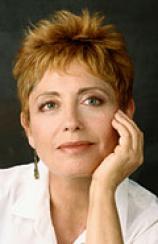
Victoria Lustbader

BIO

Victoria Schochet Lustbader was born on November 11, 1947, in New York City to Dorothy and Rubin Schochet. Her mother was born in New York; her father emigrated from Lithuania alone, in 1924, when he was 18, and began working on the Lower East Side. They met at a May Day rally planning meeting. Rubin went on to help form a union, District 65, and ran their Credit Union until retirement. He passed away in 1980. Victoria and her two older brothers, Michael and David, were raised in a middle-income, intellectual, activist, non-observant liberal Jewish household with an emphasis on family, education and doing good in the world.

Lustbader grew up in Jackson Heights, Queens, went to Hunter College High School in Manhattan and attended SUNY at Stony Brook, Long Island. Interested in the arts, she studied ballet for ten years, played the piano and guitar, read voraciously, devoured music, wrote poetry and a journal. Academically however, she was drawn to biology and languages, and in college majored in biology with a minor in Russian. She planned to be a geneticist or cellular biologist, but being that it was the 1960s and she was at heart a dedicated hippie, she soon switched sides and graduated with a BA in English.

In 1969 she started at Harper & Row as a reader of unsolicited manuscripts and spent several months being either bemused or terrified by the submissions. She soon became the assistant to the editor who began H&R's science fiction and fantasy line. When he left within the year, Victoria was asked to take over. She worked with and published many popular authors, including Ursula LeGuin, Harlan Ellison, Robert Silverberg, and Philip Jose Farmer. She then became a senior editor of science fiction and fantasy titles at Berkley/Putnam, where she formed a close relationship with legendary science fiction author Frank Herbert.

In 1982, Victoria married author Eric Van Lustbader, moved to Southampton, NY, and began working as a freelance editor. Several years later, she volunteered her skills to the local chapter of The Nature Conservancy. That turned into a second career, first as a Development staff member and then --- until this past year --- as a Board member of both the Long Island and New York State chapters.

Five years ago, Victoria made the tumultuous decision to become a writer herself and began work on her first novel, HIDDEN, published in June of 2006 by Forge Books. Her second is already completed, and a third is in the works.

Victoria and Eric currently divide their time between Southampton and New York City.

Back to top.   


INTERVIEW

May 30, 2008

Victoria Lustbader --- former fiction editor and the wife of author Eric Van Lustbader --- recently published her second novel, STONE CREEK. In this interview with Bookreporter.com's Cindy Crosby, Lustbader describes the challenging circumstances under which the book was written and sheds light on some of its weighty topics, such as love, relationships and infidelity. She also explains how her experience as an editor helped to strengthen her own narrative abilities, reveals the benefits of having another writer in the family, and shares details on her current project tentatively titled APPROACHING THE SPEED OF LIGHT.

Bookreporter.com: There's a lot of buzz about your new novel! How did you come to write STONE CREEK?

Victoria Lustbader: At the risk of sounding corny, I’m going to say that I wrote STONE CREEK because it was the book I was meant to write at the time, and the universe contrived to make sure I wrote it.

STONE CREEK is my second novel. My first, HIDDEN, was a very different sort of book --- an epic historical family saga. My second would most likely have been a sequel to HIDDEN, given enthusiastic early response to it, except for the minorly inconvenient fact that HIDDEN was turned down by 12 publishers over a period of nine months before finally finding a home. This was not a happy turn of events, but it was the best thing that could have happened for me.

After several months, I believed that HIDDEN would never be published. I knew I had to go on and try again. I wasn’t going to write another historical. And, since I had nothing to live up to, whatever I wrote next had the feel of a first novel all over again. I was free to write whatever came from my heart. And what came from my heart was a real, immediate story about loss and disappointment, and about reaching a point in life, which we all do after we’ve been around a while, when we have to learn to live happily with what we’ve got, even if it’s not everything we thought we needed or wanted; because the alternative does not make for an acceptable existence.

I had reached that point in my own life, and moved past it. Writing STONE CREEK was the expression of a personal life transition. But as the novel’s characters and storyline gradually crystalized in my imagination, I knew that what I was writing about was not my story. It was everyone’s story, because everyone --- in his or her own individual way --- suffers the pains of loss and disappointment and has to decide whether or not those pains will forever define their lives.

BRC: You chose to write your story in the present tense, which seems to give events a sort of urgency and immediacy. Any particular reason why you decided to go this route?

VL: I began writing the book in the more usual past tense of storytelling. And actually, as a reader, I often find a present-tense narrative somehow obtrusive or false-sounding. But the book has many sections of the characters’ past histories, and as soon as I came to writing the first of those --- which was on page 3 of the manuscript! --- I realized that the front story had to be in the present, and the past in the past. I take copious notes on my books before and even as I’m writing, and they are always in the present tense, as though I am seeing the event or conversation happening in front of me. In this case, it became obvious to me --- and exactly for the reasons you note above --- that this story needed to be experienced with that immediacy. As soon as I switched to the present tense, the story seemed to leap off the pages for me.

Oddly, the book I am working on now also has a present story with many glimpses into the characters’ pasts. But in this case, the present story is going to be told in the past tense, and the past histories in the present tense. My books seem to eventually tell me the structure they require. One of the themes of this new book is time itself, how we perceive it in relation to the events of our lives, how we fit into it. Time is a mystery, and turning the tense structure on its head a bit feels right for this story.

BRC: Was it challenging to write from several points of view? Why did you choose to write your story this way, rather than from just one point of view?

VL: Firstly, this story is not primarily about one character. It is equally about Danny and Lily foremost, and secondarily about Paul and Eve. It is also about people who do not truly understand one another, or who need help in understanding themselves. So telling the story from the point of view of one particular character was not possible. And, although each section is presented from the internal perspective of one of the four main characters, you could still say that the narrative has an omniscient point of view, in that it tells things about the characters that are observed from the outside, and not only from their perceptions of themselves.

I don’t find it challenging to write from multiple points of view. In fact, I admire more than I can say someone who can write an entire novel from only one point of view and make all the characters come alive. To me, that would be a daunting challenge. I love getting in the heads of my characters, moving from one to the other, being in their skins and knowing everything there is to know about them. It’s a form of role playing, I suppose, that I find very exciting and nurturing.

BRC: You explore the stages of grief through the characters of Danny and Eve in a very authentic way. Did you research the stages of grief for your writing? Or is your portrayal based on experience?

VL: No, I did not do any research for this book. And the portrayals of Danny’s and Eve’s grief are not based on parallel experiences of loss in my life, although as happens to everyone eventually, I have lost and grieved over loved ones --- friends, my father, a brother. I think one of the things I have to offer as a writer is that I have confidence in my intuitive understanding of human emotion and psychology, and in my ability and willingness to delve deeply into my own emotions and experiences, and imagine them applied to situations more extreme or different from my own, and find the universal humanity that exists in us all.

BRC: What did you hope to portray about love in STONE CREEK?

VL: I would have to say... That it comes in many forms; that we tend to see it unrealistically, use it selfishly, expect it to complete us in ways that finally we can only do for ourselves. But despite its imperfections, and our often callous inattention to it, love remains the core of what makes us not merely human, but what connects us to what is best and most beautiful about being alive. It is only love that has the capability to bring us out of ourselves, out of our fears and dissatisfactions and ultimately meaningless neediness, and give us a taste of why we are here. I say below that I am a realist. But I am also a romantic --- which I don’t find contradictory! I believe that nothing has the power to heal damage, to redeem hurts, to give back joy of life, as intensely and wonderfully as the right experience of love.

BRC: Did you have any concerns about writing about the topic of infidelity?

VL: I didn’t let myself think about that when I wrote the book. I set out to write a story about authentic people coping with true, difficult life situations. And I believed that if I succeeded at portraying that, and making my characters real, then whatever choices they made would be understood and found sympathetic, even if the reader did not agree with those choices. I make no judgements in the book about my characters’ behavior --- I’m a realist, infidelity happens, a great deal, and there are myriad, enormously complex reasons why. I wanted to explore that as one aspect of the failures and glories of love.

BRC: How was writing a contemporary novel like STONE CREEK different from a historical novel such as HIDDEN?

VL: There are the practical differences, obviously, such as not needing to do three years of research; being able to call on my own contemporary experiences, culturally, socially, geographically, etc. for background and verisimilitude; being able to contemplate a shorter, more compact book. But, the biggest difference for me was one of emotional attachment. While HIDDEN has wonderful, real characters, and a great emotional impact, the still-strong Victorian influence of its setting, and the epic historical saga trappings allowed me the freedom to be a bit more narratively melodramatic, and to keep more emotional distance than is possible with a book set in the world I live in, about characters whose experiences are closer to my own. There was no standing outside myself while writing STONE CREEK. Writers disappear into the worlds they create, find themselves living in two worlds at once; but it was harder to wrench myself out of the world of STONE CREEK than of HIDDEN, and I think its characters will remain alive and part of me in a more lasting and meaningful way over time.

BRC: You were born and raised in New York City. How has the Big Apple shaped you as a person? As a writer?

VL: Not to be overly prejudicial here, but I think New York is the greatest city in the world, and I feel very fortunate to have grown up there. The intellectual and cultural influences are staggering, there is stimulation for the senses, for the appetites, for the intellect, around every corner. Life just comes crashing into you, unbidden and unlooked for, whether you want it or not! As I’ve said elsewhere about the city’s role in HIDDEN, New York is as alive as any character I could create. It’s a living, breathing entity that I have spent my life interacting with, and being influenced by, as I’m sure all places are to the people who live in them. But certainly, New York helped make me curious about almost everything, gave me opportunities to explore almost any interest I had, made me aware of and open to people, made me believe anything was possible while making me realize how tough life could be all at once.

As a writer, while the mental chaos in New York is often overwhelming, the incredible hum and buzz of creativity that one walks through and breathes in every day is a constant source of encouragement and inspiration.

BRC: We hear you were a biology major for a while. When did your interest change to writing, and why? What happened?

VL: Calculus happened. And adolescent laziness. Which just goes to prove that being a sluggard sometimes pays off. Yes, the sciences have always fascinated me, and still do (I’m reading up on quantum physics for the book I’m working on now…black holes, quarks, fermions, oh my!), but I would have made a terrible lab rat. By my sophomore year in college, I realized I didn’t love science enough to do the required work. It was people that really fascinated me. I flirted with psychology, but ultimately became an English major, and as soon as I got my first job, at what was then Harper & Row, I couldn’t deny that I’d always loved words, and books, and writing, more than anything. Science, psychology, humanity, history…books contained everything. I’d wanted to be a writer since I was a teenager, and although it took me another several decades to actually get there, at least I’d ended up exactly where I wanted and needed to be.

BRC: You're married to the author Eric Van Lustbader. How did you two meet? What is it like having two authors in the house? What are the challenges? What are the joys?

VL: We met when I was the SF/Fantasy editor for Berkeley Books. Berkeley acquired another company, Jove Books, and I inherited Eric’s fantasy novels and became his paperback publisher. We married three years later.

For us, I would say there are mostly only benefits to us both being writers. Even after working with writers for years, the reality of living with one was an entirely different animal. Eric wrote almost constantly, and seemed “gone” most of the time. Having an intellectual understanding of why, and where he went, didn’t help me feel less abandoned. It wasn’t until I was writing myself that I understood viscerally what it meant to be partly living every moment in the world you were creating, to appreciate what a joy that was, and to realize that it didn’t make a writer’s connection to the “real world” any less substantial. We empathize with one another’s ups and downs, down to the bone, and can often help one another. Eric and I write very different kinds of books, have different strengths and weaknesses, and can often complement the other’s way of thinking about a problem.

BRC: What do you enjoy doing when you aren't writing?

VL: I love to travel, and I love active traveling. Eric does not like the latter particularly, so when he and I aren’t going somewhere together, I take hiking trips with my best girlfriends. I love being in beautiful places, close to nature. At home, I love to read, which I do whether I’m writing or not. We mostly live in Southampton, out on Long Island, but we keep a small apartment in the city and I love being in town eating, walking around, going to movies, spending time with friends. And oh yeah, I really love to eat.

BRC: Tell us a little bit about your work with the Nature Conservancy (or past work). Does (Did) it inform your writing?

VL: I worked for TNC on Long Island first as a volunteer, then as a staff person doing fundraising events, for about 10 years. For several years thereafter, I served on the Boards of the East Hampton chapter and the New York State office. It was a wonderful second career for me. I got to discover and use skills that the publishing work had not flexed, and got to do it in the service of a cause I am passionate about --- the preservation of our natural world. I can’t say that my career at TNC informs my writing, but the confidence I garnered in doing that work certainly helped me make the decision to try becoming a writer. And I think that my respect for and love of the natural world comes through in my writing, in the physical settings and some of the characters’ relationships to their environment.

BRC: You spent many years as a book editor. How does this “previous life” inform your writing as an author?

VL: It may have taken me a long while to become a writer, but I got to learn a great many useful things while I was preparing myself. My years of editing, and of observing my husband's relationship to his work, gave me an unconscious confidence in my ability to produce good writing and a good read. Striving to be a good editor who could truly help other writers improve their work schooled me in story structure, pacing, and character development. It made me appreciate the talents I did have. By the time I had the guts to come out of hiding, I knew I had the talent to write, as well.

BRC: Your editing work was mostly with science fiction and fantasy. Were you ever tempted to explore this genre in your own writing?

VL: No, I wasn’t. I enjoyed working in that genre as an editor, but in fact it was something I’d luckily fallen into early in my career, and it gave me a chance to do very responsible work sooner than most fledgling editors. My own personal first love has always been regular fiction, however, and my imagination doesn’t run toward the fantastical. I’m rather rooted in the actual! And as I’ve said previously, my greatest interest is in character.

BRC: Do you believe you treat your editors differently than most authors do because of “walking a mile in their shoes?”

VL: You’d have to ask them to verify this!, but I certainly hope I do. I am more knowledgeable about how the business works, more realistic and I hope less demanding than many authors I’ve known. I am also very appreciative of the role editors play, know their value, and know that even the best author, the best book, can be made even better by the input of a fine editor.

BRC: What authors do you read for pleasure?

VL: I’m a voracious reader, and that’s a hard question, but some of my favorites over the years are Dorothy Dunnett, Martin Amis, Michel Faber, Barry Unsworth, Neal Stephenson, Susan Howatch... then there’s a long list of individual titles I’ve loved.

BRC: What are you working on now, and when might readers expect to see it?

VL: I’m working on a novel currently titled APPROACHING THE SPEED OF LIGHT, a contemporary story in the vein of STONE CREEK. Like STONE CREEK, it is about love and damage, but of very different sorts. It deals with issues that particularly draw me now, among them the imbalance and abuse of power --- from the brutally overt to the subtly covert --- within human relationships; how damaged souls find their individual paths to inner peace; how we perceive aging and the passing of time; and the unconventional, unexpected kinds of love that can exist between people of different ages. It brings together three strangers --- Jody, a troubled and hopeless 29-year old man; Ella, a slowly resurgent and hopeful 48-year old divorcée; and Tess, a gently fading 80-year old widow --- who discover unimaginable bonds among them that change all their lives.

I wrote HIDDEN and STONE CREEK back to back over a period of five years, in a bit of a frenzy. I’m in a different place in my writing now, and this book is taking a very different trajectory; it’s evolving slowly along with significant changes in my inner world. This book feels like a journey I’m taking, and clearly, it’s going to take a bit longer to complete than the first two. How long exactly, I don’t know --- all I can say is I’m sure it will see the light of day before there is peace in the Middle East!

Click here now to buy this book from Amazon.com.


AUTHOR TALK

August 2006

Former fiction editor Victoria Lustbader’s debut novel, HIDDEN, follows two disparate families during the tumultuous 1920s in New York. In this interview, Lustbader discusses why she chose to set her story in that particular era of American history and shares her thoughts on sexuality and its impact on human behavior. She also describes her two-decade-long research and writing process, as well as the sense of liberation she feels from creating dark characters.

Question: Where did the idea for HIDDEN come from?

Victoria Lustbader: The idea came to me nearly 20 years ago. It grew out of elements in my family's history and its original focus was the rise of the labor movement on the Lower East Side in the 1920s, with the two diametrically opposed families representing the conflict between the upper and lower classes. 

As I began sketching out the idea, delving into the history, my head began to fill with images and voices of characters, a whole host of them. I very quickly realized that while the history was fascinating, I didn't care about it nearly as much as I cared about these striving, struggling people.

I began writing the book, but I simply wasn't ready. I had a sense of the story, and the writing was good --- some of it made it into HIDDEN intact --- but I didn't know what the book was about. I wouldn't know for another dozen years.

Q: Why did you choose the period of the 1920s in which to set the story?

VL: The decade after World War I was the real wrenching shift from the Victorian to the Modern Age. There was change in every aspect of society: loss of faith in the rightness and power of previous beliefs, both religious and secular; a revolution in sexual mores and behavior; the rise of the United States as a world power; huge upheavals in the economy, in the garnering of wealth and material possessions; an enormous jolt to what people suddenly wanted out of life. All of it fascinating.

I might have set a similar story in the present. What people can't express or do hasn't changed as much as we like to think it has. But the 1920s were a time when the rules and expectations of behavior and morality were still black and white for some, while falling to pieces for others. It was a period of extraordinary and painful transition, but within families and classes there remained much that was absolute; and the still-strong Victorian influence allowed for greater drama.

The '20s was an era in conflict with itself. I saw it as an external representation of my characters' internal conflict between rectitude and the pursuit of happiness.

Q: HIDDEN is an epic period piece. How did you do the tremendous amount of research it required?

VL: I have never been a lazy person, but I can't imagine having tackled this project without the miracle of Google! I did of course have a trove of book sources which became my overall bibles, and through them I steeped myself in the times. In particular, AMERICA IN THE TWENTIES by Geoffrey Perrett, which I eagerly read cover to cover repeatedly both before and during the writing of the book. The rest, the myriad tidbits of information, all the delicious details, I tracked down in countless hours on the Internet, researching absolutely everything --- the subway system, slang of the day, spiritualists, clothing styles, Christian Science, the creation of the advertising industry, and on and on. The process was thoroughly exhilarating. Every new piece of information led to a new idea on how to incorporate the times into the story and deepen the authenticity and richness of my characters' lives.

Q: The historical elements in HIDDEN are woven seamlessly into the story, with a fine balance between character and setting. Was that difficult to do?

VL: I made myself a promise from the outset that even if the book stank, no one would ever throw it across the room and snarl, "Watch out. Here comes the research!" I didn't want to make the mistake of seeming to show off how much knowledge I'd accumulated or of imposing information upon the reader.

The history had to be as integral to the story as any character. It exists to illuminate them within the time and place they inhabit. I worked very hard to embed all the facts and figures within the characters' actions, circumstances, dialogue, etc., so that the effect of the time and place on them was what became important, and not the time and place itself. And I tried to be discriminate in the information I used. There is an urge to use it all because it's just so neat, but you can't.

I was so careful to not be obvious with the information offered in the book that the first question I asked my husband when he read the manuscript was whether or not there was any feel at all for where and when the book took place! It seemed so secondary to the characters that I was worried it just wasn't there. He looked at me as though I'd grown another head.

Q: There are two main protagonists, but the overall cast of characters encompasses three generations of two families. Each one has his or her own compelling story. How did you develop and orchestrate so many characters and intertwined stories?

VL: One of the most gratifying things about the positive reviews the book is getting is that they all comment on how real and unforgettable the characters are. I would love to be able to say how I made them that way, but honestly I don't know. Right from the beginning, they were all unique individuals. They appeared on the stage of my imagination and I saw them, I knew what they looked like, what they sounded like, their every gesture and expression. I knew everything about them. But, since they were so real to me, they did what real people do. They took control of their own lives and at times told me things about themselves that I didn't know.

The hard part, therefore, wasn't in developing them but in understanding fully why they were there, what purpose they had in the telling of the story; how they revealed or reacted to the main characters, and how their individual stories advanced the overall story and the book's themes. I had to know they weren't there simply because I liked them.

For example, I was nearly halfway through the book and I still wasn't sure why Brook was there. I adored him, but thought, Why do you need him? Maybe you should cut him out? I agonized over it, focused on everything I knew about him, and voila!, his role became clear.

On a purely practical level, however, I created and continually revised scene charts, which I taped to the walls and windows of my office. That way I could track the characters, make sure they reappeared in timely fashion, were getting their appropriate amount of on-stage time, and that their stories were advancing.

Q: Who is your favorite character? Why?

VL: As any author will tell you, I love all my characters. And I am totally in love with David. But my favorite character is, without doubt, Jed. He's the true tragic figure in the book, the one who struggles and struggles and can't find a way to be happy. I feel for him the most and sympathize with his unbearable yearnings for things he believes he can't have. And in his way, although he can't figure out how to get what he wants, he is the most self-aware, the most sensitive, open-hearted and the most passionate of all the characters. When he does finally let it all go, he doesn't hold anything in reserve. He is also the most emotionally fragile; he doesn't know how to protect himself. He's an innocent. I want to ride off into the sunset with David, but Jed is the one I want to save.

Q: The element of homosexuality is an unusual one for a historical family saga. How did it make its way into the book?

VL: It was essential that Jed's hidden desire be something truly potentially ruinous. His wishing to be an artist, for instance, or marry beneath his class, would have been woefully insufficient. I don't think there is anything that influences human behavior, and can both exalt and destroy, as efficiently and powerfully as sexuality. The first moment I saw the two boys in my mind, I knew Jed would fall in love with David, and that his torment was to suffer the consequences of an unacceptable, unrequited love.

The subject of human sexuality, in all its forms and expressions, is compelling to me. It's a subject that will have a place in everything I write, I'm sure. The history of homosexuality and lesbianism in our society interests me greatly as well, perhaps because I have always had gay friends of both sexes and have been deeply involved in their lives. I wanted to explore its place in that tumultuous era along with the other aspects of society.

Q: The villain of the story is someone who today would undoubtedly be diagnosed as a dangerous sociopath. Was he frightening to write? How did you get inside his head?

VL: Well, I don't know what this says about me, but I loved writing Monty! It wasn't frightening, it was liberating. The passages from his point of view gave me a safe opportunity to get in touch with a darkness that exists in all of us but which most of us never go near. Human beings carry every emotion and desire there is inside them, but only a few ever get expressed. Through Monty, I could be crude, lewd, selfish, murderous, vulgar, grasping, scheming, dissolute, remorseless --- all without retribution.

Q: There are an equal number of men and women characters in HIDDEN, all full-bodied, vivid and authentic. Did you find writing male characters different from writing women? How do you create strong characters of either gender?

VL: Everyone has aspects of the opposite gender embedded in their genes and in their personalities that never get expressed, just as with emotions and desires that are considered unseemly or worse. Women are rarely encouraged to exhibit traits considered masculine and learn to repress or sublimate them; likewise feminine traits in men. More's the pity. I inherited and absorbed as much from my father and my two older brothers as I did from my mother and my grandmother and aunts. But that masculine side of me that gave me my drive, my boldness, my belief in my abilities was tamed and tempered by a more timid, compromising feminine inheritance. By the time I was ready to write HIDDEN, which is so much about not being afraid to be your whole true self, I was ready to let the two aspects of myself get to know one another better.

I didn't find it strange at all to delve beneath the surfaces of my male characters. I loved them, I knew them, I knew how they were different from the women, what their burdens and desires were. I think I've been around long enough to have a grasp on the differences between men and women, and the similarities they share. And, just like letting go and writing Monty, writing all the characters, both male and female, was a freeing exploration of various pieces of myself. But being that I am a woman, and one who is very fond of men, getting intimate with my male characters was also a delicious way to create men the woman in me could lavish my emotions on.

Q: Did you know how the book would end before you actually began writing?

VL: Yes and no. Overall, I always knew how it would end in that I knew what David's and Jed's fundamental journeys were meant to be, where they would begin and where they would finish. Their journeys are the core of the story, and I had to understand them from the outset. But what exactly the end would look like, what was going to propel and befall each character along the way, that I didn't know. The story evolved, as life does, and was very much created by the characters as they revealed themselves to me.

For example, I had no plans for Monty beyond him being Zoe's alcoholic, abusive husband. Imagine my surprise when, early in the second third of the book, I realized he had pushed his way into the catalytic role of the villain. Similarly, I didn't know what would happen to Philip and Sally until I was two-thirds through and had lived with them long enough to know what they really wanted and were capable of.

Q: Reading HIDDEN is an intensely visual experience, as if watching an epic film unfold before one's eyes. Can you comment on that aspect of your writing?

VL: Yes, many readers have said it should be a movie, that they saw everything so clearly. And they all have their own casting preferences! I write so visually, I imagine, because I see my characters and everything they do with a Godlike totality and complexity. I lived with them, in their world, while I wrote the book, and continued to for months after I was done. At times the world and people of HIDDEN were more real to me than my own life.

Before I write a scene I sit with it in my head and visualize every aspect of it: the setting, the lighting, any smells or sounds in the background, the characters' positions, etc. And then often I will literally act it out, become the characters and speak their words, listen for the tones of their voices, make their facial expressions and body movements. Feel what they feel. You can't translate all of that into words --- someone's exact sound or look --- but you don't need or even want to. If a writer gives readers enough, their own imaginations become engaged and then the world and the characters become theirs. 

© Copyright 2006, Victoria Lustbader. All rights reserved.

Click here now to buy this book from Amazon.com.

© Copyright 1996-2010, Bookreporter.com. All rights reserved.

Back to top.