IndieBound Independent Bookstores
Bookreporter.com
Click Here For Librarians Submitting a Book Become a Reviewer FAQ Contact Us About Us
Home Reviews Features Authors Quote Books Into Movies Book Clubs Awards Coming Soon
Search Contests WOM Bestsellers New in Paperback Newsletter Bibliographies Blog

Interviews

November 17, 2000

Books by
Alan Lightman


GHOST

THE DIAGNOSIS

Reading Group Guides

THE DIAGNOSIS

REUNION

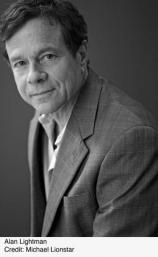
Alan Lightman

BIO

Lightman's previous books include EINSTEIN'S DREAMS, GOOD BENITO, and DANCE FOR TWO. A professor of humanities and a lecturer in physics at MIT, he lives in Boston.

Back to top.   


INTERVIEW

November 17, 2000

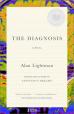
National Book Award Nominee for Best Fiction, Alan Lightman --- honored for his novel, THE DIAGNOSIS --- graced Bookreporter.com Writer Marge Fletcher with a special phone interview soon after the 2000 nominees were announced. Author of several critically acclaimed novels, this is his first one nominated for the NBA. His latest book settles on the theme of modern malaise and it begins when one ordinary business man suddenly forgets where he needs to go during his morning commute --- and the rest of his life quickly begins to unravel. One of the very unique things about Lightman is how strongly he feels about the connection between novel and reader --- one is not complete without the other. Hear about his reaction to the NBA nomination, his very honest thoughts about email, and much more in this interview.

TBR: You must be thrilled that your book, THE DIAGNOSIS has been nominated for the 2000 National Book Award for fiction. How did you first hear and what was your reaction? What do you think of your chances?

AL: The executive director of the foundation, Neil Baldwin, called me. I was quite surprised, shocked actually. I'm in excellent company. I believe my chances are one in five!

TBR: What inspired you to write THE DIAGNOSIS?

AL: For years I wanted to say something about the modern malaise, the absence of time we have to think about who we are. We have a loss of spirituality, without any time in our day to think. The modern American condition has been bothering me for years, and I began to think that it was a very serious problem. My aim is to investigate and attempt to understand the world.  

TBR: You have come upon widespread readership in mid-life with your books, EINSTEIN'S DREAMS, GOOD BENITO, DANCE FOR TWO, and now THE DIAGNOSIS. How has being a published author changed your life, your teaching, and possibly your writing?

AL: Ever since I was eight years old, I have been interested in writing and in Science. I thought it best to be well grounded in Science, writing as a hobby. In my 30s and 40s, I began writing more, beginning with essays, and moving to larger works of fiction. It has been a real joy for me to explore the scientist's world and the artist's world. My wife is an artist, and we have much to talk about.

Success as a writer to me means that more people are reading my work, and it is satisfying. I am closer to the feeling that I have done something to make the world a better place. A minor benefit is that people return my phone calls.

TBR: What would you like readers to take away from the book?

AL: I would like readers to have an increased awareness of the way that we are living. The book raises questions, raises the level of consciousness.

TBR: THE DIAGNOSIS has been described as "Kafkaesque." What is your opinion of that analogy?

AL: Actually, Kafka is one of my major influences. I think it is a valid analogy. I think of THE TRIAL and METAMORPHOSIS, and individuals battling for survival through change.

TBR: Tell us about the wide use of email, and the Ancient Greek scenes Alex copies from the Internet. What made this technology crucial to the story?

AL: Email is a symptom, a metaphor of our fast-food mentality, and a tool for speeding up our lives.

TBR: I found the typos you use in the email communications between characters quite humorous. From what I understand --- and please correct me if I am wrong ---- you do not use email, yet your characters often rely on it for medical, legal and family communication. Do you think you will ever come online as well?

AL: I plan never to use it. My daughters, one still at home, and one at college, rely on it. At times, I will have my daughter write an email for me. I use it from time to time for urgent messages.

TBR: What is your writing schedule like, do you try to write daily?

AL: When I am working on a book, I write 4-5 days a week, from about 9:00 AM until mid-afternoon, on non-teaching days.

TBR: Who are your inspirations and favorite authors?

AL: I could easily list five or ten: Dostoyevski, James Joyce, Annie Proulx, Michael Olijink, Marquez, Badakov.

TBR: What are you reading now?

AL: WAITING by Ha Jin, a Chinese American. It's very well written.

TBR: Are you working on your next book yet, if so, can you tell us about it?

AL: I have many ideas, but am intentionally taking a break. I am empty right now.

Click here now to buy this book from Amazon.

© Copyright 1996-2009, Bookreporter.com. All rights reserved.

Back to top.