|
BIO
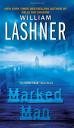
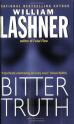
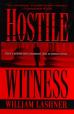
William Lashner is the New York Times bestselling creator of Victor Carl, who has been called by Booklist one of the mystery novel’s “most compelling, most morally ambiguous characters.” The Victor Carl novels, which have been translated into more than a dozen foreign languages and have been sold all across the globe, include KILLER’S KISS, MARKED MAN, FALLS THE SHADOW, PAST DUE, FATAL FLAW, BITTER TRUTH, and HOSTILE WITNESS. BLOOD AND BONE is his first stand-alone thriller.
Writing under the pseudonym of Tyler Knox, Lashner is also the author of KOCKROACH, described as “roaringly entertaining,” by Publisher’s Weekly, and “an energetic tour de force,” by USA Today. As Tyler Knox he has written a number of book reviews for the Washington Post Book World.
Lashner was a criminal prosecutor with the Department of Justice in Washington D.C. before quitting the law to write fulltime. A graduate of the New York University School of Law, as well as the Iowa Writers' Workshop, he lives with his wife, his three children, and his dog, Chase Muttley, outside Philadelphia.
AUTHOR TALK
William Lashner on PAST DUE: An Interrogation
The following interrogation of WILLIAM LASHNER was performed in the basement of the Roundhouse, Philadelphia Police Headquarters. As per police regulations, the room was dank, full of shadows, and the single light in the room was focused on the subject's face. The subject was read his rights and declined representation of counsel, but he did ask for a pair of sunglasses and a cruller.
Q. Do you know why you're here?
WL: Because I have a book just out called PAST DUE? Could that be it?
Q. Don't be smart with us, smart guy. We're trying to get a lowdown on some bird name of Victor Carl. You know him?
WL: Sure I do. A Philadelphia lawyer, strictly low rent, always looking to make a dishonest dime.
Q. A real ambulance chaser, huh?.
WL: Victor chases ambulances with the same devotion and enthusiasm as dogs chase cars. Whenever an ambulance stops short he cracks a tooth. But he also handles the occasional high profile murder case when it falls into his lap, like in FATAL FLAW. Or now and again a wrongful death suit, like in BITTER TRUTH. Or, just recently, the investigation of a murder as recounted in PAST DUE, when a client, a career criminal named Joey Cheaps, gets his throat slit on some pier down by the waterfront. Victor decides he owes it to his client to find out why he was killed. It is sort of a moral decision, to find the killer, and it has nothing to do with the pictures of the naked woman he finds and obsesses over, or with the suitcase full of money that is out there, waiting to be snatched. Really, it isn't those things at all. Victor is just trying to do the right thing.
Q. And we're supposed to believe that?
WL: Well, no. But as his partner says, Victor usually does the right thing, just for the wrong reasons.
Q. So how does it turn out?
WL: Not so well. Victor stumbles on the remnants of a drug ring, decades old, and that leads to a sitting Supreme Court justice who might be involved in Joey's murder and another murder that happened twenty years before. As soon as the justice gets involved the law seems to turn against Victor. The DA starts giving him a hard time, a client gets unfairly slammed in court, and a routine appearance in Traffic Court ends with Victor behind bars. I mean, he was speeding and he ran a stop sign but still.
Q. A jailbird, is he? That figures. He must have had a tough time, a lawyer behind bars.
WL: Not really. It turns out Victor is able to drum up quite a bit of business. You would be surprised how many people in prison are having legal troubles. Can I have another cruller?
Q. No, but this is police headquarters so there are always donuts.
WL: No thank you, the jelly might stain my tie.
Q. And that would be a problem how?
WL: Is that part of your bad cop routine?
Q. So what are you, some kind of writer?
WL: Some kind, yeah. I write novels with a lawyer as the hero, no matter how oxymoronic that might sound. I try to write stories that are thrilling and full of mystery and funny all at the same time, stories that raise moral questions but come up with very few moral answers, stories that emotionally touch readers through the characters. And the law is merely one of the tools my protagonist, who happens to be the Victor Carl you're so interested in, uses to find out what's going on and to try find a resolution that makes some sort of moral sense. He's not so much a reflection of me as he is a reflection of the type of lawyer I might have been had things gone very differently in my life. I like to think I'm writing in the tradition of Raymond Chandler, although I don't ape his style.
Q. So this Victor Carl, is he some hero type, like Chandler's Marlowe? Is he a hard guy?
WL: Oh no, he's a pussycat. The only thing he knows about guns is that he's afraid of them. And he's also very polite. He says please and thank you even when he's picking your pocket. Except in court, he's not polite in court. In court he's a tiger. Trust me, you don't want to meet up with him in court. But outside, he's got all the fighting instincts of a pill bug. And sure, maybe he drinks too much, and maybe he's a little too clever, a little too glib, but basically he's a coward. In fact, he's proud of his cowardice. He thinks it's one of his finer traits, along with his unbridled venality and the horniness of a horned toad.
Q. He likes the ladies, huh?
WL: Oh yes, but unfortunately more than they like him. He's hung up on beautiful sad-eyed women who refuse to give him the time of day. In fact, in PAST DUE he finally meets a normal, well adjusted woman. She's pretty, young, and a doctor -- a doctor! -- which, because he is Jewish, Victor finds especially appealing. She's perfect for him in every way except that she is very sincere, which he has trouble with, and she's a vegetarian. It's at a Chinese restaurant, while the two of are sharing a plate of tofu, while platters heaped with beef and chicken and shrimp pass him by, that he realizes it won't work with the doctor. "This is what I have learned of life from eating in Chinese restaurants," he writes, "the meal that would make me most perfectly happy is always being served at the table next to mine."
Q. A pathetic loner, is that it?
WL: Not at all. He's got a partner, Beth Derringer, who is his best friend, and a private investigator named Phil Skink, who is just as ethically challenged as Victor so they get along perfectly. And then, in PAST DUE, there is Kimberly Blue, who is astonishingly beautiful and astonishingly young and yet is already a vice president at some shady corporation that, for some strange reason, is also keenly interested in Joey Cheap's murder. Kimberly reminds me of my middle school daughter -- in fact, amazingly, some of the expressions they use are identical, how did that happen? - and that might explain why Victor is not so interested in making her as in saving her. (Beth opines that it's because she's not sad enough for Victor and Victor, always as self-aware as a moth, wonders what the heck she's talking about.) Anyway, it turns out that however vulnerable Kimberly might appear, she is absolutely able to take care of herself, which, come to think about it, is a lot like my daughter too. And then of course there is Victor's father.
Q. How is Victor's father doing? I heard he was sick.
WL: He's in the hospital actually, which is pretty convenient for Victor because Victor's cable's out, due to his inability to pay that pesky little bill which comes every month, and so having a father in the hospital gives him a chance to watch the Sixers play on ESPN. But it's not all good. His father is actually dying, and his dying father feels compelled to tell his only son about the true love of his life, the girl who got away, the girl in the pleated skirt. It's a story Victor doesn't want to hear - who does want to hear the details of his father's failed love life - but a story that turns out to have had a huge impact on Victor's life. It's a story of love, of sex, of greed and murder and betrayal, all fun father-and-son-bonding stuff which, through the telling of it, strangely heals the relationship between Victor and his dad.
Q. Aw, that almost sounds sweet.
WL: Not too sweet, because Victor's father is a grumpy old pessimist and Victor does everything he can to avoid opening up to the dying man. As Victor says in the book, "The unexamined life might not be worth living, but the examined life is pure murder."
Q. Is there a point to all this?
WL: Gosh, I hope not. I don't trust novels with points, do you? If a novel is only about a point, the writer should just say it in as few words as possible so we can take it in and go back to watching 'The Bachelor' on television. But PAST DUE is a story about dealing with the past, the price of burying it, the futility of trying to cure it as if it were a disease, and the value of embracing it and learning from it before moving on. Or maybe it's just a fun story of murder and revenge with a swordfight at the end, sort of like Hamlet without the tights. Which is too bad, actually, because Victor would look good in tights, like an albino flamingo with a thyroid condition.
Q. This Victor creep, are we going to see him again or is he gone for good?
WL: No, he'll be back. Victor is like the piece of gum that sticks to your shoe, then to your thumb, then to your other thumb, then to your palm, then to your nose, the piece gum you just can't get rid of and that ruins your day. Yeah, Victor's just like that. But in the next book he'll be battling an enemy so fearsome, so brutal and sadistic, that it makes my skin crawl just thinking about. He makes Dr. No look like a yes man. He makes Dr. Strangelove look like a missionary. The most savage of all professionals.
Q. You don't mean . . .
WL: That's right. In the next book, Victor goes up against a dentist.
© Copyright 2004, William Lashner. All rights reserved.
Click here now to buy this book from Amazon.
Back to top.
INTERVIEW
May 9, 2003
In this special interview with Bookreporter.com's Suspense/Thriller Author Spotlight team (Carol Fitzgerald, Joe Hartlaub, and Wiley Saichek), William Lashner, author of FATAL FLAW, discusses his legal background, his characters' personalities, and his future writing plans.
BRC: Victor Carl's personality has been subtly changing. He was a bit of a smart aleck, if an endearing one, in HOSTILE WITNESS. He seemed to undergo a bit of a transformation by the middle of BITTER TRUTH, becoming a bit more serious by the end of that book. In FATAL FLAW his persona is almost dark, almost brooding. Are you deliberately changing Carl's image, or are you merely dramatically demonstrating different sides of his persona over the course of the three novels?
William Lashner: Victor has absolutely changed through the course of the books, you can't go through what Victor went through in HOSTILE WITNESS without changing. They say adversity doesn't test character so much as reveal it, and I think that's true, but I'm also interested in what happens to the poor sap whose inner character is revealed to himself and he's not so sure he likes what he sees. I think over time Victor has realized, with much disappointment I might add, that he has an internal code of honor that will continually frustrate his ever more desperate lunges for success. I think what is happening in the course of these books is that Victor is slowly learning, by trial and error, the terms of that internal code and the price he will pay for honoring it. In FATAL FLAW, for example, he finds in himself a thirst for justice that he decides to quench in his own terms. It is only later that he realizes that the legal niceties are not just for show and that justice without due process is not really justice at all.
BRC: As discussed in your interview with Lisa Scottoline, Hailey seemed to "haunt" the entire story --- she certainly haunted Victor's and Gus's thoughts. From your first mention of the character until the book's conclusion I could literally feel her presence. Was she a hard character to break away from when you finished the book, or did you keep thinking of her even as you turned in the manuscript and started the next book?
William Lashner: Hailey was really a powerful presence for me through the whole book. It was hard to say good-bye to her, but what was harder was getting deeper and deeper into her sad, twisted psyche. There is a scene at the end of the book when Victor describes the crucial moment when Hailey sets in motion all the brutal events of the book and that was truly painful to write. It showed a different side of Hailey, a pathetic humiliated side, it showed the true cost of all that had been done to her, and I hated writing that.
BRC: Victor Carl's practice, like your own, is based in Philadelphia. Are any of the principals in HOSTILE WITNESS, BITTER TRUTH, or FATAL FLAW based on individuals you encountered during the course of your practice?
William Lashner: I had a really varied legal career and dealt with all kinds of different types of individuals. I tried cases against drug kingpins, prostitutes, wife beaters, addicts, Nazi concentration camp guards, investment bankers with suits that cost more than my car. So yes, all of this does go into my fiction. But I also scour the paper everyday, because the stories never end. The spur for FATAL FLAW, for example, was a case in the newspaper about a guy who killed his wife so he could keep giving money to a stripper he thought he was in love with. The book is very different than that case, of course, but the questions of how far we would go for love, and what the heck love is in the first place, are the very questions of the book.
BRC: The plots of your novels, particularly BITTER TRUTH and FATAL FLAW, have been very complex yet laid out quite well, taking your reader step by step along a well-marked path. Do you outline where your story is going before you begin?
William Lashner: I start with a basic outline, and then outline more in depth as I go forward. At the end of every writing day I sit down and outline the next five chapters or so, and that detailed outline is always changing. But one of the things I do, and it started, actually with BITTER TRUTH so it's interesting that you picked it out, is to spend a lot of time, before I start, working on the back story. I think the key to a strong mystery is a strong back story, with all the twists and turns and motivations tightly in place. Then, while it might seem complicated in the telling, what is really happening is that Victor is simply, step by step, in his own inimitable way, putting together the pieces of that story in a way that is dramatic both for the investigation and for the story of the past. If the back story is rich enough for a novel of its own, then suddenly, instead of one intense story of a lawyer trying to find the truth, you get two intense stories which resonate against each. In BITTER TRUTH there were actually three or four.
BRC: One of the most interesting elements of your novels has been your use of private investigators. Phil Skink in FATAL FLAW and the unforgettable Morris Kapustin in HOSTILE WITNESS and BITTER TRUTH come perilously close to stealing the action from Carl. Have you considered writing a novel centering around either of these gentlemen? Or a book told solely through Beth's point of view? Why or why not?
William Lashner: One of the first things you learn in law school is to never interview a witness without an investigator, so you'll have someone to call to stand if the witness changes his story. That gives me an opportunity to play a bit with the PI conventions of the mystery story. I firmly believe that the American PI character, as created by Hammett and Chandler, is one of the most powerful influences on American and world culture. Morris and Skink are tributes to that influence. The single quality that they both possess is that they are crackerjack at what they do. But both characters, I think, are better off in smaller doses. Beth, on the other hand, could carry a book herself and I am actually planning to write one in the near future from her point of view. She's funnier than Victor, and more idealistic, and yet there is some very dark stuff beneath the surface that would shock her if it was ever revealed. My job as a writer is to find the right story that will do just that.
BRC: Fellow lawyer-turned-novelist D.W. Buffa has said that he had an interest in writing before he became a lawyer. Is this the same for you? When did you know you wanted to write books? Was there any particular impetus that made you change careers from attorney to author? And have there been any attorney/authors who have particularly influenced your writing career?
William Lashner: Writing was absolutely first. Law was a fall back, and I fell back into it after I took a year off to write and just wrote horribly. But I was always changing legal jobs and taking gobs of time between to try to write and was pretty unhappy with the situation. Then, finally, the girl whom I was dating, who is now my wife, told me to quit whining about wanting to write and do something about it. So I did. She thought she was marrying a lawyer, but what she ended up with was an unemployed writer, which served her right for opening her mouth. I think she still regrets it.
BRC: How have your former lawyer colleagues reacted to your legal thrillers?
William Lashner: They envy my freedom, I envy their steady paychecks.
BRC: What advice do you give to readers who may be contemplating a career in law?
William Lashner: My first instinct is to tell them to look into medical school. But the law is a marvelous profession, my father was a lawyer, and when things go seriously wrong it is really only a lawyer who will make them seriously right. I never liked the business part of it so much, which might explain why the law firm of Derringer and Carl is always on the edge of insolvency, but when you have a client whom you care about and a cause worth fighting for there is nothing more worthwhile. It can pay pretty well too.
BRC: On your website you mention a number of writers whose style you admired when
you were beginning to write. What writers do you enjoy reading today? Is there a favorite book/story/poem you keep returning to for inspiration or just sheer enjoyment?
William Lashner: I try to read everything I can and there are a tremendous amount of terrific writers working in all genres, too many to name. But I can tell you some of the books that I keep returning to for any number of reasons; THE MALTESE FALCON by Dashiell Hammett (the quintessential detective story and the model for what I try to do); WATERLAND by Graham Swift (an almost perfect novel and another model); BURNING THE DAYS by James Salter (Salter's prose is so pure I dip into it now and then just to inspire), MONEY by Martin Amis (too funny for words); ALL THE KINGS MEN by Robert Penn Warren (his rhythms are astounding), ON THE ROAD by Jack Kerouac (my fist literary hero and again his rhythms are an important influence); THE POETRY OF EMILY DICKINSON (she never stops amazing, how could she be so modern?); SIN CITY by Frank Miller (a comic book that is noirer than noir --- I have the whole series) and HENRY IV PARTS I AND II by Willy Shake (my favorites of his plays, his first great tragedy --- 'A tragedy?' you say: read them again --- and very much in my mind as I write about Victor Carl).
BRC: Sylvia Plath's work is mentioned frequently in FATAL FLAW. There seems to be a recent resurgence of interest in Plath, and your quotations from several of her works indicates more than a passing familiarity with her. Do you have any thoughts regarding the enduring relevance of her work?
William Lashner: Plath is like the Three Stooges in that her work doesn't cross deeply over the gender divide. I must admit to being more a fan of Curly than of Sylvia, and to finding his art more relevant to my slapstick sort of life than hers. Having said that, you cannot read Plath's poetry without recognizing its awesome power, and it is that power that keeps her work alive. While writing FATAL FLAW I was looking for a window into Hailey Prouix and read something in Plath's language that seemed to fit her. One poem in particular, "Daddy" blew me away, it was as if Plath was absolutely writing about Hailey. The poem itself, and Plath's language, plays an important role in the key section of the book.
BRC: On your website you mention unpublished works. Are these stories we will eventually get to see, now that you have published three novels?
William Lashner: Let's just say that much unpublished work reached that state by merit, and some of mine is no exception. Others I'm quite fond of and hope someday to see in print.
BRC: What is the most difficult part of writing a novel? The most rewarding?
William Lashner: The hardest part of writing a novel, for me, is getting it going, the first hundred pages where I'm still sort of figuring out the direction of everything. The absolutely most rewarding part is when the book starts coming alive for me, when the world I create and the characters in that world start moving about almost on their own. I know I'm there when I start dreaming about the story. Of course, writing a good line is always a thrill.
BRC: What's next for you, and will it involve Victor Carl?
William Lashner: I'm just finishing up another Victor Carl novel, a story of lust and revenge, of photographs of a naked woman and a suitcase full of money --- just the things to have Victor panting --- but at the story's core is Victor's relationship with his father and a tale his father tells him that had a profound influence on Victor's life.
Back to top.
INTERVIEW WITH LISA SCOTTOLINE
April 11, 2003
In this special interview for Bookreporter.com's Suspense/Thriller Author Spotlight, bestselling author Lisa Scottoline, author of COURTING TROUBLE and the upcoming book DEAD RINGER (due in stores in 04/27/2004), talks to William Lashner about his new book FATAL FLAW (due in stores May 9th) setting books in Philadephia, femme fatales and the word love.
Lisa Scottoline: You look great. Have you been working out?
William Lashner: Absolutely, Lisa, and thank you for noticing. Basically every day I do the fifteen reps, two sets each arm, of cheese curls and then I press my pants. Doesn't do much for my body, but my creases are impeccable.
Lisa Scottoline: Victor Carl, the lawyer hero of your books, is unusual in that he follows his own brand of ethics, which turns out to be rather twisted. Who were you thinking of when you created him?
William Lashner: My lawyer heroes are Clarence Darrow and Thurgood Marshall, men of unquestioned integrity and strong moral beliefs, and so of course they were not the models for Victor Carl. Instead, in fashioning Victor, I harkened back to the old pulp detective novels I still love. I wanted a character that believed the rules didn't apply to him, but who, in the end, wouldn't violate some internal code of honor, a code that is completely opaque to the rest of the world and not quite clear to him, either. The major difference between these old pulp detectives and Victor is that Victor never ever uses a gun.
Lisa Scottoline: Is there anything similar between you and Victor in the way you practiced law?
William Lashner: We both believed in getting the retainer up front.
Lisa Scottoline: The first time we see Hailey Prouix in FATAL FLAW she's a corpse, but she ends up taking over the book. Was that intended from the start?
William Lashner: I think you're right that she steals the story. At the start, I was more interested in Guy Forrest, the man who leaves his wife and children for the other woman, and Hailey was simply his bad choice. But as I wrote the book, and as the stories about Hailey started pouring forth from the other characters, she became more complex and more interesting than I had originally thought. By the time I reached the end of the first draft I realized it was her book and that every secret, every mystery, every explanation of motive came out of her past. I was surprised and then pleased and then I went about tearing the thing apart and rewriting the story with her in the forefront.
Lisa Scottoline: You seem to have a thing for femmes fatales. What's that all about and are you seeing someone about it?
William Lashner: I've always been a sucker for a dangerous woman, which is why I admire you so much. A femme fatale is mysterious and frightening and she quickens the blood and leads you to do all these things you would never do without her but with her you can't stop yourself from doing with her. In that way she's all about sex, I suppose, but I'm not talking about the act, more like the way sex lives like a dangerous spark in our consciousness, waiting for something to set on fire. The interesting thing about a femme fatale is that she is a femme fatale only in the warped consciousness of the man heading down the dangerous road with her. To herself, she's just a woman trying to get by. That was what surprised me about Hailey. She can't help herself when it comes to manipulating the men with whom she becomes involved, but in her heart she's only doing the best she can with the rotten hand she was dealt.
Lisa Scottoline: Victor says in the book that while Eskimos have all their different words for snow because they understand snow, we only have one word for love because, basically, we are clueless about what it really is. Do you really think that's true?
William Lashner: Absolutely. We love our kids, our spouses, our parents, our friends, our favorite books and each is very very different. And sometimes we give up all that we profess to love for something that we also call love, something inescapable and powerful and transforming in both positive and negative ways and that in the end can either deliver us or destroy us.
Lisa Scottoline: The defendant in the book, who is accused of Hailey's murder, seems to have given up everything for love. It clearly worked out badly for him, but do you think he was he a hero or a fool?
William Lashner: That's the question isn't it? Whenever I start a novel I begin with two contradictory ideas, which I write out and on a note card and tape to the wall, and then I let those ideas fight it out for supremacy over the course of the book. For FATAL FLAW the contradictory ideas were about love and whether or not there was a price too high to pay for finding and pursuing it. Usually in my books one or the other idea comes out the victor but in FATAL FLAW I think they slugged it out to a draw. The idea that love can save you is very dangerous and can lead to desperation and obsession and brutal disappointment, because it places on another person responsibility that really belongs to the self. On the other hand, of course, life without love is not something I would want to live. In that way, I suppose, love is a lot like air-conditioning and the remote control.
Lisa Scottoline: We're both Philly guys, setting our books right here. What role does Philadelphia play in your writing?
William Lashner: Not only is Philadelphia my home, it was my father's home and my grandfather's home, so it has a place deep in my heart. Its language is my language, its baseball team is my baseball team, its geography is hardwired in my brain. The great thing about these pulp detectives I was talking about before is that they are perennial outsiders, which makes them perfect explorers of all the differing strata of society, which Philly has in abundance, the rich, with their locked jaws, the poor, with their missing teeth, the powerful and put upon, and the guys on the corner who don't give a damn about any of it. Victor moves easily among all the differing levels, which lets him see so much of the city's character. And of course there's no shortage of sordid stories in the newspaper to feed the imagination.
Lisa Scottoline: Part of the book takes place in Las Vegas. Was that necessary for the story or a cheap ploy to send you to the Strip for research?
William Lashner: Let me just say that the sweetest words a man can ever say to his wife is, "Dear, I have to go to Vegas for business." Actually, I read that Henderson, Nevada was the fastest growing town in America, an honest-to-goodness boomtown, and I thought that would be an interesting place to set a scene. Just imagine my delight when I looked on the map and I found it was fifteen miles from the Vegas Strip. Just imagine. "Dear, I have to go to some place called Henderson, Nevada for business. " She felt sorry for me until she looked at the map too.
Lisa Scottoline: Your detective in the story says he has a system for playing craps. Care to share it?
William Lashner: It's a little technical. If you know something about craps my system might make sense, if not, you'd be better off reading Dostoyevski in the original Russian.
Lisa Scottoline: Does it work?
William Lashner:Not really, but the advantage of this system is that when you lose money, by the end of the session you have such a headache you don't care any more.
© Copyright 1996-2009, Bookreporter.com. All rights reserved.
Back to top.
|