|
BIO
Laurie R. King is the New York Times bestselling author of eight Mary Russell mysteries, four contemporary novels featuring Kate Martinelli, and the bestselling novels A DARKER PLACE, FOLLY and KEEPING WATCH. She lives in northern California.
Back to top.
INTERVIEW
June 24, 2005
Bookreporter.com Co-Founder Carol Fitzgerald and contributing writer Shannon McKenna interviewed Laurie R. King, author of LOCKED ROOMS. King discusses the personality traits of the characters who populate this latest installment in her Mary Russell/Sherlock Holmes mystery series, as well as the varied settings of her novels. She also shares details of her writing process, her background as a storyteller, and juicy tidbits about her next book, which is "sort of halfway between a Kate Martinelli and a Mary Russell."
Bookreporter.com: In LOCKED ROOMS, Mary Russell and Sherlock Holmes travel to San Francisco so that Russell can settle her late parents' estate. How does this book shed new light on Russell's character? How about on Holmes?
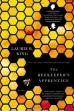
Laurie R. King: We first learned about Russell's history in California in THE BEEKEEPER'S APPRENTICE, and now, seven books later, we're finally getting down to details. Unfortunately, Russell proves to have some sort of persistent, and previously unsuspected, mental block about her entire childhood, so that details are hard for her to remember. This problem of an unreliable narrator in LOCKED ROOMS finds its solution in having Holmes take a greater role in the story than he does in the previous books, with sections narrated by Russell alternating with those following Holmes and his various Irregulars. It is a personal book for Russell, being entirely wrapped up in her past and that of her family, but it also gives us insight into Holmes, particularly his relationship with this young woman who is his partner and wife.
BRC: You have ties to San Francisco, the setting for LOCKED ROOMS --- your mother was born there, you spent part of your childhood in the Bay Area, and you currently live in northern California. Was it significant for you to set this book in a location you know so well? Did you draw on your family history at all?
LRK: Most of the Russell books are set in England, but I greatly enjoy writing those set elsewhere as well --- O JERUSALEM in what was at the time Palestine, THE GAME in India. To an Englishman in the 1920s, California would have been a far more exotic place than India, what with the Wild West overtones, the devastating fire eighteen years earlier, and Prohibition adding its piquant flavor to the place. In 1924, the Twenties were just getting under way, so for the first time in the books, we find ourselves in speakeasies and dancing that new craze, the Charleston. My grandparents, both of whom went through the earthquake, were a part of that era; in fact one of the characters bears a name similar to that of my grandmother, Flossie. The book is dedicated to Flossie and her husband, Dick.
BRC: For readers who have yet to make the acquaintance of Mary Russell, what would you tell them about the series?
LRK: Mary Russell is a young, female (and feminist) Twentieth Century edition of Sherlock Holmes. Their partnership is a good part rivalry, which makes for some fun scenes, but it also enables me to develop the rather two-dimensional character of Holmes that Conan Doyle preferred.
BRC: In previous Russell/Holmes books, literary characters such as Dorothy Sayers' Lord Peter Wimsey and Rudyard Kipling's Kim O'Hara have made appearances. LOCKED ROOMS features a real historical figure, Dashiell Hammett. Why did you choose to have Hammett play a part in the story?
LRK: Well, I originally thought to give him a brief cameo, since he was there in San Francisco at the time and I like to people the background of the stories with actual individuals --- something along the lines of the mention of T. E. Lawrence at the end of O JERUSALEM. However, once Hammett had his well-shod foot in the door, he just kept muscling his way in until he nearly took the book over. With Russell rendered unsuitable for combat due to her psychological preoccupations, Holmes needed a suitable foil. Hammett is it.
BRC: Do you have a favorite moment or scene in LOCKED ROOMS?
LRK: The chase scene through Chinatown was fun to write, with caged chickens flying and a bullet whizzing through the telephone exchange. Still, my favorite parts of the books are almost always the small sparkly bits. Things like, when Russell brings up the opportunity to travel to New York by airplane, Holmes' reaction is given as, "Holmes' upper lip was nothing if not stiff." And when Russell, Holmes, and Hammett confront an aged Chinese scholar, I shaped the scene around a similar character in one of Hammett's short stories, although I knew that very, very few people would get the joke.
BRC: You've traveled to many of the locales in the Russell/Holmes books, including England, Israel and India. Where will your travels take you next, and will you use it as a setting for a future book?
LRK: The next book coming out is set in San Francisco, modern and historical, but after that I think I'll be writing a stand-alone set in England in the Twenties and Thirties. In the future, I'd like to develop an episode mentioned in LOCKED ROOMS, when Russell and Holmes pause for three weeks in Japan to do a job for the emperor. That episode was placed there almost entirely to give me an excuse to go to Japan.
BRC: What makes Russell and Holmes such an interesting and appealing couple, both personally and professionally? How do they complement one another?
LRK: They are each other, with profound differences that arise out of their sex and their times. In fact, that was probably the initial impetus for Russell's character, the question, "What would that man's mind look like in a woman?" Yes, Holmes is a Victorian male gentleman, but on the other hand, a brain is a kind of engine and can be adapted for all kinds of settings. When she and he clash, it is because of their similarities, not their differences.
BRC: Besides the Russell/Holmes books, you also write the Kate Martinelli series and stand-alone novels. Is it important to you to have variety in your writing life?
LRK: Oh yes, absolutely essential. If I had to write a string of Russells in a row, I'd end up doing violence to the poor girl. The shift in perspective, voice, setting, even language is like traveling to a foreign country each year; it keeps me from seeing that I'm just doing the same thing, sitting and pecking out words on a keyboard.
BRC: When did your affinity for storytelling begin?
LRK: My affinity for stories has been there since I was tiny, although I didn't begin to tell my own until I was in my thirties. I've always loved to escape into books, and since we moved a lot when I was a kid, local libraries became my most steadfast source of friendship.
BRC: Do you enjoy the research aspect of creating your books? How about for the Russell series in particular?
LRK: I am a recovering academic, and find research dangerously addictive, to the point that a book often threatens to wander off into the stacks and become permanently lost amidst the facts. I try to avoid this by doing a minimum of research at the early stages, then later concentrating on given areas after I know what I need. However, I still find myself reading a ton of books that end up having nothing to do with the finished story.
BRC: After eight books, is it difficult to come up with new adventures for Russell and Holmes?
LRK: I haven't had any problems so far. After they get back to England in a couple of years, I may have to set off a few firecrackers under them to keep them (and me) from becoming complacent.
BRC: What are you working on now, and when will it be available?
LRK: It's sort of halfway between a Kate Martinelli and a Mary Russell, which sounds impossible but seems to be working remarkably well. It's still nameless at the moment --- it's been through two or three titles on my computer, but I've yet to come up with one my editor cares much for. (This is hardly unusual for me --- actually, neither of my children had legal names for weeks after their births --- but it does frustrate those saddled with the job of writing catalog copy.) I can say that at long last, in the summer of 2006, Kate Martinelli and her friends both in and out of the San Francisco Police Department will return, investigating a death on the Marin headlands that has something to do with...Mary Russell and Sherlock Holmes.
I'm having a whole lot of fun with it.
Click here now to buy this book from Amazon.com.
Back to top.
VIDEO CLIP
May 2005
Watch a video of Laurie R. King where, among other topics, she discusses LOCKED ROOMS, the challenge of writing the character of Sherlock Holmes and using San Francisco as a character in her books. Click Here
Back to top.
PAST INTERVIEW
March 5, 2004
In this interview with Bookreporter.com's Andi Shechter and Wiley Saichek, Laurie R. King talks in-depth about the setting and characters in her latest Mary Russell/Sherlock Holmes mystery, THE GAME. She also explains the difficulties in keeping a series "fresh" and how she incorporates her extensive research into her books.
BRC: You've taken your characters Mary Russell and Sherlock Holmes to Jerusalem as well as Dartmoor, and now, in THE GAME, to India. What made you select India as a setting?
LRK: Originally I thought it would be a chance for poor Russell to go someplace warm for a change --- she's shivered in the Palestinian desert, on Dartmoor, in an underheated country house, in the Canadian snow ... so I thought, Ah, India! Except that the interesting stuff was going on, not in the tropical south, but in the Northwest Frontier provinces, and it's January. However, I swear, next time she'll bask in the sun.
Except in my next book she's going to San Francisco, where the fog lies heavy on the hills.
But India was immensely appealing as a place to send the two. It's such a mad, spectacularly colorful country, I just couldn't resist it.
BRC: One might think that writing a known character like Sherlock Holmes restricts you in your storylines. Do you feel otherwise?
LRK: Any series character is restrictive in the sense that he or she is a defined quantity and can't be changed too drastically, and Holmes even more so because he brings with him the baggage of sixty "canonical" Conan Doyle stories. However, I haven't found myself chafing at any limitations his presence has imposed on me, and indeed, I have the freedom of developing more fully the characteristics and idiosyncrasies that Conan Doyle introduced. For example, Conan Doyle often has Holmes assuming disguises such as horse-handler or pious priest, so in THE GAME it's only natural that Holmes --- and his student Russell --- can dress up as itinerant magicians. Or, in the case of Russell, as her own brother.
BRC: The story in THE GAME revolves around a missing British spy named Kimball O'Hara. He is the grownup character of Rudyard Kipling's Kim. In KIM, he was the orphaned son of an Irish soldier stationed in India. Can you tell us why you chose to include him?
LRK: Kipling's KIM, one of my favorite novels, embodies the British colonial experience in India, so that even in a story set in 1924 it is not possible to ignore the book entirely. However, when I first began my research into the place and time, I came upon the fact that Kipling started thinking about the story during the exact period Holmesians call "the Great Hiatus," between "The Final Problem," when Holmes apparently dies battling Moriarty in the Reichenbach Falls, and "The Adventure of the Empty House," when he reappears in London and tells Watson that he has been, among other places, in Tibet.
Now how can any novelist pass up a piece of glorious serendipity like that? Holmes and Kipling, both in northern India while KIM was being hatched. And I didn't even have to twist any timetables to make it work!
BRC: How would you describe Mary Russell to a reader who has never read one of your books? What makes her "tick?"
LRK: To put her in a nutshell, she's a young, female (and feminist) twentieth-century version of the male, quintessentially Victorian Holmes. Like him, she is a passionate believer in justice and the need to set things right. Unlike Holmes, she sometimes has to be dragged forcibly into a case, since she has a life outside of crime.
BRC: Your affection for Russell is obvious, as well as your feelings for Mycroft Holmes. Do you like Sherlock Holmes as a character? Have your feelings evolved since starting the series with THE BEEKEEPER'S APPRENTICE?
LRK: Then as now, I am filled with respect and admiration for Conan Doyle's creation. Every time I re-read one of the stories, I am struck anew by the complexity of the character, the subtle elements to his personality, the sharp unexpectedness of his humor and his passions. Holmes is the archetypal example of a creation that surpasses his creator's intentions, perhaps even abilities, and takes on a life of his own. Faced with that degree of awe, I don't know that "like" matters all that much.
BRC: When you first began writing Mary Russell mysteries, were you anticipating a series or did you originally plan one stand-alone title? What gave you the idea to write a mystery series with this character and Sherlock Holmes? Are there any other literary/"fictional" characters you would like to do a series around?
LRK: THE BEEKEEPER'S APPRENTICE only makes sense as the introduction of a series. It is an episodic novel, following the development of Miss Russell from apprentice to partner to independent master of the art of detection. The idea stemmed from an irritated thought (not an inappropriate beginning, considering the characters) that a great deal of what the much-vaunted Holmes did would have been dismissed in a woman as mere feminine intuition. The response might have been to create a female Holmes working all on her own, but I found the idea of juxtaposition more appealing --- and as it turned out, some of the best parts of the books center on their interaction.
Particularly those scenes where she beats him at his own (pardon the pun) game.
As for other characters, stealing one man's life's work is probably crime enough for one writer. Although I have hijacked a number of other literary characters for the books --- Lord Peter Wimsey has a cameo in A LETTER OF MARY and, as mentioned above, Kim O'Hara figures large in THE GAME.
BRC: Do you have a favorite moment or scene in the Russell books?
LRK: As I said, I enjoy the scenes where Russell gets the better of Holmes in the course of an investigation. But often the bits that please me most in a book are the throwaway lines, usually humorous, that are there only for the appreciation of the discerning reader. Such as the exchange in THE GAME where Russell is first introduced to the presence of the boy Kim in their investigation, and she asks in surprise, "He's real, then?" to which Holmes replies, "As real as I am."
Perhaps I do not need to explain that I have a rather outdated and British sense of humor, being the sort of person who snorts and chuckles her way through Jerome K. Jerome's THREE MEN AND A BOAT. Sad, really.
BRC: What is the hardest thing about keeping a series "fresh" after so many titles?
LRK: The more the books, the greater the danger of repeating oneself in plot, theme or incident. Even more so when the series inhabits a narrow slice of the genre --- in the case of the Russell books, humorous adventures resting on serious themes. If they were grim and gritty stories throughout, I could, for example, put Russell into a life-threatening coma and let Holmes take over for one book; that would certainly keep things from going stale. However, the threat to the main character would jar readers accustomed to Russell's light touch.
Changing settings helps freshen the books --- India for THE GAME, San Francisco in the next novel. Bringing in new characters, new concerns, events that spark the imagination --- all those help.
BRC: In every book --- your stand-alones and your series titles --- your research is both deep and broad. You inform the reader about esoteric topics like juggling (which has appeared in several books) or hunting wild boars or searching for lost children. How do you walk that fine line in telling a story, and decide what your reader already knows and what might need explanation?
LRK: It's always tricky to know how much to show of the machinery behind the effects. As a reader, I find myself skipping over a lot of the details of, for example, how to palm coins or conjure flames out of cold torches (both of which are used in THE GAME). If I read in a magic book that such things are possible, I figure that if someone really wants to know how to do the trick, they'll look it up like I did. But unless the details themselves contribute to the story, I trim them down to little more than an offhand reference to the skill or chemistry involved. That way, a person who actually knows how to conjure flames sees that I've done my homework and keeps reading in satisfaction, while the person who couldn't conjure flames from a Zippo lighter sees merely the easy reference to arcane knowledge and, impressed, keeps reading.
It also helps to accept that the writer is not going to please every reader, that where some praise the details of, say, theological exegesis, others will gripe that there's too much God stuff. In the end a writer can only try to please herself and, as her primary reader, her editor. With luck, the majority of readers will agree.
BRC: You describe your writing so many different books by saying you have a "low threshold for boredom." Please explain.
LRK: I rarely write two books in a row about the same characters --- although that is precisely what I am doing now, with Russell and Holmes leaving India and going to San Francisco. However, as the setting is so radically different, it isn't feeling like repetition. By alternating characters, by changing points of view, style of language, setting and thematic elements, each book becomes a trip to a different place. I don't have the chance to get bored with the characters.
BRC: There are authors out there who struggle to meet deadlines and requirements of a book a year. You have written 14 books in only 11 years. Are you very disciplined or just prolific?
LRK: Both, I suppose. And neither. I happen to be a fast writer --- generally it's no problem, when I have a book actively growing, to produce between five and ten pages a day. Doing that even five or six days a week gives a first draft in three months. The rewrite takes a little longer, usually --- I use my first draft as raw material for a book, not as the book itself. The only person who sees the thing at that early stage is my immensely understanding editor.
BRC: We saw a photo of you on your website that was taken at the Taj Mahal. Can you share some stories of your travels to India to research THE GAME? What were your favorite stops on this trip?
LRK: I've been to India twice, once as an undergraduate on a set tour, the other time for six months with my husband and daughter (when that Taj Mahal photo was taken). Perhaps the most interesting thing about the longer trip was traveling with a child. It's a thing few people do (with reason --- it's hard work!) and as a result, the people who live there get a somewhat skewed idea of who and what Americans are. To see a Western family walking up the village street --- mother, father and small blonde child --- acts like an instant outstretched hand.
This may be an idea for diplomatic overtures to parts of the world with ambivalent feelings about the United States: offer free plane tickets to any family willing to take small children with them, and watch the amity grow.
BRC: What are you working on now and when can readers expect to see it?
LRK: Russell and Holmes continue their world journey to go to San Francisco, where Russell has business she has long neglected. What she does not realize until she gets there is that a great part of that business is personal, involving her own past and family connections.
It doesn't have a firm title yet, but look for it in the late spring of 2005.
Click here now to buy this book from Amazon.
© Copyright 1996-2009, Bookreporter.com. All rights reserved.
Back to top.
|