|
Jonathan Kellerman
BIO
Jonathan Kellerman is one of the world's most popular authors. He has brought his expertise as a clinical psychologist to two dozen bestselling crime novels, including the Alex Delaware series, THE BUTCHER'S THEATER, BILLY STRAIGHT, THE CONSPIRACY CLUB, and TWISTED. With his wife, the novelist Faye Kellerman, he co-authored the bestseller DOUBLE HOMICIDE. He is the author of numerous essays, short stories, scientific articles, two children's books, and three volumes of psychology, including SAVAGE SPAWN: Reflections on Violent Children. He has won the Goldwyn, Edgar, and Anthony awards, and has been nominated for a Shamus Award. Jonathan and Faye Kellerman live in California and New Mexico. Their four children include the novelist Jesse Kellerman.
Interview with Jonathan and Faye Kellerman
November 22, 2006
Each with a slew of international bestsellers in their repertoires, husband and wife Jonathan and Faye Kellerman are two of the world's most popular suspense/thriller authors today. They recently combined their talents to write CAPITAL CRIMES, a pair of novellas in which their respective signature protagonists, Alex Delaware and Peter Decker, make an appearance. In this interview with Bookreporter.com's Carol Fitzgerald and Joe Hartlaub, the Kellermans reveal why they chose to collaborate at this stage in their careers and describe the methods they use to keep the writing process fruitful and harmonious. They also talk about the accomplishments of their son, author and playwright Jesse Kellerman, and share what future projects are in store for each of them.
Bookreporter.com: I love the concept behind CAPITAL CRIMES and your previous collaborative volume, DOUBLE HOMICIDE. You have both been writing for over 20 years, yet your collaborative efforts started only recently. Who originally thought of the idea of the two of you collaborating? Is it an idea you've considered for a while?
Jonathan Kellerman & Faye Kellerman: In the past, we considered writing our sole "alone time" --- preciously private. After all, we've been together for 36 years, married for 34 of those, and have collaborated on just about everything in life except writing --- including raising four kids. However, a few years ago the notion of writing police procedural novellas set in interesting cities came up during a conversation, and it grew in appeal as a means of stretching creatively. These books were intended to supplement rather than to substitute for our novels, and, of course, we wanted to see how smoothly we worked together. Turns out, it was a wonderful process, without a cross word, and we were quite pleased with the results.

BRC: "Her Sister's Keeper" and "Music City Breakdown," the two short novels that comprise CAPITAL CRIMES, are much darker in tone and content than "In the Land of Giants" and "Still Life" in DOUBLE HOMICIDE. Was there any reason for the change of style?
JK & FK: Once again, we're talking about stretching creatively. The novella form was new to us, and though we were pleased with DOUBLE HOMICIDE, we found ourselves wanting to dig deeper into the characters' lives and internal thought processes. In a sense, that brings these books closer to our novels, so perhaps we've veered toward "familiar territory." However, the combination of our two voices has produced a new voice that can't be replicated by either of us working alone. Quite fascinating, really, to see what emerged.
BRC: This book, unlike DOUBLE HOMICIDE, features your signature characters, Alex Delaware and Peter Decker. We know that fans have been looking for this kind of a collaboration for years. What made you decide to include them in this book?
JK & FK: The fun, here, was being able to view Decker and Delaware from the perspective of an outside observer --- really the first time these two men have been categorized as outsiders rather than as stars of the show. We say "fun" because we don't feel that's an undignified concept when applied to writing fiction. We write the kinds of books we enjoy reading, and we feel that if we're stimulated --- and entertained --- the reader will be as well.
BRC: How does your collaborative process work? Does one of you begin with a first draft of a story and pass it to the other, or are you both part of the process of each story from the beginning? How do you manage to work on these shorter novels while maintaining your respective writing schedules on your more established series?
JK & FK: We used email, which perhaps contributed to the harmonious working relationship, in that it avoided verbal discussion. Unlike our respective novels, over which we're quite protective, we needed to start out with a different mindset: this was to be a collaboration involving total surrender at each step of the way. That is, when one of us wrote a draft, he/she needed to relinquish it to the other for undebated modification. Kind of like surrogate parenting, except the baby kept returning for more care. We kept emailing drafts back and forth until we were both satisfied. Happily, we admire each other's writing skills and found nothing with which to quibble. It really went quite seamlessly.
BRC: What is the easiest part of the collaboration process for each of you? And what is the hardest?
JK & FK: Honestly, this was easy. A lot easier, in fact, than writing a novel alone, which can be quite isolating, even lonely. The buck kept getting passed from hand to hand, which relieved some of the crushing pressure writers can feel, particularly in the middle of a book, where conundrums and creative challenges arise. Here, someone else was available with a life-jacket. And someone we trusted.
BRC: I was extremely impressed by the way in which you captured the flavor of Berkeley and Nashville, the cities where the short novels in CAPITAL CRIMES are set. You display a knowledge of those cities --- particularly Nashville --- that was obviously acquired by much more than an overnight visit or two. What attracted you to those cities as settings for "Her Sister's Keeper" and "Music City Breakdown?" And how did you go about researching the nooks and crannies of each city?
JK & FK: Thanks for saying so, because we really strove for authenticity and regional flavor. We picked cities with strong identities and spent time traveling and talking to those in the know. Research is always part of writing a crime novel, and this research was fun --- that word, again. The police departments of Nashville and Berkeley couldn't have been more helpful, as were various other contacts we've cultivated over 20 years. That's one of the advantages of a long career; one acquires credibility and a body of work that can be "investigated." Our bodies of work make it clear that we respect what law enforcement does, so perhaps that helped. In any event, we took our time researching before sitting down to write, striving to get it right.
BRC: You have both written books outside of the mystery/thriller genre. Do you have plans for collaboration on a work in another genre, or even a nonfiction work?
JK & FK: We've just finished taping separate episodes of Court TV's new series, "Murder By The Book." Faye's show will air 11/27, Jon's 12/4. It's likely we'll collaborate on other film/TV projects, as well as on other CAPITAL CRIMES-type books. Primarily, though, we'll be concentrating on our novels. Jon's next Delaware, OBSESSION, will be published in April 2007 and Faye's new Decker/Lazarus novel, THE BURNT HOUSE, in August. We each have multiple book contracts for our respective series.
BRC: Your son, Jesse, published his first novel, SUNSTROKE, in 2006 and has a new novel, TROUBLE, scheduled to be published in January 2007. It may be premature to ask this, but has the topic of a collaboration between Jesse and either --- or both --- of you been raised?
JK & FK: We're so pleased with the success of SUNSTROKE --- rave reviews and appearances on several bestseller lists. TROUBLE is, to our mind, an even stronger book --- immensely powerful --- and the industry buzz has been strong. Jesse's publisher, Putnam, was smart enough to purchase several more novels from him, so he'll be busy for a while. If the three of us do collaborate, it will be on a film/theater/TV project, as Jesse is also a published playwright with strong scriptwriting skills.
BRC: What will we see next from the team of Jonathan and Faye Kellerman? And what can we expect from you individually, as well?
JK & FK: As we just noted, several more Delaware and Decker novels are in various stages of planning, writing, etc., and we're always open to stand-alone projects that inspire us. Both of us love our jobs and a good part of that is due to our readers, who've been so loyal and supportive over more than two decades.
Click here now to buy this book from Amazon.com.
Back to top.
INTERVIEW
December 3, 2004
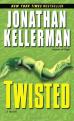
Bookreporter.com co-Founder Carol Fitzgerald and senior writer Joe Hartlaub interviewed Jonathan Kellerman, who has written numerous bestselling tales of suspense. His latest novel, TWISTED, features Hollywood homicide detective Petra Connor and characters from some of his previous books. In this interview Kellerman talks about his writing process and how he is able to be such a prolific author while maintaining the standards he sets for himself. He also talks about DOUBLE HOMICIDE --- his first collaborative work with wife Faye --- and what readers can expect from him in the future.
Bookreporter.com: TWISTED puts a new and different spin on the serial killer. What jump-started this novel for you? Did you read an account of a real-world killer with similar methodology?
Jonathan Kellerman: The story sprang from my rather warped imagination, not from a real-world case. I can never answer the question of jump-starting in a simple manner because my novels tend not to be high-concept, summable in one sentence. For me, a novel takes months, even years, to materialize. It's the product of thought-fragments, dreams and daydreams, conversations, and other bits of mental flotsam that one picks up over time. Writers are basically psychological vacuum cleaners. The good ones know what choice tidbits to pick out of the bag.
BRC: Late in the book Isaac Gomez discovers some research that turns the tide on the investigation. This story within the book is complex and explores another case in great detail. Did you write that section before you wrote the rest of TWISTED?
JK: No, I always write in chronological order, starting with chapter one --- proceeding in a rather obsessive-compulsive manner that matches my general approach to life. I do prepare by outlining in detail, because I'm not smart enough to keep multiple plotlines in my head. The outlining process takes months as well.
BRC: Eric Stahl, Petra Connor's enigmatic love interest, is one of our favorite characters. He makes a number of important but all-too-brief appearances in TWISTED. Do you have any plans to feature him more extensively in future novels?
JK: Thanks. I've become rather fond of Eric myself, so I would like to give him a bit more attention. Sometimes characters begin as relatively minor players (though I always like to imbue all characters with a sense of humanity). Petra, herself, first appeared as a side-character in the Alex Delaware novel, SURVIVAL OF THE FITTEST. I found myself wanting to know more about her and I was challenged by the notion of writing from a female perspective. That sense of challenge was heightened by the fact that my gifted wife, Faye, has always excelled at writing from a male point of view. So the next novel after SURVIVAL was BILLY STRAIGHT, which starred Petra. Then she teamed up with Alex and Milo in A COLD HEART, in which Eric debuted. Now, three years later, I've developed another story that suits her. The story always dictates the form.
BRC: Isaac Gomez, a character who debuts in TWISTED, possesses genius-level intelligence, yet he is in many ways unsure of himself, still finding his way along. What plans do you have for Gomez in future novels?
JK: Once again, I'm very fond of him and would love to bring him back. That's what's so great about my job. I get paid to do what got me in trouble in grade school: space out and play with my imaginary friends. In terms of Isaac, when the time's right...
BRC: In novels, we often read of female officers feeling that they are treated like second-class citizens. Petra seems to carry none of that baggage with her. Was this a conscious decision on your part?
JK: Petra's from the post-feminist generation that has reaped the benefits of her predecessor's hard work. She assumes the best until proven otherwise. The truth is that the LAPD and other police departments employ many female detectives and though I'm not naive, my impression is that, for the most part, whoever does the job well earns respect. The police chief of Santa Fe is a very popular woman and I just got back from a research trip to Nashville where the lieutenant of the murders squad is a woman. In general, I've always worked hard at playing against stereotype, e.g. a hard-bitten but gay detective who'd hardly qualify for "Queer Eye" (except as a recipient), a couple where the male (Alex) deals with human emotions while the female (Robin) works with power tools. The fact that Petra is a woman but isn't preoccupied with that seems much fresher to me than mining the same old same old.
BRC: TWISTED is a great title for this book since it works with the story on so many levels. Did you conceive of the title before you started, or did you come up with it once you started writing?
JK: I conceived it before I started writing. It also describes the way my mind works.
BRC: Though TWISTED is primarily a Petra Connor novel, you tie a number of your other characters and novels into TWISTED, including Darryl Two Moons and Steve Katz from DOUBLE HOMICIDE and Billy from BILLY STRAIGHT. Since so much of a character can be shared from his or her backstory, do you plan this in advance or do you include these descriptive segments as you write? How do you keep track of backstories?
JK: That kind of thing is generally spontaneous during the writing process, rather than pre-plotted. These people are real to me, and situations keep coming up where their emergence feels natural. It's like meeting old friends. I hope readers feel the same way.
BRC: In October DOUBLE HOMICIDE, your first collaborative work with your wife, Faye, was released. How did you collaborate?
JK: Faye and I will leave a little mystery to the process, but basically one of us did an initial draft of one novella and vice versa. We then e-mailed it to the other, and the manuscript got passed back and forth electronically until both of us were satisfied. It was a true collaboration: both of us had input on both novellas and I believe the voice we created is neither Faye's, nor mine, but Faye-and-Jon.
BRC: Many readers thought that a collaborative effort between the two of you might include Alex Delaware collaborating with Peter Decker or Rina Lazarus on a case. Why did you choose not to go this route?
JK: The key to this collaboration --- which we undertook after much deliberation --- was to stretch creatively. New characters, new locales, new form (the novella).
BRC: What are your ongoing plans for the DOUBLE HOMICIDE books? Do you plan to confine those books to their current Boston and Santa Fe locations, or do you plan to introduce other locales, with other characters?
JK: The key to DOUBLE HOMICIDE is exploring the regionalism of the USA. Therefore we'll set each novella in a different city. Our goal is to make the city a third partner (along with the team of homicide detectives). Volume Two will cover Nashville and San Francisco, and we hope to do many, many more --- theoretically twenty-five, in total, to cover all fifty states of the Union.
BRC: You have been especially prolific of late, while maintaining, even exceeding, the quality of your past work. What do you do to maintain your standards while increasing your productivity?
JK: My perfectionistic personality and compulsive nature don't allow me to send a manuscript in until I'm relatively happy with it. I say relatively because I'm rewriting constantly and there are always changes one can make. But at some point one needs to put the book aside and move on. I have been prolific --- DOUBLE HOMICIDE, TWISTED and the Delaware novel, RAGE, due out this spring. It's not because I'm hacking it out. It's because I worked like a demon. This may have arisen from the fact that Faye and I married off two of our children this past summer --- twenty-eight days apart. As anyone who's done a wedding knows, the role of father of the bride/groom is to write checks and have no opinion. So I was doubly mandated to have no opinion. I escaped the process by hiding in my office and typing away. Faye's the hero. She did the wedding work and still managed to get some writing done.
BRC: We read recently that you have outlines ready for several --- actually for dozens --- of additional novels. Do these deal with characters you have created already? Or do you have some new protagonists waiting in the wings?
JK: Since I'm in the throes of advanced middle age, I've learned to write everything down. This has resulted in a surprising number of plotlines in my hard copy files. If God grants me continued good health and if the reading public persists in digging my stuff, I'd love to keep writing for a long time. Some of the books will be Delawares --- unlike some authors I don't despise my main character, I like him. And some will feature other protagonists. As I said, it all depends on the story.
BRC: What are you working on now, and when will readers see it?
JK: I'm working on a Delaware novel, titled GONE, which will come out in the spring of 2006, and DOUBLE HOMICIDE II, which will be published in the fall of 2005.
Best to all, and thanks to my readers. Because of you, I get to do this job.
Click here now to buy this book from Amazon.
Back to top.
INTERVIEW
November 21, 2003
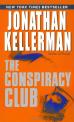
Jonathan Kellerman has brought his expertise as a clinical psychologist to a number of his bestselling suspense novels, including those that feature psychologist Alex Delaware. His latest effort, THE CONSPIRACY CLUB, introduces readers to a new character --- a dedicated young psychologist named Jeremy Carrier.
In this interview with Bookreporter.com's Suspense/Thriller Author Spotlight team (Carol Fitzgerald, Joe Hartlaub, and Wiley Saichek), Kellerman talks about his decision to depart briefly from Alex Delaware, the working relationship he has with his wife Faye and a memorable encounter he had with one of his fans.
BRC: While Alex Delaware is your best-known character, you have never been reticent to break from the Delaware stories and explore other directions, as you have most recently with THE CONSPIRACY CLUB and Jeremy Carrier. Why did you decide to write about someone new?
JK: I'm always led by the story, and a particular story and set of characters came to me. Actually, this was the rare case of "inspiration." I was relaxing after finishing A COLD HEART, staring out at the Pacific and the idea for what I thought was going to be a short story floated into my mind. Somehow, it became a novel.
BRC: What are your plans regarding Carrier and Delaware? Do you plan to alternate novels involving the two characters?
JK: No specific plans for alternation. I've completed another Delaware, as well as another novel featuring Detective Petra Connor of Hollywood Homicide. I certainly intend to write more Delawares --- in fact, I'm just about to begin one.
BRC: One of the more interesting elements of your novels is that your protagonists seem to be involved in complex emotional relationships that provide an edgy undercurrent to the main plot. They're very real, certainly not the "Nick and Nora" stereotype one frequently encounters. Are the occasional problems that your characters encounter in this regard based on individuals you know, or are they entirely the result of inspiration?
JK: There are two types of crime series protagonists: the Agatha Christie hero, e.g. Poirot, a psychologically static conduit for solving puzzles, or what I prefer --- a dynamic, evolving individual. No disrespect to Dame Agatha. It's just that one of the things I enjoy most about writing fiction is character development.
The characters emerge from my rather twisted mind. That's another enjoyable part of the job: making stuff up.
BRC: What is the most difficult part of writing a non-series title? What is the most rewarding aspect?
JK: The difficult part about writing any novel is transforming ideas into a coherent written communication that engages the reader. I try to create a hypnoidal (hypnotic-like) sense of place that draws the reader out of his/her daily routine. Each novel is harder than its predecessor because I must work harder at not repeating myself. However, I enjoy the challenge. This is the greatest job in the world.
BRC: How much time do you spend researching the book? Do you conduct all of your research before you begin writing, or do you continue researching as you are writing?
JK: Time spent researching varies from book to book. Some novels require months, even years of research, others very little. I try to do most of my research before I begin but inevitably questions emerge during the writing.
BRC: This year saw you publish two books --- THE CONSPIRACY CLUB and A COLD HEART. Was it difficult writing this much in such a short amount of time?
JK: It didn't feel difficult at the time because I was so charged up about both books. Afterward, however, I was pretty tired. In a good way, like after a great workout.
BRC: Have you ever considered writing a book with your wife Faye where Delaware and Peter and Rina Decker meet up?
JK: No imminent plans for a Delaware/Decker hookup. However Faye and I are collaborating on two volumes of a novella series entitled "Double Homicide." It's our first collaboration and it's turned out to be great fun.
BRC: At what point do you and Faye share your work with each other? Do you feed possible storylines for your series characters to each other?
JK: Faye and I share 100-page segments of our books. Fortunately, each of us really admires the other's work, which helps maintain marital harmony. The only problem is I get into her story, and then I have to wait months for the next installment. I do welcome Faye's comments. Having a successful and brilliant novelist around for support and counsel has been a real luxury for me. We don't share storylines, though it's not uncommon for us to read or observe something and to offer it to the other (e.g. "That would be a great Decker/Delaware story.") After 31 years of marriage, raising four great kids, our novels are just about the only pockets of privacy we have left.
BRC: Many bestselling authors have written holiday books about the Christmas season. Have you ever considered doing one that weaves in a story of Hanukkah into the plot line?
JK: No Hanukkah stories in the pipeline. I think Adam Sandler covered that pretty comprehensively.
BRC: Can you share a particularly memorable encounter with a fan?
JK: Since I'm a psychologist I do encounter some eccentric fan mail and the like. One of my most pleasurable fan experiences was signing a book for a quiet, courteous gentleman who turned out to be Warren Zevon, the brilliant songwriter/singer. Subsequently, Warren and I became friends. Sadly, he passed away this year. His loss is significant.
BRC: What are you working on now, and when can we expect to see it?
JK: The next Delaware, THERAPY, will be published this summer. The Petra Connor novel, TWISTED, will be published in November 2004.
Back to top.
PAST INTERVIEW
December 15, 2000
Jonathan Kellerman transports readers yet again with his new chilling
and intellectual thriller, DR. DEATH. Join us as our resident Kellerman
addict, Senior Writer Joe Hartlaub, delves inside the novel's doctor
and author. Get a hint at what's in store for his popular recurring
character, Alex Delaware, and much more in this interview.
TBR: DR. DEATH has a "real world" immediacy on a number of levels,
dealing not only with a Dr. Kevorkian-type character but also with
a character somewhat similar to Dr. Michael Swango, the physician
who recently pled guilty to murdering hospital patients in a number
of different cities. What originally drew you toward assisted suicide
--- both voluntary and involuntary --- as the underlying theme of
DR. DEATH?
JK: I can't really say what draws
me to a specific topic. Though I avoid writing a "message book,"
I do find that many of my novels tend to feature so-called "social
issues." Probably because I like to wrestle with things that bother
me. That probably also explains my choice of psychology as a profession.
I'm also drawn to complex issues, such as assisted suicide, because
I find questions much more interesting than answers. At root, all
fiction is about surprise and when I write I like to explore and
to surprise myself. That way, hopefully, the reader will be engaged,
as well.
TBR: What are your own thoughts about assisted suicides and doctors
like Dr. Kevorkian?
JK: As I said, it's a complex issue
and I don't profess any great wisdom. I do feel that we need to
be aware of slippery-slopes and to use whatever credo it takes ---
either religion or some secular code --- to explicate and buttress
the sanctity of human life.
TBR: One of the more interesting elements of DR. DEATH is that
it involves the investigation of the murder of Dr. Eldon Mate whose
involvement in assisted suicides made him quite unpopular. While
never explicitly stated in the novel, DR. DEATH very nicely demonstrated
the premise that even an unpopular victim has the right to posthumous
justice and closure. Was there any specific inspiration which drew
you toward this premise?
JK: At the risk of appearing evasive,
I really can't comment on the specifics other than to reiterate
that pat issues should be the province of CNN and episodic TV, not
novels. I like to say that as a psychologist I was concerned with
the rules of human behavior. As a novelist, I'm concerned with the
exceptions.
TBR: Another element that makes DR. DEATH more authentic was
the interplay between Alex Delaware and Milo Sturgis --- both characters
are driven, working toward a common goal, yet occasionally at cross-purposes.
The friendship was able to ultimately survive, but only because
both of them were willing to work toward that goal as well. Are
we going to see any more shifts in the friendship between Delaware
and Sturgis in the future?
JK: I chose early on to create
series characters who evolve --- in contrast with Agatha Christie's
Poirot, for example, who is basically a static figure against whom
events bounce and whose sole purpose is to solve puzzles. This is
not to detract from Christie's genius. I simply opted to do it differently
because, though I do invest a lot in plotting, my first love is
creating characters. I walk a thin line --- parceling out the details
of Delaware's personal life very stingily, because in most of the
books, he isn't the story, he's the vehicle for telling the story.
However, to me a crime novel remains a novel and I want to write
it as richly as I can.
TBR: On a similar note, I've noticed that you are not at all
reticent about changing the dynamics of Delaware's personal life.
Do you have any plans for major changes in Delaware's life over
the course of the next few Delaware novels?
JK: In terms of what changes I
plan for Delaware in the future: You can't really think I'm going
to tell you!
TBR: Do you have any plans for taking Alex Delaware out of his
southern California environs, or for a novel which does not involve
Alex Delaware in the future?
JK: I took AD out of California
for THE WEB and that was great fun. Looking back, I think I did
it because Faye and I had just welcomed a new baby to the family,
and I couldn't travel much, so I vacationed vicariously through
Alex. The book sold great but I did get a lot of cranky comments
about the change of venue. Of course, that wouldn't influence me,
if I came up with a story that lent itself to let's say...Paris?
Tahiti? Hmm...so far though, Alex stays in LA. The series is, at
root, wedded to LA.
TBR: Are there any plans, however tentative, to introduce a recurring
character outside of the Alex Delaware novels?
JK: No plans but, once again, even
if there were, I wouldn't tell you. The punch line must FOLLOW the
joke.
TBR: What are you working on now?
JK: I've completed next year's
Delaware and I'm about halfway through the one after that. And,
please, no comments about churning them out. I don't write particularly
quickly but I do write steadily. Five pages a day adds up to a manuscript
sooner than one might imagine. Then I rewrite. And rewrite. And
rewrite.
TBR: What is your writing schedule like?
JK: Five days a week, I stagger
downstairs to my office, sit down, turn off the phones, lock the
door, and type. Whether I'm feeling "inspired" or not. When I'm
through, I eat, play guitar, paint, sleep, etc. Hovering over all
of this, of course, is the perennial attempt to be a good husband
and father. And dog-owner.
TBR: Are there any plans for film adaptations of any of your
Alex Delaware novels?
JK: My first novel, WHEN THE BOUGH
BREAKS, was one of NBC's most successful movies of the week in 1986.
Since then, the film biz people haven't seemed very interested in
my books. I've had lots of options, purchases, deals, etc., but
in the end, the projects never go into production. The most common
reason seems to be that the books are extremely hard to script because
they're too "complex" or "intellectual." I suppose I should be flattered,
though a film-biz guy's notion of "intellectual" is a strange thing,
indeed. And in view of the shabby adaptation of many novels, perhaps
I should consider myself lucky. However good books can be turned
into good films --- e.g. SILENCE THE LAMBS, LA CONFIDENTIAL ---
and the latter was pretty darned complex. So, if anyone knows my
favorite film people, the Coen brothers...
TBR: What books have you read recently that you would recommend
to your readers?
JK: I've been reading all of Bill
Bryson's travel books and they're quite brilliant and hilarious.
In general, I don't read much fiction when I'm writing. Too distracting.
Thanks again, Joe.
Back to top.
PAST INTERVIEW
December 10, 1999
In his latest thriller, MONSTER, Jonathan Kellerman's reoccurring psychologist Alex
Delaware is back on the job, searching for a killer who brutally murdered another
psychologist. TBR Senior Writer Joe Hartlaub delved into the mind of Kellerman --- the
author and psychologist --- and into the heart of his new book in this insightful
interview. Find out why Kellerman keeps Delaware in the City of Angels, his views as a
psychologist on mood altering drugs, how to raise your kid to be the 'good guy' of his
novels as opposed to the monsters, and much more.
TBR: Your new book, MONSTER, is dedicated to Kenneth Millar, who wrote the Lew Archer
novels under the name Ross MacDonald. Among other things, these books documented the
social climate of southern California post World War II. I've noticed that collectively
your novels, in an understated but incredibly effective manner, have also chronicled the
people and mores of Los Angeles. Is this something that you deliberately set out to
accomplish?
JK: I struggled for many years to get published. One
of my (many) problems was finding my voice. Several factors combined to help me and one of
them was discovering the novels of Ross MacDonald. For here was someone writing ---
brilliantly --- about psychopathology in Southern California. Talk about
epiphany! I told myself that, with my background, the same focus might work for
me because I'd experienced some pretty raw things working as a psychologist in a public
hospital and I needed a way to integrate them. I feel RM is the greatest
hard-boiled crime writer who ever lived and I know others agree. James Ellroy
refers to him as "Ross the Boss." While I do appreciate Chandler and
others, RM really did it all: characterization, style, plot (Chandler wasn't much of a
plotter.) Unfortunately, he's rather underappreciated. I would have
loved to meet him, and we did have some mutual acquaintances, but sadly, he was already
ill with Alzheimers by the time I got published.
Yes, I do set out to explore L.A. in my novels --- to me L.A. is a character in the
books. Thank God I live here, rather than Cleveland or Philadelphia. Between
the weather --- which gives us more time to get into trouble --- extremes of wealth and
poverty, and the influence of the movie biz, what better setting could there be for the
excavation of perversity?
TBR: MONSTER has been one of the most highly anticipated books of this year, and lives
up to --- and surpasses --- that anticipation in no small measure due to Ardis Peake and
particularly to the Crimmins Brothers, who are compared within the book to the Menendez
Brothers. Were the actions of the Menendez Brothers the impetus for the genesis
of MONSTER?
JK: I'd rather not talk about the Crimmins brothers
because that might give away too much plot. I was not influenced by the
Menendez Brothers; there's no shortage of psychopathy out there if you know where to look.
The fun of fiction is making stuff up.
TBR: One topic discussed sub rosa in MONSTER is the use of psychotropic or
mood-altering medications for the treatment of behavioral disorders. There are those who
feel that the use of medications is one of the most important advances to date in the
treatment of mental problems. There are others who feel overmedication is a big problem.
What is your stance on this?
JK: As is the case with most serious issues, our
instant-information society tends to create artificial controversy. These medications
aren't any different than any other class of pharmaceuticals. Administered under proper
supervision, they can do a lot of good. Abused, they can be disastrous. With regard to
schizophrenia, the data are pretty clear: about one-third of patients achieve miraculous
results and greatly improved quality of life, sometimes verging on
cure. Another third achieves partial improvement, and the last third doesn't
respond. One of the reasons we have a "homeless problem" is that we shut down
mental hospitals and release schizophrenics to the cruelties of the streets. A good number
of these people could be helped by proper medical care, including medication.
TBR: You transported Alex Delaware to Jerusalem in THE BUTCHER'S THEATER. Do
you have any plans, however tentative, to feature him in an environ other than southern
California in the future?
JK: Will I write another book set in Israel? Doubtful.
THE BUTCHER'S THEATER took a lot out of me.
TBR: How do you go about your development of secondary characters in your
novels. Are they drawn from chance encounters, created from whole cloth, or a
combination of the two?
JK: As I just mentioned, the fun of writing fiction is
making stuff up. Normal people often have difficulty understanding the warped, meandering,
hyperactive mind of a novelist --- occasionally I hear from folks who are certain they
KNOW someone I've fictionalized. But it just ain't so. John Irving did a good job of
dealing with this in A WIDOW FOR ONE YEAR. I plot my novels extensively, so I have a
pretty good idea where the story's going (though that often changes.) In the
outline, the characters tend to be rather sketchily drawn. When I actually sit down to
write the book, they come to life. It's a rather bizarre and wonderful experience. I love
my job.
TBR: You have four children, which, in and of itself, irrespective of your educational
and professional background, qualifies you as an expert in parenting (not to mention
stress management). What, in your opinion, is the most important environmental
element a parent can provide to a child in the hope that the child will grow up to be more
like Alex Delaware, as opposed to Derrick Crimmins?
JK: You really don't want me to get started on my kids
--- I'll go on obnoxiously about how wonderful they are. I think the best thing I did for
them was marry the right woman. Faye, in addition to being a gifted novelist, really is
Super-Mom, sometimes at great cost to her energy level. I don't think there are any big
secrets to raising moral children. Given kids with normal neurological systems, you have
to provide them with love, affection and LOTS of attention. LOTS and LOTS. I'm an old dad
with a seven year old, so know of whence I speak. Needless to say, you also have to set a
decent example. Really bad people rarely sprout randomly. I deal with this in my
nonfiction book SAVAGE SPAWN: Reflections on Violent Children. The precursors of serious
evil are generally pretty blatant. In other words, it takes a lot to screw up a kid.
TBR: You have an extensive background as a child psychologist --- a field where you
remain highly respected to this day. What initially inspired you to make the
"jump," so to speak, from the practice of psychology to the writing of novels?
JK: I never really "jumped." The
arts and science have always been dual interests. I began writing at the age of 9, worked
as a journalist and cartoonist in college, tried my first novel at 19, won a literary
award at 21 and thought I was pretty hot stuff. I even had an agent! My first
PUBLISHED novel came out 14 years later, so that gives you a pretty good idea of my
struggle. Basically, I was a failed writer with a really good day job. Piles of rejection
letters. However, I don't want to imply that I went into psychology in order to bide my
time until the acceptance letters arrived. I was fascinated by the field and decided to
become a child clinical psychologist during my freshman year in college. Psych was going
to be my lifelong job, for even though I loved writing and wanted to get published, I
never considered it a way to make a living. Surprise, surprise. Sometimes I still can't
believe it. So thanks to all the readers who allow me to continue this great gig. The
obvious thing, of course, is that without my training in psychology, I'd never have
published fiction. For a long time, though, I was too stupid to realize the obvious
synergy.
TBR: Notwithstanding your success as a novelist, you recently returned to writing
nonfiction with the publication of SAVAGE SPAWN, your first nonfiction work in eighteen
years. What was the impetus for your return to nonfiction?
JK: I wrote SAVAGE SPAWN because a) I was really upset
by the rash of school yard shootings, particularly Jonesboro, Arkansas, and b) the editor
of the Library of Contemporary Thought asked me to do it the same day I'd dashed off an
op-ed piece on the topic for USA Today. Just one of those strange confluences. I thought I
should take that to heart. Writing my first psych book in nearly twenty years was fun but
there's no doubt in my mind that I prefer fiction. After fifteen years in academic
medicine, I've had my fill of footnotes, references, etc.
TBR: Do you have a preference for writing fiction or nonfiction? What about when it
comes to reading?
JK: When it comes to reading I tend to favor
nonfiction. One of the occupational hazards of my job is that I tend to read fiction
editorially rather than hypnotically. I do, however, love really great novels.
TBR: If you don't mind letting us peek over your shoulder, could you describe your work
schedule to us?
JK: Both Faye and I prefer to write in the morning,
when the kids are in school and the house is relatively quiet. I'm not cranky about this,
however. During my failed-writer days I wrote late at night in my garage, after
discharging my duties to patients and family. So I'd like to think I'm flexible.
Afternoons I often rewrite or deal with business issues.
TBR: Are you working on anything new right now?
JK: Next year's Delaware novel is complete and I'm
about halfway through the one after that. It's not that I write particularly quickly --- I
don't. But I have a pretty good work ethic and try not to get distracted. Also, I still
love writing, so that makes it easier.
TBR: What writers, other than Ross MacDonald, have influenced you?
JK: The other hard-boiled California writers ---
Chandler, Hammet, Jonathan Latimer, Horace McCoy, etc., --- as well as Joseph Wambaugh,
E.A. Poe, A.C. Doyle, Dumas, Verne, HG Wells, Robert Louis Stevenson, James T. Farrell.
And many others. Anyone with style, grace, and a strong sense of story.
TBR: What are you reading now?
JK: A scholarly tome on hermaphrodites.
TBR: There has been consideration in the past of adapting one or more of your novels to
film. Can you tell us if any of your novels are presently being scripted? Is there one in
particular that you would like to see on the big screen?
JK: Big-screen folks have no interest in my novels ---
allegedly too "complex" or "intellectual." WHEN THE BOUGH
BREAKS was a very successful TV movie in 1986 and that's the only time I've been adapted
for any size screen. Coppola bought three books for TV a few years back and BAD LOVE was
scripted and ready to go. Then some TV executive came aboard and kaboshed what her
predecessor had done. Typical. BILLY STRAIGHT has been scripted for TV, but whether or not
the project will actually go through is anyone's guess. I have very little interest in
film, though if a terrific director/actor/production company wanted to do one of my books
--- at the right price --- I'd be amenable.
TBR: We are rapidly approaching the close of the 20th Century. What one advancement
would you like to see in the field of child psychology?
JK: I'd like to see a more balanced view of
nature-nurture issues develop --- recognition that both are vital with less bifurcation
into one-or-the-other dogmas. I tend to be optimistic about children --- there's some good
research showing that "experts'" dire predictions tend to be inaccurate. Kids
aren't much different today than they ever were --- as a matter of fact, I wrote an essay
on that for the current Land's End Catalogue. My primary worry is the impact of divorce
upon children. There is a tendency to under-appreciate the consequences of divorce,
particularly upon 7 to 11-year-olds.
TBR: And finally, the question we are asking everyone, what are your thoughts on the
millennium?
JK: To me the whole millennium issue is nonsense. Just
another year. But maybe I'm saying that because I just turned 50 and keep telling myself
that's arbitrary, as well.
Back to top.
PAST INTERVIEW
January 22, 1997
On January 22, 1997, THE BOOK REPORT welcomed bestselling crime novelist Jonathan
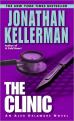
Kellerman to discuss his novels, including his latest, THE CLINIC. Jennifer Levitsky
(BookpgJL) was THE BOOK REPORT interviewer.
Marlene T: Hello, Jennifer and Mr. Kellerman, welcome!
BookpgJL: Thank you, Jonathan for being here tonight!
J Kell 97: Thank you. Great to be here.
BookpgJL: In THE CLINIC, Alex says to Milo: "Fame
is like stripping in a dark theater. You never know who's out there." How have you
found this to relate to your public writing life?
J Kell 97: Actually, I'm quite obscure. One
of the advantages to being a writer rather than an actor is that a writer, at best.
becomes "pseudo-famous. No one knows who I am so I can lurk around L.A.
eavesdropping.
BookpgJL: Do you lurk? Where?
J Kell 97: Absolutely.
BookpgJL: For story ideas?
J Kell 97: All over L.A. This city is the
best setting for crime novels because it's really a third-world country --- extreme
contrasts between high and low income and the rather unhealthy influence of the film
business. The dialogue I pick up at various locales is unbelievable.
BookpgJL: What's the most unbelievable thing you've
ever heard or seen?
J Kell 97: I can't think of any single line but people
really do like to be noticed. Especially actors. You'd think they
want privacy but they tend to flaunt themselves and to talk rather loud.
BookpgJL: In your current book, THE CLINIC, and Faye's
current, PRAYERS FOR THE DEAD, you both have doctors and medicine at the heart of the
stories. Coincidence or planned?
J Kell 97: Both Faye and I have backgrounds in
health-care so I suppose it's natural that we'd each gravitate toward that
world. Faye and I never discuss our works before we begin them, so in that
sense it is a coincidence. I have written about docs, shrinks, etc., many
times.
BookpgJL: Let's talk about that. How easy or difficult
was the transition from child psychologist to bestselling crime novelist?
J Kell 97: It wasn't really a
transition. I've been writing compulsively since the age of 9. For
many years I was a failed writer with a very good day job.
BookpgJL: Compulsively....what did you write as a
child? Dreck or good stuff?
J Kell 97: Depends upon who you ask. My mom
thinks it was great. Everyone else would probably call it mega-drek.
BookpgJL: The next obvious question: How much are you
like Alex Delaware?
J Kell 97: AD is my Walter Mitty fantasy. I
decided, finally, to write what I knew but I'm a rather boring fellow, married with kids,
dogs, etc., and could never get into the trouble he does. I'd like to think I share his
compassion and curiosity about people and, certainly, some of the more technical aspects
of psychology that find their way into the novels emerge from my own
experience. Oh yeah, he's also in much better physical shape.
BookpgJL: In THE CLINIC I was sad to note that Robin
and Alex barely spoke except in notes. Why?
J Kell 97: Doing smething interesting with Robin is
always a challenge. Sometimes she takes a more active role, as in THE
WEB. Sometimes she's busy with her own life. I have enough trouble
working in a shrink, a gay cop, and a dog. Believe me, this is not an easy
formula for commercial success.
Question: Do you find that you are promoted more
heavily than your wife because her books are categorized solely under Mystery while yours
are put under general fiction?
J Kell 97: The question of categorization is always
arbitrary. For some reason, I've usually been put in fiction, but not
always. Actually, Faye has been very well promoted by Morrow. She's
quite happy with them and just signed on for another 3 books. I'm thrilled at
her success because I think she's a brilliant novelist.
Question: Jonathan, I saw a movie entiled When the
Bough Breaks. Is that based on your book and did you have any involvement in
the making of the film?
J Kell 97: There've been several movies by that
name. The only one based on my book was a t.v. film aired in 1986 on NBC
starring Ted Danson. Unfortunately, you can't copyright a name and there've also been a
spate of cheap straight-to-video trash thrillers called WTBB. On the NBC movie
I was a technical advisor and I don't think it came out half-bad.
Question: In the Clinic there is a statement made by
the female clinic doctor re Alex's friendship with Milo --- was there ever any question in
Alex's character that would question this relationship?
J Kell 97: I assume you're asking if Alex has had
doubts about his own sexuality. The answer is no. I thought it would be a cool
thing to have a straight man and a gay man have a friendship. To my knowledge, this hadn't
been done prior to WTBB, which I wrote in 1981, though it wasn't published til 1985.
BookpgJL: How did you arrive at the idea of a gay LAPD
cop, a child shrink, a wood-fixing wife, and a drooly dog for a book series?
J Kell 97: Because I'm a
masochist. Seriously, the main reason is I'm easily bored and wanted to avoid
stereotypes within a rather structured genre --- the L.A. detective novel.
Question: How long does it take to write one of your
Alex Delaware novels?
J Kell 97: One year. Three to six months of
thinking, conceptualizing and outlining. Another half year to
write. And rewrite. And rewrite.
BookpgJL: THE WEB, in particular, was psychologically
challenging. How does your background help you? How much do you draw on it?
J Kell 97: With THE WEB I wanted to break free from
the structure as much as possible. Also, Faye and I had a baby and I couldn't
take a vacation, so I gave Alex one --- this is what writers do; they live
vicariously. My background does help and, fortunately, I do enjoy doing
research. But the greatest fun is making stuff up. You'll notice that I did
send Alex to the South Pacific rather than downtown Burbank.
BookpgJL: Not that I think you would want a vacation
with that much gruesome action!
Question: By using the same characters throughout all
of your novels, do you feel it's easier or more difficult to come up with new stories?
J Kell 97: I don't think it matters. I find
Alex D an excellent vehicle for telling the kind of stories I like to tell. I
have done a non-serious book ---THE BUTCHERS THEATER, and I'm currently working on another
non-serious book, quite different from BUTCHER and the Delawares.
BookpgJL: Mike Judge claims Beavis is the last name of
his childhood bully....do your characters' names have any personal resonance for you?
J Kell 97: Sometimes I engage in bad puns --- e.g. a
manic depressive named Richard Moody. Once, Faye had a troubador named Augusto
Toon. It's amazing how seldom readers notice this. Mostly, I pick names out of
the air.
Question: Do you and Faye consult on story lines?
J Kell 97: No. But we do show each other
works in progress --- a great luxury for me, having a brilliant in-house editor.
BookpgJL: So, we asked Faye this in October, now your
turn....why write gruesome crime novels?
J Kell 97: Because I'm a coward. Really,
because matters of life and death concern me, I'm not really interested in exploring angst
for 350 pages. I write about things that disturb me and frighten me.
BookpgJL: Does it tell of a dark side of you out there
in sunny LA with a wonderful family?
J Kell 97: Well, Doctor, it all goes back to my
childhood. Actually, I do have a rather sick appreciaton for the bizarre. Herr
Doktor.
BookpgJL: Thank you, Dr. Kellerman....really....
Question: Do you still consult as a child psychologist
in real life?
J Kell 97: I haven't seen patients for several years
but occasionally I will do a consult. I remain on the faculty of USC med school
and try to keep up with journals. I really loved psych but it's impossible
doing 2 careers --- I published 3 novels while in full-time practice. Ah, but that was a
younger man!
Question: What made you go in a different direction
with THE WEB than all of your previous books, and is THE CLINIC going back to your old
formula?
J Kell 97: I assume you mean formula in terms of L.A.
setting and lots of Milo. It wasn't a conscious decision. Believe it
or not, I never write commercially or with an audience in mind. Sometimes the
books originate with a character, sometimes with a story. In this case both
came into play: Hope Devane and the whole notion of fame gone wrong, political
correctness, etc. I let the story guide me.
BookpgJL: You mentioned that you have a 5-book deal
starting with Random House....will they be Alex Delaware novels?
J Kell 97: Four Delawares, one non.
BookpgJL: And the non?
J Kell 97: Working on it now. It is a crime
novel. Can't say more.
Question: Have you and your wife considered writing a
book together?
J Kell 97: We tried a comic novel. About as
funny as a hernia. We share everything else but consider writing our private
time. We have considered putting out a joint anthology of short stories and
essays. Faye is much better at short stories than I am, but I have done a
few. What do you think, audience? Any interest? We
haven't talked to publishers, yet. Should we?
BookpgJL: What are your writing schedules like? How do
you keep up with 4 kids and your menagerie?
J Kell 97: We try to write mornings and, if the day
allows, we sometimes continue during the p.m. Once the kids are home from school, it's
tough. The nice thing is, they write, too, so sometimes they're upstairs
scribbling away.
Question: Your police detective is gay. Is that your
way of counteracting stereotypes?
J Kell 97: Yes. I thought it would be
interesting --- back in '81, when I conceived the characters --- to explore the notion of
a first-rate detective who just happens to be gay. Because I thought American
books and films paid way too much attention to what people did in bed.
Question: Jonathan, any movies of your great novels in
the works (I just bought your new one today!)?
J Kell 97: Thanks for the kind
words. Hollywood thinks the books are too "intellectual" and
"internal." I have signed a 3-book deal with FF Copolla's American
Zoetrope to develop t.v. movies. How they come out...who knows?
Question: Regarding Milo --- will you be bringing his
relationship more into your writings?
J Kell 97: If it fits with the story. The
story is king. I'm not adverse to it --- though I orignally intended Milo's
gayness to be a very small part of the books, it became clear to me that as he developed,
we'd need to learn more about him and that, sometimes, the story dictated
it. We'll see what develops.
BookpgJL: Do you find at bookstore signings that you
have a large gay following?
J Kell 97: Not particularly. The funny
thing is when I first started I got lots of nice letters from gay folk thanking
me. Now I get some carping about "How can a straight man
presume to know what it's like."
Question: Mr. Kellerman, if you are going to sit down
with a good novel, who do you like to read?
J Kell 97: I love many of my fellow contemporary crime
writers --- E. Leonard, J. Wambaugh, Stephen Hunter, Ruth Rendell. Many, many
more. I also like Michael Dorris. Loved Snow Falling on
Cedars. Love the old classics --- Verne, H.G. Wells, R.L. Stevenson, Dumas,
etc. I tend to gravitate toward books with a strong story line. Hate
George Elliot.
Question: Who would you cast in the roles of Alex and
Robin for the movies?
J Kell 97: Never thought about it. Honestly
--- I really consider these characters my surrogate kids and don't want to share
them. I did think Ben Kingsley would have made a great Daniel Sharavi (BUTCHERS
THEATER) and Ben loved the book, wanted to play the role. But no one in
Hollywood was interested.
Question: Comment and question: You're the only author
I have time to read for pleasure! I've noticed that in a few of your recent titles you had
an underlying theme of dark sexuality. Is it a selling point or a psychological aspect you
enjoy exploring?
J Kell 97: It's never a selling point. I know you guys
probably won't believe me, but I never set out to write commercially. It must
come from my experiences as a psychologist. The things I saw...and heard.
Question: What kind of research did you have to do for
all the spiders in The Web?
J Kell 97: When I was a kid I loved spiders, read all
about them. For the book, I did some re-reading.
Question: Will you and Robin ever have children in
your upcoming novels?
J Kell 97: Me and Robin? Or Alex and
Robin? Either way, I'm in trouble. I don't think A.D. can ever get
married. Too much responsibility. Same reason, though I love fast
vehicles, that I don't get a Harley.
Question: Do you compose on a computer?
Longhand? If computer, what type?
J Kell 97: Computer. IBM
clone. That's about as technical as I get. I do wear out the letters
on the keyboards. My computer guy says he's never seen anything like it.
BookpgJL: Faye writes so much about your religion.
Your characters don't even approach it. Why?
J Kell 97: How could I compete with
her? Seriously, I've thought about this and I think it's because I don't have
any conflict with religion.
BookpgJL: What letters do you wear out on the
keyboard, by the way?
J Kell 97: The first to go is L. Then M and
N.
Question: Which book did you enjoy writing the most?
J Kell 97: All of them. Some are harder,
some easier, but I honestly can't choose one over the other.
Question: Who started to write first? You
or Faye?
J Kell 97: I did. I was
nine. Faye was a math/science person, though she did write plays, as a kid. I
never thought of her as a writer which is why I was so amazed when she handed me a
manuscript. And it was wonderful! I called my
agent: "Know what it sounds like, but my wife wrote a
book." Later, he told me his eyes rolled all the way back in his
head. But he sold that sucker in 2 weeks. THE RITUAL BATH. The woman's a
genius.
Question: Does it make you feel better to write about
what you fear. Does it lessen your fears?
J Kell 97: Definitely. Because crime novels
offer the illusion of power. I think we all know that in real life justice doesn't always
prevail. A writer is the closest thing one can be to God. Create
people, determine their fates, etc. I think that's why I love writing crime
novels and why people enjoy reading them.
BookpgJL: Playing God? What does your rabbi think?
J Kell 97: As long as I donate to the synagogue, he
doesn't complain.
Question: I understand that you also write children's
books. Can you describe what type of stories you write?
J Kell 97: I've written two books of light
verse. Both I got to illustrate, but I wasn't happy with my
drawings. I used to be a half-decent painter and have recently regained my
chops. The problem is, publishers think of you as only one kind of writer and
are inherently skeptical when one tries to cross genres. In fairness to them,
very few adult writers have produced successful kids' books. But I did enjoy
writing (and drawing) them.
BookpgJL: Write, paint, psychologize.......what can't
you do?
J Kell 97: Change a lightbulb.
Question: Do your children read your drafts or books?
J Kell 97: They're allowed to but they're not very
interested. My son, 18.5 years old is more into "serious" literature, e.g.
Garcia-Marquez. Though he did recently get into Jim Thompson. My daughters are
younger and don't seem drawn to my novels.
Question: Have you ever considered a non-fictional
crime novel, ie: like Bugliosi?
J Kell 97: No. Too much fun making it
up. Also, you tend to get sued a lot doing true-crime. Joe Wambaugh
went through this repeatedly.
Question: I loved the Web! Is your new book going to
be anything like it?
J Kell 97: Hard to say because I don't know what you
liked about THE WEB. THE CLINIC returns to L.A., but I'd like to think both
books share common elements of suspense and dark secrets, the past coming back to haunt
the present.
Question: Who was the inspiration for the character
Alex Delaware?
J Kell 97: I can't really give a straight answer to
that. I just made him up --- using my own background as a psychologist then
trying to pretend I was a dashing, physically fit, compassionate, decent guy.
Question: Does your religion impact your
writing?
J Kell 97: I guess it might in the sense of a yearning
for justice.
Question: When you say the story is king, do you mean
that in writing your books, you concentrate on developing the plot first and letting
characters follow?
J Kell 97: Sometimes it starts with a character,
sometimes with an event, sometimes both. Often I try to have more than one
story line because I believe in never cheat the reader. What I meant is that no
matter how I start, I always like to have a strong story.
Question: Is there any way i can find out if you will
be coming to a booksigning near me?
J Kell 97: I rarely do booksignings any more because
of carpal tunnel syndrome. Typing's okay but handwriting really throws my hand
out. Sorry.
BookpgJL: We're nearing the end of our time....how
about one more question from the audience?
Question: Have you left child psychology for
good? I am studying it in college and I couldn't imagine leaving it.
J Kell 97: As I said, I still read and
consult. I agree it's a great field. And after all those patients it
became clear to me that being a therapist is somewhat like being a parent. So I
began the book PRIVATE EYES with "A therapist's work is never
done." Thanks, audience.
J Kell 97: It's really been a pleasure. JK
BookpgJL: Thank you, Jonathan, for your visit tonight!
It's been wonderful. I hope THE CLINIC continues its bestseller ascent!
Marlene T: Thanks so much, Mr. Kellerman and Jennifer!
Back to top.
PAST INTERVIEW
November 24, 1997
On November 24, 1997, THE BOOK REPORT welcomed bestselling psychological thriller
writer Jonathan Kellerman to discuss his new book, SURVIVAL OF THE FITTEST. In our brief
time together, we managed to cover topics ranging from guitar playing to American
perceptions of Israel. Interested? Read on for more about a thoughtful and intelligent
writer. Our interviewer was Jennifer Levitsky (BookpgJL) and our host was MarleneT.
Marlene T: BookpgJL (Jennifer Levitsky) of THE BOOK
REPORT will be interviewing Mr. Kellerman tonight. Good evening Jen and Mr. Kellerman,
welcome!
BookpgJL: Thank you, Jonathan, for being here with us
tonight.
JKellerman: Hi, pleasure to be here.
BookpgJL: Let's get started! SURVIVAL OF THE FITTEST
is much darker in subject matter than some of your previous novels. Was this a conscious
choice? A trend we'll see more of in the future?
JKellerman: No conscious choice. I let the story and
the characters guide me. This book was appealing on two levels: I got to pair Alex
Delaware with Daniel Sharavi, of BUTCHER'S THEATER fame and I got to explore some social
issues that trouble me.
BookpgJL: Reading about a murdered retarded girl was
difficult. How was it to write?
JKellerman: Tough. It's always tough when you get into
the characters. But, let's face it, I write crime novels, so I'd better not be too
faint-hearted.
BookpgJL: We have a member question selected from our
message board. Jadeless wants to know: What prompted you to include Daniel Sharavi in this
novel?
JKellerman: I really enjoyed writing about him in THE
BUTCHER'S THEATER but for the next few years I didn't intend to bring him back. Then this
particular story came to me and I realized he'd be perfect. So it was an opportunity to
get him together with Alex Delaware to see how they'd interact. Also, it gave me the
opportunity to get a little risky: write a Delaware novel with multiple points of view.
This way we get to see Delaware through the eyes of another. All in all, I had a great
deal of fun and I hope that comes across to the reader.
BookpgJL: Why make Sharavi a slightly suspicious
character at first in SURVIVAL?
JKellerman: Once again, just to keep things
interesting. I believe all good fiction must have some degree of mystery. Certainly this
is true for crime novels, where the mystery is the prime ingredient. I'm always searching
for ways to keep myself and --- hopefully --- my readers interested. The challenge, when
writing a long-standing series, is to avoid hacking out the same old stuff, getting
complacent, etc. Always striving to keep it fresh.
BookpgJL: Sharavi's role in SURVIVAL seems to play
into American-held stereotypes about Israelis. He's secretive, has all these weapons and
spy toys, etc. Why do you tackle him in this way?
JKellerman: Though I consider myself a staunch
Zionist, I have lived in Israel and consider myself fairly knowledgeable about Israelis,
the Israeli gov. etc. I think this is a very accurate portrayal. Just look at what
happened in Jordan, recently --- squirting poison in some Hamas guy's ear. There is a love
of cloak and dagger stuff in Israel, primarily because it has worked pretty well in aiding
the country to survive in the face of all that hatred. I wouldn't like to think that I
painted a negative portrait of Israel, Israelis, simply one that is true-to-life.
BookpgJL: Tell us a little about your time in Israel.
Would you want to live there again?
JKellerman: I attended rabbinic seminary in 1968,
visited several other times, including a research trip in 1985 for THE BUTCHER'S THEATER,
when my knowledge of Hebrew allowed me to interview street cops in their native tongue.
I'd like to think part of that books accuracy (Netanyahu said he felt he had a map to
Jerusalem when he was reading it --- comes from the time I spent there.) Most recently, I
was there for a two month stay around six years ago. Wonderful place, but I consider
myself very strongly American and have no plans to move.
Question: Do you have any tours scheduled? If so,
where can we find out about them?
JKellerman: This year, no tour, as far as I know. I'm
leaving Bantam to go to Random House and Bantam isn't too thrilled about promoting me. I
suspect that when my first Random House book comes out in one year I'll be doing an
extensive tour. The only problem is carpal tunnel syndrome prevents me from doing
extensive signings. I do have a personalized stamp that was well received on a recent tour
in the United Kingdom, but how well it would go over in the U.S. I don't know. All that
sad, I love meeting fans, booksellers, etc. Despite the fact that I lead a rather hermetic
existence I do come up for air occasionally and enjoy bursts of sociability.
BookpgJL: Tell us a bit about your deal with Random
House. More Delaware books? Others?
JKellerman: My deal is for 5 books. The first is a
non-Delaware, my first in 10 years and I'm very pleased with it. So, thank God, are Random
House and my foreign publishers. division, a "big-case" murder, a 12-year-old
boy on the lam and multiple points of view. The other 4 books are Delawares and I'm about
halfway through the first --- to be published in November of 99. The non-Delaware is due
out November of 98.
Question: Mr. Kellerman, one of my favorite books,
BUTCHER'S THEATER, is not an Alex Delaware book. Any plans to do more books that don't
feature him?
JKellerman: As just answered, next year's book is
non-Delaware. I became very attached to the characters and would certainly like to do more
books with them. I'd like to see how this book is received as well as to come up with the
right stories. From a novelist's standpoint, it's certainly appealing to stretch.
BookpgJL: In SURVIVAL, you talk about LA being the
ideal hiding place for a stalker/killer because of its "country-sized sprawl."
How does this effect the plotting and pace of your novels?
JKellerman: Interesting question. I've never really
considered that consciously but there's no doubt L.A. plays a major role in all the
Delaware novels. In some sense, the city itself is a character. I must like doing this,
because Jerusalem is a "character" in BUTCHER'S THEATER. I grew up in L.A. and
was very influenced by the S. California hardboiled writers --- R. MacDonald, R. Chandler,
J. Latimer, N. West, etc. I think of L.A. as a third world nation --- severe distance
between the have and the have-nots. The resulting tension is excellent grist for the
novelist's mill. Probably why I still live here.
Question: What was the first thing you wrote that was
published and how old were you when it was published?
JKellerman: I wrote all through college for the UCLA
Daily Bruin, so if you consider that publication, I began at 16. My first published short
story was in 1977, making me 28. Around that time I published several op-ed pieces, such
as My Turns in Newsweek, etc. My first book --- a medical text --- came out in 1980. I'd
been working on novels since 1972 but didn't get published til 1985. Thirteen year
rejection phase. I'm the poster boy for perseverance.
BookpgJL: If you could team Alex up with any sleuth in
the fictional mystery world, who would it be?
JKellerman: This is going to sound cute, but no doubt
it would be Peter Decker from my wife's series, simply because I know him best and I do
love her books. But!!! in answer to a sure-to-be asked question, Faye and I have no plans
to collaborate. Other potential partners would include: Jacob Asch (Arthur Lyons) Sherlock
Holmes, Lew Archer, and any of Elmore Leonard's sad sack heroes.
BookpgJL: Everyone wants to know: How much of you is
in Alex Delaware?
JKellerman: Think of him as my Walter Mitty fantasy.
We share common biographical factors --- because I finally figured out "Write what
you know" was a good way to get started. However, he is a. handsomer b. more fit c.
more reckless d. not married-with-kids and d. according to my, wife, a lot more
straightlaced than I am. She feels --- and I must agree --- that Milo serves as my outlet
for an often tasteless sense of humor. The thing about writing through Delaware's point of
view is you get to edit and rewrite, so he always ends up saying the right thing. Real
life is, alas, quite different.
BookpgJL: Does Alex have any major flaws we'll ever
get to know about?
JKellerman: Well, I think he gets a little too
self-righteous. I mean wouldn't it be great if the guy just cut loose and said something
grossly politically incorrect? Or refused to help someone because he was too damned
tired? Not gonna happen --- he is what he is and though I strive to stretch
within the confines of this alter-ego I've created, there are limitations to what I can do
without violating the character.
BookpgJL: Going back to Milo, will we ever get to know
him more personally? Perhaps see him as a more main character than Alex?
JKellerman: It will all depend upon the story. I tried
leaving him out in THE WEB, just to see how it would turn out and though the book outsold
every previous book, I got lots of complaints. I don't think he'll ever replace Alex as
the main character. I love to characterize but sometimes this leads to digressions that
detract from the story. I have to keep reminding myself that this is a thriller I'm
writing and anything that gets in the way of suspense is probably detrimental. Who knows,
though. Never say never.
Question: What other authors do you enjoy reading?
JKellerman: I read very little fiction ---
occupational hazard. And I'm always loathe to compose a list because there will be
inevitable errors of omission. But...J. Wambaugh, E. Leonard, J. Ellroy, R. Rendell. The
classic crime writers, as noted in a previous answer. Recently I've become quite enamored
of the travel books of Tim Cahill. JAGUARS RIPPED MY FLESH was a particular favorite. I do
think Stephen King will be read in high school textbooks in coming generations and
venerated in much the same way we venerate Poe.
Question: Does CTS affect your writing ability? How do
you cope with it?
JKellerman: The syndrome is at a fairly early stage
and through excellent exercise rehab --- stretching, weight lifting --- I've been able to
prevent progression. I'm able to type for 3, 4 hours, but I do break every hour of so. The
other activity I'm thrilled to be able to continue is guitar playing. The only thing that
seems to really make it worse is handwriting --- I'm a lefty and hook in a terrible way.
Ergo, very few signings.
BookpgJL: What do you like to play on the guitar? Do
you sing?
JKellerman: I'm an old picker --- and I do mean old
--- pre-Beatles. I used to teach guitar, played in a band. I play rock, jazz, pop, just
about anything other than heavy-duty classical. I also have a pretty maniacal
guitar collection. This has been a lifelong passion. I used to sing. I won't comment on
the quality of my baritone but let's just say no record companies have been knocking on my
door.
Question: I've always been a fan of your wife's, Faye
Kellerman, as well as of you. Is there a sense of competition around the house when it
comes to writing?
JKellerman: Honestly, no. At first it was a little
tough because I was selling quite a bit more and Faye used to get "Oh, so you write,
too," a lot. Now, however, she's doing great. In fact, recently, she's been the one
getting the "celebrity treatment" and I don't mind at all because I prefer to
remain in the background --- writing, playing guitar, etc. Faye and I have been married 25
years plus and it's really quite a wonderful match. We were married twelve years before we
became novelists, so we were pretty cemented. We like to joke that there's no competition
because it all goes into the same bank account. The other thing that makes is easy is we
genuinely admire each other's work.
Question: What advice can you give to aspiring
authors?
JKellerman: Well, maybe I'm not the best person to ask
because it took me a long time to break in and I certainly wasn't viewed as a "big
author" until the public --- God bless 'em --- went out and bought WHEN THE BOUGH
BREAKS. No one was more surprised than me. And my publisher. However, some
basics: write what you know, it all comes down to an interesting story about
characters we care about --- that doesn't mean we have to like them. I find rewriting a
necessity and I try to be open-minded about editing. One gets so close to one's work that
sometimes the point of view of another is helpful. Also, don't spend too much time
introspecting. Write, write write. Perspiration along with inspiration. Treat it like a
job.
BookpgJL: Your life seems pretty happy, right? So why
write about such gruesome crimes?
JKellerman: I guess I have a warped mind. Seriously,
though my life is good, it has not been without its share of trauma. I had cancer 10 years
ago. Prior to that I worked with children with cancer and other serious diseases. As a
psychologist I witnessed some pretty terrible things. I suppose I write about things that
trouble me. As in SURVIVAL OF THE FITTEST: the rather terrifying tendency of technology to
outstrip ethics. I worry that the slippery slope toward total devaluation of human life is
well on its way. I suppose I am, fundamentally, a rather serious fellow who probably does
too much worrying. Most of us crime novelists are cowards. We make a living describing our
terrors.
BookpgJL: Does living amid LA and the infamous LAPD
provide a lot of fodder for fiction?
JKellerman: I try to stay away from the
well-publicized cases because they're already out in the public domain. But, sure, it's a
crazy city. No shortage of material.
Question: Can you share with us how you and Faye met?
JKellerman: Faye was 18, I was 21. It was a college
sports night. She was serving a volleyball and looked adorable. I tried to pick her up.
She demurred but did agree to go out with a group of friends. We were secretly engaged 3
months later. Very romantic, huh?
Question: When you wrote the first Delaware novel did
you know that you wanted to do a series of books about him or did it just happen?
JKellerman: I'd failed for so long that I didn't think
BOUGH would get published, let alone spawn a series. I mean can you see building a series
around a shrink and a gay cop? When they accepted BOUGH, I said, Okay, as long as they're
letting me through the door, I'll give them another. And another. The rest is...rather
trivial...history.
Question: Did you have any interesting jobs during
your 13-year rejection phase that have turned up in your books?
JKellerman: I was a failed writer with an excellent
day-job: I worked as a psychologist and medical school professor. Did behavioral medicine
research --- pediatric pain control, hypnosis, psychosocial rehab. Etc.
BookpgJL: We're out of time, unfortunately. Thanks for
being here!
JKellerman: Thanks for having me and most important
--- thanks to all you readers who took the time to listen.
Marlene T: Thank you Jen and Mr. Kellerman.
© Copyright 1996-2008, Bookreporter.com. All rights reserved.
Back to top.
|