IndieBound Independent Bookstores BRC Facebook Fan Page
Bookreporter.com
Click Here For Librarians Submitting a Book Become a Reviewer FAQ Contact Us About Us
Home Reviews Features Authors Quote Books Into Movies Book Clubs Awards Coming Soon
Search Contests WOM Bestsellers New in Paperback Newsletter Bibliographies Blog


Photo © Jonathan Exley

Interviews

November 22, 2006

October 8, 1999

October 2, 1996

Author Bibliography

Books by
Faye Kellerman


BLINDMAN'S BLUFF:
A Decker and Lazarus Novel


THE MERCEDES COFFIN:
A Decker and Lazarus Novel


THE BURNT HOUSE:
A Peter Decker/Rina Lazarus Novel


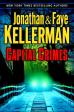
CAPITAL CRIMES
with Jonathan Kellerman

THE GARDEN OF EDEN AND OTHER CRIMINAL DELIGHTS

STRAIGHT INTO DARKNESS

DOUBLE HOMICIDE
with Jonathan Kellerman

STREET DREAMS

STONE KISS

PRAYERS FOR THE DEAD

MOON MUSIC

JUPITER'S BONES

STALKER

THE FORGOTTEN

Faye Kellerman Feature


Faye Kellerman


BIO

Faye Kellerman is the author of the bestselling Peter Decker/Rina Lazarus novels, as well as a thriller, MOON MUSIC, and a historical novel, THE QUALITY OF MERCY. She lives in Los Angeles with her husband, Jonathan Kellerman, and their children.


Interview with Jonathan and Faye Kellerman

November 22, 2006

Each with a slew of international bestsellers in their repertoires, husband and wife Jonathan and Faye Kellerman are two of the world's most popular suspense/thriller authors today. They recently combined their talents to write CAPITAL CRIMES, a pair of novellas in which their respective signature protagonists, Alex Delaware and Peter Decker, make an appearance. In this interview with Bookreporter.com's Carol Fitzgerald and Joe Hartlaub, the Kellermans reveal why they chose to collaborate at this stage in their careers and describe the methods they use to keep the writing process fruitful and harmonious. They also talk about the accomplishments of their son, author and playwright Jesse Kellerman, and share what future projects are in store for each of them.

Bookreporter.com: I love the concept behind CAPITAL CRIMES and your previous collaborative volume, DOUBLE HOMICIDE. You have both been writing for over 20 years, yet your collaborative efforts started only recently. Who originally thought of the idea of the two of you collaborating? Is it an idea you've considered for a while?

Jonathan Kellerman & Faye Kellerman: In the past, we considered writing our sole "alone time" --- preciously private. After all, we've been together for 36 years, married for 34 of those, and have collaborated on just about everything in life except writing --- including raising four kids. However, a few years ago the notion of writing police procedural novellas set in interesting cities came up during a conversation, and it grew in appeal as a means of stretching creatively. These books were intended to supplement rather than to substitute for our novels, and, of course, we wanted to see how smoothly we worked together. Turns out, it was a wonderful process, without a cross word, and we were quite pleased with the results.

BRC: "Her Sister's Keeper" and "Music City Breakdown," the two short novels that comprise CAPITAL CRIMES, are much darker in tone and content than "In the Land of Giants" and "Still Life" in DOUBLE HOMICIDE. Was there any reason for the change of style?

JK & FK: Once again, we're talking about stretching creatively. The novella form was new to us, and though we were pleased with DOUBLE HOMICIDE, we found ourselves wanting to dig deeper into the characters' lives and internal thought processes. In a sense, that brings these books closer to our novels, so perhaps we've veered toward "familiar territory." However, the combination of our two voices has produced a new voice that can't be replicated by either of us working alone. Quite fascinating, really, to see what emerged.

BRC: This book, unlike DOUBLE HOMICIDE, features your signature characters, Alex Delaware and Peter Decker. We know that fans have been looking for this kind of a collaboration for years. What made you decide to include them in this book?

JK & FK: The fun, here, was being able to view Decker and Delaware from the perspective of an outside observer --- really the first time these two men have been categorized as outsiders rather than as stars of the show. We say "fun" because we don't feel that's an undignified concept when applied to writing fiction. We write the kinds of books we enjoy reading, and we feel that if we're stimulated --- and entertained --- the reader will be as well.

BRC: How does your collaborative process work? Does one of you begin with a first draft of a story and pass it to the other, or are you both part of the process of each story from the beginning? How do you manage to work on these shorter novels while maintaining your respective writing schedules on your more established series?

JK & FK: We used email, which perhaps contributed to the harmonious working relationship, in that it avoided verbal discussion. Unlike our respective novels, over which we're quite protective, we needed to start out with a different mindset: this was to be a collaboration involving total surrender at each step of the way. That is, when one of us wrote a draft, he/she needed to relinquish it to the other for undebated modification. Kind of like surrogate parenting, except the baby kept returning for more care. We kept emailing drafts back and forth until we were both satisfied. Happily, we admire each other's writing skills and found nothing with which to quibble. It really went quite seamlessly.

BRC: What is the easiest part of the collaboration process for each of you? And what is the hardest?

JK & FK: Honestly, this was easy. A lot easier, in fact, than writing a novel alone, which can be quite isolating, even lonely. The buck kept getting passed from hand to hand, which relieved some of the crushing pressure writers can feel, particularly in the middle of a book, where conundrums and creative challenges arise. Here, someone else was available with a life-jacket. And someone we trusted.

BRC: I was extremely impressed by the way in which you captured the flavor of Berkeley and Nashville, the cities where the short novels in CAPITAL CRIMES are set. You display a knowledge of those cities --- particularly Nashville --- that was obviously acquired by much more than an overnight visit or two. What attracted you to those cities as settings for "Her Sister's Keeper" and "Music City Breakdown?" And how did you go about researching the nooks and crannies of each city?

JK & FK: Thanks for saying so, because we really strove for authenticity and regional flavor. We picked cities with strong identities and spent time traveling and talking to those in the know. Research is always part of writing a crime novel, and this research was fun --- that word, again. The police departments of Nashville and Berkeley couldn't have been more helpful, as were various other contacts we've cultivated over 20 years. That's one of the advantages of a long career; one acquires credibility and a body of work that can be "investigated." Our bodies of work make it clear that we respect what law enforcement does, so perhaps that helped. In any event, we took our time researching before sitting down to write, striving to get it right.

BRC: You have both written books outside of the mystery/thriller genre. Do you have plans for collaboration on a work in another genre, or even a nonfiction work?

JK & FK: We've just finished taping separate episodes of Court TV's new series, "Murder By The Book." Faye's show will air 11/27, Jon's 12/4. It's likely we'll collaborate on other film/TV projects, as well as on other CAPITAL CRIMES-type books. Primarily, though, we'll be concentrating on our novels. Jon's next Delaware, OBSESSION, will be published in April 2007 and Faye's new Decker/Lazarus novel, THE BURNT HOUSE, in August. We each have multiple book contracts for our respective series.

BRC: Your son, Jesse, published his first novel, SUNSTROKE, in 2006 and has a new novel, TROUBLE, scheduled to be published in January 2007. It may be premature to ask this, but has the topic of a collaboration between Jesse and either --- or both --- of you been raised?

JK & FK: We're so pleased with the success of SUNSTROKE --- rave reviews and appearances on several bestseller lists. TROUBLE is, to our mind, an even stronger book --- immensely powerful --- and the industry buzz has been strong. Jesse's publisher, Putnam, was smart enough to purchase several more novels from him, so he'll be busy for a while. If the three of us do collaborate, it will be on a film/theater/TV project, as Jesse is also a published playwright with strong scriptwriting skills.

BRC: What will we see next from the team of Jonathan and Faye Kellerman? And what can we expect from you individually, as well?

JK & FK: As we just noted, several more Delaware and Decker novels are in various stages of planning, writing, etc., and we're always open to stand-alone projects that inspire us. Both of us love our jobs and a good part of that is due to our readers, who've been so loyal and supportive over more than two decades.

Click here now to buy this book from Amazon.com.

Back to top.   


PAST INTERVIEW

October 8, 1999

TBR Reviewer Jill Zaklow dove into Faye Kellerman's novel JUPITER'S BONES with the relish of an avid fan and eagerly volunteered to do the interview. JUPITER'S BONES is the 11th book in Kellerman's popular Peter Decker and Rina Lazarus series, thrillers that always contain a family element that keeps things sizzling in and out of the Decker-Lazarus household. Find out if Kellerman will ever retire her fictional husband and wife team, the behind the scenes scoop about her own marriage (Faye is married to bestselling author Jonathan Kellerman) and more about her book JUPITER'S BONES in this interview.

TBR: Your new book JUPITER'S BONES is the 11th book you've written featuring Peter Decker and Rina Lazarus. Do you think you'll ever retire Decker, or can we expect to see him in future books? What is it that makes him and his wife Rina so appealing to your readers?

FK: I don't think I'll retire Decker as long as I can think of good stories featuring him as the protagonist. I have to make sure that he is the proper vehicle to tell my story. I think my readers related to Decker and Rina because they are real people to me. Not only do they talk to me --- tell me what to write --- but I consider them my friends as well.

TBR: You and your husband, Jonathan Kellerman, are both well known and well loved authors. What is it like to be married to a fellow writer? Do you give each other feedback on story ideas and/or your writing? Do you both have home offices?

FK: I can't talk about what it's like to be married to an "author," but I can tell you what it's like to be married to a bestseller, Jonathan Kellerman. It's great. He's my best friend and my favorite editor. But remember, he was my best friend for fifteen years before he became my editor. I think that's the key. We didn't get married as "writers." We were lovers way before Alex Delaware or Rina Lazarus was born. We never collaborate on our stories. But we do collaborate on life.

TBR: Your reoccurring main character Decker has married into an Orthodox Jewish family. Much of the plot revolves around the mystery he needs to solve, as well as religious and familial struggles. How does religion factor into your books? Into your own life?

FK: Religion is a major factor in my life. I consider myself a modern Orthodox Jewish woman with attachments to my synagogue, my children's religious school and the community at large. But Jonathan and I are also involved in other community causes, Children's Hospital of LA being a biggie. Jonathan worked there for fifteen years and it's an institution that holds a deep place in our hearts. Also, USC --- Jonathan's alma mater.

TBR: In JUPITER'S BONES, there is a lot of family angst going on --- Decker is having trouble with his teenage children, Jacob and Shayna. Have you ever considered writing straight fiction without a mystery angle?

FK: The family element in JUPITER'S BONES is something I am very proud of. I consider myself a family person with children of all ages. So I write from experience. I don't think of myself as writing mysteries. I consider myself a writer of fiction with a strong plot element. I think good books should have it all --- a riveting story peopled with characters that we care about.

TBR: The mystery in JUPITER'S BONES revolves around a Heaven's Gate-style religious cult. What do you think is the appeal of cults to certain people? What do you think about religions such as Scientology which are not cults per say, but seem to have a cult-like following?

FK: The cult in JUPITER'S BONES was largely fictitious, but it was based on elements of other cults, both small and well-known. I think cults thrive in people who feel devoid of spiritualism. I think religion thrives for that reason as well. My particular cult was nefarious because it was closed, refusing to let the insiders out and the outsiders in. The danger comes when cults are coercive. Religious freedom of the cult cannot impinge on civil rights of the individual.

TBR: What is the biggest challenge you find when beginning a new book?

FK: Starting a new book is like starting any relationship. In the beginning, it's all love, love, love. You're in love with your writing, you're in love with your characters, you're in love with your story. Then comes the middle where things get fuzzy. Just like a relationship, the hero worship is gone, and to succeed you have to work at it. Same as with a book. You have to work, work, work to pull everything together. The end is like a long-term relationship . . . like a good marriage. You know the characters, you know what's going on, you just have to slow down to prevent yourself from rushing. It's more or less like stopping and smelling the roses. Enjoy the process, not just the outcome.

TBR: What writers and books have influenced your career and your life?

FK: Some of my favorite writers are Jonathan Kellerman, Joseph Wambaugh, Raymond Chandler, Ross MacDonald, John D. MacDonald, Sue Grafton, Stephen King, Dean Koontz . . . those are the twentieth century people. Let's not forget Dumas, and Hugo and the Bronte sisters. I'm a sucker for Goth novels. There's nothing so appealing as a girl all alone in a scary house with a brooding storm over the horizon.

TBR: What advice would you give to aspiring writers?

FK: To aspiring writers, I say, "Write, write, write" as well as "read, read, read." Not just fiction, but nonfiction as well. You can never get enough information . . . so many stories out there. I just wish I had enough time.

TBR: What are your thoughts on the millennium?

FK: No thoughts on the millennium! I just want more of the same.

Back to top.   

PAST INTERVIEW

October 2, 1996

On October 2, 1996, THE BOOK REPORT welcomed Faye Kellerman, author of 10 novels, including PRAYERS FOR THE DEAD, THE RITUAL BATH, and SANCTUARY. The Book Report interviewers were Jesse Kornbluth and Jennifer Levitsky.

BookpgJL:  We're pleased to have Faye Kellerman here as a guest. Let's start with the first question. How did you create Peter Decker and Rina Lazarus as characters?

FayeKell:  A little bit of imagination, a little bit of personal experience and a lot of sweat.  Actually, Rina was the first of the duo to be created. Peter came later after I had decided that I needed a professional. They've worked very well together.

BookpgJL:  Why do you integrate religion into your books?

FayeKell:  The religion in the books comes from personal experience. I am a practicing modern Orthodox Jew and I have a great deal of love for my religion. I felt that maybe I could transmit some of that feeling and emotion. Also, I felt that people would enjoy learning about the rites and rituals of Orthodox Jewry the same way I enjoy learning about other cultures and religions. I'm a fan of many authors who incorporate the ethnic into their stories.

BookpgJL:  Given that desire to incorporate religion, why do you write crime novels?

FayeKell:  Crime novels speak to the most basic human drives and instincts. There is nothing as  compelling as murder. It addresses the darkest recesses of human nature much in the same way that religion does. I like to contrast the two, the sacred and the profane. One deals with the corporeal, the other deals with the spiritual. These are the two most propelling drives or motivational factors that exist within us.

AOLiveMC1:  We have a question from the audience, Faye.

Question:  Faye did you write when you were a young girl?

FayeKell:  Not much. Mostly, I wrote plays. Even today my novels tend to be dialogue heavy. As a youngster I was a math science nature. I was also slightly dyslexic.

BookpgJL:  How do you research the grislier aspects of the crimes? Some of the murders are so detailed!

FayeKell:  There is no shortage of material out there. The hard part is figuring out how to      glean through the masses. Newspapers, calls to police stations, taking lots of long walks and of course, the computer data bases. There is just an endless wealth of information out there.

Question:  Peter Decker seems to be getting less religious. Is this so?

FayeKell:  Not really. He is getting more comfortable with it. As he eases into the lifestyle, he isn't as preoccupied with the nuances as he once was.

BookpgJL:  What authors do you admire? Seek for inspiration?

FayeKell:  My favorite author is Jonathan Kellerman, no bias of course. In fact, he is the reason I'm writing today. His encouragement in the initial stages of my so called career was outstanding. I also enjoy female detective fiction, Grafton especially. I like Elmore Leonard. One of my all time favorite writers is James Cain.

Question:  I noticed a reference to Marge Dunn, one of your husband's characters in your book. Do you anticipate any collaborations?

FayeKell:  I think "Double Indemnity" is my all time favorite novel. We once tried to collaborate on a comic novel. It was so dreadful and unfunny you could have read it at a funeral. I think we'll stick to our separate works. But it's fun to give our mutual readers a little in joke.

Question:  Will Rina have more of an input in the stories?

FayeKell:  I love Rina. I try to work her in as often as the story allows. Some of the tales are more conducive to her involvement. Others require less of her. But I do try to make her as major a character as possible.

Question:  Who are your favorite ethnic writers? Will we ever see the darker side of Rina?

FayeKell:  I like Walter Mosley, I like Tony Hillerman. I've read a number of literary novels that have religion as a central theme. Will there be a darker side of Rina? Depends on what she chooses to express to me. Characters take on a life of their own.

Question:  Do you have any new books in the works?

FayeKell:  The next hardcover is due out in the summer of next year. It's entitled "Serpent's Tooth." After that, It's time for a break from Peter and Rina. The novel in creation will have a fantastical as well as criminal story line.

Question:  What is the most common reactions that you get from readers of your works?

FayeKell:  Most of the reactions have been wonderful. I have the greatest fans. Of course, I get the occasional "Please Drop Dead" letters. But I try to view them with humor. I also get lots of funny letters with interesting requests. One that comes to mind: Does Peter Decker have a brother who is single?

Question:  How much of Rina and Peter's personalities are similar to you and your husband's?

FayeKell:  All characters are creations of the mind. Though I try to keep them entities unto themselves I can't help the bits and pieces of personal life that creeps into the story. I think that is what makes them easy to identify with.

Question:  What are your touring plans? I was hoping to meet you at Left Coast Crime in Seattle, but it falls on my wife's due date. Have you considered attending Bouchercon? Plans to visit New England?

FayeKell:  We will be there at Left Coast Crime. I wish your wife the best of luck. I'm not quite sure of my touring plans, but I hope to make it to New England sometime next year. Hope to see you and your little one there.

Question:  You evidenced a new style in "Justice." First person narrative by a main character. I liked it. Will we see more of this style?

FayeKell:  If the storyline is compatible with that kind of narrative. The reason "Justice" was written in that fashion? Terry was an old character cannibalized from an old, old attempt. And she spoke in first person in that novel. When I tried to rewrite her in third person, it didn't work. She spoke to me as an "I". So I kept her that way.

Question:  I love to write but all the fun is taken out of it by having to clean up the grammar  and punctuation, etc. Should I have someone do it? Do you do your own? How much would it cost to do the trimmings, got any ideas?

FayeKell:  Whenever you send in any kind of written work, it pays to be meticulous. If you have  trouble with grammar or punctuation or spelling, hire a freelance editor or a good friend with a strong English background. FYI, I'm a terrible speller. So take heart.

Question:  How do you find time for family, Faye?

FayeKell:  What family? What time? Seriously, I wake up very early and go to bed late. Family    always comes first whether I like it or not. Mostly, I like it. But there are times with four kids and three dogs and numerous people running in and out of my life, it's a wonder I'm not bald from tearing my hair out.  

Question:  Your "Elizabethan" novel was one of my favorites. Are you planning any more historical novels, or do the rigors of motherhood demand too much of your time?

FayeKell:  Thank you very much. I loved writing "Quality of Mercy." But it was demanding as far as research was concerned. I'd like to do another one eventually. Maybe something in an even earlier time period.

Question:  How long does it take you to write a book?

FayeKell:  It takes about a full year. Six months to plot and outline. Another six months to write and edit. As a novelist, you're usually working with three books the one you're writing the one you're conceiving and the one you're publicizing.

Question:  I'm in a Jewish book group. Any suggestions for our reading?

FayeKell:  How about the Talmud? Seriously, Rochelle Krich writes wonderful Jewish mysteries. Me? I read a lot of religious texts. Get a lot of information from them.

Question:  Will you ever write a novel without Rina & Peter as the main characters? Will you ever write a book that's not a murder mystery?

FayeKell:  The next novel after the one that's due out next year. Got that? Will be a story that will introduce new characters. Although it will be a novel heavily saturated with crime, other elements will come into play.

BookpgJL:  The final question. How do you juggle the crimes, the families, the religion, etc.?

FayeKell:  With a very organized mind. I write things down. Never depend on my memory. I also have lots of files for story ideas. Pages cut out of newspapers or downloaded from data bases. Web crawling is wonderful. I try to do the best I can. Sometimes, it works and sometimes it doesn't. But I smile through it all. And that's not too shabby.

BookpgJL:  Faye, thank you for being here. It's been wonderful. Thanks again!

AOLiveMC1:  Yes, Faye, thank you for taking the time to appear with us tonight! And thank you to our other guests, BookpgJL and Bookpg JK! And a special thanks to the audience for joining us. Have a good evening, folks. Until next time, AOL!

© Copyright 1996-2009, Bookreporter.com. All rights reserved.

Back to top.