IndieBound Independent Bookstores BRC Facebook Fan Page
Coming Soon Page
Bookreporter.com
Click Here For Librarians Submitting a Book Become a Reviewer FAQ Contact Us About Us
Home Reviews Features Authors Quote Books Into Movies Book Clubs Awards Coming Soon
Search Contests WOM Bestsellers New in Paperback Newsletter Bibliographies Blog


Books by
Barbara Hambly


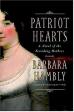
PATRIOT HEARTS: A Novel of the Founding Mothers

WET GRAVE

A FREE MAN
OF COLOR


FEVER SEASON

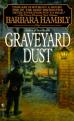
GRAVEYARD DUST

SOLD DOWN THE RIVER

DIE UPON A KISS


Interviews

October 6, 2000

December 10, 1999


Barbara Hambly

BIO

Barbara Hambly attended the University of California and spent a year at the University of Bordeaux, France, obtaining a master's degree in medieval history. She has worked as both a teacher and a technical editor, but her first love has always been history. Ms. Hambly lives in Los Angeles, where she is at work on the sixth Benjamin January novel, WET GRAVE.

PAST INTERVIEW

October 6, 2000

Author Barbara Hambly extends her literary limbs into many different genres, but our favorite is her Benjamin January mystery series. Long time fan and Bookreporter.com Writer Joe Hartlaub volunteered to reinterview Hambly, one of his favorite writers, in time for her latest book SOLD DOWN THE RIVER. Join us for a fresh look at this innovative writer who writes historical mysteries with a deft hand, a fine eye for detail, and a warm heart for her characters.

TBR: One of the many impressive elements of your Benjamin January books --- and particularly the latest, SOLD DOWN THE RIVER --- is the breadth and depth of the research that goes into your creation of the background. You generously credit the staff of The Historic New Orleans Collection for their assistance to you during the writing of SOLD DOWN THE RIVER. Do you usually know what you're looking for when you start your research? And have you ever been surprised by anything you discovered?

BH: I research more specifically these days, as my general reading on the period of the 1830s has given me a good groundwork. For instance, on this latest trip to New Orleans, I was doing preliminary research for January #6, WET GRAVE, which will concern among other things Jean Lafitte's treasure; so I asked for all the stuff they had about Jean Lafitte, and the barrier islands --- Grand Terre and Grand Isle --- that were his home stomping-ground. Am I ever surprised by what I find? Not often.  Again, I've got a pretty good handle on the period by this time, though some of the details sometimes surprise me, like the fact that among the debris of slave-cabins, archaeologists found considerable evidence that even the field hands probably had access to (illegal) guns. Has stuff I've found changed the outcome of a January novel? Generally, no, though it's frequently sparked plots for other books.

TBR: You also credit the staff of the Laura Plantation in St. John Parish. I did notice some similarity between Laura and the Mon Triumphe Plantation in SOLD DOWN THE RIVER, though Laura, I believe, was more of a matriarchal establishment. I knew from our previous correspondences of last year that you had previously toured Laura; did that tour inspire the genesis of SOLD DOWN THE RIVER?

BH:  No. In fact, SOLD DOWN THE RIVER was one of the earliest ideas I had for Ben.

TBR: I found one of the more interesting characters in SOLD DOWN THE RIVER to be Harry, who, notwithstanding his surroundings and circumstance, was able to function almost as well as a freeperson. He reminded me somewhat of Bob Crane's character on the television program HOGAN'S HEROES. Was there a historical basis for Harry?

BH:  I loved writing Harry as a character. I wouldn't say there's a specific historical basis for him, but in almost any institutional environment --- or village, probably --- there's always SOMEBODY who's the "fixer," the wheeler-dealer, the one who can get liquor and chocolate in a POW camp or cigarettes in the county jail. It can't have been that different in the slave quarters, which seem to have been a mixture of minimum-security prison and African village. People are people. Actually, as I wrote Harry I pictured James Garner's character in THE GREAT ESCAPE, as if he'd been played by Will Smith.

TBR: In your Benjamin January novels --- A FREE MAN OF COLOR, FEVER SEASON, GRAVEYARD DUST and now SOLD DOWN THE RIVER --- you weave dual threads of fiction --- your developing account of the life of Benjamin January --- with historical figures and events, such as Bienville, Docteur Jean, and Marie Leveau. I have been particularly impressed with your account and description of Marie Leveau, especially compared to other contemporaneous historical record. Do you plan to feature her again in the future, and perhaps more prominently with Benjamin?

BH:  Marie Leveau is another character I enjoy writing. She enters only peripherally into the next few books, but I'll certainly use her later. You refer to "contemporaneous historical record," and as far as I've been able to find, there isn't any --- only tales and legends, some more absurd, and others that hint at who the woman must really have been: a kind of spiritual Moriarty figure, on the one hand a dealer in secrets and the power that secrets give, and on the other, the woman who largely Catholicized New Orleans voodoo.

TBR: You had indicated last year that the next Benjamin January novel, DIE UPON A KISS, scheduled for publication in 2001, would be a bit lighter in tone than SOLD DOWN THE RIVER. Is this still the case?

BH:  I think DIE UPON A KISS is lighter than SOLD DOWN THE RIVER --- it would be hard to do something more grim. For one thing, KISS is about opera, which opens the door to much silliness by its very nature. How grim can you be about THE MARRIAGE OF FIGARO? Several people said to me --- and I agree with them --- "Benjamin needs a break."

TBR: SOLD DOWN THE RIVER ends with major changes in Benjamin's life, both in terms of his future living situation and revelations concerning his past. Do you plan any additional changes for Benjamin in DIE UPON A KISS, particularly with respect December 10, 1999 to the slow but sure development of his relationship with Rose?

BH:  Part of my enormous enjoyment of the series is the character arcs: following the developments of relationships down through several books. Since January moves out of his mother's house at the end of SOLD DOWN THE RIVER, in DIE UPON A KISS he has a new landlady --- like his mother, a former plaçée --- who definitely doesn't have both oars in the water. Given the emotional blackmail January's mother practices on him, it's definitely a change for the better as far as he's concerned. DIE UPON A KISS doesn't involve Rose much, but the next one --- WET GRAVE --- is largely about his relationship with Rose (as well as Jean Lafitte's treasure).

TBR: Each of your January novels has focused upon a unique and particular aspect of life in New Orleans in the 1830s. A FREE MAN OF COLOR was set against the backdrop of the Octoroon Balls; FEVER SEASON dealt with the impact of cholera and yellow fever upon the city and its inhabitants; GRAVEYARD DUST contained elements of voodoo; and SOLD DOWN THE RIVER tacitly discusses the institution of slavery. Generally, what topics do you intend to explore in future Benjamin January novels?

BH:  WET GRAVE, as I said above, is my Jean Lafitte's Treasure Hunt book; the following one (whose title I'm not sure of) takes place in Mexico City on the eve of the Texas Revolution. DEAD WATER will be about a steamboat journey up the Mississippi. I'm putting together other outlines, but since I haven't turned those in yet I think I won't talk about them. Suffice it to say, there's LOTS of stuff in that time and place to write about. New Orleans was the bottleneck for enormous amounts of money, politics, ambition and greed.

TBR: You are well known for having loyal followings among readers in several different genres. What other novels will you have published this year?

BH:  In February I had a fantasy novel, KNIGHT OF THE DEMON QUEEN, published, so that makes two for 2000, which is pretty fair shootin' by anyone's standards.  A modern-day fantasy that I co-wrote with Marc Zicree, MAGIC TIME, is due out (I think) in the fall of 2001, shortly after DIE UPON A KISS comes out, so I've been busy.

TBR: And what are you working on now?

BH:  The fantasy I've been working on lately is THE FADING OF THE LIGHT --- a fantasy-mystery about the first woman to be educated in the Wizards' College --- and I'm just starting on WET GRAVE.

TBR: Given your prolificacy, I am always amazed that you find time to read. What have you been reading recently?

BH:  When I'm overworked --- as I have been for the past couple of years --- it's difficult for me to read fiction, especially things that are intellectually demanding.  I go back to old favorites, like the novels of Georgette Heyer. I recently read Laurie King's THE BEEKEEPER'S APPRENTICE, and enjoyed it hugely; also IN THE HEART OF THE SEA by Nathaniel Philbrick (the one about the true incident upon which MOBY DICK was based) and THE PERFECT STORM. (FADING OF THE LIGHT takes place in the desert --- I guess I wanted a couple of very damp books).

TBR: Are you planning any new series, or books involving recurring characters, in any genres in the future?

BH:  Well, FADING OF THE LIGHT is going to have at least one sequel where the characters that survive it return. I'm also evolving plans for another mystery series, but at the moment they're nebulous, and I'd rather keep them quiet. There's a couple of straight historical novels I want to do, but they're even farther in the future.

Back to top.


PAST INTERVIEW

December 10, 1999

Within the last two decades Barbara Hambly has become known as one of our most prolific writers of popular fiction, winning accolades for her work in a number of genres, including the science fiction, fantasy and horror fields. She is especially well known for her DRAGONSBANE novels and her contributions to the Star Wars' mythos, including CHILDREN OF THE JEDI. Ms. Hambly has recently won especially strong praise for her series of historical mysteries featuring Benjamin January. These books --- A FREE MAN OF COLOR, FEVER SEASON, and the recently published GRAVEYARD DUST --- set in the New Orleans of the early 1830s, are notable for their meticulous plotting, incredibly thorough research, and sharp characterization. Ms. Hambly recently took some time to visit with Senior TBR writer Joe Hartlaub in order to discuss Benjamin January, the genesis and evolution of the series, and her plans for the future.  
  
TBR: Some of the most poignant moments of FEVER SEASON and GRAVEYARD DUST are those during which January fondly reminisces about his father, from whom he was separated when Benjamin, his mother, and younger sister were purchased by St-Denis Javier. Do you have any plans to reveal the whereabouts --- or fate --- of Benjamin's father?
  
BH: In fact, that question gets answered in the upcoming SOLD DOWN THE RIVER, which will be out next June.  
  
TBR: Can you tell us more about this book?
  
BH: I've already turned in the manuscript on SOLD DOWN THE RIVER, and am now hard at work on January #5, DIE UPON A KISS.  SOLD DOWN THE RIVER is about January agreeing (as a result of emotional blackmail by his mother) to go undercover on a sugar plantation where sabotage is taking place, posing as a slave to find who is plotting to murder the master, a thoroughly awful man named Simon Fourchet.  January personally doesn't believe it's any of the slaves, but more likely some member of Fourchet's family --- however, if Fourchet is killed, it will be some, or perhaps all, the slaves who are punished for the deed.
  
TBR: Up until your Benjamin January novels, the primary focus of your work had been in the science fiction, fantasy, and horror fields. You are especially well-known for your STAR TREK and STAR WARS novels, as well as for your DRAGONSBANE series and several other novels. Yet, I understand that your educational background is much closer to history. Could you elaborate a bit on your educational background?
  
BH: I have a Master's Degree in Medieval History from the University of California, and history has always been my preoccupation and love. Strangely enough, once I got the MA in it, I never felt much desire to write a historical novel set in the Middle Ages. Getting the degree taught me how to do research, what to look for, and how societies are structured, invaluable if you're inventing a universe for a fantasy or science fiction novel.
  
TBR: What specifically drew you to the study of Medieval History?
  
BH: Yikes! I no longer remember clearly enough to give a completely truthful answer to that, since my fascination with the Middle Ages started when I was about eight. I suspect the true answer --- the ORIGINAL answer --- to that was that I thought it would be keen to wear long robes and live in a castle. But the more I found out about other societies, other ways of life --- about other peoples' lives in a different and strange society --- the more I wanted to know. Love of history is a hunger that grows with feeding.
  
TBR: Each of your Benjamin January novels, against the backdrop of New Orleans in the early to mid-1830s, focuses on a specific cultural and/or historical event of that era.  A FREE MAN OF COLOR provided a fascinating glimpse into the custom of the Quadroon Balls; FEVER SEASON gave a long, stark look at the horror, and politics, of the cholera and yellow fever epidemics; and GRAVEYARD DUST provided a realistic look at both the voodoo culture of New Orleans and its most famous ----and misunderstood --- practitioner, Marie Laveau.  What other historical aspects of New Orleans do you intend to examine in future Benjamin January novels?
  
BH: SOLD DOWN THE RIVER takes place almost entirely on a sugar plantation during the Roulaison, the time of sugar harvest and grinding. It focuses mostly on the lives of the field-hands, the slaves that you almost never see in books like GONE WITH THE WIND. The next book, DIE UPON A KISS, deals with grand opera in New Orleans, and is far less grim. One of the things I love about this series is that there was so much going on in and around New Orleans at this time: in the future I hope to bring in the Native American tribes, the mountain men, the Texas revolution, early baseball, and whole bunches of other things.

TBR: Besides SOLD DOWN THE RIVER, do you have any other novels planned for publication in 2000?
  
BH: In addition to SOLD DOWN THE RIVER, which will be out in June, in February or March 2000 I'll have the fantasy novel, KNIGHT OF THE DEMON QUEEN, the third in the series of which DRAGONSBANE was the first and DRAGONSHADOW the second. My name, as a collaborator, will also be on MAGIC TIME by Marc Scott Zicree.
  
TBR: It is amazing to me that you are able to produce the number of novels which you have at such frequency while maintaining quality, originality, and --- with respect to the January novels --- a meticulous attention to research and detail.  Would you share with us your work routine?
  
BH: Since my husband has chronic health problems, and some weeks isn't able to get around much, I have to be extremely disciplined in order to work at all.  I work midmorning to late afternoon, six or seven days a week: my goal is to work five hours a day and things work out best if I do that in two sittings, with lunch in between. I usually work on one draft of one project at a time: I go all the way through Draft # 1 of a mystery, then put it aside and do Draft #1 of a fantasy, then put that aside and go back to the mystery for a second draft, etc.  It takes me five or six drafts to do a book, plus polishing, though I'm able to work fairly fast. I go bicycling along the beach a couple of mornings a week --- usually very early --- and take ballet classes two evenings a week. I find that regular exercise helps me concentrate, and if I get stuck over a scene I'll often take a walk to air my brain out.  
  
TBR: With respect to your research, I am constantly impressed --- page by page --- with your accurate portrayal of January's life and times. What resources do you avail yourself of while writing a January novel?
  
BH: I do research on everything all the time --- my husband and I between us have a home library larger than some small-town public libraries (my husband is science fiction writer George Alec Effinger) --- and I'll occasionally go up to UCLA's main library, though with the parking situation up there it makes it an all-day expedition. George used to live in New Orleans and when we were first together we maintained two residences, in LA and New Orleans; now we go to New Orleans three or four times a year, for me to work in the Historic New Orleans Collection or just to walk around the Quarter, or drive out to the plantations, to get the feeling of the air and the quality of the sunlight there.
  
TBR: Benjamin January is a surgeon, and classically trained and educated musician.  He is also a free man of color in 1830s New Orleans.  My understanding is that this particular combination of race, status, education and talent, while not commonplace, was not unheard of in that place and time. Was there a specific historical model for Benjamin January?  And, if not, what combination of personalities was your inspiration for him?
  
BH: No, there's no specific historical model for January. I can't even say what personalities went into my inspiration for the man. But I have a very clear mental image of him: a very intelligent man who is of an age where intelligence and experience are transforming into wisdom; a man who has a clear idea of what goodness is, and is willing to pursue it; a man whose heart is rooted in the love of his family, and his love for music. Like many of the free people of color he was brought up to think of himself as a Frenchman, but having been a slave himself as a child, he can't turn his back on those who are still slaves (which is what many of the free people of color did).  I feel like I'm still getting to know him, which is why each book is fascinating to me.
  
TBR: The thought kept occurring to me when I first read A FREE MAN OF COLOR that it would make an intriguing film.  Are there any plans along these lines in the immediate future?
  
BH: One of the things about living in Los Angeles is that EVERYBODY has film options out there --- and you can't take any of them very seriously. My film agent tells me "there's discussion." I've had a couple of very nice dinners with producers. I have my own ideas about what I'd like to see done, of course, but I assume that when the time is right, the right thing will come.
  
TBR: Do you have any idea what future Benjamin January books, after SOLD UP THE RIVER, will be about?  And do you conceive this as an open-ended series, or one which will have a definite ending?
  
BH: I'm under contract for four more of the series after SOLD DOWN THE RIVER, at which point it will be clear (I hope) whether the Bantam Books will want me to continue.  I picture it as an open-ended series and have clear ideas for another six beyond the existing contract. As I said above, it was a fascinating time and there are lots of stories to tell.
  
TBR: In narrating your January novels, you have taken the higher --- and more difficult --- road in presenting the culture and political mores of New Orleans in that day and time.  A lesser writer would have stepped back from the narrative, explained an aspect of local custom for a page or two as necessary, and continued onward.  You have taken the more difficult --- and more challenging approach --- of letting the culture unfold around your characters, so that your readers obtain an overview of January's life and circumstances in a mosaic fashion. Did you discover that this approach best fit your narrative by trial and error, or did you naturally adapt to this style?
  
BH: I think that approach grew out of writing fantasy and science fiction --- letting the reader discover the world without bringing the narrative to a screeching halt for what science fiction writers jokingly call the DEL: the Dreaded Expository Lump.  All fiction writing is world-building --- even novels of contemporary life build worlds that the reader has never seen, corners and niches of our own society, or of the character's life, that we want to explore. One challenge about the January books is that so much of the horror and injustice that came later --- bigotry and racial violence and the systematic denigration of millions of people of African descent --- is rooted in the customs and culture that I'm writing about. There's so much politics and so much emotional freight attached to words and attitudes and situations. I want to keep saying, "I'm not making this up. This is really how it was, as far as I can tell from my research."  
  
TBR: Another fascinating aspect of the January novels is the complexity of the characterization of the supporting characters. For example, Livia Levesque, January's mother is presented as a very cold, calculating woman, with little use for her son and even less for her elder daughter. Yet  
January, in GRAVEYARD DUST, begins to see her as a person who has done, and is doing, what must be done to exist and survive in a difficult time and under even more difficult circumstances. Do you plan to focus more on Livia in any subsequent novels?

  
BH: I love writing Livia as a character. She's made the choices that a lot of the free people of color made, to turn their backs on the African side of their heritage. The choice was logical: white people had power, and power was life. There was a lot of unspoken feeling that you don't identify yourself culturally with the losing side. But Livia is more than just a "typical free-colored" anything. She's a real woman, and not a very nice one; she knows money is the key to power, and she'll sacrifice everything and everyone to keep herself secure. The other thing I love about Livia is she's a wonderful shortcut for a writer. She knows all the dirt and all the stories and all the personal history about everybody in town. If January needs a piece of information, he just goes to his mother, and then I can throw in all kinds of details about who's sleeping with whom and what the financial ramifications of any situation are.
  
TBR: Lieutenant Shaw is another incredibly complex, yet delightfully understated character in the January novels.  He subtly and unexpectedly appears to have an attitude far more enlightened than one would expect given his background, station, and environment.  How did Shaw's character evolve for you?       
  
BH: Again, it's hard to say where Shaw's character comes from in my mind. There's a lot more to him than meets the eye, and of course January and his mother are just as prejudiced against upriver tobacco-chewing bumpkins of his ilk as the American ruffians along the levee are prejudiced against January's skin-color. One of the things that entertains me about the series is playing off everyone's prejudices against each other: juggling blind-spots that keeps them from seeing the answers to problems. At some point I'm going to focus on Shaw's back story, the same way I'm going to open up the back story on Hannibal a little. As I've said, there's just so much...
  
TBR: Do you have other historical mysteries, involving other characters and settings, planned for the future?
  
BH: Absolutely, though I'd rather not talk about that just now.
  
TBR: What authors have been a major influence upon you?
  
BH: There's an infinite list. Georgette Heyer, Mary Renault, Manning Coles, John Le Carre, A. Conan Doyle, Rudyard Kipling, Dorothy Sayers, Josephine Tey, JRR Tolkien, L. Frank Baum, Anne Rice, Tony Hillerman, Sarah Caudwell, Marge Piercy.
  
TBR: What books are you reading now?
  
BH: I just finished LES MISERABLES --- which took me about five months of picking up and putting down --- and am rereading Sarah Caudwell's THUS WAS ADONIS MURDERED, one of my favorite mysteries.
  
TBR: What advice would you give to aspiring writers?
  
BH: Don't be afraid to rewrite. Have someone whose judgment you trust read your work, and ask them if it worked for them, and if not, why not?  Finish what you start, if not every time, at least most of the time.  Tell a story about people --- don't spend all your time setting up a world or a history or a setting.
  
TBR: And finally, the question we've asked all our authors, what are your thoughts regarding the millennium?
  
BH: It's only one day, followed by the next day.


© Copyright 1996-2010, Bookreporter.com. All rights reserved.

Back to top.