IndieBound Independent Bookstores BRC Facebook Fan Page
Coming Soon Page
Bookreporter.com
Click Here For Librarians Submitting a Book Become a Reviewer FAQ Contact Us About Us
Home Reviews Features Authors Quote Books Into Movies Book Clubs Awards Coming Soon
Search Contests WOM Bestsellers New in Paperback Newsletter Bibliographies Blog


Interviews

Author Talk
May 2006


Books by
Sara Gruen


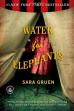
WATER FOR ELEPHANTS

Reading Group Guides

WATER FOR ELEPHANTS

Sara Gruen

BIO

Sara Gruen lives with her husband and three children in an environmentalist community outside of Chicago. An award-winning technical writer, she made her fiction debut in 2004 with RIDING LESSONS, followed by FLYING CHANGES. WATER FOR ELEPHANTS is her third novel.


AUTHOR TALK

May 2006

Sara Gruen, author of RIDING LESSONS and FLYING CHANGES, recently had her third novel published, WATER FOR ELEPHANTS --- a tale of life and love in a traveling circus during the 1930s. In this essay, Gruen describes her journey with this latest endeavor, from the newspaper article that sparked her imagination to the "mourning period" she experienced once she completed the novel. Read on to learn more about the intensive research she conducted, her delicate writing process, and the fascinating anecdotes from circus history she encountered along the way.

INSIDE CIRCUS WORLD
by Sara Gruen


EDITOR'S NOTE: Horses were featured prominently in the first two novels Sara Gruen wrote, a reflection of her personal passion. She has brought her love of animals to full flower in her new novel, and has created a world as real as any that ever existed. It's enough to make you want an elephant of your own.

The idea for this book came unexpectedly. I was a day away from starting a different novel when the Chicago Tribune ran an article on a photographer who followed and documented train circuses during the 1920s and 1930s.

The photograph that accompanied the article was stunning --- a detailed panoramic that so fascinated me I immediately bought two books of old-time circus photographs. By the time I thumbed through them, I was hooked. I abandoned my other novel and dove into the world of the train circus.

I began by getting a bibliography from the archivist at Circus World in Baraboo, Wisconsin. Most of the books were out of print, but I managed to track them down online and through rare-book sellers. Within weeks I was off to Sarasota, Florida, to visit the Ringling Circus Museum. I spent three days crawling under circus wagons, peering inside the trunks stored beneath them, and taking flash pictures to reveal the mysteries stashed in unlit corners.

By the end of the first day, I was being shadowed. By the end of the third, an employee approached me and asked what on earth I thought I was doing. When I told her of my desire to write a novel set on a circus train, her eyes lit up and she walked me through the entire museum, regaling me with a rich oral history that was far more vivid than the information on the posted placards, and that answered many of the questions I had scribbled in my notebook.

The museum was selling duplicates of books in its collection, so I came home poorer by several hundred dollars. Yet the more I read, the more aware I became of just how much I still had to learn. Train circuses operated in a distinct culture that had its own language, its own traditions, and its own laws. I also realized that there is a huge subculture of circus fans who would know if I got something wrong.

I spent almost a year doing research, including hauling my family to every circus within driving distance. I returned to Sarasota and brought home more books. I went to Circus World, where I was taken into the elephant enclosure and introduced to a beautiful fifty-three-year-old Asian elephant named Barbara. I stood by her ten-foot-high shoulder, literally trembling as I reached out to touch her. And finally, because I wanted to learn about elephant body language, I went to the Kansas City Zoo with a former elephant handler.

When it was time to start writing, my head was so full of details I couldn't stand external stimulus. I asked my husband to move my desk into our walk-in closet, covered the window, and wore noise-reduction headphones. I spent much of the winter in that closet, weaving together the things I had learned.

The history of the American circus is so rich that I plucked many of the novel's most outrageous details from fact or anecdote (in circus history, the line between the two is famously blurred). Among them are stories about a hippo pickled in formaldehyde, a deceased four-hundred-pound "strong lady" who was paraded around town in an elephant cage, an elephant who repeatedly pulled up her stake and drank the lemonade intended for sale on the midway, another elephant who ran off and was retrieved from a backyard vegetable patch, and an ancient lion who got wedged beneath a sink along with a restaurant employee, rendering both of them too terrified to move. I also incorporated the horrific and very real tragedy of Jamaica ginger paralysis, a neurological disease caused by the consumption of adulterated ginger extract that devastated the lives of approximately 100,000 Americans between 1930 and 1931 and which is virtually forgotten today because most of its victims lived on the fringes of society.

None of the characters in the novel is based on any one real person; rather, they are a distillation of the many memorable performers and circus workers I encountered during the course of my research. And then there is Rosie, the elephant at the center of the novel; she became as real to me as any living pachyderm could ever be.

I knew from the beginning that I had embarked on an adventure with this book, but I didn't know the extent until the day I found myself cold-calling a man who owns a side show and keeps human heads in his house. And really, how often can you greet your spouse with the words, "So I was talking with a retired clown today . . ."?

I went through a period of mourning when the book was finished, and it took me a while to figure out why. Eventually I realized it was because I no longer had an elephant in my life.

I miss her.

© Copyright 2006, The Algonkian. All rights reserved.

Click here now to buy this book from Amazon.com.

Back to top.