IndieBound Independent Bookstores BRC Facebook Fan Page
Coming Soon Page
Bookreporter.com
Click Here For Librarians Submitting a Book Become a Reviewer FAQ Contact Us About Us
Home Reviews Features Authors Quote Books Into Movies Book Clubs Awards Coming Soon
Search Contests WOM Bestsellers New in Paperback Newsletter Bibliographies Blog


Interviews

February 24, 2006

September 5, 2003

September 6, 2002

October 5, 2001

Author Bibliography

Books by
Martha Grimes


DAKOTA

DUST
A Richard Jury Novel


THE OLD WINE SHADES

BELLE RUIN

THE WINDS OF CHANGE

FOUL MATTER

THE GRAVE MAURICE

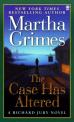
THE CASE HAS ALTERED

THE LAMORNA WINK

THE TRAIN NOW DEPARTING

COLD FLAT JUNCTION

THE BLUE LAST

Martha Grimes

BIO

Martha Grimes is the bestselling author of 18 Richard Jury mysteries and also the acclaimed fiction FOUL MATTER, COLD FLAT JUNCTION, HOTEL PARADISE, THE END OF THE PIER and THE TRAIN NOW DEPARTING.

Back to top.   


INTERVIEW

February 24, 2006

Bookreporter.com's contributing writer Roz Shea interviewed mystery author Martha Grimes about her newest release, THE OLD WINE SHADES --- the 20th installment in the bestselling Richard Jury series. Grimes shares the inspiration behind the novel's title, and discusses which of her characters have real-life counterparts and which are figments of her imagination. She also speculates on the future of her new series featuring Emma Graham and reveals just how much she really knows about two recurring subjects in her latest book --- oenology and quantum mechanics.

Bookreporter.com: You pick up the story in THE OLD WINE SHADES with the last scene from the prior book, THE WINDS OF CHANGE. Did that tagline haunt you after you wrote it, or did you already have this continuing storyline in mind when you finished the previous book?

Martha Grimes: I meant the next book to begin exactly where WINDS OF CHANGE ended. No, I didn't have a plot in mind. I thought it would be interesting to have Jury in a long, long conversation with someone else.

BRC: In THE OLD WINE SHADES you display a fair bit of knowledge about two esoteric subjects: oenology, the art or science of wine tasting; and of all things, quantum mechanics! I can't imagine two more diverse subjects coming together for a mystery, but they do. Where did the idea to merge these topics come from?

MG: Any knowledge of wine on my part is pretty bogus. But since this was one of the El Vino wine bars, and I always like badinage between barmen and Jury, I did have to make Harry a bit of an expert. Thus, there was no attempt to merge wine with quantum mechanics. My knowledge of physics is about as bogus as my knowledge of wine. I happened to pick up a copy of a book called QUANTUM and was fascinated by the illustrations. They were wonderfully weird, especially the ones depicting the thought-experiment called "Schrodinger's Cat." Then, I happened to pick up a copy of a book about Godel's "incompleteness" theory and was also fascinated by that.  Why did I decide to use it? Because (1) Jury knew nothing about it (just like me) and so could be sucked into this odd tale and (2) I just loved "the dog came back" and the notion there were a lot of extra dimensions out there. Jury could not possibly have "disproved" this; he's clever but not that clever.

BRC: Having just struggled through the movie Down the Rabbit Hole, a sequel to What the Bleep Do We Know!?, which deals in quantum physics, the fourth dimension and duality, where did you pick up your knowledge of this mystery of the ages? You explain it better than all the physics professors in that film!

MG: I'm extremely flattered that you think I explained quantum physics so well. I can hardly wait to get all of the irate letters from physicists taking me to task. (Who am I kidding?)

BRC: The true hero of the tale is an engaging mutt named Mungo. You dedicate the book to Vicky and to the memory of Dodger, whom we might suppose is a dog? Is Mungo's gamesmanship with Schrodinger, the cat, based on real experience? Those scenes are genuine, laugh-out-loud moments in the book.

MG: No, Dodger was a cat. This is just coincidental. No real life experience here; I just get a kick out of writing from an animal's point of view. Actually, I was rather worried that Mungo might irritate the reader, but he hasn't yet.

BRC: How do you find the pub names you feature in your novels? Do you actually visit them and use interior descriptions in each book?

MG: Pub names: Most of them I have visited, I think, and, yes I do note the interiors. A few pubs, such as The Old Contemptibles, I've moved from their original location to a location I want.

BRC: With 20 Richard Jury mysteries under your belt --- or should we say "down the hatch" since they are all named after real-life pubs --- what is the name of your next pub and how did you come across it?

MG: The next pub? Sorry, I never tell anyone the next title/pub name. I found THE OLD WINE SHADES wandering around Clerkenwell, a section of London that is getting very trendy.

BRC: When you are in a pub what drink do you call for from the bartender?

MG: What drink do I call out? Anything, anything! In the good old days, Guinness.

BRC: Richard Jury and his fellow mystery solvers are a quaint lot. Have they grown strictly from your imagination, or are they based on people in your life?

MG: All of the characters are strictly imaginary (allowing, of course, for people wafting up from my unconscious), except the Crippses! Yes, the White Rhino and Ash the Flash do indeed exist. So do the little footprints in the greasy pan that so appalled Sgt. Wiggins.

BRC: Is the Boring Men's Club an actual place? The name is so perfectly suited to its members.

MG: Boring's is also imaginary.

BRC: I don't want to reveal anything, but the story isn't finished yet. And we are left wanting more Mungo! Will he be back?

MG: I'm sure Harry Johnson --- I love Harry --- and Mungo will creep back in again.

BRC: Your new series featuring Emma Graham has gained you new fans, but also raised some ire among the Richard Jury readers. Will we see more of Emma anytime soon?

MG: Actually, I don't think these books irritated Jury fans. There are quite a few readers who've told me they like these books even more. Emma was never intended as a serial character. COLD FLAT JUNCTION was not to have been told from her point of view. But I got so fond of Emma while I was writing about her, now it looks as if she may never go away. So, yes there will be another book about Emma.

BRC: What are you working on now and when can we expect to see it?

MG: I'm working on another Jury book, which will be out, I imagine, next year; I am also working on another book like BITING THE MOON, addressing another issue regarding animal abuse. I'm not sure when that will get published.

Click here now to buy this book from Amazon.com.

Back to top.   


INTERVIEW

September 5, 2003

Martha Grimes' succession of novels has demonstrated time and again her mastery of prose and her limitless imagination. In her latest offering, FOUL MATTER, Grimes' expands into virgin territory with a satirical tale of writers and publishers and the comic consequences when egos and ethics collide. In this interview with Bookreporter.com's Ann Bruns, Ms. Grimes gives readers a glimpse into her views on the industry and her sense of what it means to be a true writer.

Q: FOUL MATTER is a wonderfully funny tale built upon the vanities and vices that drive the world of publishing. Is this a book that you've been itching to write for a long time?

MG: Actually, I wrote FOUL MATTER over a period of five or six years. The book was a kind of safety valve. Whenever I'd get fed up with Richard Jury or one of the other books I was writing, I'd just go back and write another chapter of FOUL MATTER. I loved writing this book. It was inspired --- just as Paul Giverney's book was inspired --- by an officious little note from the publisher's assistant returning my original manuscript. I couldn't believe anyone could use this phrase without laughing fit-to-kill.

Q: Do you think the average reader, with limited knowledge of the publishing game, will grasp all the marvelous satire within the storyline?

MG: Yes, I think so. After all, it's a pretty simple-minded business. Well, come to think of it, it could be any business, couldn't it?

Q: The contract demands of best-selling author Paul Giverney set the wild events of FOUL MATTER in motion and, as the story unfolds, readers are treated to several views of the events in alternating narrations. Does this style of multi-voice narration make a storyline easier or more difficult for you to write?

MG: The question is more intelligent than the execution of the book. It didn't consciously occur to me --- well, no, I take that back. The part called "Jardine les Plantes" is, actually, quite intricately done but I doubt anyone will notice. It is, as you say, "multi-voiced" and I did a chart: a large square (Ned and Nathalie in the actual garden) and then progressively smaller squares, each about a character's involvement with flowers (e.g., Sally and the blue bouquet; Candy, Karl and the zinnia bed). I honestly don't know if this is easier or more difficult.

Q: Clive Esterhaus is the essence of the ambitious corporate climber. Yet despite his self-serving actions, he surmises that the publishing industry is in danger of imploding from huge author advances. How close are his reflections to the truth?

MG: Imploding from huge advances? Oh, this is very, very, close to the truth.

Q: Saul is a writer loaded with imagination but reluctant to spend it. Despite his status as the revered elder of the group, he hasn't submitted a manuscript in 10 years. Have the previous literary accolades created a fear of failure and undermined his confidence? Or does he simply reveal in the process too much to "put a period," as Jamie advises.

MG: Saul does, of course, suffer as all writers do at times from a lack of confidence, but I don't think it has much to do with accolades or his reputation. The reason he gets blocked is because he honestly didn't realize the book ended when it ended. That is too simple a reason, though; Saul perhaps should have gotten more extensive treatment than he did. But, hey, like I said. This is a simple-minded business.

Q: Ned is so tortured over his current manuscript and the fate of his heroine, he is totally unaware of the danger unfolding around him. His stream of consciousness intertwines imagination with reality to the point that he's a participant in his own fiction. Is this a common occurrence for writers during the creative process?

MG: I'm sure there are a lot of writers out there who would answer this question, "Oh, my goodness, yes. Yes, I get as involved as Ned with my characters, blah blah blah." I seriously doubt it. God knows I wish I got this involved; I wish I were Ned. The initial motivation in writing this book was to find out what sort of person I believed to be a pure writer, the "ideal writer". Ned comes very close to it. But I think he needs a shot of Jamie's pragmatism (though Jamie is, of course, handing everybody a line). Maybe the ideal writer is someone like Jimmy McKinney, who can spot the heat around the corner and get the hell out of his destructive life and do what he knows he's meant to do.

Q: In previous interviews you've elaborated on the elusive girl who makes frequent appearances in your novels. Nathalie would certainly seem to be another instance. Do you find that your other characters hover around the periphery of your consciousness regardless of what book you're writing?

MG: That's very interesting. I hadn't thought of Nathalie as another representation of the Girl. No, I don't think other characters come knocking on the door. I can write a couple of books at once and they all seem to know their place.

Q: Hit men have become increasingly popular personas in both literature and film. Was the delightful duo of Karl and Candy fully formed in your mind from the beginning or did their personalities gradually evolve in reaction to the other characters and events?

MG: Karl and Candy were there from the beginning. I don't think K and C have much to do with evolution. I liked them right away. I think I had that scene in Bobby's office almost from the beginning. It's one of my favorite scenes.

Q: The hilarious convergence of characters in the town of Pittsburgh was reminiscent of a Blake Edwards' movie --- (Shot in the Dark comes to mind) --- and readers are bound to be laughing out loud at this point. Did you start out with the idea for all the players to cross paths in Pittsburgh or were you just setting the stage for later revelations about Ned's enigmatic past?

MG: . . .and so is Pittsburgh. That whole business had me rolling on the floor; I loved it. But Pittsburgh didn't come up until later on. I wasn't really thinking about Ned's past except when I heard about that I.S.A.L.Y. acronym, I knew that was going to figure into things. (I didn't see Shot in the Dark; was that a Peter Sellers thing?)

Q: The Old Hotel dining area presented the perfect backdrop to illuminate the comic posturing and rivalries of authors and publishers alike. In reality, to succeed as an author, don't you have to have at least a minimal amount of ego?

MG: To succeed as a writer, you probably have to have a fair amount of ego, although in the case of this "ego" I think it's just an incredible amount of determination. Instead of "Aren't I grand?" it's more "I don't care if I'm grand, but I'm doing this anyway."

Q: In the beginning of FOUL MATTER Paul Giverney reflects on the scarcity of "pure writers." Do the commercial lures corrupt the purist, or is it simply a rare quality that few writers have to begin with?

MG: It's both. But I think it's more a writer's confusion as to what a writer is supposed to be rather than merely a gimmee gimmee money, publicity, fame, etc. Ned is a purist; he doesn't get caught up in the whole publishing process, and this is very, very rare. Jimmy McKinny knows this; he knows that underneath all of the tinsel and glory, a writer can still stay in touch with the blank page.

Q: If the purist is primarily concerned with the internal process of writing rather than the external process of getting published, then how would they realize any satisfaction from putting their thoughts to paper? In other words, if the tree falls in the forest and no one hears it...

MG: If the tree were a writer, then someone would hear it. I do not regard myself as this rare kind of tree. But J.D. Salinger still writes, doesn't he?

Q: Do you think most best-selling genre authors are content with their commercial success, or do they secretly yearn for literary awards and accolades?

MG: Well, I certainly yearn for literary awards and accolades. I don't know about Sue Grafton. I think Wallace Stegner said the difference between genre writing and "literary" writing is that one is craft, the other art. The blueprint is already there for the writer of mysteries (no matter how he may deny it). For the literary writer, there is no blueprint. He's taking much more of a chance. I agree with this.

Q: In FOUL MATTER Jamie is the prolific genre writer, criticized by her peers for accepting the limitations that places on her talent. Knowing your distaste for genre labels, do you feel eliminating them would awaken the literary juices of more writers and substantially weed out the field? Is doing away with genres even feasible in today's commercial market?

MG: No. Eliminating genres would eliminate a lot of writers. The reading public likes a mystery series because it means settling down with something familiar, with characters who are "like family," and who can blame them? We all like the familiar. The Richard Jury series might be analogous to Cracker Barrel Restaurants (except one's British, one's American). I like Cracker Barrel Restaurants. I know I will be able to get oatmeal there at noon. It makes my stomach comfortable.

Q: Although your writing always contains humor, FOUL MATTER is somewhat of a departure from your other novels. Can we look forward to more books along the same lines in the future?

MG: Yes, FOUL MATTER is a departure. The couple of books I have in mind right now are in the other two series --- good lord! Everything turns into a series! There's Emma and there's the animal welfare series. But I wouldn't be surprised if something else turns up more on the order of FOUL MATTER. I certainly hope something does which I can have as much straight fun writing as I did this book.


PAST INTERVIEW

September 6, 2002

Martha Grimes is the author of seventeen Richard Jury novels, as well as the novella THE TRAIN NOW DEPARTING, and the Spirit Lake trilogy --- COLD FLAT JUNCTION, HOTEL PARADISE, and THE END OF THE PIER. In this interview with Bookreporter.com's Ann Bruns, Ms. Grimes gives readers an even deeper insight into what sparks her imagination and motivates her characterizations.

BRC: The storyline of THE GRAVE MAURICE unfolds through the collective eyes of Melrose and Jury, along with other key characters: Nell, Maurice, Vernon, and --- most intriguingly of all --- the horses. What inspired you to intertwine the voices of your human characters and the thoroughbreds?

MG: What inspired me to include the point of view of some of the horses was, for one thing, a hedge against sentimentality --- something I only manage to just skirt on occasion. In this case, Samarkand's real put-down thoughts to Maurice's drooling love (well, I guess he's not that sentimental) are the horse's responses, like "Your day," et al. Then, of course, there are Aggrieved's thoughts about Melrose. This was just my sense of one-upmanship, I suppose. Melrose never quite seems to make it with the animal world. But another reason for the horse intrusion is because the book deals very seriously with the abusive treatment of some of the horses and I was trying to make the horses a little more human.

BRC: When asked about your approach to writing, you've responded that your novels are created from images, not plot outlines. Whose image first came to mind for THE GRAVE MAURICE?

MG: The image that "inspired" this book was the one at the very beginning: "The pale horse. . ." Oddly enough, I got this from Proust. I thought this was what I read, but when I went back to check, Marcel hadn't said this at all. It was the pale something-else, "house" possibly. Funny to write a whole book based on a misapprehension. (Well, of course, there were other things that came along.)

BRC: While recuperating in the hospital Jury is drawn into investigating the disappearance of his doctor's daughter, Nell, who vanished two years ago. Despite the good doctor's expressions of parental anguish, he nearly drops out of the storyline once he signs Jury's medical release. Did you deliberately relegate him to the background to emphasize the sense of abandonment that Nell must have felt living apart from her father?

MG: I wish I'd had a good reason for shoving Roger into the background; it happened simply because there wasn't time and space for him and he didn't seem to have a great deal of impact on the story anyway, beyond getting Jury interested. It's not a good reason for leaving him out, but that's what happened.

BRC: Jury revisits the children from your previous novel, THE BLUE LAST, and makes the observation that each has chosen to continue their individual living arrangements because people "... get used to a certain way of --- being, and it's not always a good thing to change it." Is this also a hint that Jury has reached a level of contentment with his own life?

MG: Jury intuited this about Benny's reaction to living with the family; of course, he did generalize it, but I doubt that he's becoming more content with his own life. The right woman would probably help to cure him of that.

BRC: Nell's kidnapping evolves into something much more horrific when she stumbles onto the truth about the cruelties behind the operation of a "horse urine" mill. I'm predicting THE GRAVE MAURICE is going to come as a shock for more than a few of your female readers --- it certainly stopped me cold when I read the name Premarin. How did you come upon this information about the manufacture of Premarin, and where can women go to learn more?

MG: I went to L.A. to lend my support to an animal-rights group called Last Chance for Animals. I've long been a supporter; they do very good work. On my way out of the office, I saw a bunch of folders sporting a beautiful horse and foal on the front. When I read about this hormone replacement therapy and its devastating effects on mares and foals I was absolutely stunned. As it happened, I had already been writing THE GRAVE MAURICE, and since I was dealing with a stud farm and horses anyway, the whole Premarin issue fit right in. In other words, I did not begin with this issue --- although I imagine I'll be accused of preaching.

I've got an email address if you want to get more information: campaigns@lcanimal.org I can only say I hope this does come as a shock to a lot of women who've been more or less conned into believing they need this sort of therapy. (Some probably do, but certainly not all of the women who are taking it. Can you believe that these "horse farms" have been around for 50 years and yet have never been widely known of?

BRC: Melrose and Jury both sense that despite a common background of tragedy and a love of horses, it's the differences between Nell and Maurice that are significant --- a prophetic thought, as it turns out. In your view, is strength of character, or the lack of it, the key element that all great human dramas turn upon?

MG: I think it's courage (which might be synonymous with character); I also think it's focus. Focus is very important to me (who doesn't have it). This leads into your last question. Nell Ryder is another Carrie Fleet, no doubt about it. Nell simply burns away any extraneous matter --- which causes Vernon (to his surprise, I'm sure) to realize she can be ruthless. She doesn't give much of a damn about putting people out of work. She has one object --- save those mares. (But she is also very human; she's in love with Vern but thinks it's all in vain given the difference in their ages.)

BRC: THE GRAVE MAURICE features Melrose conducting his usual undercover investigation on Jury's behalf, and he predictably goes off the deep end, buying a horse. Is this compulsion for always getting himself in these comical fixes what makes his character so appealing to write?

MG: Yes, absolutely. Melrose and his "ornamental hermit." Writing scenes like this makes me one stop short of hysterical. Once I fell off the bed. Unfortunately, a number of reviewers don't share my enthusiasm for Melrose --- and by extension the Long Pidd gang in the Jack and Hammer. Of course, people often don't see the connection between scenes like the hunt that Melrose and friends go to, and accuse me of tossing in irrelevancies. Huh? There's no connection between the hunt subplot and the main story???

BRC: Jury has a fling with yet another femme fatale and he proffers his theory about love at first sight. Given the number of times Jury has admittedly "fallen in love," won't readers view this as some stereotypical male rationale --- confusing lust with love?

MG: Well, I can see where readers might, but they never have. And actually I go along with RJ. It's really love. He's of a mind that one can fall in love at first sight. Jury's an incredible romantic.

BRC: At one point in their investigative travels, Plant and Jury take a wistful walk through the remains of The Man With A Load of Mischief --- the pub that lent it's name to your first Jury novel --- and Melrose ponders the idea of buying and restoring it. Is he echoing some wishful thoughts of your own along that same line?

MG: No, I have no wish to open a pub. Jury comes up with some very good reasons not to.

BRC: In a previous interview you mentioned the possibility of a Jury series being developed for British television. Has there been any progress made in those discussions?

MG: Unfortunately, the TV series has come and gone. Or rather, it was gone before it came. A very sore point with me because I was sure it was really going to happen.

BRC: Can you tell us anything about your next novel? Will it be another Jury? Another Spirit Lake?

MG: The novel I'm writing now is something completely different (as Monty Python was fond of saying). However, the one after that will be another Jury novel. And the one after that will be either another of the Spirit Lake books or a sequel to BITING THE MOON (i.e., another animal-welfare theme).

BRC: One final thought --- Nell is characterized as having an elusive quality about her that is difficult to describe; an ethereal essence that, one way or another, always seems to remain just out of everyone's grasp. I was reminded of your comments in the COLD FLAT JUNCTION interview: "Who is this Girl? It beats me. I think the Girl is the same "girl" who appears in BITING THE MOON. I think she's also Carrie Fleet in THE DEER LEAP. I think her coming back again and again is very, very, very strange." Do you think it's the search for an answer to that question that keeps compelling you to write the next novel? Do you think you'll ever find an answer?

MG: "The Girl", Carrie Fleet, Nell Ryder, Andi (in BITING THE MOON) are all spun from the same cloth and, as I said, I do indeed find it very strange. It's a compulsion to write about this "girl". The story of Emma will probably never be finished until she figures out who this girl is. Will that question ever be answered? Yes, I think so. But I think your comment that this person always seems to "remain just out of everyone's grasp" is a very good way of putting it.

Back to top.   


PAST INTERVIEW

October 5, 2001

Martha Grimes crafts her storylines with strong characters and vivid surroundings that envelope the reader and make them a participant.  Equal parts of humor and compassion underly her prose, giving it a strong voice that is reflective of the author herself.  Although some have characterized her as shy, Bookreporter.com's Ann Bruns has never found that to be a stumbling block, as readers will see in this latest interview about her most recent Richard Jury novel, THE BLUE LAST.

TBR: THE BLUE LAST has an interesting twist from your previous Richard Jury novels --- the pub of the title serves as the initial crime scene, but is nothing more than a pile of rubble, having been bombed in World War II. Was there an actual Blue Last pub that you used as the basis for the story?

MG: The history of the pub is exactly as given in the book. What inspired me to write it is the fact that this did actually happen. The Blue Last was demolished by fire-bombing on December 29, 1940. The only liberty I took with this history was that the discovery of the development of the site and the discovery of the skeletons (and this, too, really did happen) occurred a few years later than in the book, the time of which is not 2001, but the mid-nineties --- 94, 95.

TBR: Inspector Jury is asked by an old friend on the force to determine the identity of a baby found at the scene years ago. Given the current technology available, why wouldn't Jury have suggested a DNA test to determine which baby was killed in the bombing?

MG: DNA testing wouldn't work here. If DNA could be extracted from the bones, it could still not positively id them, since there would be nothing to compare the DNA with. The father is out; the grandfather is out (Jury wouldn't ask him); Kitty and Maisie are obviously out because they wouldn't go along with DNA testing --- knowing what the result would be.

Another interesting way of looking at the identification is that the bones found are merely suggestive, i.e., one couldn't say what the adult woman's bones are actually...

And then of course there's the possibility that the bones might not belong to the Tynedale mom and daughter and Mickey is mistaken. Or he might be lying to Jury... (I think I'll write this book again...)

TBR: In THE BLUE LAST storyline, Jury is in quite a funk, brooding on his childhood memories of the war years. Is his personal history, his fragmented memories of an orphaned life, in any way an explanation for his continued bachelorhood?

MG: Jury's bachelor status seems far more the result of bad luck than lack of desire. The women either die or are using him or are just not the right woman for him (e.g. Jenny Kennington).

TBR: THE BLUE LAST is teeming with characters who have been orphaned for one reason or another. There's a definite echo of the same heart-wrenching sadness that consumed Emma Graham of HOTEL PARADISE and COLD FLAT JUNCTION and the woman of THE TRAIN NOW DEPARTING. Are you conscience of this recurring theme of loneliness when you are in the process of fleshing out your characters?

MG: The recurring theme of loneliness? Of course I'm conscious of it. It's quite deliberate. In the Jury series another reason for the kids' being along (sans parents or meaningful relations) is that I want to show their resourcefulness in saving themselves. It isn't Plant or Jury who save them; they always turn up a shade too late. (The dog Arnold saves Bertie; Emily Louise Park saves herself by riding her horse; Abby gets the dogs to start a sheep-avalanche; etc.)

TBR: How did you go about researching details about the British Code and Cypher intelligence branch that operated during World War II? Were you able to talk with survivors from that era? Access MI files or other such resources?

MG: Books. I don't know any survivors; I don't know anyone in the Secret Service. Just a lot of books and newspapers.

TBR: Inspector Jury interviews Sir Oswald, who was a former member of the Code and Cypher group, in order to piece together a history of Ralph Herrick, the father of the presumed heir to the Tynedale estate. Is Sir Oswald's resigned attitude toward "the game" of spies and counterspies a realistic portrayal of how many former intelligence agents view their occupation?

MG: Again, I don't know any agents, but I certainly think the attitude of some would be Sir Oswald's.

TBR: THE BLUE LAST draws a great deal of background from the destructive bombing of England during World War II.  Are there still a good many locations that remain dangerous to excavate or restore?

MG: In London, none. The Blue Last was the last bomb site.

TBR: The parallel story involving Marshall Trueblood's quest to identify the Italian Renaissance painting was not only humorous, but enlightening.  Are there many valuable works of art thought to be floating around  --- unrecognized, or without proper provenance? Is it that difficult for experts to identify these pieces with absolute certainty?

MG: There probably are some, and undoubtedly in private collections. I doubt it's this difficult to recognize them, though.

TBR: The residents of Long Piddleton are such delightfully quirky characters --- Marshall Trueblood, Diane Demorney, and, of course, the charming Melrose Plant who has played such a key role in many of Inspector Jury's investigations. All of these people have a somewhat solitary existence, yet, for the most part, they seem content and self-fulfilled. Do they reflect a not-so-subtle statement of your own personal convictions concerning career, relationships and life in general?

MG: Yes. Clearly, a writer has to be able to tolerate long periods of being alone. However, considering all of the people floating around in my mind, I sometimes wonder if I'm ever alone. But it astonishes me that many people can't tolerate being alone, in other words, can't tolerate themselves.

TBR: Melrose Plant undergoes some changes in his usual conservative demeanor: more impulsive in his behavior and strikingly experimental with his appearance. Frankly, my mental picture of him altered during the reading of THE BLUE LAST; he seemed younger, livelier and more assertive. Were you just having a little fun with his character, or is this a "new" Melrose?

MG: As far as I'm concerned, this is the same old Melrose. But perhaps his being for a long period of time with Trueblood brings out certain qualities. If Melrose showed changes in his character, I would say it's in THE LAMORNA WINK.

TBR: Young Gemma became the ward of Oliver Tynedale when they "accidentally" crossed paths after the death of his daughter. While some tantalizing possibilities are presented suggesting that this might not be an accident, it really remains an enigma. Do you always like to leave readers with a little something to chew on?

MG: The origins of Gemma are more of a red herring than anything else. One is taken up by wondering where she came from and, as in the case of red herrings, doesn't concentrate on the mystery. The most glorious red herring in the book, though, is Ralph Herrick and that book Simon was writing.

TBR: Gemma and Benny, who is also an orphan with strong survival skills, are both such marvelous characters --- bright, clever, and remarkably perceptive about human nature. In fact, the children of your novels are always so engaging, it begs the question: why haven't you ever written stories for children?

MG: Well, writing about children and writing for them are two different things.

TBR: In our last interview, you assured us we would be seeing more of the Spirit Lake community of characters (my personal favorites) and your website states there will be more novels like BITING THE MOON focusing on preserving wildlife and the environment. Can you tell us what your next project will be?

MG: No, I can't. I'm writing a Jury book at the moment, but I could easily start writing another book about Spirit Lake and Emma. Sometimes I write two books at the same time.

NOTE TO READERS: The last few questions may reveal more than you would like to know prior to reading THE BLUE LAST. You may wish to stop here, and return to them at a later date.

TBR: I have to ask the obvious question: Since you've often said you don't always know where the story will go until you write it, was that the case with THE BLUE LAST? Or had you determined it was time to put Richard Jury to rest? Since it's not outside the realm of possibility that Jury could recover if you chose to let him, could the inevitable fan mail that will result from this influence you at all?

MG: Why are you so sure Richard Jury dies at the end of this book? The "villain" is an exceptionally good shot. Would he have to fire three times? No, I'd say, with Melrose, Benny and Sparky all headed in his direction, there's a good chance Jury doesn't die. As for my fans influencing me to do one this way or another, no.

TBR: Will we ever see any of the other Richard Jury characters appearing in another novel? Will any of them pop up in the United States for a cameo? Is there anything you would like to say to readers, particularly with regard to the close of the series?

MG: I guess these are answered above. It's interesting that you think everything would shut down if R. J. died. There's still Melrose Plant, remember. And a lot of readers like him more than Richard Jury.

Thank you for taking time for some questions. Your fans always love to hear from you.

   --- Ann Bruns

Back to top.


PAST INTERVIEW

April 20, 2001

Fans of Martha Grimes have long been familiar with her Richard Jury series, mysteries that often evolve in the quaint villages and colorful pubs of England. Her remarkable characterizations and intuitive sense of human nature raise her novels far above the level of the genre they've been assigned. Her departures from that series have been acclaimed, as well, for their rich prose and literary essence. In this interview with Bookreporter.com's Ann Bruns, Martha Grimes reveals her frustrations with being labeled a mystery writer, her curiosity with her character "the Girl", and much more!

BRC: COLD FLAT JUNCTION is a continuation of your novel HOTEL PARADISE, the story of a 12-year-old girl's obsession with a drowning that occurred 40 years ago. In your opening chapter, Emma admonishes, "...if you think I shouldn't have waited so long to tell you more of this story, just remember: I haven't been away. You have." Why did you wait so long to return to this captivating story? Were these two novels originally written and intended to be one, or did COLD FLAT JUNCTION evolve later because Emma was nagging you to finish telling her story? Near the end Emma states, "This is my story, and it's not over til I say it's over." Is she hinting she may have more to tell us?

MG:
The novels evolved out of my wanting to write a "trilogy," the first being THE END OF THE PIER. This story actually happens some time after the other two, although it was written first. Given the content of THE END OF THE PIER it couldn't have happened before Emma's story or she certainly would have made much of it. When I finished HOTEL PARADISE I knew that although the story didn't have to be "tied up" --- given that none of these three books is a mystery --- still there were questions I, myself, wanted to answer, so that's how COLD FLAT JUNCTION came about. Now, I guess there'll be another one because there are still questions that nag me. Who is this Girl that Emma keeps seeing?

BRC: COLD FLAT JUNCTION involves three tragic deaths in the same family. Emma's interest in the whole affair began with a vision of "The Girl" near that family's Spirit Lake home. Readers will undoubtedly be divided on whether "The Girl" really exists, whether she's the spirit of the little girl that died, or that it's Emma's overactive imagination. Do you believe a spirit can haunt the scene of a tragedy?

MG:
Who is she? It beats me. Although I know she's a flesh-and-blood person, she appears to have some significance that goes beyond the events in the two books. Emma is convinced she's Fern Queen's daughter. And the fact that Ben Queen does not want her identity known further supports Emma's notion. Ben appears to think she shot Fern (hence his protective behavior). I think the Girl is the same "girl" who appears in BITING THE MOON. I think she's also Carrie Fleet in THE DEER LEAP. I think her coming back again and again is very, very, very strange. Do I believe a spirit can haunt the scene of a tragedy? I don't know. Maybe if I knew who the Girl is I could better answer that question.

BRC: To describe Emma as precocious would be an understatement. She's sharp, imaginative, resourceful, and obviously far more independent than most girls her age. Yet, she is often troubled by feelings of loneliness and self-doubt. Is it her insatiable curiosity or her need for attention and recognition that compels her to investigate the Devereau family tragedies?

MG:
It's not Emma's curiosity that keeps her on this case. It's her unconscious knowledge that if this awful death could happen to Mary-Evelyn Devereau, it could happen to her, too. She's also 12; she also lives with people who appear to be indifferent to her. Emma is scared, although that might come off as her "nebbiness." (I love that word.)

BRC: Emma's saga is a unique blend of mystery and coming-of-age stories with equal emphasis on each. Did you begin with the idea of combining both of these elements, or did that just evolve as you were writing?

MG:
I never have any idea when I begin a book, so I certainly had no intention to make this either a mystery (it isn't, incidentally) or (shudder, shudder) a "coming-of-age" story.

BRC: The parent-child relationship in COLD FLAT JUNCTION is an important element on many levels. In Emma's case, her mother is barely involved in her life, yet Emma expresses more emotion at the rift in her friendship with Sam than her mother's lack of attention. Is her need for a symbolic father more important? Or is her anger toward Ree-Jane, the pampered daughter of her mother's partner, actually subconscious jealousy and hurt?

MG:
Well, shucks, if I'd ever known the Sheriff, I'd sure would have been more distressed over losing him as a friend than I would over my mother's indifference. Emma's adoration --- it's almost religious --- her mother's cooking is her way of expressing her feelings for her mother; the expression of feelings is not encouraged in this place, which is pretty clear. Yes, I'd say Sam (and Ben) are symbolic fathers, just as Maud is very much a mother. As for Ree-Jane, I don't think the jealousy and hurt are subconscious. I think she's fairly well aware of them.

BRC: On your website you state that, except for the murders, Emma's tale is "the story of my 12-year-old life." Aside from your brother Will, are the characters in these novels based on people you've actually known? What are the parallels between life at the Hotel Paradise and the summers you spent at your mother's hotel?

MG:
Yes, many of the characters are based on real people and were just as I've described them. It surprised me that certain characters (such as Walter) got such big roles in the story. Yes, there was even a Miss Bertha. Will's friend Mill is real enough that the model for this kid recognized himself immediately, 50 years later, and it's been that long since I saw him. The only characters that aren't based on real ones are the nice ones: Sam, Maud, Dwayne, etc.

BRC: With few distractions other than the local movie theater, Emma role plays with entire scenarios she creates like her imaginary trip to Florida. Her brother and his friends perform amateur productions in the barn. Do you think children of earlier generations were more creative by having to rely on their own imagination?

MG:
Yes. And because of this, I think we were luckier.

BRC: Cold Flat Junction is a rather dreary whistle-stop town forming part of the triangular locale for HOTEL PARADISE and COLD FLAT JUNCTION. Your descriptions of the actual train station and its atmosphere are reminiscent of the setting for your recent novella, THE TRAIN NOW DEPARTING. Was there a conscious link between the two settings? Was the woman from the novella in any way a reflection of a grown-up Emma?

MG:
This is an interesting question to raise about THE TRAIN NOW DEPARTING. There is no conscious link between this town and COLD FLAT JUNCTION. But I am apparently very much taken by railroad stations. I have no idea where this comes from. And the protagonist of TRAIN does, perhaps, reflect something of Emma's imaginative quality.

BRC: Although COLD FLAT JUNCTION is a sequel, it's actually the third novel you've written involving the people from the La Porte area. THE END OF THE PIER, the first of these, featured both Sheriff Sam DeGheyn, Maud Chadwick and others that appeared in subsequent books. Will we hopefully see even more novels revolving around others in this marvelous cast of characters?

MG:
Yes, there'll be others.

BRC: The use of Edward Hopper's "Hotel Lobby" and "Railroad Sunset" as jacket covers is so wonderfully appropriate for these novels. Were his haunting paintings part of the spark that resulted in the writing of Emma's saga?

MG:
No, I chose his paintings because I thought they reflected the subject matter of the books.

BRC: You've also written another novel outside of your British mystery series featuring two teenage heroines. BITING THE MOON is a mystery, but the real focus is on animal cruelty with some pretty grisly imagery. Have fans reacted to this book as positively as you'd hoped they would?

MG:
The readers I've heard from reacted very positively. Of course, some wouldn't get through it because people don't want to know about animal cruelty. One reader wrote that she liked the book, but "skipped those parts" as they were too tough to take. This book is the first in what I mean to make a series. And, again, I don't consider BITING THE MOON a mystery. It's extremely disconcerting to me that I'm not "allowed" to write anything but mysteries.

BRC: Your highly successful Richard Jury series, fondly known as the pub series, is somewhat of an anomaly in the traditional sense --- British mysteries with an American overtone. Why did you originally choose England as your setting? Have you actually been to each of these English pubs? How do the English people react when they find out you intend to use their local pub in a murder mystery?

MG:
I chose England simply because I liked it. I've been in most of these pubs. Ordinarily, I don't say anything about using the pub as a setting. I did do that once: I asked the owner of the Old Silent if he minded my setting the book there. His answer (shrugging), "Suit yourself."

BRC: Your novels always contain a seductive mystery, but it's the characters that really command the spotlight. How do you approach writing a new novel? Does the premise surrounding the murder come first or the characters?

MG:
Here we go with "mystery" again. What I begin with is an image, not an idea. I don't write outlines or summaries. I just begin with the little I have.

BRC: At the end of HOTEL PARADISE Emma said, "However much I want to believe the story has a neat ending, I guess it doesn't. Turn the page, another story; another page, another story." Does this more or less summarize your philosophy of writing?

MG:
Emma says that because that's the way it appears to her. This isn't the way it appears to me. I don't have a philosophy.

BRC: When you were Emma's age, what authors inspired you?

MG:
I didn't do any writing when I was Emma's age. I read somewhat, but I'm not aware of being inspired by any particular authors.

BRC: Many writers state they don't read in their own genre because it might complicate their own creativity. Do you read books by other mystery writers? Who do you read for enjoyment?

MG:
If any writer ever said that to me I'd throw up. But I suppose some do say things like that. I like to read novels of psychological suspense, but not books that feature a "sleuth" (such as R. Jury). I like Jane Austen, Henry James, Joyce Porter (the only series I really like, and, perhaps the only writer who has consciously influenced me).

BRC: HOTEL PARADISE and COLD FLAT JUNCTION would seem to be ideal for a movie adaptation. Would you ever consider letting your novels be adapted into screenplays? Have you ever wanted to write one?

MG:
Sure, I'd like to see the books adapted. I'm currently hoping that the Jury books will be taken on as a series by a British TV producer.

© Copyright 1996-2010, Bookreporter.com. All rights reserved.

Back to top.