IndieBound Independent Bookstores BRC Facebook Fan Page
Coming Soon Page
Bookreporter.com
Click Here For Librarians Submitting a Book Become a Reviewer FAQ Contact Us About Us
Home Reviews Features Authors Quote Books Into Movies Book Clubs Awards Coming Soon
Search Contests WOM Bestsellers New in Paperback Newsletter Bibliographies Blog


Photo @ Claudia Kunin

Interviews

Author Talk
September 2006


Click here to find more Janet Fitch on Audible.com.

Books by
Janet Fitch


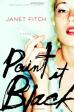
PAINT IT BLACK

WHITE OLEANDER

Reading Group Guides

WHITE OLEANDER

Janet Fitch

BIO

Janet Fitch was born in Los Angeles, a third-generation native, and grew up in a family of voracious readers. As an undergraduate at Reed College, Fitch had decided to become an historian, attracted to its powerful narratives, the scope of events, the colossal personalities, and the potency and breadth of its themes. But when she won a student exchange to Keele University in England, where her passion for Russian history led her, she awoke in the middle of the night on her twenty-first birthday with the revelation she wanted to write fiction. "I wanted to Live, not spend my life in a library. Of course, my conception of being a writer was to wear a cape and have Adventures."

Since then, she has had more than a few Adventures. In addition, she has published short stories in literary journals such as Black Warrior Review, Rain City Review, and A Room of One's Own, briefly attended film school in the director's program at the University of Southern California, worked at various times as a typesetter, a proofreader, a graphic artist, a freelance journalist, the managing editor of American Film magazine, and the editor of The Mancos Times Tribune, a weekly newspaper in the mountains of Southwestern Colorado. Currently, she reviews books for Speak magazine in San Francisco, and teaches fiction writing privately in Los Angeles, where she lives with her husband and eight year old daughter.

"WHITE OLEANDER,"the story which grew into her novel, was named as a distinguished story in Best American Short Stories 1994.

Interestingly enough, the story was rejected from The Ontario Review with a note from Joyce Carol Oates, stating that while she enjoyed it, it seemed more like the first chapter of a novel than a short story. It had not occurred to Fitch to extend the story, but she decided to take a chance on this advice and wrote her novel.

Her writing process is simple. "I write all the time, whether I feel like it or not," she says. "I never get inspired unless I'm already writing. I write every day, including weekends. For writers there are no weekends. It's just that your family is around, looking mournful, wondering when you're going to pay attention to them."

Her journalistic experience proved a vaccination against writer's block. "When I had the newspaper, I had to come up with 12 or 15 stories a week regardless of whether there was anything to write about. Someone would call me up and say, "My kid just caught a big fish, come over and take a picture of it." So you'd go take a picture of the fish and then interview the kid. What do you ask a kid who caught a big fish? "What kind of bait were you using? Where'd you catch it? What time of day was it?" I learned you could always write. You just couldn't be too perfectionistic about it."

But the artistry of her work, the lines that take the reader's breath away, were hard-won. "I could always tell a story," she said, "but I needed to learn the poetics of the literary craft." She found her mentor in the writer Kate Braverman, under whom she learned to work until she found the right word, the right sound.

Poetry plays a great part in her writing of prose fiction. "I always read poetry before I write, to sensitize me to the rhythms and music of language. Their startling originality is a challenge. I like Dylan Thomas, Eliot, Sexton. There are parts of WHITE OLEANDER which use cadences of Pound--whatever you think of Pound, there's a specific music to him. I like Kate Braverman's poetry and the late Donald Rawley's. A novelist can get by on story, but the poet has nothing but the words."

Back to top.   


AUTHOR TALK

September 2006

Janet Fitch --- author of the critically acclaimed and bestselling novel WHITE OLEANDER --- has written her second work of fiction, PAINT IT BLACK. In this interview, Fitch describes the highs and lows that come hand in hand with a successful publication, and shares the words of wisdom she imparts to her creative writing students at the University of Southern California. She also touches upon the common traits that bind her protagonists together and explains how the creative impulses of others (music, visual art, etc.) have inspired her own work.

Question: After the tremendous success of your debut novel, WHITE OLEANDER, what was it like to sit down and write your next book?

Janet Fitch: Easy, then hard. I thought that I was handling the success very well --- I was just a writer, doing what I do, just keep on the way I always had... The book was a separate entity; it went off and did well for itself, groovy. I had no idea what an impact it would have on me.

When you have a big book, there seems to be three stages (if you don't count the 'nothing will change' stage). Stage one --- you think you're Godzilla. You can do anything. You can eat cars, you can crush cities. You take on huge ideas, and make a terrific mess. Stage two --- you shrink to about the size of a single cell. You can do nothing, you stink, you're a fraud. You can't admit to anyone what's happening to you. Stage three --- you go back to basics. You remember that you can do a few things. Then a few more. Gradually, you regain a somewhat human size, and you're working again, scarred and humbled but grateful. It was a bizarre and none-too-comfortable ride.

Q: Los Angeles is the setting for both of your novels, but you treat it as much more than a backdrop. Why does LA have such an important presence in your novels? Do you think you would have written the same novels if you had set the stories in another city?

JF: Los Angeles definitely inspired these stories. When Faulkner was asked why he wrote about Mississippi, he said that it wasn't because Mississippi was so special; it was only the place he knew well enough to write about. LA is my home town, a very specific culture, a very specific landscape --- emotionally, historically, mythologically and physically. LA is for dreamers, people who want to remake themselves, and it's the absolute epicenter of culture clash, the great intersection of the 21st Century.

Q: You've said that the central question of PAINT IT BLACK is "what happens to a dream when the dreamer is gone?" Will you explain that?

JF: When someone sees something in you that you don't see yourself, you believe it only as long as you can be with them --- as long as you can see yourself through their eyes, borrowing their vision of you. But when they're gone, you're orphaned. You can't help but question whether or not it was them who created this vision, or whether it was really you. Josie Tyrell has to come to terms with the vision of herself that Michael Faraday saw in her, the world he opened for her. Does it still exist after he's gone?

Q: Astrid from WHITE OLEANDER and Josie and Meredith from PAINT IT BLACK are all linked by loneliness. For each woman, the one person who means the most is taken from them. What is it that keeps bringing you back to this tragic aspect of the human condition?

JF: Loss is the constant. Loss is the human condition. How to survive loss, to incorporate it without denying it, drowning in it or being poisoned by it, as I see it, is one of the great challenges of human existence. And loneliness, the result of this loss --- drives us to seek one another's company, it engenders love. On the other hand, it can also drive us mad.

Q: PAINT IT BLACK is generously peppered with 1980s punk rock music, as well as references to the visual arts and classical music. How important is the role of art and music in your life? And how do you think that's expressed in your novels?

JF: I'm deeply stimulated by seeing the ways other people's creative impulses manifest in the world. Not that I necessarily intend to be influenced by them formally or stylistically, but I seek out the way it excites me and heats things up internally. My creativity responds to another's the way one string of a guitar vibrates an unplucked string next to it. I think most people seek out art for this experience, not just artists. We're fed by all the arts.

Specifically, in my work, music and visual arts are a way in which I can think about my own art form without writing about it. How artists relate to their art. In PAINT IT BLACK, punk rock and classical music contrast two distinct attitudes towards creativity that I clearly move between --- an attitude of permission and a reverence for mastery. Awareness of what has been done, of the level of genius the world has already produced, and holding oneself to those standards produces a very high art, but also creates almost insurmountable pressure on the artist --- the danger, a stifling self-criticism which results in paralysis. On the other side, there's a lot to be said for the freedom to do what you feel like doing, even if it's ugly, even if it's awkward, even if it stinks, even if you don't have knowledge or background or credentials, the courage of that, not having to judge anything but just doing it --- this was the punk motto, DIY --- do it yourself. And it can be loud and tasteless and ugly, but you're doing it and the hell with everyone. Two stances toward creativity.

Q: What works of art and what other writers have inspired you and shaped your journey as a novelist?

JF: I'm a tai chi practitioner, and we talk about our lineage masters. My own personal lineage I guess you could trace me from Poe, through Doestoyevsky, Faulkner, Tennessee Williams and Joyce Carol Oates. I'm a bit Gothic in my sensibilities, Russian in my taste for extremes. Though a big secondary branch of influence has been Anaïs Nin and Henry Miller, and from them to Laurence Durrell. I've definitely been influenced by the LA writing that has established Los Angeles as a literary entity: Joan Didion, John Fante, Charles Bukowski, Kate Braverman, John Rechy, Eve Babitz, also the great noir writers Raymond Chandler and James M. Cain.

Poetry inspires me a great deal --- Joseph Brodsky, T.S. Eliot, Anne Sexton, Dylan Thomas, Carl Sandburg. I like the 'Silver Age' Russian poets, Akhmatova, Pasternak, Tsvetayeva... I'm a big fan of Anne Carson. I'm very auditory --- I like to read poetry aloud, hear poets read their own work. I like poetry and prose that has a distinctly musical quality, a strong voice. I hear my characters before I see them. Film is also a great inspiration and appears in all my work.

Q: You teach creative writing at the University of Southern California. Can you share anything about your writing process, perhaps something you tell your students to inspire them?

JF: The thing I tell my students that they hate to hear is not to expect your writing to support you. Art is a child, not a workhorse. Pay cash and don't get used to a lifestyle you have to maintain. My process is that I write all the time, think all the time, and try to live while I'm working. I keep notebooks. As a teacher I'm very nuts and bolts --- when I was taking writing classes, I hated the ones where everybody was good and everything was good and there was nothing you could hold onto.

To inspire my students, I tell them that the great thing about writing is that you don't need anybody's permission to do it. All you need is the desire. It took me a long time to sell my first short story --- ten years. Writing constantly, sending out stories constantly. I got to a crisis where I had to decide whether to bag it or keep going. That I could write my whole life and never publish anything scared me to death. But then I realized if I was on my deathbed, I could still say I did what I wanted in life. I am a free human being. I can do what I want and no one can take this away from me. I don't need anybody's permission or seal of approval.

Q: What's your favorite part of the writing experience? How do you manage to balance your writing with your teaching career? Do the two conflict with or nourish each other?

JF: My favorite part of writing is when the angels sing. That's when you're writing and something just lifts you up and sings through you, like a great jazz solo, just wailing. To be the instrument, that's when it's heaven itself. The rest is just hard work.

I love teaching. Writing for me is about getting the intellect out of the way and working down into the unconscious self, feeling it out, teasing it out. Intellectualizing about my work keeps me on the surface. I'm constantly trying to shut off the critical, rational part of myself to let the other come through. Teaching lets me use the highly developed intellectual, analytical side of my mind, it gives me an outlet. It's a great balance.

Copyright © 2006 by Janet Fitch

Click here now to buy this book from Amazon.com.

Click here to get the audiobook from Audible.com.

© Copyright 1996-2010, Bookreporter.com. All rights reserved.

Back to top.