IndieBound Independant Bookstores
Bookreporter.com Click Here For Librarians Submitting a Book Become a Reviewer FAQ Contact Us About Us
Home Reviews Features Authors Quote Books Into Movies Book Clubs Awards Coming Soon
Search Contests WOM Bestsellers New in Paperback Newsletter Bibliographies Blog


Interviews

September 21, 2001

Books by
Karen Essex


LEONARDO'S SWANS

2002 Historical Fiction Author Roundtable

Click here to find more Karen Essex on Audible.com.

Books by
Karen Essex


STEALING ATHENA

LEONARDO'S SWANS

KLEOPATRA

PHARAOH
Volume II of KLEOPATRA


Reading Group Guides

LEONARDO'S SWANS

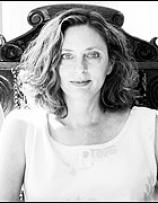
Karen Essex

BIO

Karen Essex was born and raised in New Orleans. She graduated from Tulane University, attended graduate school at Vanderbilt University, and received an MFA in Writing from Goddard College in Vermont. Essex's previous books include KLEOPATRA and PHARAOH, which she adapted into a screenplay for Warner Bros. Essex has adapted Anne Rice's novel THE MUMMY OR RAMSES THE DAMNED into a screenplay for 20th Century Fox, and she has also written a screenplay about Kamehameha (the first king of Hawaii) for Columbia/Tristar. Most recently, she has written a screenplay for Entertainment and Paramount Pictures in which Jennifer Lopez is set to star.

Also an award-winning journalist, Essex's articles, essays and profiles have been published in publications such as Vogue, Playboy, The L.A. Weekly, and L.A. Style. After being awarded highest honors from the Los Angeles Press Club for her thought-provoking cover story about the missing 1950's pinup icon Bettie Page, Essex co-authored the biography, BETTIE PAGE: LIFE OF A PINUP LEGEND. Essex is the first and only journalist with whom the reclusive Ms. Page has ever agreed to meet and cooperate.

Essex has appeared on The Today Show and A Word on Words, hosted by John Seigenthaler, as well as other PBS and NPR programs. She's lectured at the Chicago Museum of Art, and extensively at universities. Her books are taught in many college courses from creative writing to history to women's studies.

Essex's novels have been published in twenty languages. She lives in Los Angeles.

Back to top.   


INTERVIEW

September 21, 2001

With KLEOPATRA, Karen Essex seized upon the opportunity to create a fascinating piece of fiction and bridge the gap between the myth and reality of Egypt's infamous Queen in the process. It's called "a reimagined history," but maybe "a history debunked" would be a better to described the epic novel. Join Bookreporter.com's Kate Ayers as she and Essex discuss the misconceptions surrounding Kleopatra, the challenge of research, the book's translation to film and much more.

BRC: KLEOPATRA is the reimagined history of the great Queen of Egypt. How did you choose this great woman as the target of your attentions?

KE: When I realized that there was a huge gap between how scholars perceive Kleopatra and how the general public perceives her, I knew I had a good story. Scholars know that she was a formidable queen whose image has come down to us through the pens of her Roman enemies, but the public still views her as the wanton seductress of drama, film, and myth.

BRC: Obviously, your passion for women and their roles in ancient lands fueled your interest and spurred you on to detailed research. Which came first, though, the desire to learn about Kleopatra herself or the thirst for knowledge of the history?

KE: I was studying the ways in which history has either cut women out of its pages or misrepresented women, and Kleopatra seemed to me the most egregious example of that. I couldn't abide that one of the most powerful women EVER has been remembered only for her sexuality. It's a great way of undercutting a woman's power, of discrediting her, and I guess my sense of justice wouldn't let that rest.

BRC: I read that KLEOPATRA will be used as a text in a class called "Women of Power". This must be very exciting news for you. What other venues do you see KLEOPATRA being used in?

KE: I hope that more professors will see fit to use it as a textbook. I think it will be useful as such in several ways. I hope it will help students to reconsider how history portrays women, how historians have traditionally undercut women's roles and reduced them to appendages of men. I also think it will stimulate a student's desire to learn more about the ancient world. So few realize our direct connections to those societies.

BRC: The research for this novel spanned half a decade and took you to Italy, Greece, Turkey and Egypt, where you retraced Kleopatra's footsteps. How long were you there and how did you conduct your research?

KE: The research actually has taken almost ten years, and it continued until YESTERDAY, when I finished the edit of Pharaoh. All total, I traveled for a couple of months. I did all the academic research first so that when I actually went to the places, they held such meaning for me. I had been researching for years before I went to Egypt, and it was very exciting to see the things I had been reading about for so long.

BRC: On your website, under your commentary of "Why I Wrote KLEOPATRA," you say "The Kleopatra handed to us by history was the victim of a smear campaign by her rival and mortal enemy, Octavian . . . After her death, he destroyed all written histories favorable to her."  With the documentation thus eradicated, how did you go about reconstructing the true Kleopatra?

KE: In recent decades, scholars have dusted off the old, maligned Kleopatra and have taken a new look at her story. Once you realize that everything written about her is biased and served the purposes of her enemies, you can begin to read through the lines of history and see how the accusations don't even make sense. But I am not unearthing new scholarship. That work was done for me by the historians who preceded me. The scholarship is there and I am simply using my novels as a vehicle to bring it to the reading public. The reason we think Kleopatra was just a seductress is because that image of her handed to us by Rome was the very thing that ignited the imaginations of artists, playwrights, poets, painters, and filmmakers. Oh, what a good story it is, the irresistible female vamp luring men into her snare to do her bidding!! It's simply not historical, but a result of movies and such. John Q. Public didn't get his image of Kleopatra from Plutarch, but rather from Elizabeth Taylor.

BRC: In a previous interview I read, you said you entered a graduate program at Goddard University with a 550-page rough draft which included every single thing you knew about the ancient world. How did you trim it down into the beautiful work we see before us?

KE: Well, thanks for the compliment. I owe a great deal to my graduate adviser, the novelist Marina Budhos, who made me see that while the endless details of history were interesting to me, they would deaden the reader if they didn't serve the story. I had to have quite a bit of distance from the research before I could move from merely chronicling history to writing a good novel.

BRC: Many authors, having achieved their goal of being published, dream of their story being snapped up by Hollywood and made into a screenplay. KLEOPATRA has already been sold to Warner Bros., and you're slated to write the screenplay. Who do you picture to play your Kleopatra, Julius Caesar and Marc Antony?

KE: I promised the producer, Adam Schroeder, that I wouldn't say. He gave me a brilliant piece of advice. He said that we should let the integrity of my characters stand for a while before we attach actors' names and faces to them. I think he's right.

BRC: Having worked so much in the film industry, do you find you write with an eye toward the story becoming a movie?

KE: No, I really don't. But I do think that my sense of plot, or rather, my sense of the necessity of plot, comes from my work in the movie business. I get very frustrated with novelists who forget that they're supposed to be telling a good story. I've closed a lot of books never to reopen them after fifty pages of beautifully crafted sentences in which nothing at all is happening.  

BRC: In other news from the movie capital of the world, it is rumored that you've been hired by 20th Century Fox to adapt the Anne Rice novel, RAMSES THE DAMNED, into a screenplay. In that story, the pharaoh Ramses resurrects his love Kleopatra and in the film she is seen learning how to get around in the 21st century. How do you reconcile the history you've spent a decade researching and writing with a whimsical take on your main character?

KE: Well I just had a blast dressing Kleopatra in Armani and teaching her how to do web searches. I even put her behind the wheel of a Ferrari, which she adored. I simply took the historical Kleopatra and put her in the circumstances of the Rice novel. There is no betrayal of the historical queen, no discrepancies, even. I asked myself, what would she be like if someone in 2002 resurrected her mummy and threw her into the modern world? It's really good clean fun. I think it's important not to let anything become too sacred. And I don't think anyone is going to mistake a resurrected mummy for a portrait of the historical Kleopatra. If they do, slap them.

BRC: Do you see yourself on a parallel with any other historical fiction writers?

KE: I would hope that my work calls to mind the novels of Mary Renault, Robert Graves, Gore Vidal, and Marguerite Yourcenaur. They are just about the only historical fiction writers I've read!

BRC: Who are the most influential writers in your life?

KE: A lot of these are playwrights: Bertolt Brecht, Joe Orton, Harold Pinter, and Tom Stoppard are my favorites, and of course, Shakespeare. I think Marcel Proust and conversely (almost perversely) Raymond Carver, have been my biggest influences in writing prose, and I worship Lawrence Durrell, though he is oddly out of fashion. Iris Murdoch has been important. As a child, I adored the Nancy Drew mysteries, everything by Jane Austen, and in the eighth grade, I read GONE WITH THE WIND so many times that I actually once read it backwards. From the early novels of Anne Rice, and because of our mutual New Orleans upbringings, I inherited my love of gothic excess. Now I'm intrigued with Indian and Arab writers.  

BRC: What/who do you read for pleasure?

KE: I read everything for both pleasure and for work. I can't separate the two any more. If it pleases me, it usually influences me. But if it's not for research or related to my own writing, and I am not enjoying it, I just put the thing down. Life is too short.  

BRC: The second part of Kleopatra's history, PHARAOH, is to be slated for release in 2002. May we ask how that is coming along?

KE: Actually we are making one film out of the two novels. I had my first script meeting on August 27, so we're very early in the process. We are looking to begin production in 2003, which, if you know the film business at all, is realistic.

Click here now to buy this book from Amazon.com.

Back to top.   


-->

© Copyright 1996-2008, Bookreporter.com. All rights reserved.

Back to top.   


Home - Reviews - Features - Authors - Daily Quote - Books to Movies - Book Clubs - Awards - Coming Soon
Search - Contests - Word of Mouth - Bestsellers - New in Paperback - Newsletter - Author Bibliographies - Blog
For Librarians - Submitting a Book - Become a Reviewer - FAQ - Contact Us - About Us - Privacy Policy

© Copyright 1996-2008, Bookreporter.com. All rights reserved.
The Book Report, Inc. • 250 West 57th Street • Suite 1228 • New York, NY • 10107

Bookreporter.comReadingGroupGuides.comAuthorsOnTheWeb.comAuthorYellowPages.com
Teenreads.comKidsreads.comFaithfulReader.com