Bookrepoter.com Click Here Click Here Click Here
Home Reviews Features Authors Quote Books Into Movies Book Clubs Awards Coming Soon
Search Contests WOM Bestsellers New in Paperback Newsletter Bibliographies Blog

Barbara Delinsky

BIO

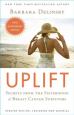
Barbara Delinsky has written many bestselling novels over the past two decades, including THE SUMMER I DARED, FLIRTING WITH PETE, AN ACCIDENTAL WOMAN, COAST ROAD, THE VINEYARD, THE WOMAN NEXT DOOR and THREE WISHES. She is also the author of a nonfiction book, UPLIFT: Secrets from the Sisterhood of Breast Cancer Survivors, available from Washington Square Press. Published in twenty-five languages worldwide, her books regularly appear on the bestseller lists of The New York Times, USA Today, The Wall Street Journal, The Washington Post and Publishers Weekly. Delinsky is a lifelong New Englander who loves communicating with her readers.

Back to top.   


AUTHOR TALK

February 9, 2007

Barbara Delinsky is the bestselling author of such novels as AN ACCIDENTAL WOMAN, FLIRTING WITH PETE, THE SUMMER I DARED and LOOKING FOR PEYTON PLACE. In this interview, Delinsky talks about the inspiration behind her latest work of fiction, FAMILY TREE, and its various themes, such as race relations and the concept of family. She also sheds light on the disparities between attitudes of today's generation and those that preceded it, and explains why she favors New England as the setting for many of her books.

Question: FAMILY TREE deals with issues close to the heart such as love and relationships. However, it also speaks to larger social issues of identity, race, and community. What served as inspiration for your story? Were you influenced by larger, social issues?

Barbara Delinsky: Interestingly, there was no single event or newspaper piece or personal experience that inspired FAMILY TREE. The book was inspired by the times we live in, with those larger social issues creeping into my consciousness and crying for expression. Interestingly too, I don't see the book as one about race. Basic identity, yes. Community, definitely. But the book is also about hypocrisy --- about those people who say one thing and do another, who wear one face in public and another in private, who want us to do as they say, not do as they do. We all know people like this, whether personally or in the news. Writing about them was a temptation I couldn't resist.

Q: The concept of family is central to FAMILY TREE. The book begins with Dana and Hugh Clarke's growing family on the eve of their daughter Lizzie's birth. In addition, FAMILY TREE is full of atypical families: Dana and her grandmother Ellie Jo; Dana and her long-lost father, Jack Kettyle; Hugh and his prominent ancestry that can be traced back to the Mayflower; Crystal's paternity case against he senator; and the knitting club, a group of women who care for each other as if they were a family. What do you see as the basic values that define a family?

BD: I would define a family as a unit that is linked by either genetics or love. Indeed, one of my goals in writing FAMILY TREE was to create discussion of what, indeed, constitutes a family. I personally consider a close and caring group of friends to be family, hence the knitting group. This is a family we choose. Those others, the ones that come with the territory of birth, marriage, and DNA, are more visceral. Here, the stakes are higher with regard to both joy and pain.

Q: Dana and Hugh's young family is almost torn apart because of Lizzie's unexpected African-American physical traits. Hugh, feeling pressure from his Caucasian New England family, begins to doubt Dana's fidelity and ultimately damages his relationship with his African-American friend, David. Is Hugh's mistrust from outside pressures? Or do his reactions reveal his real attitudes about race?

BD: That is a pivotal question in this book. Hugh is a lawyer who has, time and again, gone out on a limb defending minority clients. Yet suddenly, seeing that his own child has minority roots, he feels a qualm. Do I think he is racist? Absolutely not. I think he is stunned. He is frightened. He is savvy enough to know exactly what his bi-racial child will face in life. And, yes, he bows to outside pressures at the start. But he loves this baby from the get-go. She is the vehicle that enables him to honestly and realistically examine his attitudes about race.

Q: The notion of secrets resonates with every character and drives the plot of FAMILY TREE. Questions of paternity and infidelity branch across generations, leaving change in their wake. For instance, why does Ellie Jo keep her husband's secret?

BD: Ellie Jo is of a generation that found shame in certain things, her husband's secret being one of them. Times have changed; in the modern day, Earl's secret would be easily handled, with little shame involved. But Ellie Jo is not of the modern day. Goodness, my mother died of breast cancer when I was a child, yet I didn't learn it until I was nearly an adult. Why? My father couldn't say the word 'breast,' much less 'cancer,' and he was far from unique. His and Ellie Jo's may have been The Greatest Generation, but it was also one of the most silent ones.

Q: Both Eaton and Hugh Clarke struggle with the question of identity once they are forced to reexamine their past. How much do we shape our own identities apart from our families? Are Eaton and Hugh more alike than they think? What characteristics, good or bad, do they share?

BD: Here, too, the modern day differs from the past. We are a mobile society now. Families are dispersed geographically in ways they did not used to be. Many families see their younger generation doing things occupationally that are new and different. New locations, new occupations, new social liaisons --- all do shape identities to be different from those in the family nest. That said, though, some traits do carry over from one generation to the next. Physical traits do. Hugh and Eaton have the same stature and the same coloring. Emotionally, though, the two are definitely alike. Both are dogged in their chosen fields. Both are hard-headed. Both are also, at the core, compassionate people who do have the ability to change and to grow.

Q: Driven by Hugh to discover her ancestry, Dana delves into her ambiguous family past in order to learn about the father she never knew. Although he wants to develop a relationship once they've reconnected, why does Dana have a hard time opening up to her estranged father? As she learns about his life and his relationship with her mother, does her attitude towards her mother change? How does this alter her concept of family?

BD: Dana has grown up without a father and, perhaps by way of rationalization, prides herself in neither needing nor wanting one. She goes looking for the man solely for the sake of her daughter, but a part of her remains resentful he never cared enough to look for her. Why does she have trouble opening up to him? Fear of being hurt, perhaps? Fear of being seen as the illegitimate one, the intruder in a tight-knit family? One of the problems is that he is a really, really nice man. Liking him, for Dana, though, means believing his story, which in turn means finding fault with her mother. In time, she is able to set fault aside and be realistic about both of her parents. She sees that people are human and do make mistakes. This helps her understand her husband.

Q: Many of your books use New England as a setting. Massachusetts is the setting for FAMILY TREE. Did the location impact the story itself?

BD: As a lifelong New Englander, I know this region more than any other and, therefore, feel comfortable setting my books here. Massachusetts is the home of Plymouth Rock, the site of the Mayflower's first landing. In that Hugh Clarke's forebears were on that boat, the state is an appropriate setting for FAMILY TREE. Beyond that, though, the issues in FAMILY TREE are not region-specific. They are broad issues that impact readers wherever they live.

© Copyright 2007, Doubleday, a division of Random House, Inc. All rights reserved.

Back to top.   


INTERVIEW

July 26, 2002

Barbara Delinsky, author of AN ACCIDENTAL WOMAN, has written and published sixty-five novels in a variety of genres. Delinsky reveals the meaning behind her title and the difficulty of resurrecting characters from a previous novel in this interview with Bookreporter.com's Roberta O'Hara

BRC: Who is the accidental woman? Is it Poppy or is it Heather? Did the title come to you after the writing of the book, or was it there all along? And did you intend the title to be somewhat of a mystery in and of itself?


BD: The title of the book came about half-way through the writing. It has multiple meanings in the story - and yes, I did intend it to be something of a mystery. Is it Poppy or Heather? It's actually both. Poppy and Heather are the women they are because of accidents in which they were involved. Taken another way, Poppy and Heather are "accidentally" women in that neither one planned to find a mate; accidents of fate tossed them in with Griffin and Micah, respectively. But the meaning of the title goes beyond even that. Here's the thing. My readers identify with my characters; they see their own problems in these fictitious people. I deliberately titled the book "an" accidental woman rather than "the" accidental woman because, in truth, this phrase may well fit you or I or any one of my readers.

BRC: Your characters are all round, fully-developed individuals, but Poppy seems to take center stage as the main character in the story. Was that how the story started out? How did Heather become a minor character in the book, when the mystery revolves around her?

BD: I wrote "An Accidental Woman" first and foremost to tell Poppy's story. Heather is simply the vehicle I chose to do this. The mystery may revolve around her, but the mystery is only a small part of this book. The larger part deals with guilt, with the cost of suppressing one's past, with the ways in which we sometimes hold ourselves back from leading rich and fulfilling lives. Heather Malone is a catalyst for Poppy's growth; in facing the mystery of Heather, Poppy is forced to act, to reflect, to look at her own life - and ultimately to reach for her dreams.

BRC: Several of the characters are resurrected from an earlier work --- LAKE NEWS. Did having existing characters and personalities and histories make the writing of An ACCIDENTAL WOMAN easier? Did you enjoy revisiting these characters? Will any of these same characters reappear in future stories? (I think we'd all like to see what happens to Poppy and Griffin.)

BD: Funny, but I thought that it would be easier to write a story with characters and personalities already established. Wrong. I discovered that when you go back to a setting from another book, you have to make sure that everything is the same as it was in the previous book, and that's hard! You also have to work within certain preset guidelines, though your new plot may cry out for things to be different. It was definitely a challenge, but I do love challenges. Will these characters reappear in another book? I'm not planning it at this time, but there is part of me that feels Lake Henry needs to be visited in summer ...

BRC: Which character did you sympathize with most? Why?

BD: Poppy. Who else? Poppy was strong and upbeat, and I respected that. She was loving and caring, and I respected that, too. She was also walking around, euphemistically speaking, shouldering a heavy load of guilt. She had a secret. It haunted her. She had reasons not to tell it and might well have gone to her death with the secret untold. That would have been the easy thing to do. That she did the hard thing - the right thing - made me love her all the more. When it came to her disability, she had determination and grit. I found Poppy to be all the more inspiring because of that.

BRC: I found the details about the harvesting of maple syrup to be fascinating. Why maple syrup? Did you choose this because of the region you were writing about? What research did you do?

BD: Why maple syrup? "An Accidental Woman" is set in a small New Hampshire town in late winter, and maple syrup production is truly part and parcel of life in many small New Hampshire towns in late winter. So that was one reason why I used it as a backdrop. Another is that I was fascinated with it myself and wanted to learn more. Another is that I knew my readers would be just as intrigued. I have always viewed the small towns I create as characters; characters have varied looks and smells; maple syrup is one facet of the character of Lake Henry. As for research, I did a lot. I read books and web reports, but mostly I worked with actual sugarmakers. They were totally gracious, totally eager, totally knowledgeable. I count their friendship a blessing.

BRC: When did you start writing?

BD: I started writing 22 years ago. Never dreamed it would come to this! How lucky I am.

BRC: Which authors do you read with regularity?


BD: No specific repeat ones. Right now, I'm on a kick of reading children's classics - "Little Women," "The Yearling," "A Wrinkle in Time."

BRC: I am always curious about a writer's routine. What is a day in the life of Barbara Delinsky the writer like?

BD: Busy. And disciplined. I read the newspaper (a major source of ideas) every morning at 6. By eight I'm at my computer. When I'm nearing a deadline, I'll work until six or seven at night. Earlier in the course of a book, it's five pages or 2 pm, whichever comes first. The hours after 2 pm are filled with the business side of my work - like answering questions such as yours!

BRC: What are you working on now?

BD: Right now, I'm working on "Flirting With Pete." Based on a novella that I wrote seven years ago, this is a story of reality versus imagination - what is real versus what we want to be real - the ways in which we fool ourselves when reality hurts. On another level, it tells of the complex relationships we have with our parents, both when they're alive and when they're dead. "Flirting With Pete" will be published in the summer of 2003

© Copyright 1996-2008, Bookreporter.com. All rights reserved.

Back to top.


Home - Reviews - Features - Authors - Daily Quote - Books to Movies - Book Clubs - Awards - Coming Soon
Search - Contests - Word of Mouth - Bestsellers - New in Paperback - Newsletter - Author Bibliographies - Blog
For Librarians - Submitting a Book - Become a Reviewer - FAQ - Contact Us - About Us - Privacy Policy

© Copyright 1996-2008, Bookreporter.com. All rights reserved.
The Book Report, Inc. • 250 West 57th Street • Suite 1228 • New York, NY • 10107

Bookreporter.comReadingGroupGuides.comAuthorsOnTheWeb.comAuthorYellowPages.com
Teenreads.comKidsreads.comFaithfulReader.com