|
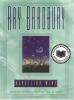
Ray Bradbury
BIO
The author of more than thirty books, Ray Bradbury is one of the most celebrated fiction writers of our time. Among his best-known works are FAHRENHEIT 451, THE MARTIAN CHRONICLES, THE ILLUSTRATED MAN, DANDELION WINE, and SOMETHING WICKED THIS WAY COMES. In 2000, Mr. Bradbury was honored by the National Book Foundation with a medal for Distinguished Contribution to American Letters. He is the winner of the 2004 National Medal of Arts and the 2007 Pulitzer Prize Special Citation. In 2007, he was awarded a medal naming him a Commander of the Order of Arts and Letters, France's highest cultural award. His most recent books include NOW AND FOREVER, FAREWELL SUMMER, and FROM THE DUST RETURNED. Mr. Bradbury lives in Los Angeles.
Back to top.
ARTICLE
If you're looking for a Writer of the Century, Ray Bradbury fits the bill. In fact, he fits it so well that it may be damning him with faint praise. Maybe THE Writer of the Century would be a better title. For one thing, he has been at it for better than half of the century. For another, what he wrote in the first half of the century stands up just as well --- maybe even better --- in the closing months and days of the second half. And he has influenced just about everyone sitting in front of a keyboard and trying to make a living at it, from people who are household names like King and Crichton, to unfamiliar names like Joe Hartlaub or William D. Plant III who dream one day of seeing their names on the side of some hardcover binding.
Of course, great writers are made, not born. Bradbury was born in 1920 in Waukegan, Illinois. He credits the development of his imagination to his mother, who was sneaking him into movies at age three, where, by osmosis, he caught the creative virus. That experience, coupled with his family's sporadic relocations between the West and the heartland before settling for good in Los Angeles, undoubtedly stimulated his imagination and gave him time to develop it.
Bradbury's first story publication was "Hollerbochen's Dilemma," printed in 1938 in Imagination!, an amateur fan magazine. In 1939, Bradbury published four issues of Futuria Fantasia, his own fan magazine, contributing much of the published material himself. His first paid publication was "Pendulum" in 1941 in Super Science Stories, one of the many wonderfully trashy pulp genre magazines of the era that occasionally, by the wonder of accident and the benevolence of design, permitted major talent like Bradbury to develop and grow. In 1942 Bradbury wrote "The Lake," the story in which he discovered his distinctive writing style. By 1943 he had given up a job selling newspapers and began writing full-time, contributing numerous short stories to periodicals. In 1945 his short story "The Big Black and White Game" was selected for Best American Short Stories. In 1947 Bradbury married Marguerite McClure, and that same year he gathered many of his best stories and published them as DARK CARNIVAL (later substantially republished as THE OCTOBER COUNTRY), his first short story collection.
His reputation as a leading writer of science fiction was established with the publication of THE MARTIAN CHRONICLES, a series of short stories which describe the first attempts of Earth people to conquer and colonize Mars, the constant thwarting of their efforts by the gentle, telepathic Martians, the eventual colonization, and finally the effect on the Martian settlers of a massive nuclear war on Earth. As much a fable and cautionary tale as science fiction, THE MARTIAN CHRONICLES reflects some of the prevailing anxieties of America in the early atomic age of the 1950s: the fear of nuclear war, the longing for a simpler life, reactions against racism and censorship, and fear of foreign political powers.
Another of Bradbury's best-known works, FAHRENHEIT 451, developed out of a series of five short stories which Bradbury wrote in the early 1950s. Unable to afford an office at the time, Bradbury wrote the stories in a university basement on a typewriter rented for the princely sum of 10 cents per half hour, with his costs of production ultimately totaling $9.50. FAHRENHEIT 451 --- the temperature at which book paper burns --- is set in a future society where the written word is forbidden, and firemen are utilized for burning books and putting out the fires.
Bradbury's best work, however, has arguably been in the area of the short story. His work has been included in the Best American Short Story collections (1946, 1948, and 1952) and the O. Henry Memorial Award, among many others. And after a couple of decades of selling to Thrilling Wonder Stories and the like, he graduated to highbrow publications such as Life and McCall's. It was the big boys, however, who caught up with him. It wasn't the other way around. They realized that here was this guy who was writing stories that were labeled "science fiction" which were in fact these quietly brilliant cautionary fables of where we were and, God help us, where we were going.
And these stories are closer to fantasy than science fiction --- and closer to reality than fantasy. Bradbury used to write about Mars, a lot. But he wasn't really concerned with how the astronauts got there, or how they breathed, or what the atmosphere was like. He was more concerned with plopping them there and revealing their human reactions, both good and bad. And people could relate to it. Bradbury, before Stephen King, before Star Wars --- hell, before "Star Trek" --- was one of the few writers whose books you could pop into someone's hands and have them say to you later, "I don't like that science fiction stuff, but this was good."
But Bradbury didn't just write stories about Mars. He wrote stories about families and people and horror stories that still resonate today. Read SOMETHING WICKED THIS WAY COMES. This book influenced Stan Lee when he created his "Ringmaster" villain, Stephen King's IT, and half a hundred others. I have four children whom I have loved dearly; but every time I have done an Oliver Hardy pratfall down a flight of stairs after stepping on an action figure in the middle of the night I have thought, however briefly, of Bradbury's story "The Small Assassin." And if you have ever felt the serpent's tooth of a child's anger, read "The Veldt," a short story which incidentally, precognitively conceived of microwave ovens and virtual reality in 1949.
Bradbury's work in the late 1960s began to turn more introspective, and, if not more mainstream, to quieter, more down to earth topics, with more whimsy and perhaps less darkness and fantasy. He maintained, however, the beauty, spareness and power of his prose. While there was some weeping and gnashing of teeth among the unwashed literati over this turn of events, such complaints merely illustrated their own hypocrisy by their failure to accept in Bradbury's work the diversity which they paid general lip service to. Bradbury, his reputation and credentials well established for eternity, went about his business, writing poems, plays, critiques, essays, and, of course, short stories and novels in a variety of genres which somehow always became his own. And he is still at it. Rumors of a new novel abound.
His reputation reaches far beyond the field of things literary. Elton John's "Rocket Man" was based on Bradbury's story of the same name. Bradbury was the idea consultant for the United States Pavilion at the 1964 World's Fair; has been a creative consultant for architects, Disney, and others. His work has been adapted to film and for television in such anthology series as "Twilight Zone," "Night Gallery," and, of course, "The Ray Bradbury Theater." Perhaps his most fitting tribute, however, was the naming of Dandelion Crater on Earth's Moon in honor of his collection, DANDELION WINE.
Dandelion Crater. A fitting tribute, indeed. For now. The Hilton hotel chain is presently contemplating a property on the Moon. The "Bradbury Hilton" has a nice ring to it, don't you think? And a name like that would be just like Bradbury's work: simple, poetic, uncomplicated, ironic, and direct. His stories become more beautiful, and more relevant, with every passing year. If his more recent labors have been eclipsed by his earlier work, that does not change the fact that he continues to amaze and bedazzle, and still has the ability to show 90 percent of the scribes out there how it is done. Bradbury was, and is, quite simply, our very own Aesop, giving us fables of our age and time with lessons to be learned. Like Aesop, Bradbury's stories will continue to endure, and to be the legends upon which future legends are based.
--- Joe Hartlaub
© Copyright 1996-2010, Bookreporter.com. All rights reserved.
Back to top.
|