|
BIO
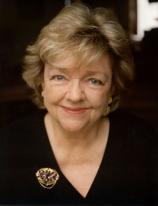
Maeve Binchy is the author of numerous best-selling books, including her most recent novel, Whitethorn Woods, in addition to Night of Rain and Stars, Quentins, Scarlet Feather, Circle of Friends, and Tara Road, which was an Oprah's Book Club selection. She has written for Gourmet; O, The Oprah Magazine; Modern Maturity; and Good Housekeeping, among other publications. She and her husband, Gordon Snell, live in Dalkey, Ireland, and London.
Back to top.
INTERVIEW
Maeve Binchy, the best-selling author of TARA ROAD, EVENING CLASS, and CIRCLE OF FRIENDS, is back to claim her rightful spot atop the bestseller list with her latest novel SCARLET FEATHER. Join Senior Writer Jana Siciliano as she chats with Binchy about the inspiration behind SCARLET FEATHER, the changing face of Ireland, Oprah and, of course, potatoes.
BRC: The Daily Telegraph announced that "the greats of Irish literature - including Samuel Beckett, Brendan Beham, W.B. Yeats, and Oscar Wilde --- have been outsold in their homeland by the popular novelist Maeve Binchy." How has this success affected your lifestyle and your work style? How did being an Oprah author change your life?
MB: I was very pleased, obviously, to have outsold such great writers. But I'm not insane…I do realize that I am a popular writer who people buy to take on vacation. I'm an escapist kind of writer. I didn't think for a moment that I was better than any of these people, I was just lucky I lived in this time of mass-market paperback. After all, if you were going on a long plane journey and you had a choice between one of my books and ULYSSES, you'd probably opt for one of my books!
Being picked as an Oprah author was huge; it was extraordinary. The day she called to tell me that I had been chosen, I assumed it was one of my friends having a joke and I kept saying, "Who is this really?" She said, "It is Oprah," in such a firm voice I suddenly knew there was no messing about here. I knew it was going to make a huge difference because it was going to bring my stories to a public that might never have read them before because people trust her. She has taken the seriousness out of reading and brought it back to the kind of writing and reading I love: the "Come here, and I'll tell you a story" kind of reading. I can't ever thank her enough.
But being an Oprah author didn't change my lifestyle at all. I became famous when I was 43, and I've led the same kind of life since then. I've lived in the same house, only fixed up a bit. Needless to say, I didn't go and buy a mansion. I was too old to let it get to my head…perhaps if I had been 23!
BRC: The plot of SCARLET FEATHER wraps itself a great deal around food. How important is the subject of food in Irish culture?
MB: Everybody has always loved eating in Ireland and the family always gathered around the table - which was also where all the stories were told. It's a bit like the Jewish culture in a sense. But because we were not a rich country, we were not very good cooks in Ireland for years. We did lots of interesting things with potatoes, but that was about it!
And because most of Ireland is Roman Catholic and not allowed to eat meat on Fridays, we always regarded fish as a penitential thing, as second rate. However, nowadays we all absolutely love fish. I hardly eat anything else besides fish now. Also, Ireland has become much richer because of the European Union, so nowadays we can actually afford things like caterers! Now people are really interested in food. It's quite lovely really.
BRC: What are some of the themes of SCARLET FEATHER that can be linked to the great traditions of Irish literature?
MB: The theme of the huge importance of family. In Irish culture, people care very much about their families. And the family that doesn't care about each other --- the Mitchells --- they're real losers. All the other families have a strength that comes from caring about one another.
I also wanted to bring in the question of class-consciousness and inequality of position. The people of Ireland have no right to be class conscious. Well, no one does, but we have less right than anybody because almost everybody in Ireland was a peasant at some point; and it just took some of us longer to get out of that situation. We've always admired America for having a classless society. It's unlike, say, Britain or France, where people really care about how old your family is. Basically, I wanted to point out that Ireland's young people are so full of courage and guts that they don't take any notice of silly snobberies.
I also wanted to embrace the notion that courage is what makes people win. It's not beauty or wealth, but simply people being courageous and strong in the face of adversity. That's really the main theme of an awful lot of my books…and I think that's why people seem to like them.
BRC: Why does SCARLET FEATHER occur over the course of one single year in the life of its protagonists? What did this time stricture help you to do with the telling of the story?
MB: Knowing that I had to finish the story within one year disciplined the plot for me much more because I then knew when things would have to happen (though sometimes it was difficult to keep all the dates straight in my head so they made sense in the story.) When you let things go on for days and weeks and months, the story can often become drifty. I like that the time stricture sped things up for me.
BRC: TARA ROAD has been published in the United Kingdom, Ireland, Australia, Canada, New Zealand, Germany, and Sweden. What was the response to its overseas publications?
MB: Everybody has liked it very much. They all see it --- much more than any of my other books --- as a movie. The reason I wrote the book was because I did a home exchange myself with a woman in Australia. We had a very uneventful home exchange in comparison to TARA ROAD, but what did happen was I found I knew her very well because I was living amongst her things. I knew her secrets; I knew the bills she didn't pay; I knew the neighbors that didn't like her; I knew that her husband used a hair-restorer. And she knew all those things about me. We met two years later and it was, really, like meeting an old friend. It was at that point that I said, " I think I'm going to write a book about this." It was an incredibly intense relationship.
BRC: How has the changing face and attitude of Ireland opened you up to new ways of telling the stories of its inhabitants?
MB: The most important thing has been the huge youth revolution --- the young people are not afraid anymore of what people will say, or hurting their reputation, or of the church like we all were. We were all terrified of sin when we were young and sex was explained to us very, very badly. Many girls I knew lived in fear of getting pregnant…and they were all virgins! The greatest evil that could befall a family was getting pregnant without being married. It's nice to see that nowadays this is not the case --- that little babies are loved by the community, despite their mothers being married or not. The secrecy and the hypocrisy are gone. Also, Ireland is a very young country --- there is a huge under-30 population. So, all of these things I had to reflect in my book.
BRC: Ria and her best friend Rosemary are two career girls who embark on the path of adult life. What advice might you give to young women like them today, on the cusp of adulthood?
MB: The same advice I would give to everybody: We only have one go at this; we are only dealt one hand of cards. Whatever hand you are dealt, that's the one you must play. You must spend no time wishing you were dealt a different hand. I feel very sorry for those young people who are convinced that the whole world is looking at them because, quite simply, the world is not looking at them.
BRC: You were once a teacher and Signora in EVENING CLASS is a perfect example of how important you feel teachers are in this world. What was your most winning trait as a teacher?
MB: I suppose the best thing I did as a teacher was to try and instill confidence in the children. I once had a teacher --- she's still alive at 90 and still a nun --- who always found something to admire in each child. Everybody loved her and, more importantly, we learned in her class. So, I tried to do that as well. And in the end, you get more out of children when you praise them. My large and imposing stature was also quite helpful in gaining respect!
BRC: How do you react to the film adaptations of your books? Did you mind that they changed the ending of CIRCLE OF FRIENDS?
MB: I didn't mind that they changed the ending because I knew that they were going to --- it wasn't a question of them stealing it away from me and secretly changing the end. I said it was okay if the girl and the guy had to get back together in the end, just as long as she didn't take him back too easily. Although I think it would have been a better and a stronger ending if she didn't take him back, because it would send out a message to girls everywhere that you don't have to go along with behavior you don't approve of. It wasn't just because she was a plump girl that she had to settle for less and let her guy do anything. But, truth be told, in real life none of us would have given him up because Jack was so gorgeous. The movie was so sweet and they both were so beautiful, I think they were able to get away with the ending change.
BRC: Why is the theme of love so important for you? How do you find new ways of dealing with such a well-worn topic?
MB: We're nothing if we're not loved. When you meet somebody who is more important to you than yourself, that has to be the most important thing in life, really. And I think we are all striving for it in different ways. I also believe very, very strongly that everybody is the hero/heroine of his/her own life. I try to make my characters kind of ordinary, somebody that anybody could be. Because we've all had loves, perhaps love and loss, people can relate to my characters.
BRC: There seems to be group or core of Irish authors making their mark on literature today: you, Roddy Doyle, Jennifer Johnston, Pat McCabe, to name a few. Why is it, do you think, that the Irish have seen something of a renaissance in the literary world?
MB: The Irish have always been great storytellers. We've always admired people who talk a lot --- whether or not they have something of importance to say! The Irish don't like listeners…they love talkers, people who come in and interrupt and take part. As far as the renaissance, I think it has all got to do with a renewed sense of confidence in Ireland now. For the first time we are realizing that we're not just a little island off a little island.
BRC: You published two books of short stories before TARA ROAD. Do you enjoy writing short stories or novels more?
MB: I prefer writing short stories actually. The fact that you have to have a story finished in ten pages or so makes it a much better story because, if I have 500 pages to finish a story in, it could become too sprawling and unwieldy. In fact, right now I'm writing a book of short stories of Quinlans, which is a restaurant that appears in EVENING CLASS, TARA ROAD, and SCARLET FEATHER --- all the stories take place in this restaurant.
BRC: In TARA ROAD, the bitter deception of a woman who believes she has a happy marriage and the inability of another woman to cope with bereavement make for curious bedfellows. Do you think that TARA ROAD struck a chord with readers because it harkens to such core issues about the way humans approach life?
MB: I think there are two things in there that we've all come across in our lives: (1) People's inability to grieve properly --- as in Marilyn's inability to accept her son's death, (2) Marriage is such a strange and fragile thing…no one really understands how it works or, on the flip side, how it could fall apart so unexpectedly. I've gotten thousands of letters from women who simply could not understand how their seemingly happy marriage could fall apart so easily. I had no idea, until after I wrote TARA ROAD, how often that happens.
BRC: Your father was an attorney and he told you to never base a character on a real person or you would be paying litigation for the rest of your life. What other advice did he have for your career and did he support your choice of endeavors?
MB: Yes, he always told all of us --- I was the eldest of four --- "you will never be rich when I die…I won't be able to leave you much money because I will put every penny I have into educating you." Of my family, I'm actually the least educated. I thought it was about time for one of us to leave school and get a job because our father was working so hard! We were all told that education was the most important thing. My father had this theory that the word education was derived from the Latin word "educere," which means to lead out. Education led you out into things, into the light and information.
My mother gave me my confidence. On the night I was going to my first dance she said to me, "You look so beautiful, you'll take the sight right out of their eyes." I mean, that was so patently not true! I can tell you it was not true --- I've seen pictures of myself! But I went there with such happiness because I thought I looked so beautiful that I would take the sight right from their eyes.
More than anything, I really, really wish they had lived long enough to benefit from my success.
BRC: Your husband is also an author. What sort of books does he write, and what is it like to live with another writer?
MB: He often writes children's books. He also writes various humorous books --- like THE RHYMING IRISH COOKBOOK, which people all buy when they come to Ireland. It's such a funny and clever book. He's also edited an anthology of young adult short stories called THICKER THAN WATER. He's English, but I always tell him I think maybe his mother brought the wrong baby home from the hospital and, in fact, he's really Irish.
We both sit at a big, long desk --- he at one end, me the other. We get on extremely well. When either of us finishs a book, we go out and celebrate. We're very celebratory.
BRC: Do you feel your writing style has changed over the years? How?
MB: Not really, I write exactly the same way I speak. I speak quickly and I write quickly, without many flourishes (or punctuation marks!) However, as Ireland has changed, the topic I address in my books has changed.
BRC: Did you have an author or authors who influenced you in your formative years prior to launching your own career as a writer?
MB: No, I never wrote like anybody. This is absolutely true. The authors I like write so differently from me. I write as if I'm writing a letter. It's all "come here and I'll tell you" --- that's always been my style of writing. But I admire other authors. I love Anne Tyler --- she's a terrific writer. I love a Canadian writer named Alice Munro. And I love an English writer, Fay Weldon.
BRC: What is your writing schedule like? Do you write every day? Do you set goals for yourself?
MB: I do write every day. I write early in the morning, from about half-past seven in the morning until about half-past one in the afternoon. Then I answer my mail and such in the afternoon --- I don't usually do creative writing in the afternoon.
BRC: If you met a person who had never read any of your books, which of your books would you recommend as their first read and why?
MB: I would tell them to read SCARLET FEATHER. It really does tell people about Ireland in this millennium. It tells you about the way young people are confident, the way they feel and grow. It tells you about the hopes and fears and anxieties of families. I think I've gotten a bit wiser as I've grown older, and I've never had any real villains or absolutely startling heroines. There is always a little bit of bad in the good people, and a little bit of good in the bad. I feel I've done it all best in the SCARLET FEATHER. It's my favorite book.
Back to top.
INTERVIEW
TBR writer Joan Higgins has been an avid fan of Maeve Binchy for years. So when Binchy's latest novel, TARA ROAD, came out she was eager to read it --- and she's not the only one. No one can characterize as beautifully as Maeve Binchy, says Joan Lowery Nixon, a Young Adult writer who listed Binchy as one of her "must-read" authors. With her lyrical prose and vivid description, Binchy is sure to win fans over again in TARA ROAD. In this telling interview, find out who Binchy would trade places with, how Ireland copes with the problem of violence against women, how she felt about the ending of Circle of Friends, and much more.
BRC: Your new novel TARA ROAD, takes place in contemporary Ireland which is different from many of your previous novels which take place in historical Ireland. What do you think has been the biggest change in Ireland over the past few years? The most important change?
MB: The most important changes in Ireland have been increased affluence, the development of a liberal and more tolerant agenda, the decline in organized religion and a halting of emigration.
BRC: Ireland has always been a staunchly religious country. However, in TARA ROAD, the character of young Ria expresses total disbelief in heavenly intercession. How strongly does religion influence young people in Ireland today? Do they believe in God as strongly as their parents did at their age or is this another area that has seen a shift in attitudes?
MB: Religion in Ireland nowadays is entirely dependent on personal conviction and no longer upon the fears of offending society. Therefore those young people who DO have a faith practice it, but others do not.
BRC: TARA ROAD's two main characters, Ria Lynch of Dublin, and Marilyn Vine of New England, both experience devastating events in their lives. In order to help themselves heal, these two women exchange homes for the summer and, in doing so, exchange "lives." Reading books also allows readers to put themselves in other people's "lives" and learn about things they may never experience in their own lives. What kind of new insights about life and human nature would you like your readers to gain from meeting your characters in TARA ROAD?
MB: I would like readers to believe, as I do, that we are largely responsible ourselves for the direction our lives take. There are no magical solutions, makeovers, or accidental outside influences.
BRC: If you could "switch" lives with someone for a few weeks, as Ria and Marilyn do, whose life would you pick? What would you hope to learn or accomplish by "living" that person's life for a few weeks?
MB: I would like to exchange lives with Josephine, Napoleon Bonaparte's first wife, whom he loved to distraction but abandoned because she could not give him an heir.
BRC: Much attention is paid to the plight of battered women in the US. Is the situation similar in Ireland?
MB: Yes, in Ireland also women have become more courageous in admitting that they have lived in a violent lifestyle, and society has become more caring in supporting them financially to help them escape such situations.
BRC: In TARA ROAD the character of Gertie is constantly being abused by her husband Jack. Why don't her women friends like Ria and Rosemary step in and try harder to get Gertie to leave him?
MB: They DO try, but Gertie believes that "for better or for worse" is a vow that means she must stay, however bad the situation becomes. She truly believes that he loves her and she is his last hope.
BRC: TARA ROAD is your first novel set partly in the US. What kind of experience was it to write a story set here? Any particular reason you chose New England?
MB: I chose the U.S. because I felt it was an environment which would energize Ria and give her the courage she needed. I chose New England because I thought that there might be many similar university towns like Marilyn's town and that it would seem typical rather than specific.
BRC: Many novelists say that they don't base their characters on any "real-life" people they know, but often "borrow" traits from them. Would you say this is true of your writing? What kind of people intrigue you enough that you might "borrow" from them?
MB: I am constantly borrowing traits from people I know well, and from slight acquaintances. I am always interested in the self-destructive characteristics of those who have no idea that their manner and behavior alienates everyone else.
BRC: A fortune teller named Mrs. Conner predicts many important events in Ria's life, including the births and sexes of her children, her business success, and her travel aboard. She is an interesting addition to the story, since one of the themes of TARA ROAD is the uncertainly of the future, as demonstrated by everything from Danny's unpredictable real estate business, to Ria's divorce despite her seemingly "happy" marriage, to the unexpected death of Marilyn's young son. If they could know the future, do you think most people would truly want to know what lies ahead of them? If you could know your future, would you want to?
MB: I would not want to know my own future, and I believe this is the same for most people. Yet the popularity of psychics and fortune tellers increases all the time. Perhaps those who seek their help do so only in times of stress and sadness.
BRC: Several of your books have been made into films and teleplays with CIRCLE OF FRIENDS being the most well-known in this country. What were your reactions to the movie? How did you feel about the movie's ending being different from your novel's ending? Is it difficult for you as a writer to see your characters' fates changed on screen?
MB: I loved the mood direction, and acting in Circle of Friends, and I was told well in advance that they wanted Benny and Jack to get together in the movie, unlike the book, so nothing came as a horrible surprise. I try to think like Elmore Leonard, "my book, their movie."
BRC: What's next for Maeve Binchy? Is there a film version of TARA ROAD or any other novels of yours in the works?
MB: There is serious film discussion in Hollywood at the moment about TARA ROAD and EVENING CLASS.
BRC: Do you have another story already in mind for your next novel? If so, can you give us a preview? Will it take place in contemporary Ireland?
MB: My next novel will be called SCARLET FEATHER, a story set in contemporary Ireland about two young people who set up a catering company together.
BRC: What advice would you give for aspiring writers?
MB: I would advise anyone to write as they speak, and on the subjects that they know about.
BRC: What writers influenced you the most in your life?
MB: Nobody influenced me in the way that I write because I speak entirely with my own voice, but I greatly admire Kurt Vonnegut, William Trevor and Alice Munro.
BRC: People who read one Maeve Binchy usually feel inclined to read more. Are there any authors that you read consistently? What are you reading right now?
MB: I read all the previously mentioned authors consistently, plus Elmore Leonard and Carl Hiassen. Right now I am reading CHARMING BILLY by Alice McDermott.
BRC: What are your thoughts on the millennium?
MB: It will be interesting and symbolic of course. I plan to spend the night itself quietly at home.
© Copyright 1996-2010, Bookreporter.com. All rights reserved.
Back to top.
|