IndieBound Independant Bookstores
Bookreporter.com Click Here For Librarians Submitting a Book Become a Reviewer FAQ Contact Us About Us
Home Reviews Features Authors Quote Books Into Movies Book Clubs Awards Coming Soon
Search Contests WOM Bestsellers New in Paperback Newsletter Bibliographies Blog


Interviews

April 13, 2007

February 8, 2008

Author Bibliography

BeverlyBarton.com

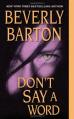
Books by
Beverly Barton


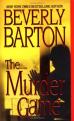
THE MURDER GAME

THE DYING GAME

MOST LIKELY TO DIE
with Lisa Jackson and Wendy Corsi Staub

Beverly Barton Feature

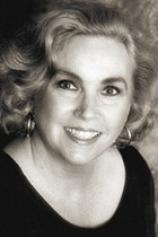
Beverly Barton

BIO

New York Times bestselling author Beverly Barton has written over 50 contemporary romance novels and created the popular The Protectors series for Silhouette’s Intimate Moments line. This sixth-generation Alabamian is a two-time Maggie Award winner, a two-time National Reader’s Choice Award winner, and a recipient of a Romantic Times Career Achievement Award for Series Romantic Adventure. Readers can visit her website at BeverlyBarton.com.

Back to top.   


INTERVIEW

February 8, 2008

In this interview with Bookreporter.com's Maggie Harding, Beverly Barton --- the award-winning author of over 60 books, including CLOSE ENOUGH TO KILL, THE DYING GAME and the newly released THE MURDER GAME --- explains how she is able to maintain a balance between the romantic and thriller elements in her writing, and describes the research she performs in order to accurately portray her characters' actions from a psychological standpoint. She also discusses how she handles the challenges of having a career that thrives under solitude and shares what she has in store for her recurring characters in future works.

Bookreporter.com: What was your inspiration for THE MURDER GAME?

Beverly Barton: The inspiration for the romance in the book came from the sexual tension between Nic and Griff while they were bitter adversaries in THE DYING GAME. It was one of those things that just happened. It wasn’t planned.

Also, part of the suspense/serial killer inspiration/idea for this book began in the prequel, THE DYING GAME. I knew that Pudge would want to “play” again, so from that point, it was only a matter of deciding what type of new game he would devise. Since I wanted the new game to be a very personal issue for Griffin Powell, I needed a game that would relate in some way to what had happened to him during those 10 missing years of his life. One thought led to another and then another, and the plot formed.

Writers are asked, probably more than any other question, where you get your ideas/inspiration. That is such a difficult question to answer because we usually can’t pinpoint the exact source. My mind is a convoluted storage bin of knowledge/information gathered during a lifetime, so ideas/inspiration come from everywhere and from everything.

BRC: You detail each kidnapping that leads up to the Hunter's ultimate challenge. Was that meant to underline the killer's depravity or to build suspense?

BB: Both. A “normal” person can never truly understand the mind of a depraved killer, but in a murder/suspense story, the reader needs to see into the mind of this type of person to fully grasp how mentally sick the killer is and how this type of person can justify his/her actions. With each kidnapping and murder, a writer gradually builds the suspense, making the reader wonder what is going to happen next.

BRC: The back story involving the attraction between Griff and Nic has all the elements of a stand-alone romance. How do you balance writing the romance and the suspense plotlines in your books?

BB: As most of my readers know, I began my career writing romance and there’s nothing I like better than a good love story. Writing about relationships comes as easily to me as breathing. And ever since I read my first Ellery Queen novel when I was a teenager, I’ve been intrigued by mystery/suspense novels. Blending romance with suspense is a balancing act, the precise combination --- how much of each --- is dictated by the story/plot itself and by the characters, and varies from book to book. You don’t want one to overshadow the other because you want to satisfy your romance readers and your suspense readers without shortchanging either. I plot the mystery before I write the book, and then I let my natural writer’s instincts take over while I’m writing. I go into the “zone” and simply write.

BRC: There must be quite a bit of psychological development that goes into creating a character like Pudge. Have you studied forensic psychology, or do you compile various deviant traits to craft such a vicious villain?

BB: Over the years, I have collected a small private library of books and magazines on various subjects, and I’m always adding new material. I have numerous books on serial killers, mostly written by law enforcement officers such as former FBI profilers and agents/officers who have firsthand knowledge of this type of killer. I’ve spoken to and corresponded with FBI agents, police officers, sheriffs and their deputies, highway patrol officers, district attorneys, etc., and have found their assistance invaluable. Our local RWA chapter has brought in a variety of speakers, from a SWAT team to psychologists specializing in human behavior, and I’ve learned a great deal from them. But when I am creating a killer, I try to make him/her unique, not simply a carbon copy of a true-life killer.

BRC: Pinky and Pudge as serial killers? The nicknames took me by surprise. Any significance to them?

BB: As readers know, Pinky and Pudge were distant cousins, both “odd ducks” from childhood. In THE DYING GAME, when each of them was introduced, I made some vague references to the fact that Pinky had fat rosy cheeks, which is how he got the nickname. The same is true of Pudge --- he was an overweight, “pudgy” child. Pinky and Pudge refer to each other throughout the book by these boyhood nicknames, showing readers the depth of their affection for one another. And yes, I deliberately chose cute, even endearing nicknames for these two diabolical killers. Never judge a book by its cover or a person by his/her name.

BRC: No matter how much we like the main characters, we often get frustrated with their difficulty to communicate honestly with one another. For example, Nicole seems to go to extremes to be rude to Griff. How do you decide when to let her lighten up?

BB: Human relationships are complex, and we are hostile to another person for various reasons. Often, we assume we know a person and misjudge them. Nic and Griff did just that. Nic was a woman who, because of her chauvinistic father, felt she had to prove she was tough and strong and as good as any man. Also, she was dealing with her guilt over her husband’s death. The last thing she wanted was to become emotionally involved with a strong, macho guy she thought was a lot like her father. She used hostility to protect herself from Griff. She begins to “lighten up” gradually as she gets to know Griff on a personal level and realizes she has misjudged him.

BRC: You’ve managed to capture the essence of so many different types of people in THE MURDER GAME. How do you switch your thinking from the loyal Sanders to the twisted killer?

BB: I’ve actually never thought about how I do it. But just think about how many people you encounter on an average day. How you act and react with each one is different. You can go from screaming at your children to answering the phone with a pleasant voice, all in the span of seconds. In that same way, I go from writing about a depraved killer to writing about a loyal, trusted friend by simply switching gears. Being able to do this may be because, as a writer, I have a host of characters inside my head all the time, each vying for attention.

BRC: Speaking of Sanders, he is such a great friend and assistant to Griff. Do you have any plans for him and Barbara to have bigger roles in a future book?

BB: I don’t have any exact plans, but I hope to include Griff and Nic, as well as Sanders and Barbara Jean, in future books. I’d like the opportunity to delve deeper into Sanders’s life and also into Dr. Yvette Meng’s life. Who knows, maybe one day each will have his/her own book.

BRC: Even your minor characters are memorable and elicit emotions from the reader. What are some of the techniques you use to develop them? Do you ever allow the characters to pull the story in unexpected directions?

BB: I really don’t have any special technique to develop my secondary characters. Just as my main characters are very real to me, so are my minor characters and I find all of them utterly fascinating. The story dictates the characters, who they are, what their purpose is in the book, etc. I get to know them as I’m writing about them, and oddly enough, they reveal unexpected things about themselves to me. I want my readers to know them as I do. As for characters pulling me in unexpected directions --- it happens in every book.

BRC: Do you think that every violent, deviant person has some compelling psychological reason behind their behavior, or are some people just plain evil?

BB: I’m not an expert by any means, but I believe that many killers do have compelling psychological problems caused either by some genetic malfunction or from horrific childhood experiences. But I also believe that it is possible some people are innately amoral, totally without a conscience.

BRC: How would you describe your writing style? Can you think of anyone that directly influenced or inspired it?

BB: My writing style: fast-paced, lean, character-driven.

Anyone who inspired it: Probably every writer that I’ve read whose style appealed to me.

BRC: Writers often refer to loneliness that they experience while writing. Since you often write more than one book a year, how do you deal with that aspect of your career?

BB: I believe that the loneliness we experience as writers is essential. We have to live, at least part of the time, in the world we’re creating, and that means cutting ourselves off from others. We work in solitary confinement day after day. What keeps us sane are the same things that nurture and comfort every human being --- family and friends. I make time for my family and my friends. Two of my best friends are writers, and we email one another daily. We share our ups and downs, our problems, our frustrations, our triumphs. We talk about writing, our husbands, our children, our grandchildren, our pets, our diets, our health, shopping, etc.

BRC: What can we expect in your next book? Can we look forward to more of Griff in future novels?

BB: My next novel for Kensington’s Zebra imprint is COLD HEARTED, due out in September this year. My hero, Rick Carson, is an agent for Griffin Powell’s private security and investigation agency. Rick is hired by the wealthy, influential Price family of Georgia to investigate the death of Senator Daniel Price. The police ruled the senator’s death a suicide, but his brother believes it was homicide. As Rick searches for the truth, he unearths startling information that leads him and the authorities to suspect that the late senator’s wife, Jordan, could be a Black Widow. Complicating matters is Rick’s sexual attraction to the lovely, vulnerable widow.

Yes, I hope to include Griff and Nic in future books, probably as secondary characters. They make several appearances in COLD HEARTED.

Click here now to buy this book from Amazon.

Back to top.   


INTERVIEW

April 13, 2007

Bestselling author Beverly Barton has written over 60 books, including CLOSE ENOUGH TO KILL, KILLING HER SOFTLY and THE LAST TO DIE. In this interview with Bookreporter.com's Hillary Wagy, Barton discusses how she became inspired to write her latest novel, THE DYING GAME, and explains the motivations and inner workings behind its main characters, Judd Walker and Lindsay McAllister. She also talks about the difficulty she experiences when writing violent scenes, shares her thoughts on one of the key elements of the romance novel and reveals what she has in store for two secondary characters in a future work.

Bookreporter.com: What gave you the idea for THE DYING GAME?

Beverly Barton: When I wrote KILLING HER SOFTLY, I introduced a secondary character, Judd Walker, who was engaged to a former Miss Tennessee. When I decided to write a book about Judd, the idea just hit me from out of the blue that his bride should be the victim of a serial killer. The fact that she was a former beauty queen sparked the idea that all the victims were former beauty queens. It's like a domino effect; one idea hits another and then another and another. Maybe it's a domino effect in reverse because instead of destroying, I was creating.

BRC: The murder scenes are gruesome and graphic. Were these scenes created from your imagination, or were they based on actual murder cases investigated by the FBI?

BB: Whenever I write a scene, it is from my imagination, but it's always affected by my research on any given subject, so that sometimes I don't know for sure where actual facts leave off and my imagination begins --- or vice/versa.

BRC: There is a prevalent dichotomy between the graphic murder scenes and the steamy romantic scenes. How do you mentally shift from writing the twisted thoughts of the murderer and the gruesome sights he left behind to writing tender moments between the lovers?

BB: I don't write a murder scene and a love scene the same day. Love scenes come to me as naturally as breathing and that's one of the reasons I've been writing romance for most of my career. The graphic murder scenes take a huge toll on me, mentally and emotionally. I'm a very emotional person, thus a very emotional writer. I "feel" my characters' emotions, so when I go into a dark, frightening, often sadistic person's mind, I don't come out untouched by the darkness. After writing that type of scene, I walk away from the computer and do something "happy" that brings me back to reality, back into the light.

BRC: While reading THE DYING GAME, I found myself more aware of my surroundings and less trusting in certain situations. Did you intentionally portray the female victims as trusting to warn women that we too can be victims of brutal crimes?

BB: I suppose, subconsciously, I did just that. I try to portray characters in a realistic manner, make them seem like real people and not just characters in a book. Many women, perhaps most women, are far too trusting, and it would be very easy for a criminal to get the upper hand. Most women want to be helpful, caring and obliging, all wonderful traits. My villain studied his victim, figured out the best way to trick her into being alone with him, and then went in for the kill. Unfortunately, this type of killer is not fictitious; these men exist. We women need to learn to be aware without being paranoid.

BRC: Why choose beauty queens as victims? The juxtapositions of beauty and brutality, bombshell and blood, were very gripping.

BB: As I mentioned, Judd Walker's wife being a former beauty queen triggered this idea. The villain was playing a game, each victim a trophy, a prize. Who better to fill that role than a woman who had been singled out for her beauty and talent?

BRC: Each of the brutal murders is shocking, but the first murder we are introduced to hits the reader the hardest. The visual and emotional trauma of a man holding his beloved wife minus her hands is heartbreaking to read. Was there some special intent in having each victim's gruesome remains found in most cases by their husbands or lovers?

BB: Often in this type of case, the husband does discover the body and becomes a suspect. That's a documented fact. But on a purely emotional level, I wanted readers to see the effect this type of crime has on the man who loved the victim. How does he feel? How does he react? How does this affect his life? So often a suspense/thriller novel is seen through the investigators' eyes --- cold, hard facts. I want readers to see what this type of crime does to a victim's family, as well as the toll it takes on the investigators.

BRC: Fear is a powerful presence in THE DYING GAME. How did you research the elements of fear before dying for the riveting scenes just before each beauty queen is brutally murdered?

BB: I simply put myself into the victim's place and let my emotions take over completely. How would I feel? How would I react? What would I say or do if I were this particular woman? If I were she, would I fight, would I beg, would I pray? As a writer, I must be capable of, to some degree, becoming each of my characters as I write about her or him. Yes, even my villain. It is a strange "empathic" ability that many writers have to emotionally connect with their characters.

BRC: Judd's pain as the widower and his consuming desire for revenge is understandable. He is a broken man, who is an alcoholic, cynical and alone. It was nice to read the character of a woman who takes on the role of knight in shining armor. Was Lindsay patterned after someone you know, or a combination of all the traits that make women strong?

BB: Lindsay was definitely a combination, a composite of strong, dependable and loyal women, steel magnolias who are caretakers to their families and friends. I have been fortunate in my life to be surrounded by such women, those with the capacity to love deeply and unselfishly. These women were not/are not only capable of taking care of themselves, but were/are the glue that holds their families together through good times and bad.

BRC: Judd's character is also strong, despite the unbearable grief that is destroying his soul. A man who admits his shortcomings and asks for help is rare and exemplifies inner strength. Take us through your thought process as you transformed the Judd who is incapable of "human emotions, other than hatred and revenge," to the Judd who faces his demons in an attempt to recapture his life.

BB: Judd was a man who loved with everything in him. A man capable of loving that deeply would be almost destroyed by losing the love of his life. He had to reach rock bottom before he realized he wanted to live again. When Judd emotionally brutalized Lindsay and understood how deeply he had hurt a woman who would do anything to help him, he slowly began to feel emotions other than hatred, anger and revenge.  Faced with the choice of losing Lindsay and the new life she offered him, or sinking deeper into alcoholism and depression, he knew he needed professional help. He had relied on Lindsay, used her, abused her love, and depended upon her to never forsake him. He came to realize that she was his salvation, and if he lost her, he would lose not only his life but also his soul.

BRC: "She was born to love this man and only this man. Now and forever." This is the essence of a romance novel. What is your personal opinion? Is it fantasy to believe this phrase, or is it a plausible reality?

BB: It is both fantasy and plausible reality. It depends on the person. I do believe that for some people, it is true. They may love many people during their lifetime, but there is only one true love for them. Others can find that rare gift of exceptional physical and emotional love with more than one person. As we love each of our children equally but differently, we can love others that way. First love is new and exciting, and for some of us it lasts a lifetime. For others, first love is only a prelude to a stronger, more enduring love later in life.

BRC: Griff Powell, Judd's loyal best friend and diligent private investigator, also has a mysterious past. Will we learn more about this past in a future novel?

BB: Most definitely. With each book in which Griff appeared as a minor character, he intrigued me more and more. I don't remember at which point I realized he would one day have his own book. Griffin Powell's story is in the works. It picks up where THE DYING GAME leaves off. And everything about those 10 missing years of Griff's life will be revealed.

BRC: FBI agent Nic Baxter and Griff Powell have a current of sexual electricity that sizzles. Will they appear in your next novel? Can you tell us more about this book and when it will be released?

BB: Yes, Griff and Nic will be forced to work together by a diabolical villain who is choosing very special victims to play his "murder game." Only after the villain sends both Nic and Griff messages about several recent murders in various states do they connect the crimes and realize a serial killer is on the loose, a killer who wants them to play along, to match wits with them, to accept that he can outsmart them. The hostility and sexual tension between Griff and Nic will reach an explosive point when the villain chooses Nic as a participant in his evil game. THE MURDER GAME will be released in February 2008.

Click here now to buy this book from Amazon.

© Copyright 1996-2008, Bookreporter.com. All rights reserved.

Back to top.   


Home - Reviews - Features - Authors - Daily Quote - Books to Movies - Book Clubs - Awards - Coming Soon
Search - Contests - Word of Mouth - Bestsellers - New in Paperback - Newsletter - Author Bibliographies - Blog
For Librarians - Submitting a Book - Become a Reviewer - FAQ - Contact Us - About Us - Privacy Policy

© Copyright 1996-2008, Bookreporter.com. All rights reserved.
The Book Report, Inc. • 250 West 57th Street • Suite 1228 • New York, NY • 10107

Bookreporter.comReadingGroupGuides.comAuthorsOnTheWeb.comAuthorYellowPages.com
Teenreads.comKidsreads.comFaithfulReader.com