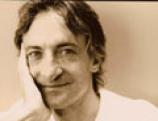
Interview: October 2011


Chris Raschka’s debut work of fiction, SERIOUSLY, NORMAN!, follows Norman and his friends in their wild adventures as they try to figure out why grown-ups are so insane.
In this interview, conducted by Kidsreads.com’s Usha Rao, Raschka describes his writing process, including the way he uses random searches through a dictionary to find inspiration. He also sheds light on the character of Balthazar, shares anecdotes from his own childhood, and gives us a sneak peak at the new novel he currently has in the works.
Kidsreads.com: Selling bombers to shady countries seems to be an unusual job choice for the hapless and rather dim-witted Orman Normann. What made you decide that Norman's father would be a weapons dealer?
Chris Raschka: Part of the way I wrote SERIOUSLY, NORMAN! had to do with chance. For instance, many of the dictionary items, including bomb and bomber, were hit upon by chance; that is, I cracked a huge dictionary open randomly in the Bs and put down my finger. Once hit, I had to try to work these words into the story. In this case, I made Orman a used bomber salesman, because I thought that might be funny and not quite as scary as being a new bomber salesman and it was a little bit absurd, and anything absurd, I like. Of course, it is a fine line between funny absurd, that still has some truth to it, and silly absurd that is too over the edge. I do try to stay on the right side of that line. (Actually, there is quite a bit of absurdity in our everyday world, so you can go pretty far without crossing it.)
KRC: Balthazar Birdsong is rather mysterious. Can you tell us more about his background?
CR: Yes; he is a free spirit, a scholar, an enthusiast. He might be working on a book. He might be independently wealthy. I don't know if he is romantically attached. Perhaps he once was. I'm not sure. At present, we know about as much as Norman knows of him, just as we don't know everything about our teachers --- sometimes guessing about whether they are married, straight or gay, single, or whether they or not they have children. We're never entirely sure until we see them out to dinner with someone and even then we aren't completely sure.
KRC: Does Balthazar like children? Does he genuinely enjoy being Norman's tutor?
CR: Yes, he likes children very much. That is, he likes interesting, thoughtful, funny, open, pragmatic, unbiased, engaging children just as much as he likes adults who fall in those categories. And children as a group are often more interesting, thoughtful, funny, open, pragmatic, unbiased and engaging than are adults. Balthazar certainly likes Norman, Leonard, Anna and Emma enormously because he would seek them out for the same reasons he seeks out his adult friends. They're fun and he likes them.
KRC: Why are the children so drawn to Balthazar? Why is he of such interest to them?
CR: Balthazar, because he does not follow the normal rules of adult behavior, is at first disturbing, and then appealing. As the children discover, he genuinely likes them and wants them to learn. He is also unpredictable, which the four ever-adventuresome friends appreciate. Balthazar likes to try to get the children to see their own worlds in quite a new way, believing that there is magic in the everyday. Your neighbor, a leaf, clouds, all generally taken for granted, can be endlessly fascinating when looked at the right way.
KRC: Balthazar has pets named Watson and Crick, which reference famous scientists. Are you interested in science?
CR: Watson and Crick are the discoverers of the DNA helix among other things. Part of my college background is in science, specifically biology, so I will always be interested in all things science. You will never be bored if you can get your hands on the New York Times Tuesday Science Section now and then.
KRC: Balthazar assigns Norman the task of reading the dictionary, letter by letter. Did you ever try to read your way through a dictionary as a kid?
CR: Never. Actually, I had a draconian fourth grade teacher who made us look up 50 words at a time and write out the definitions. This, I hated. The stress of it literally made me sick. But just to dip into the dictionary as a book of discovery on your own can be extremely fun. Individual words become quite beautiful and fascinating --- like "purple" or "sorrow" or "spoon".
KRC: What was your childhood like? Did you enjoy the freedom to explore that Balthazar urges on the children, such as traveling alone in the city?
CR: I did explore quite a bit. I grew up on the outskirts of Chicago, and my best friend Keith and I spent days poking around concrete slag heaps and drainage ditches. We even explored with boots and flashlights the extensive storm sewers built under an enormous shopping center that went up about a mile from our homes.
My mother is from Vienna, so I often visited our family there in the summers, traveling through other parts of Europe as well. By the time I was 13, one of my favorite things to do was to sit on any city park bench by myself and watch the world pass me. I distinctly remember looking out over a balcony in Geneva, Switzerland and thinking that I could be quite happy as a grown-up with nearly any job so long as I could live in a place I loved.
Now I live in New York City, which feels a bit like Chicago and a bit like Vienna, and I love it very much.
KRC: Did you build the story around Balthazar, Norman or any of the other characters? Was there a character who helped you to develop the plot?
CR: Initially, I built the story around Norman and Balthazar. But then in my second and third and fourth drafts, I began to shift the story so that it was propelled by Norman's relationship with his father, Orman. Now, it is primarily the elaboration of the relationship between Norman and Orman that drives the story, with Balthazar as intuitive assistant and guide in Norman's quest.
KRC: You're clearly interested in word play. Which authors do you most enjoy reading?
CR: I love writers who can tell a story clearly and wittily. PG Wodehouse will probably never be surpassed in this, putting one sentence behind another to make you laugh every time you read it. Wodehouse is an adult writer but you could certainly enjoy reading him by the time you are 12 or 13, I think.
At times he can be hard to follow, as his stories are set in historical eras of England, New York and Hollywood, but actually his characters exist in a world that never really was anyway, so if you just let yourself sink in, it is blissful. Now I'm reading Kingsley Amis, who writes about teachers and marriage and who can be very, very funny as well.
KRC: Can you tell our readers about what you are working on now?
CR: I'm writing another novel. It’s about a 12-year-old girl who lives in a big apartment building in New York City. She is an only child and happily independent of her loving but very busy parents. The story begins at the start of the summer vacation when her cat, Muffin, slips out their front door, disappears down the hall and winds up in a very mysterious apartment all the way at the end of the hall on the floor below.