
Excerpt


Excerpt
The River King
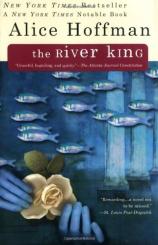




The Haddan School was built in 1858 on the sloping banks of the Haddan River, a muddy and precarious location that had proven disastrous from the start. That very first year, when the whole town smelled of cedar shavings, there was a storm of enormous proportions, with winds so strong that dozens of fish were drawn up from the reedy shallows, then lifted above the village in a shining cloud of scales. Torrents of water fell from the sky, and by morning the river had overflowed, leaving the school's freshly painted white clapboard buildings adrift in a murky sea of duckweed and algae.
For weeks, students were ferried to classes in rowboats; catfish swam through flooded perennial gardens, observing the disaster with cool, glassy eyes. Every evening, at twilight, the school cook balanced on a second-story window ledge, then cast out his rod to catch dozens of silver trout, a species found only in the currents of the Haddan River, a sweet, fleshy variety that was especially delectable when fried with shallots and oil. After the flood subsided, two inches of thick, black silt covered the carpets in the dormitories; at the headmaster's house, mosquitoes began to hatch in sinks and commodes. The delightful watery vistas of the site, a landscape abundant with willows and water lotus, had seduced the foolish trustees into building much too close to the river, an architectural mistake that has never been rectified. To this day, frogs can be found in the plumbing; linens and clothes stored in closets have a distinctly weedy odor, as if each article had been washed in river water and never thoroughly dried.
After the flood, houses in town had to be refloored and re-roofed; public buildings were torn down, then refashioned from cellar to ceiling. Whole chimneys floated down Main Street, with some of them still issuing forth smoke. Main Street itself had become a river, with waters more than six feet deep. Iron fences were loosened and ripped from the earth, leaving metal posts in the shape of arrows adrift. Horses drowned; mules floated for miles and when rescued, refused to eat anything but wild celery and duckweed. Poison sumac was uprooted and deposited in vegetable bins, only to be mistakenly cooked along with the carrots and cabbages, a recipe that led to several untimely deaths. Bobcats showed up on back porches, mewing and desperate for milk; several were found beside babies in their cradles, sucking from bottles and purring as though they were house cats let in through front doors.
At that time, the rich fields circling the town of Haddan were owned by prosperous farmers who cultivated asparagus and onions and a peculiar type of yellow cabbage known for its large size and delicate fragrance. These farmers put aside their plows and watched as boys arrived from every corner of the Commonwealth and beyond to take up residence at the school, but even the wealthiest among them were unable to afford tuition for their own sons. Local boys had to make do with the dusty stacks at the library on Main Street and whatever fundamentals they might learn in their very own parlors and fields. To this day, people in Haddan retain a rustic knowledge of which they are proud. Even the children can foretell the weather; they can point to and name every constellation in the sky.
A dozen years after the Haddan School was built, a public high school was erected in the neighboring town of Hamilton, which meant a five-mile trek to classes on days when the snow was knee-deep and the weather so cold even the badgers kept to their dens. Each time a Haddan boy walked through a storm to the public school his animosity toward the Haddan School grew, a small bump on the skin of ill will ready to rupture at the slightest contact. In this way a hard bitterness was forged, and the spiteful sentiment increased every year, until there might as well have been a fence dividing those who came from the school and the residents of the village. Before long, anyone who dared to cross that line was judged to be either a martyr or a fool.
There was a time when it seemed possible for the separate worlds to be united, when Dr. George Howe, the esteemed headmaster, considered to be the finest in the Haddan School history, decided to marry Annie Jordan, the most beautiful girl in the village. Annie's father was a well-respected man who owned a parcel of farmland out where Route 17 now runs into the interstate, and he approved of the marriage, but soon after the wedding it became apparent that Haddan would remain divided. Dr. Howe was jealous and vindictive; he turned local people away from his door. Even Annie's family was quickly dispatched. Her father and brothers, good, simple men with mud on their boots, were struck mute the few times they came to call, as if the bone china and leather-bound books had robbed them of their tongues. Before long people in town came to resent Annie, as if she'd somehow betrayed them. If she thought she was so high and mighty, in that fine house by the river, then the girls she grew up with felt they had reason to retaliate, and on the streets they passed her by without a word. Even her own dog, a lazy hound named Sugar, ran away yelping on those rare occasions when Annie came to visit her father's farm.
It quickly became clear that the marriage had been a horrid mistake; anyone more worldly than Annie would have known this from the start. At his very own wedding, Dr. Howe had forgotten his hat, always the sign of a man who's bound to stray. He was the sort of person who wished to own his wife, without belonging to her in return. There were days when he spoke barely a sentence in his own home, and nights when he didn't come in until dawn. It was loneliness that led Annie to begin her work in the gardens at Haddan, which until her arrival were neglected, ruined patches filled with ivy and nightshade, dark vines that choked out any wildflowers that might have grown in the thin soil. As it turned out, Annie's loneliness was the school's good fortune, for it was she who designed the brick walkways that form an hourglass and who, with the help of six strong boys, saw to the planting of the weeping beeches beneath whose branches many girls still receive their first kiss. Annie brought the original pair of swans to reside at the bend in the river behind the headmaster's house, ill-tempered, wretched specimens rescued from a farmer in Hamilton whose wife plucked their bloody feathers for soft, plump quilts. Each evening, before supper, when the light above the river washed the air with a green haze, Annie went out with an apronful of old bread. She held the firm belief that scattering bread crumbs brought happiness, a condition she herself had not known since her wedding day.
There are those who vow that swans are unlucky, and fishermen in particular despise them, but Annie loved her pets; she could call them to her with a single cry. At the sound of her sweet voice the birds lined up as politely as gentlemen; they ate from her hands without ever once drawing blood, favoring crusts of rye bread and whole-wheat crackers. As a special treat, Annie often brought whole pies, leftovers from the dining room. In a wicker basket, she piled up apple cobbler and wild raspberry tart, which the swans gobbled down nearly whole, so that their beaks were stained crimson and their bellies took on the shapes of medicine balls.
Even those who were certain Dr. Howe had made a serious error in judgment in choosing his bride had to admire Annie's gardens. In no time the perennial borders were thick with rosy-pink foxglove and cream-colored lilies, each of which hung like a pendant, collecting dew on its satiny petals. But it was with her roses that Annie had the best luck of all, and among the more jealous members of the Haddan garden club, founded that very year in an attempt to beautify the town, there was speculation that such good fortune was unnatural. Some people went so far as to suggest that Annie Howe sprinkled the pulverized bones of cats around the roots of her ramblers, or perhaps it was her own blood she cast about the shrubs. How else could her garden bloom in February, when all other yards were nothing more than stonewort and bare dirt? Massachusetts was known for a short growing season and its early killing frosts. Nowhere could a gardener find more unpredictable weather, be it droughts or floods or infestations of beetles, which had been known to devour entire neighborhoods full of greenery. None of these plagues ever affected Annie Howe. Under her care, even the most delicate hybrids lasted past the first frost so that in November there were still roses blooming at Haddan, although by then, the edge of each petal was often encased in a layer of ice.
Much of Annie Howe's handiwork was destroyed the year she died, yet a few samples of the hardiest varieties remain. A visitor to campus can find sweet, aromatic Prosperity, as well as Climbing Ophelia and those delicious Egyptian Roses, which give off the scent of cloves on rainy days, ensuring that a gardener's hands will smell sweet for hours after pruning the canes. Among all of these roses, Mrs. Howe's prized white Polars were surely her finest. Cascades of white flowers lay dormant for a decade, to bloom and envelop the metal trellis beside the girls' dormitory only once every ten years, as if all that time was needed to restore the roses their strength. Each September, when the new students arrived, Annie Howe's roses had an odd effect on certain girls, the sensitive ones who had never been away from home before and were easily influenced. When such girls walked past the brittle canes in the gardens behind St. Anne's, they felt something cold at the base of their spines, a bad case of pins and needles, as though someone were issuing a warning: Be careful who you choose to love and who loves you in return.
Most newcomers are apprised of Annie's fate as soon as they come to Haddan. Before suitcases are unpacked and classes are chosen, they know that although the huge wedding cake of a house that serves as the girls' dormitory is officially called Hastings House-in honor of some fellow, long forgotten, whose dull-witted daughter's admission opened the door for female students on the strength of a huge donation-the dormitory is never referred to by that name. Among students, the house is called St. Anne's, in honor of Annie Howe, who hanged herself from the rafters one mild evening in March, only hours before wild iris began to appear in the woods. There will always be girls who refuse to go up to the attic at St. Anne's after hearing this story, and others, whether in search of spiritual renewal or quick thrills, who are bound to ask if they can take up residence in the room where Annie ended her life. On days when rosewater preserves are served at breakfast, with Annie's recipe carefully followed by the kitchen staff, even the most fearless girls can become light-headed; after spooning this concoction onto their toast they need to sit with their heads between their knees and breathe deeply until their metabolisms grow steady again.
At the start of the term, when members of the faculty return to school, they are reminded not to grade on a curve and not to repeat Annie's story. It is exactly such nonsense that gives rise to inflated grade averages and nervous breakdowns, neither of which are approved of by the Haddan School. Nevertheless, the story always slips out, and there's nothing the administration can do to stop it. The particulars of Annie's life are simply common knowledge among the students, as much an established part of Haddan life as the route of the warblers who always begin their migration at this time of year, lighting on shrubbery and treetops, calling to one another across the open sky.
Often, the weather is unseasonably warm at the start of the term, one last triumph of summer come to call. Roses bloom more abundantly, crickets chirp wildly, flies doze on windowsills, drowsy with sunlight and heat. Even the most serious-minded educators are known to fall asleep when Dr. Jones gives his welcoming speech. This year, many in attendance drifted off in the overheated library during this oration and several teachers secretly wished that the students would never arrive. Outside, the September air was enticingly fragrant, yellow with pollen and rich, lemony sunlight. Along the river, near the canoe shed, weeping willows rustled and dropped catkins on the muddy ground. The clear sound of slow-moving water could be heard even here in the library, perhaps because the building itself had been fashioned out of river rock, gray slabs flecked with mica that had been hauled from the banks by local boys hired for a dollar a day, laborers whose hands bled from their efforts and who cursed the Haddan School forever after, even in their sleep.
As usual, people were far more curious about those who'd been recently hired than those old, reliable colleagues they already knew. In every small community, the unknown is always most intriguing, and Haddan was no exception to this rule. Most people had been to dinner with Bob Thomas, the massive dean of students, and his pretty wife, Meg, more times than they could count; they had sat at the bar at the Haddan Inn with Duck Johnson, who coached crew and soccer and always became tearful after his third beer. The on-again, off-again romance between Lynn Vining, who taught painting, and Jack Short, the married chemistry teacher, had already been discussed and dissected. Their relationship was completely predictable, as were many of the love affairs begun at Haddan-fumbling in the teachers' lounge, furtive embraces in idling cars, kisses exchanged in the library, breakups at the end of the term. Feuds were far more interesting, as in the case of Eric Herman-ancient history-and Helen Davis-American history and chair of the department, a woman who'd been teaching at Haddan for more than fifty years and was said to grow meaner with each passing day, as if she were a pitcher of milk set out to curdle in the noonday sun.
Despite the heat and Dr. Jones's dull lecture, the same speech he trotted out every year, despite the droning of bees beyond the open windows, where a hedge of twiggy China roses still grew, people took notice of the new photography instructor, Betsy Chase. It was possible to tell at a glance that Betsy would be the subject of even more gossip than any ongoing feud. It wasn't only Betsy's fevered expression that drew stares, or her high cheekbones and dark, unpredictable hair. People couldn't quite believe how inappropriate her attire was. There she was, a good-looking woman who apparently had no common sense, wearing old black slacks and a faded black T-shirt, the sort of grungy outfit barely tolerated on Haddan students, let alone on members of the faculty. On her feet were plastic flip-flops of the dime-store variety, cheap little items that announced every step with a slap. She actually had a wad of gum in her mouth, and soon enough blew a bubble when she thought no one was looking; even those in the last row of the library could hear the sugary pop. Dennis Hardy, geometry, who sat directly behind her, told people afterward that Betsy gave off the scent of vanilla, a tincture she used to dispel the odor of darkroom chemicals from her skin, a concoction so reminiscent of baked goods that people who met her often had an urge for oatmeal cookies or angel food cake.
It had been only eight months since Betsy had been hired to take the yearbook photos. She had disliked the school at first sight, and had written it off as too prissy, too picture perfect. When Eric Herman asked her out she'd been surprised by the offer, and wary as well. She'd already had more than her share of botched relationships, yet she'd agreed to have dinner with Eric, ever hopeful despite the statistics that promised her an abject and lonely old age. Eric was so much sturdier than the men she was used to, all those brooders and artists who couldn't be depended upon to show up at the door on time let alone have the foresight to plan a retirement fund. Before Betsy knew what had happened she was accepting an offer of marriage and applying for a job in the art department. The Willow Room at the Haddan Inn was already reserved for their reception in June, and Bob Thomas, the dean of students, had guaranteed them one of the coveted faculty cottages as soon as they were wed. Until that time, Betsy would be a houseparent at St. Anne's and Eric would continue on as senior proctor at Chalk House, a boys' dormitory set so close to the river that the dreadful Haddan swans often nested on the back porch, nipping at passersby's pant legs until chased away with a broom.
For the past month, Betsy had been simultaneously planning both her classes at Haddan and her wedding. Perfectly rational activities, and yet she often felt certain she had blundered into an alternate universe, one to which she clearly did not belong. Today, for instance, the other women present in the auditorium were all in dresses, the men in summer suits and ties, and there was Betsy in her T-shirt and slacks, making what was sure to be the first of an endless series of social miscalculations. She had bad judgment, there was no way around it; from childhood on, she had jumped into things headfirst, without looking to see if there was a net to break her fall. Of course, no one had bothered to inform her that Dr. Jones's addresses were such formal events; everyone said he was ancient and ailing and that Bob Thomas was the real man in charge. Hoping to erase her fashion blunder, Betsy now searched through her backpack for some lipstick and a pair of earrings, for all the good they would do.
Taking up residence in a small town had indeed left Betsy disoriented. She was used to city living, to potholes and purse snatchers, parking tickets and double locks. Whether it be morning, noon, or night, she simply couldn't get her bearings here in Haddan. She'd set out for the pharmacy on Main Street or to Selena's Sandwich Shoppe on the corner of Pine and arrive at the town cemetery in the field behind town hall. She'd start for the market, in search of a loaf of bread or some muffins, only to find that she'd strayed onto the twisting back roads leading to Sixth Commandment Pond, a deep pool at a bend in the river where horsetails and wild celery grew. Once she'd wandered off, it would often be hours before she managed to find her way back to St. Anne's. People in town had already become accustomed to a pretty, dark woman wandering about, asking for directions from schoolchildren and crossing guards, and yet still managing to take one wrong turn after another.
Although Betsy Chase was confused, the town of Haddan hadn't changed much in the last fifty years. The village itself was three blocks long, and, for some residents, contained the whole world. Along with Selena's Sandwich Shoppe, which served breakfast all day, there was a pharmacy at whose soda fountain the best raspberry lime rickeys in the Commonwealth could be had, as well as a hardware store that offered everything from nails to velveteen. One could also find a shoe store, the 5&10 Cent Bank, and the Lucky Day Florist, known for its scented garlands and wreaths. There was St. Agatha's, with its granite facade, and the public library, with its stained-glass windows, the first to be built in the county. Town hall, which had burned down twice, had finally been rebuilt with mortar and stone, and was said to be indestructible, although the statue of the eagle out front was tipped from its pedestal by local boys year after year.
All along Main Street, there were large white houses, set back from the road, whose wide lawns were ringed with black iron fences punctuated by little spikes on top; pretty, architectural warnings that made it quite clear the grass and rhododendrons within were private property. On the approach to town, the white houses grew larger, as though a set of stacking toys had been fashioned from clapboards and brick. On the far side of town was the train station, and opposite stood a gas station and mini-mart, along with the dry cleaner's and a new supermarket. In fact, the town was sliced in two, separated by Main into an east and a west side. Those who lived on the east side resided in the white houses; those who worked at the counter at Selena's or ran the ticket booth at the train station lived in the western part of town.
Beyond Main Street the village became sparser, fanning out into new housing developments and then into farmland. On Evergreen Avenue was the elementary school, and if a person followed Evergreen due east, in the direction of Route 17, he'd come to the police station. Farther north, at the town line that separated Haddan from Hamilton, deposited in a no-man's-land neither village cared to claim, was a bar called the Millstone, which offered live bands on Friday nights along with five brands of beer on tap and heated arguments in the parking lot on humid summer nights. There had probably been half a dozen divorces that had reached a fevered pitch in that very parking lot and so many alcohol-induced fights had taken place in those confines that if anyone bothered to search through the laurel bordering the asphalt he'd surely find handfuls of teeth that were said to give the laurel its odd milky color, ivory with a pale pink edge, with each blossom forming the shape of a bitter man's mouth.
Beyond town, there were still acres of fields and a crisscross of dirt roads where Betsy had gotten lost one afternoon before the start of the term, late in the day, when the sky was cobalt and the air was sweet with the scent of hay. She'd been searching for a vegetable stand Lynn Vining in the art department had told her sold the best cabbages and potatoes, when she happened upon a huge meadow, all blue with everlasting and tansy. Betsy had gotten out of the car with tears in her eyes. She was only three miles from Route 17, but she might as well have been on the moon. She was lost and she knew it, with no sense whatsoever of how she had managed to wind up in Haddan, engaged to a man she barely knew.
She might have been lost to this day if she hadn't thought to follow a newspaper delivery truck into the neighboring town of Hamilton, a true metropolis compared to Haddan, with a hospital and a high school and even a multiplex cinema. From Hamilton, Betsy drove south to the highway, then circled back to the village via Route 17. Still, for some time afterward, she'd been unable to forget how lost she'd become. Even when she was beside Eric in bed all she had to do was close her eyes and she'd continue to see those wildflowers in the meadow, each and every one the exact color of the sky.
When all was said and done, what was so wrong with Haddan? It was a lovely town, featured in several guidebooks, cited for both its excellent trout fishing and the exceptional show of fall colors that graced the landscape every October. If Betsy continually lost her way on the streets of such a neat, orderly village, perhaps it was the pale green light rising from the river each evening that led her astray. Betsy had taken to carrying a map and a flashlight in her pocket, hopefully ready for any emergency. She made certain to keep to the well-worn paths, where the old roses grew, but even the rosebushes were disturbing when they were encountered in the dark. The twisted black vines were concealed in the black night, thorns hidden deep within the dried canes until a passerby had already come close enough to cut herself unwittingly.
Excerpted from THE RIVER KING by Alice Hoffman (c) Copyright 2000. Reprinted with permission from the publisher, Penguin Putnam. All rights reserved.


The River King
- Genres: Fiction, Literary Fiction
- paperback: 352 pages
- Publisher: Berkley Trade
- ISBN-10: 0425179672
- ISBN-13: 9780425179673


