
Excerpt


Excerpt
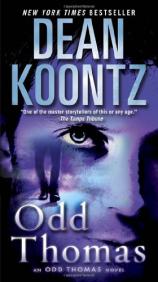
Odd Thomas




ONE
MY NAME IS ODD THOMAS, THOUGH IN THIS AGE WHEN fame is the altar at which most people worship, I am not sure why you should care who I am or that I exist.
I am not a celebrity. I am not the child of a celebrity. I have never been married to, never been abused by, and never provided a kidney for transplantation into any celebrity. Furthermore, I have no desire to be a celebrity.
In fact I am such a nonentity by the standards of our culture that People magazine not only will never feature a piece about me but might also reject my attempts to subscribe to their publication on the grounds that the black-hole gravity of my noncelebrity is powerful enough to suck their entire enterprise into oblivion.
I am twenty years old. To a world-wise adult, I am little more than a child. To any child, however, I'm old enough to be distrusted, to be excluded forever from the magical community of the short and beardless.
Consequently, a demographics expert might conclude that my sole audience is other young men and women currently adrift between their twentieth and twenty-first birthdays.
In truth, I have nothing to say to that narrow audience. In my experience, I don't care about most of the things that other twenty-year-old Americans care about. Except survival, of course.
I lead an unusual life.
By this I do not mean that my life is better than yours. I'm sure that your life is filled with as much happiness, charm, wonder, and abiding fear as anyone could wish. Like me, you are human, after all, and we know what a joy and terror that is.
I mean only that my life is not typical. Peculiar things happen to me that don't happen to other people with regularity, if ever.
For example, I would never have written this memoir if I had not been commanded to do so by a four-hundred-pound man with six fingers on his left hand.
His name is P. Oswald Boone. Everyone calls him Little Ozzie because his father, Big Ozzie, is still alive.
Little Ozzie has a cat named Terrible Chester. He loves that cat. In fact, if Terrible Chester were to use up his ninth life under the wheels of a Peterbilt, I am afraid that Little Ozzie's big heart would not survive the loss.
Personally, I do not have great affection for Terrible Chester because, for one thing, he has on several occasions peed on my shoes.
His reason for doing so, as explained by Ozzie, seems credible, but I am not convinced of his truthfulness. I mean to say that I am suspicious of Terrible Chester's veracity, not Ozzie's.
Besides, I simply cannot fully trust a cat who claims to be fifty-eight years old. Although photographic evidence exists to support this claim, I persist in believing that it's bogus.
For reasons that will become obvious, this manuscript cannot be published during my lifetime, and my effort will not be repaid with royalties while I'm alive. Little Ozzie suggests that I should leave my literary estate to the loving maintenance of Terrible Chester, who, according to him, will outlive all of us.
I will choose another charity. One that has not peed on me.
Anyway, I'm not writing this for money. I am writing it to save my sanity and to discover if I can convince myself that my life has purpose and meaning enough to justify continued existence.
Don't worry: These ramblings will not be insufferably gloomy. P. Oswald Boone has sternly instructed me to keep the tone light.
"If you don't keep it light," Ozzie said, "I'll sit my four-hundred-pound ass on you, and that's not the way you want to die."
Ozzie is bragging. His ass, while grand enough, probably weighs no more than a hundred and fifty pounds. The other two hundred fifty are distributed across the rest of his suffering skeleton.
When at first I proved unable to keep the tone light, Ozzie suggested that I be an unreliable narrator. "It worked for Agatha Christie in The Murder of Roger Ackroyd," he said.
In that first-person mystery novel, the nice-guy narrator turns out to be the murderer of Roger Ackroyd, a fact he conceals from the reader until the end.
Understand, I am not a murderer. I have done nothing evil that I am concealing from you. My unreliability as a narrator has to do largely with the tense of certain verbs.
Don't worry about it. You'll know the truth soon enough.
Anyway, I'm getting ahead of my story. Little Ozzie and Terrible Chester do not enter the picture until after the cow explodes.
This story began on a Tuesday.
For you, that is the day after Monday. For me, it is a day that, like the other six, brims with the potential for mystery, adventure, and terror.
You should not take this to mean that my life is romantic and magical. Too much mystery is merely an annoyance. Too much adventure is exhausting. And a little terror goes a long way.
Without the help of an alarm clock, I woke that Tuesday morning at five, from a dream about dead bowling-alley employees.
I never set the alarm because my internal clock is so reliable. If I wish to wake promptly at five, then before going to bed I tell myself three times that I must be awake sharply at 4:45.
While reliable, my internal alarm clock for some reason runs fifteen minutes slow. I learned this years ago and have adjusted to the problem.
The dream about the dead bowling-alley employees has troubled my sleep once or twice a month for three years. The details are not yet specific enough to act upon. I will have to wait and hope that clarification doesn't come to me too late.
So I woke at five, sat up in bed, and said, "Spare me that I may serve," which is the morning prayer that my Granny Sugars taught me to say when I was little.
Pearl Sugars was my mother's mother. If she had been my father's mother, my name would be Odd Sugars, further complicating my life.
Granny Sugars believed in bargaining with God. She called Him "that old rug merchant."
Before every poker game, she promised God to spread His holy word or to share her good fortune with orphans in return for a few unbeatable hands. Throughout her life, winnings from card games remained a significant source of income.
Being a hard-drinking woman with numerous interests in addition to poker, Granny Sugars didn't always spend as much time spreading God's word as she promised Him that she would. She believed that God expected to be conned more often than not and that He would be a good sport about it.
You can con God and get away with it, Granny said, if you do so with charm and wit. If you live your life with imagination and verve, God will play along just to see what outrageously entertaining thing you'll do next.
He'll also cut you some slack if you're astonishingly stupid in an amusing fashion. Granny claimed that this explains why uncountable millions of breathtakingly stupid people get along just fine in life.
Of course, in the process, you must never do harm to others in any serious way, or you'll cease to amuse Him. Then payment comes due for the promises you didn't keep.
In spite of drinking lumberjacks under the table, regularly winning at poker with stone-hearted psychopaths who didn't like to lose, driving fast cars with utter contempt for the laws of physics (but never while intoxicated), and eating a diet rich in pork fat, Granny Sugars died peacefully in her sleep at the age of seventy-two. They found her with a nearly empty snifter of brandy on the nightstand, a book by her favorite novelist turned to the last page, and a smile on her face.
Judging by all available evidence, Granny and God understood each other pretty well.
Pleased to be alive that Tuesday morning, on the dark side of the dawn, I switched on my nightstand lamp and surveyed the chamber that served as my bedroom, living room, kitchen, and dining room. I never get out of bed until I know who, if anyone, is waiting for me.
If visitors either benign or malevolent had spent part of the night watching me sleep, they had not lingered for a breakfast chat. Sometimes simply getting from bed to bathroom can take the charm out of a new day.
Only Elvis was there, wearing the lei of orchids, smiling, and pointing one finger at me as if it were a cocked gun.
Although I enjoy living above this particular two-car garage, and though I find my quarters cozy, Architectural Digest will not be seeking an exclusive photo layout. If one of their glamour scouts saw my place, he'd probably note, with disdain, that the second word in the magazine's name is not, after all, Indigestion.
The life-size cardboard figure of Elvis, part of a theater-lobby display promoting Blue Hawaii, was where I'd left it. Occasionally, it moves--or is moved--during the night.
I showered with peach-scented soap and peach shampoo, which were given to me by Stormy Llewellyn. Her real first name is Bronwen, but she thinks that makes her sound like an elf.
My real name actually is Odd.
According to my mother, this is an uncorrected birth-certificate error. Sometimes she says they intended to name me Todd. Other times she says it was Dobb, after a Czechoslovakian uncle.
My father insists that they always intended to name me Odd, although he won't tell me why. He notes that I don't have a Czechoslovakian uncle.
My mother vigorously asserts the existence of the uncle, though she refuses to explain why I've never met either him or her sister, Cymry, to whom he is supposedly married.
Although my father acknowledges the existence of Cymry, he is adamant that she has never married. He says that she is a freak, but what he means by this I don't know, for he will say no more.
My mother becomes infuriated at the suggestion that her sister is any kind of freak. She calls Cymry a gift from God but otherwise remains uncommunicative on the subject.
I find it easier to live with the name Odd than to contest it. By the time I was old enough to realize that it was an unusual name, I had grown comfortable with it.
Stormy Llewellyn and I are more than friends. We believe that we are soul mates.
For one thing, we have a card from a carnival fortune-telling machine that says we're destined to be together forever.
We also have matching birthmarks.
Cards and birthmarks aside, I love her intensely. I would throw myself off a high cliff for her if she asked me to jump. I would, of course, need to understand the reasoning behind her request.
Fortunately for me, Stormy is not the kind of person to ask such a thing lightly. She expects nothing of others that she herself would not do. In treacherous currents, she is kept steady by a moral anchor the size of a ship.
She once brooded for an entire day about whether to keep fifty cents that she found in the change-return slot of a pay phone. At last she mailed it to the telephone company.
Returning to the cliff for a moment, I don't mean to imply that I'm afraid of Death. I'm just not ready to go out on a date with him.
Smelling like a peach, as Stormy likes me, not afraid of Death, having eaten a blueberry muffin, saying good-bye to Elvis with the words "Taking care of business" in a lousy imitation of his voice, I set off for work at the Pico Mundo Grille.
Although the dawn had just broken, it had already flash-fried into a hard yellow yolk on the eastern horizon.
The town of Pico Mundo is in that part of southern California where you can never forget that in spite of all the water imported by the state aqueduct system, the true condition of the territory is desert. In March we bake. In August, which this was, we broil.
The ocean lay so far to the west that it was no more real to us than the Sea of Tranquility, that vast dark plain on the face of the moon.
Occasionally, when excavating for a new subdivision of tract homes on the outskirts of town, developers had struck rich veins of seashells in their deeper diggings. Once upon an ancient age, waves lapped these shores.
If you put one of those shells to your ear, you will not hear the surf breaking but only a dry mournful wind, as if the shell has forgotten its origins.
At the foot of the exterior steps that led down from my small apartment, in the early sun, Penny Kallisto waited like a shell on a shore. She wore red sneakers, white shorts, and a sleeveless white blouse.
Ordinarily, Penny had none of that preadolescent despair to which some kids prove so susceptible these days. She was an ebullient twelve-year-old, outgoing and quick to laugh.
This morning, however, she looked solemn. Her blue eyes darkened as does the sea under the passage of a cloud.
I glanced toward the house, fifty feet away, where my landlady, Rosalia Sanchez, would be expecting me at any minute to confirm that she had not disappeared during the night. The sight of herself in a mirror was never sufficient to put her fear to rest.
Without a word, Penny turned away from the stairs. She walked toward the front of the property.
Like a pair of looms, using sunshine and their own silhouettes, two enormous California live oaks wove veils of gold and purple, which they flung across the driveway.
Penny appeared to shimmer and to darkle as she passed through this intricate lace of light and shade. A black mantilla of shadow dimmed the luster of her blond hair, its elaborate pattern changing as she moved.
Afraid of losing her, I hurried down the last of the steps and followed the girl. Mrs. Sanchez would have to wait, and worry.
Penny led me past the house, off the driveway, to a birdbath on the front lawn. Around the base of the pedestal that supported the basin, Rosalia Sanchez had arranged a collection of dozens of the seashells, all shapes and sizes, that had been scooped from the hills of Pico Mundo.
Penny stooped, selected a specimen about the size of an orange, stood once more, and held it out to me.
The architecture resembled that of a conch. The rough exterior was brown and white, the polished interior shone pearly pink.
Cupping her right hand as though she still held the shell, Penny brought it to her ear. She cocked her head to listen, thus indicating what she wanted me to do.
When I put the shell to my ear, I did not hear the sea. Neither did I hear the melancholy desert wind that I mentioned previously.
Excerpted from ODD THOMAS © Copyright 2003 by Dean Koontz. Reprinted with permission by Bantam, a division of Random House, Inc. All rights reserved.


Odd Thomas
- Genres: Fiction, Supernatural Thriller, Suspense, Thriller
- Mass Market Paperback: 480 pages
- Publisher: Bantam
- ISBN-10: 0345533429
- ISBN-13: 9780345533425


