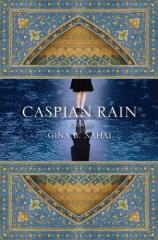
Caspian Rain


Review
Caspian Rain




“What do you do with a loss you can neither cure, nor accept, nor overcome?” asks the narrator toward the end of CASPIAN RAIN, the new novel from Gina B. Nahai. This question comes at the end of the book, even though it weaves through the entire story. The characters are colored by loss; in fact, loss seems to be what defines them. Because there is a sweetness to Nahai's prose, an otherwise gloomy and hopeless tale is lovely and graceful.
One afternoon in Tehran, a schoolgirl who isn’t beautiful but is full of energy catches the eye of an unhappy young man. His engagement has been called off (he was deemed too cold and unemotional by the bride-to-be), and he is looking for a suitable wife. Bahar is from the city's poor Jewish ghetto, and her family is stunningly unsuccessful (a seamstress who cannot sew, a cantor who cannot sing), debased (a sister horribly abused by her husband), shamed (a brother converted to Islam) and haunted (a brother who died in childhood). Omid's family is wealthy and assimilated into Tehran's upper crust, where the distinction between Jews and Muslims fades just a bit. Each family warns against the marriage, but Bahar and Omid, to the consternation and anger of all, wed nevertheless.
From the beginning the marriage is miserable; Omid wants a subservient wife, and Bahar dreams of finishing school to become a teacher. Neither one finds happiness with the other, and the resentment on the part of their families only makes them feel more isolated. Eventually they each find refuge; Omid in an affair with the beautiful and worldly Niyaz, and Bahar in her daughter, Yaas. Omid's very public affair with Niyaz humiliates Bahar, who is also disappointed by Yaas; she had hoped he would be more of a source of pride. Bahar and Omid ignore for years the signs that something is wrong with Yaas, until it becomes too obvious to overlook any longer.
For Bahar, Yaas's increasing deafness brings further shame on her and stirs up emotions her family would rather not deal with. Although Omid is kinder to Yaas than the often cruel Bahar, he is distant and, in truth, loves Niyaz more than his daughter.
In CASPIAN RAIN, the story of this tense family is set against the backdrop of Tehran leading up to the Revolution --- a place of mixed heritage and religion, full of eccentric characters (all, too, faced with the burden of loss), and both ambition and despair. Nahai's vision is mostly a bleak one: women subjugated to husbands or disappointed by lovers, parents ashamed of children, dreams deflated and talents generally wasted. This is all in the context of the Jewish community of Iran, struggling to maintain identity yet often exchanging it to gain power or a sense of security.
Nahai's writing is poetic and original, sometimes stark and sometimes transcendent. Poetic and original also describes this tale, which takes readers into the Jewish community of Tehran through the life of Yaas, who is very much an outsider to Tehran and both of the Jewish families she was born into. It is in the ghosts and oddballs that she finds self-recognition.
In asking what to do with devastating loss, Yaas and her creator Nahai decide to look for the slightest sliver of hope and fashion a good story.
Reviewed by Sarah Rachel Egelman on December 26, 2010


Caspian Rain
- Publication Date: September 14, 2007
- Genres: Fiction
- Hardcover: 290 pages
- Publisher: MacAdam/Cage
- ISBN-10: 1596922516
- ISBN-13: 9781596922518