
More Reviews


To be a bookseller or librarian, you have to play detective. Be a treasure hunter. A matchmaker. An advocate. A visionary. A person who creates “book joy” by pulling a book from a shelf, handing it to someone and saying, “You’ve got to read this. You’re going to love it.” Step inside THE SECRET LIVES OF BOOKSELLERS AND LIBRARIANS and enter a world where you can feed your curiosities, discover new voices, and find whatever you want or require. This place has the magic of rainbows and unicorns, but it's also a business. The book business. Meet the smart and talented people who live between the pages --- and who can’t wait to help you find your next favorite book.

“They’re not going to catch us,” Dan Aykroyd, as Elwood Blues, tells his brother Jake, played by John Belushi. “We’re on a mission from God.” So opens the musical action comedy The Blues Brothers, which hit theaters on June 20, 1980. Much delayed and vastly over budget, beset by mercurial and oft-drugged-out stars, the film opened to outraged reviews. However, in the 44 years since, it has been acknowledged a classic. Based on original research and dozens of interviews probing the memories of principals from director John Landis and producer Bob Weiss to Aykroyd himself, THE BLUES BROTHERS illuminates an American masterpiece while vividly portraying the creative geniuses behind modern comedy.

You’ll be safe here. That’s what the tour guide tells the Farmer-Bowens when they visit Plymouth Valley, a walled-off company town with clean air, pantries that never go empty, and blue-ribbon schools. On a very trial basis, the company offers to hire Linda Farmer’s husband, Russell, a numbers genius, and relocate her whole family to this bucolic paradise for the .0001 percent. Though Linda will have to sacrifice her medical career back home, the family jumps at the opportunity. But fitting in takes work. The pampered locals distrust outsiders, snubbing Linda, Russell and their teen twins. And the residents fervently adhere to a group of customs and beliefs called Hollow. But what exactly is Hollow? The more Linda learns, the more frightened she becomes. Should the Farmer-Bowens be fighting to stay, or fighting to get out?

London, 1924. When shy academic Lao She meets larger-than-life Judge Dee Ren Jie, his quiet life abruptly turns from books and lectures to daring chases and narrow escapes. Dee has come to London to investigate the murder of a man he’d known during World War I when serving with the Chinese Labour Corps. No sooner has Dee interviewed the grieving widow than another dead body turns up. Then another. All stabbed to death with a butterfly sword. Will Dee and Lao be able to connect the threads of the murders --- or are they next in line as victims?
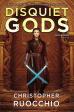
The end is nigh. It has been nearly 200 years since Hadrian Marlowe assaulted the person of the Emperor and walked away from war. From his Empire. His duty. From the will and service of the eldritch being known only as the Quiet. The galaxy lies in the grip of a terrible plague, and worse, the Cielcin have overrun the realms of men. A messenger has come to Jadd, bearing a summons from the Sollan Emperor for the one-time hero. A summons, a pardon and a plea. HAPSIS, the Emperor’s secret first-contact intelligence organization, has located one of the dreadful Watchers, the immense, powerful beings worshipped by the Pale Cielcin. Called out of retirement and exile, the old hero --- accompanied by his daughter, Cassandra --- must race across the galaxy and against time to accomplish one last, impossible task: To kill a god.

After the Underwater Investigation Unit’s disbandment, public outcry ushers Sloan McPherson and her partner, former navy diver Scott Hughes, back into the depths of crime solving. But Sloan’s return comes with a personal case. Longtime family friend Fred Stafford has disappeared. Left behind: his abandoned truck in the vicinity of an unmarked sinkhole and new findings that have Sloan second-guessing everything she thought she knew about the man. There are his gambling debts, his association with a treasure-hunting band of underwater cavern junkies called the Dive Rats, and a discovery in Stafford’s storage shed that raises the stakes even higher and plunges Sloan into an unfathomable mystery. As Sloan’s investigation unfolds, a tragic Florida cold case, local superstitions and a shocking conspiracy collide.
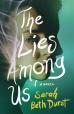
After her mother dies, Hannah doesn’t know how to exist without her. In fact, Hannah isn’t even certain that she does exist. No one seems to see or hear her, and she finds herself utterly alone. Grief-stricken and confused, Hannah sets out to find new purpose in life --- and answers about who (and what) she really is. Hannah’s only remaining family is her older sister, Leah. Yet even Leah doesn’t seem to notice her. And while Hannah can see and hear her sister, she also sees beautiful and terrible things that don’t --- or shouldn’t --- exist. She learns there’s much more to this world than meets the eye and struggles to make sense of it all. When Hannah sees Leah taking the same dangerous path that consumed their own mother --- where lies supplant reality --- she’s desperate to get through to her.

On the island of Sicily amid the Peloponnesian War, the Syracusans have figured out what to do with the surviving Athenians who had the gall to invade their city: they’ve herded the sorry prisoners of war into a rock quarry and left them to rot. Looking for a way to pass the time, Lampo and Gelon, two unemployed potters, head down into the quarry to feed the Athenians if, and only if, they can manage a few choice lines from their great playwright Euripides. Before long, the two mates hatch a plan to direct a full-blown production of "Medea." But as opening night approaches, what started as a lark quickly sets in motion a series of extraordinary events. Our wayward heroes begin to realize that staging a play can be as dangerous as fighting a war, with all sorts of risks to life, limb and friendship.

Lauren Oyler has emerged as one of the most trenchant and influential critics of her generation, a talent whose judgments on works of literature have become notorious. But what is the significance of being a critic and consumer of media in today’s fraught environment? How do we understand ourselves, and each other, as space between the individual and the world seems to get smaller and smaller, and our opinions on books and movies seem to represent something essential about our souls? And, to put it bluntly, why should you care what she --- or anyone --- thinks? In her first collection of essays, Oyler writes about topics like the role of gossip in our exponentially communicative society, the rise and proliferation of autofiction, why we’re all so “vulnerable” these days, and her own anxiety.

Cameron Leann is new to Washington, D.C. An Iowa farm boy without a penny to his name, Cam has joined a group of affluent junior staffers working for a powerful cohort of U.S. senators known as The Gang of Six. All of them have one thing in common: They hate their bosses. As they take up the rushed nomination of the first Black chief justice to the Supreme Court, Cam and his friends are plotting against them. But in the game of politics, one’s motivations are never as they seem --- especially true for Cam, the enigmatic figure at the center of it all. When a bombshell revelation threatens to sink the President's Supreme Court pick, the Gang of Six fractures, pitting senator against senator in a confirmation battle for the ages.

