IndieBound Independent Bookstores BRC Facebook Fan Page
Coming Soon Page
Bookreporter.com
Click Here For Librarians Submitting a Book Become a Reviewer FAQ Contact Us About Us
Home Reviews Features Authors Quote Books Into Movies Book Clubs Awards Coming Soon
Search Contests WOM Bestsellers New in Paperback Newsletter Bibliographies Blog


Photo © Andrea Cipriani Mecchi

Interviews

July 17, 2009

April 25, 2008

September 17, 2004

June 21, 2002

Click here to find more Jennifer Weiner on Audible.com.

Books by
Jennifer Weiner


BEST FRIENDS FOREVER

CERTAIN GIRLS

THE GUY NOT TAKEN

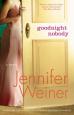
GOODNIGHT NOBODY

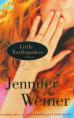
LITTLE EARTHQUAKES

IN HER SHOES

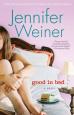
GOOD IN BED

Reading Group Guides

THE GUY NOT TAKEN

GOOD IN BED

GOODNIGHT NOBODY

LITTLE EARTHQUAKES

IN HER SHOES

Jennifer Weiner

BIO

Jennifer Weiner is the author of six novels: Good in Bed, In Her Shoes, which was made into a major motion picture, Little Earthquakes, Goodnight Nobody, Certain Girls, and Best Friends Forever, as well as the short story collection, The Guy Not Taken. A graduate of Princeton University, she lives in Philadelphia with her family. Visit her website at www.jenniferweiner.com.

Back to top.   


AUTHOR TALK

July 17, 2009

In this interview, Jennifer Weiner --- bestselling author of seven titles, including GOODNIGHT NOBODY, IN HER SHOES and CERTAIN GIRLS --- discusses her latest novel, BEST FRIENDS FOREVER, and elaborates on some of its themes, including friendship and its connection with faith and religion. She also explains why she is always drawn to exploring relationships between women in her books, and shares what she hopes readers will take away from her work.

Question: Did writing GOODNIGHT NOBODY prepare you for the facets of mystery in BEST FRIENDS FOREVER: the investigation, the crime, the Thelma and Louise–like road trip?

Jennifer Weiner: Writing GOODNIGHT NOBODY definitely helped. So did talking to the detectives who were nice enough to walk me through investigatory procedure (and to okay the liberties I planned on taking). I think the best part of researching this book was going to see the Lower Merion Township jail, which not only has a video setup for long-distance arraignments (the suspect stands in front of one camera and the judge, at home, in front of another), but also features the federally mandated handicapped-accessible holding cell, which was absolutely too good not to use in the book.

Q: Some of the same negative forces in Addie’s life --- Val and Vijay specifically --- were also positive forces. Is that what you wanted your readers to take away from her experiences?

JW: I think you can learn from any experience and any person, even the ones that hurt you so badly that you don’t think you’ll be able to survive them at the time. So yes, insofar as I had a message (and really, I cringe at the idea of books that try too hard to “teach” you something, and are not textbooks), the message was that you can survive anything life throws at you --- a parent’s death, a friend’s betrayal, a boyfriend who breaks your heart --- and come out stronger on the other side.

Q: Before she dies, Addie’s mother tells her, “There’s all kinds of love in the world, and not all of it looks like the stuff in greeting cards.” It seems like this is a metaphor for the entire novel. What are you trying to get across about the nature of love, forgiveness, and faith?

JW: When Addie’s mother is talking to her about love, Addie (and the reader) might assume that she’s talking about romance. I like to think that what she’s really talking about is Valerie, who betrayed Addie, and was herself betrayed by Addie. I think if she’d had more time, Nancy might have told her daughter that there aren’t too many people you meet who you’ll know and love for as long as you’re alive. You won’t have your parents around for your whole life, or your children…but a good friend can be forever.

Q: There are some comedic references to religious faith, particularly with Val and Chip Mason, and Dan Swansea is literally bombarded by faith. Why did you include this religious component?

JW: When I wrote this book, I was thinking about religion, and the way God (at least the God in the Old Testament) tests people. Addie is kind of my version of Job --- the person who has everything taken away, who is tested, seemingly at random. I wanted to answer the question: what happens to a woman who’s an outcast to start with, and who loses everything she loves --- her brother, her best friend, her parents, her boyfriend? How does she find the strength to go on? I guess the answer --- she finds her strength in friendship --- suggests that maybe friendship is its own kind of faith, its own kind of religion.

Q: As the story progresses, Dan becomes more of a catalyst for reuniting Val and Addie than an actual problem. Is that the direction you’d intended for his character to take, or did he surprise you?

JW: Oh, Dan! He gave me so much trouble! There was a version of the book where he died in that parking lot. There was another version where he was kidnapped and tortured by a bunch of angry feminists masquerading as a book club (because nobody suspects the book club!). It took me a long time and about a half-dozen drafts before I figured out that he wasn’t a main character as much of a catalyst --- a means to an end instead of an end in himself. Which is comeuppance enough for a former BMOC, right?

Q: You’ve explored close female relationships in all of your books. What made you want to delve into the land of female friendships?

JW: I was interested in the idea of friendship as a choice. I’ve written a lot about the relationships you don’t choose: mothers and daughters, mothers and daughters-in-law, sisters, new mothers and babies…with this book, I wanted to write about a relationship that you can opt into and out of.

Plus, like many women, I’ve had the experience of the friend who got away --- the person you thought would always be part of your life, and then isn’t, because you had a falling-out over whatever (with “whatever,” at least in my experience, usually being a boy). Or you got married and she didn’t, or she had kids and you didn’t, or whatever. I think that’s an experience that many women have, and I was really interested in seeing how it would play out in a novel.

Q: In BEST FRIENDS FOREVER, similar to some of your previous titles, the darker plot twists --- cancer, obesity, rape, neglect --- are peppered with humor. Do you consciously balance those elements as you write?

JW: Actually, not really --- it’s not as if I’m thinking, “ooh, this part was really dark, better throw in a joke,” or “time for a serious scene to balance out the funny”! I think it’s just the way I’m wired, that my stories unfold with both humor and pathos…and I think I’m wired that way because of my own life, where, with every awful thing that happened, my mother would always tell me, “You’ll laugh about this someday!” or “It’s all material!”

Q: At one point, Addie is stripped of all her personal relationships. Do you think that’s what she needed to engage in the world around her?

JW: Again, I saw Addie as my Job --- the woman who was going to lose everything in order to rebuild a better life (actually, maybe instead of Job, she’s the Six Million Dollar Woman --- “Gentlemen, we can rebuild her!”).

Q: We get our first glimpse of Addie’s newly designed home through the eyes of Jordan. He describes it specifically on page 223 as a “place made for pleasure.” What kind of research did you do regarding home design? Do Addie’s design choices reflect your own?

JW: I did the usual --- looked through a lot of home magazines, thought a lot about the kind of choices Addie would make --- and because she’s an artist, she’d probably make better choices than I do. But I wanted there to be a clear contrast between her home and Jordan’s --- specifically, I wanted him to live in a place that was totally alienating, where he couldn’t open the cabinets or unlock the oven, and for Addie’s place to feel very inviting and open.

Q: The end of the novel leaves a lot of room for a sequel. Are you thinking of continuing Addie and Valerie’s story?

JW: I’ll have to see if they keep talking to me!

© Copyright 2009, Jennifer Weiner. All rights reserved.

Click here now to buy this book from Amazon.com.

Back to top.   


AUTHOR TALK

April 25, 2008

Jennifer Weiner is the bestselling author of five novels and a collection of short stories, including IN HER SHOES, LITTLE EARTHQUAKES, GOODNIGHT NOBODY and THE GUY NOT TAKEN. Her latest work of fiction, CERTAIN GIRLS, is a sequel to her debut title and catches up with protagonist Cannie Shapiro 13 years after she appeared in 2001’s GOOD IN BED. In this interview, Weiner discusses the real-life experiences that inspired this story within a story and reflects on some of the social commentary peppering the narrative. She also shares a list of the books waiting to be read on her nightstand, humorously ruminates on the possibility of writing under a nom de plume, and reveals what she hopes readers will take away from her work.

Question: It's been seven years since you published your bestselling debut, GOOD IN BED. Had you always planned to write a sequel? Why did you decide to write CERTAIN GIRLS now?

Jennifer Weiner: I had always planned to write a sequel, and I always knew that I wanted it to be as much about Joy as about Cannie (and yes, I always knew the book was going to end the way it ended. Don't ask me how! I just knew).

What interests me as a writer are the moments in characters' lives where there's the most potential for rupture, for change: a single woman on the verge of marriage, a married woman in the first weeks of motherhood, a girl on the verge of womanhood (if that doesn't sound too horribly like a Britney Spears song title), or a woman who's stuck in one place contemplating, with hope and with terror, the prospect of getting unstuck.

And then there was the personal issue. When I wrote GOOD IN BED I was twenty-eight and single. In the intervening years I've gotten married and had two daughters, and had occasion to think about what it might be like for a child to have a parent who's done something even vaguely scandalous. The book in CERTAIN GIRLS isn't the book that I wrote --- BIG GIRLS DON’T CRY is a lot steamier than GOOD IN BED, in spite of its title, ever was --- but I've become very interested in what happens to a child when your parent is somehow notorious, and I wanted to play with that idea, through Joy's eyes.

Q: This is your fifth novel. How do you think your writing style and thematic choices have changed from one project to the next? What influences you most in your work?

JW: After five books, I hope that there are certain things I've gotten better at understanding and executing. (Plot: you need one! Blond hair: not all female characters should have it! Pop-culture references: get dated very quickly!) However, I think that in general, my writing style and the things that interest me have stayed the same. I try to write in a clear, readable, conversational style (one of my friends once said that reading one of my books was like having me sitting there talking to her, which I think was a compliment). In terms of topics, I've always been interested in body-image issues, in family dynamics, in relationships between mothers and children and husbands and wives. The way my life has changed since I wrote my first book has definitely informed my fiction --- the issues that come up during a marriage, or when children arrive, for example, or the stories I've heard from my friends as those issues have arisen in their own lives, have all influenced the stories I've told.

Q: Your second novel, IN HER SHOES, was made into a film featuring several of Hollywood's biggest stars. Were you involved in this production at all? What was it like to see your characters brought to life on the big screen?

JW: In one of the rare instances of mental health in my life, I decided very early on to be as hands-off as possible with the film version of IN HER SHOES. I decided that I'd told the story I wanted to tell in the book, that whatever happened with the film, nobody would change a word of the story, and that the best thing I could do would be to stand on the sidelines and wish everyone well. So that's what I did, and I would recommend it to any other writer lucky enough to have a novel adapted, because it worked out really well. I was thrilled with the film...and I was lucky enough to get my sister, and my nanna, roles as extras, which only added to the fun.

Q: Many first-time authors write semiautobiographical novels. Now that you've written several books, how much of your own life still ends up in your novels? What in CERTAIN GIRLS is autobiographical?

JW: Do you mean, after five books am I running out of real life to exploit? Heh. Just kidding, nameless interlocutor!

GOOD IN BED was, indeed, semiautobiographical...it was kind of a hybrid of this-really-happened with I-sure-wish-this-would-happen. Since then, I'd say that what I've done has been to take elements from my own life --- having a sister, getting married, having a baby --- and spinning them into fiction. Real life, in other words, was the irritating grain of sand, and the books were the pearls.

But there are always bits and pieces of my real life that make it into the stories. The Philadelphia of my books is very much like the Philadelphia where I live, and certain things that happen are just too funny, or too weird, not to make it into the book. For instance, I actually was asked whether I'd be interested in being a college campus spokesperson for a brand of feminine protection...so the exchange that Cannie has with her agent ("Does this offer have strings attached?") is pretty much a verbatim re-creation of the conversation I had with my agent.

Q: While the novel is a very entertaining read, there is also some serious social commentary sprinkled throughout. As a writer of fiction, what role do such weighty topics play in your work?

JW: My characters live in the real world (or at least a fictional facsimile), and so they deal with real-world issues. As a semi-obsessive mother of a vulnerable teenage girl, and with her own body-image and self-esteem issues in her not-so-distant past, it made sense to me that Cannie would worry about the messages that the culture sends to young girls, and would try to protect Joy as much as possible from what she'd see as the most pernicious of them. (As the hopefully non-obsessive mother of very young girls, I worry about them, too.) The challenge, I think, is to write books that consider these issues without banging the reader on the head with my own opinions...because being banged over the head is not much fun, and I do want my books to be entertaining.

Q: Your previous book was a critically acclaimed collection of short stories called THE GUY NOT TAKEN. What prompted you to write this collection? How is writing a collection of stories different for you than writing a novel?

JW: Like any good little wannabe writer, I'd written, and tried to sell, short stories for years, so when my publisher asked if I'd consider publishing a collection, I definitely had more than enough. I love short stories --- done right, they can have as much impact, and be every bit as memorable, as a 400-page novel. Writing short stories pushes me to be economical, to make every scene and every sentence earn its place on the page. I think naturally I gravitate toward the longer form, and the larger canvas, that a 400-page novel provides, but I think that short stories are a good exercise.

Q: Cannie is the author of both mainstream fiction and young-adult science fiction. What types of books do you most enjoy reading?

JW: You name it, I'll read it. I read a ton of YA to get ready to try to write from Joy's perspective, including books like SPEAK and LOOKING FOR ALASKA, plus old favorites like JACOB HAVE I LOVED and HOMECOMING. I'm a fan of contemporary fiction, especially books that have a great voice, or a great sense of humor. Recently, I really enjoyed Ruth Ozeki's ALL OVER CREATION and Marc Acito's ATTACK OF THE THEATER PEOPLE. Waiting on the nightstand: Junot Diaz's THE BRIEF WONDROUS LIFE OF OSCAR WAO and Kate Christensen's THE EPICURE’S LAMENT.

And my husband jokes that I never ever ever read nonfiction, but that's just not true. I like Atul Gawande's stuff because it reads like medical mysteries, and, right after my daughter was born, I officially became the last person in America to discover David Sedaris.

Q: One of the things Cannie loves best about writing the Lyla Dare series is that she does it anonymously. Do you ever think about writing under a pseudonym? Under what conditions might you try it (assuming, of course, that you haven't already)? And what would your pseudonym be?

JW: I don't think there's a writer alive --- especially one who's been pigeonholed in any way --- who hasn't dreamed about the promised land of a nom de plume. Literary writers think they could churn out a potboiler or a bodice-ripper and sell a million copies. Commercial writers think that they could finally be taken seriously as the sensitive and artistic souls that they are.

Of course, the truth is that there's no hiding anymore, since Anonymous wrote PRIMARY COLORS and was outed as Joe Klein. The technology's sophisticated enough to recognize every single writerly tic, which means that if you're a published author, there's nowhere to run to, baby, nowhere to hide. That being said, though, I do frequently wonder what would happen if I were to try to write some arty short story under a different name. As to what that name would be, my lips are sealed...but I think I'd want to be one of those writers with three names and that, for the best odds with the critics, at least one of them would have to be Jonathan. Possibly two. Maybe even all three. At this point, who wouldn't buy a book by Jonathan Jonathan Jonathan?

Q: In some ways, CERTAIN GIRLS is a story within a story -- after all, Cannie's novel BIG GIRLS DON’T CRY, is clearly the in-story version of your own novel, GOOD IN BED. What led you to make this choice? What kind of opportunities did this foray into metafiction open up for you?

JW: First, a disclaimer: BIG GIRLS DON’T CRY is not exactly GOOD IN BED. I thought about what would be the sort of ground-zero, worst-case scenario for a going-on-thirteen-year-old girl who just wants to be normal, and I figured that, as in GOOD IN BED, with Cannie's ex-boyfriend writing about their sex life, it would be a loved one (in this case, Joy's mother) writing about sex in a very explicit and revealing way.

I wanted to deal with some of the uniquely weird stuff that happens after you write a book, and how different it is than what one might (okay, than what I might) imagine: the book signings nobody shows up for, the insanity that is a book tour, the way critics won't touch you with a ten-foot pole if you've got naked lady-parts on your cover...or the way they'll take what you assumed was the least momentous part of your book and try to spin it into some grand political statement you were making. It was fun and very cathartic to write those sections of the book, and there was a lot that got left on the proverbial cutting-room floor, because it was a lot more interesting to me than to anyone else.

I also wanted to talk about the way children look for evidence of their parents' histories and give Joy a very tangible (and hopefully funny) source of information about who her mother was in her prior life as she tries to forge her own identity outside of her mother's shadow.

Q: You play with so many interesting themes in this novel, ranging from the importance of appearances, to the revised, more modern definition of family, to the tragedy of loss and the loss of innocence. What do you most hope that readers will take away from reading CERTAIN GIRLS?

JW: First and foremost, I hope they'll come away feeling satisfied by the time they've spent with my story --- like they've gotten to know the characters and, of course, like they enjoyed themselves. I really don't set out to write "message" books, but I would hope that readers would come away from the book the way guests might come away from Joy's bat mitzvah speech, with a sense that you can lean on your loved ones and get through whatever life sends your way.

© Copyright 2008, Atria Books, an imprint of Simon & Schuster. All rights reserved.

Click here now to buy this book from Amazon.com.

Back to top.   


AUTHOR TALK

September 2006

Jennifer Weiner has written the acclaimed novels GOOD IN BED, LITTLE EARTHQUAKES, GOODNIGHT NOBODY and IN HER SHOES, on which the motion picture of the same name --- starring Toni Collette and Cameron Diaz --- was based. In this interview, Weiner discusses her latest work, a collection of short stories called THE GUY NOT TAKEN, and its possibility of being adapted for the big screen. She also addresses living up to expectations of "happy endings," explains the benefits of keeping a blog, and describes the perks and drawbacks of having a "nontraditional" family.

Question: What inspired you to write "Good Men" from Bruce Guberman's point of view? Do you have plans to revisit any of the other characters from GOOD IN BED or your other books?

Jennifer Weiner: Believe it or not, "Good Men" was actually written before GOOD IN BED was even a gleam in my eye. I had those two characters in mind: a guy with a good heart, who's a bit of a slacker, and a girl with a sharp tongue who's a bit of a control freak, and the trouble they could get into. "Good Men" was their first outing (driven in part, I will confess, by my eternal fascination with stoner humor).

And yes, there is one other character from GOOD IN BED who will get a voice of his/her own in the book that I'm working on now...but I think I'll keep you in suspense as to which one (Tanya fans can start lobbying now!)

Q: The family in "Just Desserts" bears very close resemblance to your own family. Do the characters --- Nicki, Jon, and the mother --- share traits with your family members? Do they mind making these types of cameos in your work?

JW: I will offer my mother's standard disclaimer --- the one she typically recites when anyone asks about my work in general, and the mother in GOOD IN BED specifically --- "it's fiction!"

The truth is, no matter how autobiographical something is at the beginning of its life, by the time it's been through four or five rounds of revisions, it usually isn't my real life, or my real family, any more. Fiction offers many more possibilities than autobiography does. Plus, I've got to save something for the memoirs!

Last answer: I am lucky enough to be related to a bunch of very funny and tolerant people who understand the reality of living with a writer. If there's something funny, or interesting, or humiliating, or tragic, and the writer finds out about it, chances are, it's going to show up in some form, some day, somewhere. All they ask is a chance to read my work ahead of time, which I'm happy to give them, and a chance to join me on vacations, book parties and at movie premieres (ditto).

Q: Some of these stories were published before, and some were stories you'd written years ago and revised. Have you always been a prolific writer? Before your blog, did you keep journals and journals of writing? Were you always interested in fiction, even before you started being published?

JW: I credit ten years of journalism for what probably looks, to outsiders, like an impressive work ethic. When you're working at a small newspaper, writing three or four stories a day, you get used to being productive. I love writing --- I always have --- and I've been writing fiction almost as long as I've been reading it. So of course I have the obligatory shoeboxes full of unpublished short stories, articles, letters to editors, and fragments of novels. Not too many journals, though. I shared a bedroom with my sister Molly for seventeen years, and no matter where I hid my diaries she'd find them and use them to humiliate me.

Q: Absent fathers loom large in most of these stories. Why are nontraditional families such rich fodder for your work? Do you agree with Tolstoy that "Happy families are all alike; every unhappy family is unhappy in its own way?"

JW: I do agree with Tolstoy, but I also think that happy families (and, if you're part of one, forgive me)... just aren't that interesting. At least, not from a fictional standpoint. People who are suffering, or in crisis, or trying to make sense of their lives are much more fun for me to play around with than, say, women who are in love, happy with their children, their choices, and the size of their hips. I'm not sure a character like that would yield an interesting chapter, let alone an interesting short story or novel.

Q: In "Buyer's Market," you play with the idea of a Hollywood ending: "If life were a movie, Jess would have looked into Steven Ostrowsky's eyes and fallen deeply and immediately in love" (165). Do you think readers expect Hollywood-type happy endings in your writing? How do you work with these expectations?

JW: I think there are a few things at play here. One is that I do think that readers expect happy endings from me. Which is perfectly understandable. If you're setting out to tell an entertaining story with a protagonist who feels relatable, funny, and real, and if you've done your job well, then of course readers are going to want good things to happen to her.

As her creator, I will, too. I sometimes think that my job as an author is to take flawed, damaged characters and bring them to a happier place --- not a perfect place, but a place that at least offers them some decent possibilities. (This is especially true if I'm going to make them suffer!) And while I don't believe that marriage is the only happy ending possible, the bright bow that has to be tied around every young woman's life in order for her to say "There! Done! Happy!" I do believe that there is a very primal yearning for connection. Could be romantic, could be familial, could be a friendship (readers have pointed out that the most engaged and passionate relationships my heroines have aren't always with the men in their lives, but with their best friends).

To make a long answer short, I generally believe in trying to bring my characters to a good place, but I don't believe that happy endings all look the same, or are necessarily what the reader, or the heroine, expects.

Q: DreamWorks snapped up the film rights to THE GUY NOT TAKEN. Ideally, who would you envision starring as Marlie, Bob, and Drew? What did you think of the film version of IN HER SHOES?

JW: I was thrilled with the film adaptation of IN HER SHOES, and I enjoy the time I spend in Hollywood, where my brothers, my sister, my sister-in-law, and my niece all live, but I can't say that I've given the movie version of THE GUY NOT TAKEN much thought. My job is to tell the stories, as best I can, and once I'm done, and the book is published, my work is done, and any possible movies are then the filmmakers' story to tell, and my job it to stand on the sidelines, cheer them on, hope for the best, and work on my next book. That was how I felt with IN HER SHOES, and it's how I feel about THE GUY NOT TAKEN, and it's how I hope I'll feel about any future projects that come down the pike.

With all of that as a gigantic disclaimer, I will say that I hope that Marlie actually looks like a regular person, instead of some Los Angeles glamazon in the standard-issue chunky-frame glasses that they give starlets when they're trying to make them look like regular people.

Q: "The Mother's Hour" was such an accurate portrayal of the first few months (and years) of parenting, and the unlikely friendships that follow. Did you join any mother's groups when you first had your daughter? And further, did you meet any interesting mothers along the way?

JW: I joined every mother's group that would have me when my daughter was first born, because if I was home alone with her I'd end up feeling isolated, lonely, overwhelmed, and inadequate --- and usually all four by lunchtime. This was not because my daughter was such a difficult child. She wasn't. But, after a lifetime of being a good student, and relatively professionally competent as a journalist and novelist, motherhood was hard in a different way.

So Lucy and I were out and about a lot. We did playgroups, took classes, went on play dates and outings with our friends. As I'm writing this, she's getting ready to start nursery school, and I feel as though I know every woman in Philadelphia who had a baby the same year I did. All of them were interesting, and some of them became my good friends, but none of them were much like the mothers in "The Mother's Hour." I hope I'm not, either.

Q: Your blog, Snarkspot (www.jenniferweiner.blogspot.com), is immensely popular. What purpose does the blog serve in your career and in your personal life? Do you think blogging is a good first step for aspiring writers?

JW: It goes back to the journalism thing. I got spoiled by being able to write a lot, and being able to respond to things that happened immediately --- one of the few luxuries that fiction doesn't give you, unless you're publishing it online.

My blog is a way for me to feed the part of myself that journalism fed --- the part that got to write quickly and informally, about anything that struck my fancy, whether it was reality television or a three-year-old's birthday party. It's also a way to keep in touch with my readers, to give them access to my voice between books and let them keep up with me (to the extent that anyone would want to).

I'd encourage any aspiring writer to blog. I think anything that lets you write regularly, for an audience, is good practice, and a good foundation for more ambitious writing.

Q: More often than not your stories take place in Philadelphia or on the east coast. In this collection, "Swim" is set vividly in Los Angeles. How do you portray life --- with the aspiring writers and actors, the coffee shops and the apartment complexes --- in places you've never lived? How do you do this type of research?

JW: Thanks to the aforementioned family, I actually do spend a lot of time in Los Angeles, and I have had the experience of writing in a coffee shop there. I take my laptop to a coffee shop in Philadelphia all the time, without incident, but when I went to a Coffee Bean and Tea Leaf in L.A., it took me about an hour to notice that, basically, every single person at every single table was a writer, with a laptop, and an agent, and a cell phone to call the agent on. It was like an episode of "The Twilight Zone." Every single table was filled with better-looking versions of me!

© Copyright 2006, Jennifer Weiner. All rights reserved.

Click here now to buy this book from Amazon.com.

Click here to get the audiobook from Audible.com.

Back to top.   


INTERVIEW

September 17, 2004

Bookreporter.com Co-Founder Carol Fitzgerald interviews Jennifer Weiner, author of LITTLE EARTHQUAKES. Weiner explores the meaning of the book's title and how the friendships she formed in her prenatal yoga classes served as inspiration for her characters. She also talks about motherhood's impact on her writing, the joys of fine dining, how she keeps in touch with her fans and upcoming projects.

Bookreporter.com: Becky, Kelly and Ayinde are such different characters. Their worlds collide at yoga class and the story unfolds. Often moms find themselves bonding with women who they may never have met, chatted with or befriended in their pre-baby days once they have children. Were these sorts of meetings in your own life the catalyst for creating these characters?

Jennifer Weiner: Yes. As I say in the acknowledgments, LITTLE EARTHQUAKES is a work of fiction, but I was lucky enough to make amazing friends in my prenatal yoga class. While we're not quite as different as the characters in the book, I don't think we would have necessarily become friends outside of the circumstances. But, as it turned out, almost all of us were married to men who were Philadelphia natives, and all of us had moved here from somewhere else --- which meant, of course, that none of us had a mother or sister in town, but all of us had a mother-in-law nearby. Our due dates were spread out over a month but, due to a combination of babies coming late and babies arriving early, we all gave birth within something like ten days of each other, and during those first crazy days and weeks, I swear that our emails and phone conversations and lunches were the only things keeping me sane. We'd write about the troubles we were having breast-feeding or getting the babies to sleep, fights with husbands or mothers-in-law, and we really became each other's support system.

BRC: LITTLE EARTHQUAKES is such a great title. In the book these words refer to a feeling Lia has the day she leaves her son alone. To me, they describe what happens when children arrive in your world as your world gets shaken up in tiny ways every day. Did you have the title before you started the book? What is your explanation of its meaning?

JW: I think the title came to me as I started writing the book, and it means pretty much what you said: I wanted to talk about both the actual earthquake the day Lia leaves her son, and the more figurative ways that new babies shake the foundations and test the strength of relationships, friendships and marriages. I'm also a Tori Amos fan, and LITTLE EARTHQUAKES is the title of one of her albums, so there's a nod to her there, too.

BRC: Becky is a chef and the book is filled with great menu ideas, many of which sent me to my cookbook shelf or opening the fridge. Are you a culinary queen --- ie, do you cook for pleasure --- or are you better at dialing for takeout? If the latter, how did you come up with the dishes at Mas? How did you learn about nouveau-Latino cuisine?

JW: Thanks for the compliment! I'm a good cook, but my true talent is the appreciation of the good cooking of others. I love fine dining and fancy restaurants, and I'm lucky enough to live in a city with some of the best restaurants in the world (and even luckier to count the newspaper's food critic as one of my friends)! And I also read cookbooks and recipes not necessarily because I want to make the dishes, but for relaxation and inspiration.

The dishes at Mas were inspired by the food at a few different Philadelphia restaurants --- Pasion and Azafran. It was wonderful fun to be able to say to my husband, "We need to go out to dinner again! It's research!"

I also read a number of biographies and novels by chefs about life in the kitchen, and drew on some of my own experiences as a waitress years ago for the scenes at Mas.

BRC: Lia lurks as a tragic character in the opening chapters. She haunts Becky as she sees her and wonders about her. Lia then becomes a part of her world and we see her in a whole new way. Can you share with us your thoughts as you were writing Lia?

JW: All of my novels have an aspect of "What's the worst thing that could happen?" In GOOD IN BED, the worst thing is having an ex-boyfriend write about your body, and your sex life, in a national magazine. In IN HER SHOES, it's having a sister betray your trust. In LITTLE EARTHQUAKES, the worst thing I could think of actually happened to a friend of mine, whose baby died of SIDS.

I wanted to write about how a woman --- and how a marriage --- can survive such a tragedy, and set that discussion in the larger context of current thoughts on motherhood. We see so many movie stars on the covers of magazines toting their newborns like the latest chic handbag, all of the baby fat vanished, looking completely blissful…and new motherhood isn't always blissful (and the baby fat doesn't always just vanish). So, with Lia, I was thinking about the darker side of motherhood, both in terms of what it's like to lose a child and what it's like to be ambivalent about the whole notion of children in the first place.

BRC: Was there one character in LITTLE EARTHQUAKES that you had the most fun writing?

JW: Mimi. Hands down Mimi. Not even a contest! Villains are always the most fun, and I had a ball with Mimi, the mother-in-law from hell.

BRC: We have to ask. Are these characters based on women who you have met?

JW: Sort of. A little bit. To a certain extent. But nobody's an exact duplicate of a real person…it's more like I'll take someone's quirk, or a funny thing she said, and use it in the book. All four of the women got bits and pieces of my own experience, and bits and pieces of my friends'.

That being said, my friend Alexa, who spends large portions of her life at the return counter, and is the most consistently bubbly person I know, was a major influence on Kelly.

BRC: You have a quote from THE VELVETEEN RABBIT at the front of the book. What made you select that particular quote to open the book?

JW: THE VELVETEEN RABBIT was one of the books I loved best as a young reader, and that quote --- about how pain is just a part of being real --- always stuck with me. It seemed particularly appropriate to the subject matter of parenthood, which I've heard described as living with your heart on the outside of your body for the rest of your life. Parenthood is wonderful, but it's also about accepting pain, accepting loss, accepting that things don't always go the way you've planned, and then moving forward anyhow.

BRC: What books do you cherish most as you read them to your daughter?

JW: Well, right now we're in the picture book stage. I am a devotee of Sandra Boynton. We love FUZZY FUZZY FUZZY and HIPPOS GO BERSERK. And GOODNIGHT MOON, of course!

BRC: How has your writing schedule changed since the arrival of Lucy?

JW: Schedule. Heh.

What's happened is that having a child has necessarily shortened the time I can spend surfing around on the Internet and reading summaries of shows I've already seen on Televisionwithoutpity.com. I have a nanny for four hours a day, four days a week, and that's when I write. And writing is all I do during those four hours (although the coffee shop where I work just became a wireless hot spot --- oh, the temptation!)

BRC: We have to ask. Did Lucy get a t-shirt with the word "Hottie" on it?

JW: No, but I know a baby girl who has one! It's "HOTTIE," spelled out in pink sequins! Yikes!

BRC: What can you share with us about the "Good in Bed" series being developed for HBO and the movie, In Her Shoes starring Cameron Diaz? Also, is there a film deal for LITTLE EARTHQUAKES yet?

JW: In order…GOOD IN BED is still in development at HBO. Please keep all appropriate digits crossed! In Her Shoes, the movie, starring Cameron Diaz (or, as my Nana calls her, Carmen), Toni Collette and Shirley MacLaine, is in the can, awaiting only a release date --- December '04 or January '05 looks likely. LITTLE EARTHQUAKES has been optioned by Universal Pictures, and the producers who did Pulp Fiction and Out of Sight. Last I heard, they were looking for a writer to adapt the book.

BRC: So many reviews, jacket blurbs and catalog copy for books now say, "this is written in the style of Jennifer Weiner," or "reminiscent of GOOD IN BED" or "read like IN HER SHOES." How does it feel to have you and your work referred to like this? Pressure or not when you write?

JW: In a word, bizarre. I just can't get over the fact that somebody out there thinks I'm enough of an establishment to say "in the tradition of Jennifer Weiner." Also, given my goofy last name, it's insane to think anyone would want to! Of course it's extremely flattering, but mostly just very, very strange. And no, I don't think I'm feeling any pressure because of it. I feel pressure and anxiety over a great many things (number one on the list right now --- my sixteen-month-old daughter is still not quite walking), but not about writing in my own voice!

BRC: The blog on your website, JenniferWeiner.com, always is such fun to read. I have dubbed it "Jennifer Weiner Doing Standup About Her Life." What made you start the blog? What do you enjoy most about writing it?

JW: I'm so glad to hear you like it…I worry sometimes that the only people reading it are my Mom and my Nana (who actually calls to complain when I get lazy about updating. "You haven't written anything on the computer!" she'll say.)

The weblog grew out of a series of tour diaries I kept when I was a working journalist and GOOD IN BED was first published. I enjoyed writing them, people seemed to like reading them, and I thought they'd be useful for aspiring writers to get a sense of what it's really like out there.

Now that I'm an ex-reporter, with no other immediate outlet for my opinions about things, and because I have lots of opinions about things, I have a blog, which is a wonderful way to share what I'm thinking about immediately (as opposed to waiting a year until my next book comes out), and stay connected to my readers in between books.

What I love most about it is the feedback I get from people who say, "Hey, that happened to me," or "thanks for recommending that book," or "here's how to not lose every single pair of baby socks you own."

BRC: What are you working on now and when can readers expect to see it?

JW: Right now I'm writing a social satire/murder mystery set in the suburbs of Connecticut, starring a mother of triplets who solves crimes while her kids are in nursery school. I wanted to call it "Momicide," but everyone I've said "Momicide" to has the same response: "Ugh." So I'm guessing it will have a new title by the time it's published, which, God willing, will be some time next fall.
Click here now to buy this book from Amazon.

Back to top.   


PAST INTERVIEW

June 21, 2002

Jennifer Weiner has a refreshing sense of humor and a firm grasp on life's priorities that is reflected in her novel, GOOD IN BED, which is now available in paperback. In this interview with Bookreporter.com's Roberta O'Hara, she reveals her determination to portray the truth about the joys and heartaches of a plus size woman.

BRC: Cannie is a deliciously true portrayal of a real woman facing the odds every plus size woman faces. I thought it was brave of you to write about a large girl. Why her? Why her instead of a size 6 girl who has lost her boyfriend, or been abandoned by her father?

JW: Because all the books in the world are about size six girls -- or size ten girls who mistakenly believe they are enormous. I am a devoted consumer of "women's fiction" -- Helen Fielding, Melissa Bank, Laura Zigman, Susan Isaacs, Jennifer Crusie, Olivia Goldsmith, and everyone in between. I've been an avid reader all my life. And in very few places did I ever come across a heroine who looked like me -- that is, a plus-size woman who wound up with a happy ending that didn't involve radical weight loss. I wanted to tell a Cinderella story where Cinderella gets her happy ending without dropping down to a size six because a book like that, first and foremost, would fill a gap in my own heart and my own library, and could maybe be some measure of comfort to other teenage girls who devour "chick books" and come away feeling like they're the only ones who've ever weighed more than their boyfriends, struggled to find a prom dress, had a grandmother who religiously relocated the bread basket at every meal out, etc.. In addition, plus-size women have their own issues, their own concerns, their own places, that I'd never really seen explored from the "fat girl's perspective." There are millions of women who've been through Weight Watchers lectures, but I've rarely seen them written about with the kind of humor and poignance and flat-out familiarity that millions of women have with them (and, judging from the enthusiastic response the "fat class" portions of GOOD IN BED have received, not many readers have, either!"

BRC: I found Cannie's mother to be a funny character. How did she develop? Is she based on anyone in your own life?

JW: Heh. Um....well, okay, here's the truth. Cannie's Mom has a lot in common with my Mom. They both have lots of activity --- specific kinds of sneakers, and similar senses of humor and the world, and they both fell in love with women in their fifties. Showing my mother a draft of GOOD IN BED was really scary. I gave her this little speech, where I said that I'd written this book, and there was a character in it kind of like her, but I didn't want her to be hurt or offended by it. I told her to read it and tell me about anything she had problems with, and I'd change it or delete it -- whatever made her comfortable. "But please," I begged, "please don't make me take out the gay stuff. It's wicked funny!" And she wound up being very cool about it. Thank goodness.

BRC: Divorce is a subject we are all familiar with. I thought you had great insight into the affects Cannie's father's abandonment had on her and her siblings. Where did that insight come from? Has your own life been touched by divorce?

JW: Well, like Cannie, my father said "sayonara" when I was a teenager. And I've thought a lot about divorce and its consequences as I grew up. I think divorce makes you question a lot of things. There's the whole "What did I do wrong?" thing, which I think everyone whose parent leaves goes through, no matter how frequently or strenuously the parents insist it wasn't his or her fault. And then there's the thing that becomes central to Cannie's character -- not trusting love, and spending your twenties trying to unravel its mysteries. I think that questioning nature was part of what made Cannie such an identifiable heroine. She's someone who goes through life asking "why" about a lot of things.

BRC: Did you find yourself thinking about Bridget Jones when you were writing, or thinking about the inevitable comparisons that would come if Cannie ever made it to print?

JW: I honestly didn't think about Bridget much while I was writing, because I wrote GOOD IN BED in my bedroom. I didn't workshop it, I didn't share it with friends, I didn't have an editor or an agent, and I wasn't even sure the book would ever see the light of day. So I was able to put all of the potential comparisons aside and tell the story I wanted to tell. I was able to write very freely, without thinking of how the book would fit in with other books on similar subjects. That came later, after I had the agent, and the editor, and started to worry. "Oh, God, they're going to say that it's Bridget Jones after a few months at an all-U-can-eat buffet!" I knew the comparison was inevitable, and I decided not to fight it. After all, I loved the Bridget book, and the movie, too. And I wrote the story that was in my heart. I wrote about a character I cared a lot about. If reviewers needed Bridget as a jumping-off place to discuss Cannie, that wasn't the worst thing I could imagine.

BRC: You have a wonderful, sharp sense of humor (and so does your character Cannie). Do you see yourself as being a lot like Cannie? Besides the sense of humor, how?

JW: You're too kind! Seriously, Cannie and I have a lot in common, except her life is a whole lot more interesting then mine is. Which is one of the necessities of fiction. If I'd just written a straightforward account of my own life as a plus-size journalist, I don't think I could sell a single copy. So I had to give her a more dramatic plot, so to speak, and a lot more snappy come-backs. All the funny things she says would be things I myself wouldn't think of until days later, when it was way too late.

BRC: There were some moments in the book when Cannie slipped into a rather dark place, and I was worried about her eventual outcome? Did you toy with the idea of not giving Cannie a happy ending?

JW: Nope. Not even for a minute. I decided two things as I got into writing GOOD IN BED -- the character was absolutely going to have a happy ending (because if I'm going to invest the time it takes to read 400 pages about a heroine I love, I generally insist upon a happy ending). I suppose this has to do with the character being somewhat based on me, so you could be damn sure I wasn't going to leave her broke and homeless! It would be dreadful karma.

BRC: There were also moments when she was losing a lot of weight and becoming a svelte version of herself, which is something she'd always wanted. Why did you decide to have her gain the weight back instead?

JW: Because I don't believe that thin = happy, and fat = miserable. I think those are dangerous dichotomies, especially to teens and young women who spend their lives trying to live up to a standard they can never hope to achieve, and I wanted to illustrate that in a very visceral way. When Cannie gets thin, she's at the lowest point she's ever been in her life, and when she starts to gain weight again, she's got a baby to love and a man who loves her. The point is, being a size 2, 4, 6 does not guarantee you a happy life any more than being a size 16, 18, 20 consigns you to a miserable one.

BRC: Do you think Americans are too weight/image conscious?

JW: Yes.

BRC: What is next for you? Will Cannie return?

JW: Cannie and Joy and Nifkin, of course, make a brief appearance in my next book, IN HER SHOES, which will be published in September. After that will be a book called JEZEBEL BRIGHT, another single-girl-in-the-city story with a great big twist -- our heroine is the descendent of the mythical goddess Diana. It's got elements of fantasy and film noir, and it's going to be, I hope, bigger and more ambitious (not to mention longer) then anything I've written before. After that is GOOD IN BED, the sequel, called HESITATION WALTZ. I know I said in the Q and A in the paperback version that Cannie would be a hard character to come back to, because she's happy, and happy characters don't always made for the best fiction, so I think the sequel will have lots to say about Joy.

BRC: Whom do you read? Whose writing do you most admire?

JW: I read everything -- literally. I'm an omnivore. I'll read a cereal box in a pinch. I love John Irving and Stephen King, Peter Straub and Andrew Vachss, Susan Isaacs and Jennifer Crusie, Tabitha King and Anne Tyler and Wally Lamb and Neil Gaiman and Meg Wolitzer and Anna Quindlen. I've read all of Rebecca Wells and Nicholas Christopher, Jane Green and Marian Keyes. I'm eagerly awaiting Donna Tartt's new book, and the continuation of Stephen King's Dark Tower series.

Click here now to buy this book from Amazon.

Back to top.   

© Copyright 1996-2010, Bookreporter.com. All rights reserved.

Back to top.