|
BIO
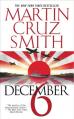
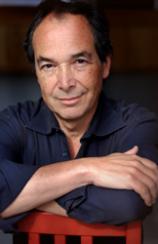
Martin Cruz Smith first burst onto the literary landscape with his critically acclaimed GORKY PARK, which went on to become an international bestseller. His subsequent novels include POLAR STAR, RED SQUARE, HAVANA BAY, and ROSE, of which the latter two won the Hammett Award. He lives with his family in California.
Back to top.
AUTHOR TALK
September 2002
Q: What inspired you to take on the subject of Japan on the brink of the bombing of Pearl Harbor?
A: I have always been interested in knowing what was going through the minds of the Japanese at this turning point in our history. Many times I wondered why on earth the Japanese started a war which they understood they had so little chance of winning. To me it was an act of desperation.
As a writer, I'm drawn to imagining the other side. In my book GORKY PARK, it was figuring out where Russians were coming from; in HAVANA BAY, it was telling a story from the perspective of Cubans.
Q: What were some of the challenges you encountered in writing this book?
A: It was agony to write. I found it very difficult to get into the Japanese character, except for Michiko [the beguiling love interest of the protagonist, Harry Niles], with whom I was secure from the beginning. There's a much bigger gap in cultures between the Japanese and Americans than between the Russians and us.
The title of my book gave me a structure for writing and it gives the reader a structure for reading the novel. I write straight through chronologically, but I constantly stop along the way to do more research and more rewriting.
Q: How did you immerse yourself not just in recreating accurate details about Japan, but those from 60 years ago? What did you draw on for your research?
A: How do you wash in the morning? What do you eat? What sounds do you hear? What do you smell? Those are the mesh of details that a writer needs to make his work come alive. So I found I needed as fine a net as possible.
I discovered a lot of wonderful books out there, books about geishas, and the culture of prewar Japan, and the buildup to the Japanese attack on Pearl Harbor. I also spent a lot of time recreating Harry Niles's childhood as a gaijin in Japan. I found one of the first songs that all Japanese children learn about frogs and put it in the book --- all those little details make a novel come to life. Because I made Harry the son of American missionaries, I explored the history of Southern Baptist missionaries in Japan.
When I went to Japan, I became fascinated by the Asakusa district of Tokyo. In pre-World War II Japan, this area was known as the Floating World and it was the center of pleasure for the Japanese, lit up with theater marquees and fortunetellers and nightclubs. This was the Nightless City, a rowdy place where men who didn't speak to their wives would flirt with waitresses.
Q: When did you go to Japan?
A: I first traveled to Japan several years ago, and arrived around Dec. 7th. I traveled there a second time with a Japanese friend who was a young reporter at the start of the war and was also in Japan's Imperial Army. We walked around Tokyo together, finding those parts of the city that had survived the war. The Asakusa district, where many people died during the fire raids, unfortunately has largely not survived.
Q: Harry Niles is a fascinating character: the heathen son of missionaries, a con man who is by turns both cunning and compassionate. How does Harry compare to your previous protagonists?
A: Harry is darker than my usual characters. He bears some family resemblance, which is inevitable. But I wanted someone slightly more despicable and a lot less the knight-errant than Arkady Renko, the hero of GORKY PARK and HAVANA BAY. The easy part was making Harry a rogue; the challenge was giving a deeper dimension to his character. I got the most pleasure in writing about Harry's childhood, which I think makes him a richer character and helps the reader to understand his motivations as an adult. Despite his wiles, loyalty and friendship mean a lot to Harry.
Q: In your novel, the German Nazi Willie Staub turns out to be a more sympathetic character than even Harry's childhood Japanese friends. Are you at all concerned by how the Japanese might feel about this book, by bringing up old hurts again?
A: I think we're going to find out very soon, because we're negotiating over rights to the book's publication in Japan. There are a lot of people there who would like to think the rape of Nanking never happened. And Pearl Harbor is still a very painful subject for the Japanese. Emperor Hirohito alluded to that in his surrender message to the Japanese: "We must bear the unbearable."
I also have tremendous respect for what the Japanese people have endured. I hope that side of the Japanese also comes through in my book.
Q: Harry's paramour Michiko, The Record Girl in Harry's cabaret, is among the most complex of your Japanese characters. Part geisha, part vixen, she alternately threatens to kill herself out of love for Harry and kill him so he doesn't leave her. What was your source of inspiration for Michiko?
A: I have a picture of a Record Girl, in prewar Tokyo. Her job was to just stand there in a nightclub and quietly change the records in the jukebox. When I was in Japan I met very forthright and outspoken Japanese women who were not quiet at all. I thought I'd combine both those personalities in the character of Michiko.
Q: Another complex character is Harry's nemesis, the war hero Ishigami, who was intimately involved in acts of carnage during the Japanese occupation of China and the infamous Rape of Nanking. Those are some of the most chilling accounts in the book. Is Ishigami based on an authentic Japanese colonel?
A: There were a couple of Japanese officers who competed to see who could cut the most heads off in Nanking. For Ishigami's character, I thought, let's take someone who is crazy enough to do that and, at some point, humanize him. I wanted to give the reader a caricature and then suddenly fill out the caricature so that the reader has to come to terms with Ishigami's human side.
Q: What do you hope readers get from reading this book, aside from enjoying a suspenseful thriller?
A: I want them to come away with a sense of the fullness of history. That there is another side. I want them to understand that these were desperate people and they did terrible, desperate things and to have a better sense of why they did those things.
Q: What makes you decide to take on Moscow during the Cold War in one book, post-Soviet Cuba in another, and Japan on the eve of World War II in still yet another?
A: I never really know exactly why. I ended up writing a book called ROSE about women who worked in the coal mines in Victorian England simply based upon a picture of women miners that I happened to come across.
For this book, I knew I wanted to write about the Japanese on the brink of World War II. As soon as I went to Japan, I felt a real sense of character and social tension that was palpable. A saner man would have gone home. But for me, something that remains a mystery all the way through is a book that doesn't bore.
Q: What did you learn from writing this novel?
A: I came away with a respect for the complexity of the Japanese character. They see themselves as superior to other cultures on the one hand but act with a Zen-like (and genuine) humility on the other. As a writer, that contradiction makes for a good story.
Q: In your book you write that from Harry's point of view, "It sometimes struck him that there was in the Japanese a majestic perversity that made them build for fire, leaving open the chance that at any time they could be wiped from the map just so they could start from scratch again." Do you agree with that assessment of the Japanese spirit?
A: I have a real appreciation for the resilience of the Japanese people. Tokyo was all but destroyed by an earthquake in 1923 --- but there it was in 1941 ready to take on the world! There is an ancient temple in Japan that is completely torn down and rebuilt every 20 years. In a way it's the oldest temple in the world, except when it's the youngest. That's an example of the Japanese spirit, holding onto a part of the old while constantly starting over again.
Q: The jazz of the '40s filters through this book. I understand both your parents were jazz musicians. How much does the music of Holiday and Ellington influence you?
A: My father had eight sounds speakers planted throughout our house, so I could not avoid listening to jazz even if I wanted to. My father played the sax and my mother was a nightclub singer. I grew up steeped in jazz. I didn't become a musician, but I do have some sense of rhythm in the way a sentence and a paragraph should run and flow together. I think you should be able to break up prose into bars of music.
Q: What country and/or era are spinning around in your mind right now?
A: I've been soaking myself in Russia these days. My next book will be another Arkady book set in present-day Russia and chronicles (I hope) the changes from the former Soviet Union into the Russia of today.
Click here now to buy this book from Amazon.
© Copyright 2002 by Martin Cruz Smith. Reprinted with permission by Simon & Schuster. All rights reserved.
Back to top.
|