|
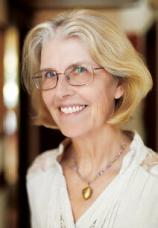
Jane Smiley
BIO
Jane Smiley was born in Los Angeles, California, moved to the suburbs of St. Louis, Missouri as an infant, and lived there through grammar school and high school (The John Burroughs School). After getting her B.A. at Vassar College in 1971, she traveled in Europe for a year, working on an archeological dig and sightseeing, and then returned to Iowa for graduate school at the University of Iowa.
M.F.A. and Ph.D. in hand, she went to work in 1981 at Iowa State University in Ames, where she taught until 1996. She has two daughters, Phoebe Silag (1978) and Lucy Silag (1982), and one son, AJ Mortensen (1992). Jane is the author of ten works of fiction, including THE AGE OF GRIEF, THE GREENLANDERS, ORDINARY LOVE and GOOD WILL, A THOUSAND ACRES, which won the Pulitzer Prize in 1992, MOO, HORSE HEAVEN and GOOD FAITH, as well as many essays for such magazines as Vogue, The New Yorker, Practical Horseman, Harper's, the New York Times Magazine and the New York Times travel section, Victoria, Mirabella, Allure, The Nation and others. She has written on politics, farming, horse training, child-rearing, literature, impulse buying, getting dressed, Barbie, marriage and many other topics. She is also the author of the nonfiction book A YEAR AT THE RACES and from Penguin Lives Series, a biography of Charles Dickens. Her new book, 13 WAYS OF LOOKING AT THE NOVEL, is now available.
Jane lives in Northern California, as do several of her horses.
Back to top.
INTERVIEW
May 12, 2000
Senior Writer Jana Siciliano had the chance to chat with author Jane Smiley about her new novel, HORSE HEAVEN. More than just about horses, Smiley weaves her always intriguing characters into the surprisingly deep well that makes up the horse racing community. Find out what led Smiley to write about this tight knit and sometimes outrageous world, her thoughts on the film version of her book A THOUSAND ACRES, her take on sex in movies, and much more.
BRC: Your new novel, HORSE HEAVEN, concerns the interrelated lives of owners, trainers, assistant trainers, farm managers, jockeys, vets, bettors and grooms. What is it about this community that led you to write a book about these?
Jane Smiley: Well, one of the things that led me to this community is that it's very large and various and so less than a book would be not very inclusive. The main thing is that in horse racing, there's lots and lots of little communities and they are really fun to follow.
BRC: Froney's Sis, Justa Bob, Epic Steam --- these are some of the stars of this show, the horses whose fortunes tie everybody together. How did their names and personalities come to you? Did you consult actual horse owners to discuss the exotic names racehorses are often given? Did you base your characters on any existing horses?
JS: Well, I didn't go to people that I knew. I went to some veterinarians and I found other people who had horse racing experiences. It wasn't that hard, people are always ready to talk at the racetrack. As far as the horses' names are concerned, Mr. T is based on a horse that I had also named Mr. T who was the same horse but in different circumstances.
BRC: So he wasn't in love with you?
JS: (Laughs) No, he wasn't in love with me.
BRC: My favorite story is the one where Elizabeth Zada, a horse psychic, "streams'' the thoughts of Mr. T, a horse in love with his caretaker, Joy Gorham. This goes way beyond Mr. Ed. What sort of research led you to create these characters?
JS: I know someone who is an animal communicator who helped me communicate with Mr. T but she's not at all like Elizabeth.
BRC: Somehow you manage to keep us aware of more than fifty characters throughout the course of the book. How exactly did you manage to organize the stories of this many individual people without losing your reader's attention?
JS: Well, sometimes I can't even remember their last names, but I have no trouble remembering who they are. When I was teaching I would have twenty kids in my class, and as soon as they read their first story, their voices were distinct and I didn't have any trouble remembering their names after that. So having that experience gives you an advantage in terms of keeping those things organized. It's different for the reader --- the reader is coming to the characters fresh and without having any preliminary sense of who they are. But the writer has a feeling of who everybody is. That's how the novel is engendered. I've had this experience before because THE GREENLANDERS had more characters and MOO has as many characters.
BRC: Your interest in communities was also reflected in your hilarious book MOO, which concentrated on the close-knit and highly competitive world of academia. Had you ever worked as a professor? Do you see an academic community as a second family for those involved?
JS: In MOO? Sure. It was all around me. The next step was to write about it. If they're smart, they're not more important than their actual family. It varies from person to person. Some are very very into their emotional lives in the office and some people keep it separate. When you live in a small university town, the most interesting thing that is going on is on the campus and you tend to have that take over your life or at least have a great effect on your life. And at a lot of universities that's what is expected of you because they hired you to come and be very available to your students. So that's certainly a lifestyle that people can have, but that wasn't my lifestyle. I had a family and friends and I viewed the university more as a job rather than as my life.
BRC: Your last book, THE ALL-TRUE TRAVELS AND ADVENTURES OF LIDIE NEWTON, was set in the pre-Civil War Kansas Territory. Lidie Newton is an abolitionist's wife heading through the emotionally difficult situation of her developing womanhood, while examining the violence of a young nation divided by slavery and headed for war. What is your general take on historical fiction? Will you write another book that depends on such a broad historical perspective?
JS: Well, I have written two books like that. One was THE GREENLANDERS, one was this one, LIDIE. THE GREENLANDERS had a longer and more historical perspective and even more characters. I can't tell in advance what's going to strike me as interesting so I can't say at this point whether I'll write another historical novel. Those two, even though I liked them, haven't been very commercially successfully. Perhaps because they are about difficult periods of history. The only thing that interests me about history is how bad things happen to good people, you know? So the periods that I write about haven't proved to be very compelling to large numbers of people. Usually the commerciality of a topic doesn't matter to me.
BRC: I read a quote from you saying A THOUSAND ACRES was your monster child, "two pages and I was wiped out. I could hardly drag myself back to the typewriter, and normally there's nowhere else I'd rather be." Why was it so difficult to write that book and was its success a happy reward for your troubles?
JS: It was difficult because it was about people in a state of conflict, constantly. I prefer to write books where there are ups and downs, where there are surprising bonuses at least from time to time. So MOO and HORSE HEAVEN have been much more up my alley, temperament-wise. I thought I had thoughts to offer about the play KING LEAR and about American farming, but the material was very uncongenial to me. It's not a happy story and was pretty relentless.
BRC: What was your experience with Hollywood in the adaptation of A Thousand Acres?
JS: I wasn't at all involved, but I thought they did a pretty good job given the uncongeniality of the material. They ran up against the same problems that everybody runs up against when they try to put up a version of King Lear.
Jessica Lange was recently in a production of TITUS ANDRONICUS --- that is dark. And to do Shakespeare plays is always a difficult effort and Hollywood doesn't like to do things that are not going to be commercially successful. The audience for a serious large-scale contemplation is very small, and especially with a large-scale depressing contemplation of something, they always regret having done it.
The only possible success is to win an Academy Award. But even that is no guarantee. Hollywood is a sad place if you're looking for something deep and interesting. From the filmmaker's point of view, if you don't win an Academy Award, then there is no reward for doing a serious project like that. So you can only have one Saving Private Ryan and one Schindler's List and it's like whistling in the dark.
BRC: When you were developing your craft, were there writers whose work influenced you?
JS: Shakespeare influenced me, but that would be naturally true of every writer in English. I'm sure Virginia Woolf, George Eliot, and Charles Dickens were also big influences.
BRC: How do you battle the twin evils of self-criticism and self-editing while you are working on a long opus?
JS: I am totally non self-critical. I'm a very rosy person and I've almost always loved every word that I've written. At least in the beginning. When it's a little farther away from me, I think, okay, that could have been different. But I never take it as a personal failure that I didn't quite make it right. As I tell my kids, "About taste there is no disputing." Taste is not a moral category. You're never going to die from writing a book and so it should be fun.
BRC: If you weren't writing, what would be your second choice career?
JS: Raising horses.
BRC: Really? How long have you been involved with horses?
JS: As an adult, about seven years. I was involved with horses as a child, too, at least as a teenager.
BRC: Does the discipline in working with horses parallel your experience as a working writer?
JS: It's much harder because I'm not very well-coordinated and it requires so much concentration. Natural-born horsemen have great balance, coordination and a quiet attentiveness. I had to learn those things instead of having them come by instinct. I was never a natural athlete, but I'm capable of learning.
BRC: Does your writing process change depending on the type of book you are doing or does it just evolve generally over time?
JS: My writing process is the same as always. I never do more than a couple of hours a day. I can always do about three pages a day, but once I try to press on it would lose its freshness so I would stop.
BRC: I heard on a radio interview that your next book has to do with sex and Hollywood, is that right? And does your interest come out of the movies or is it inspired by your romantic life taking a recent upswing?
JS: It might come a little from that, but mostly it comes out of going to the movies, watching what's on the movies and pondering that.
BRC: As a viewer, how do you see sex in the movies? What is its purpose? Is it always gratuitous?
JS: I guess I can't figure out why sex in the movies is so often a guarantee for getting punished sooner or later. If you have good sex that involves love, then your punishment is that your beloved will be taken away from you. And if you have bad sex that only involves lust, then your punishment is that you will be physically hurt or damaged in some way. So it's really very strange because movies are supposed to be very sexy, but they're very puritanical in that way.
BRC: Is that a reflection of the more conservative social attitudes about how to go about having a sex life?
JS: If you really follow the moral prescriptions of Hollywood, then you wouldn't go about having a sex life at all. And you would understand that any kind of attachment or involvement with others is going to leave you in pain. I don't agree with that.
BRC: What are your favorite horse races? Do you frequent the track near your home?
JS: My horses are in Southern California so I spend a lot of time there.
© Copyright 1996-2008, Bookreporter.com. All rights reserved.
Back to top.
|