|
BIO
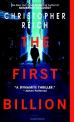
Christopher Reich was born in Tokyo in 1961. A graduate of Georgetown University and the University of Texas at Austin, he worked in Switzerland before returning to the United States to pursue a career as a novelist. The bestselling author of three other acclaimed novels, NUMBERED ACCOUNT, THE RUNNER, and THE FIRST BILLION, he lives in California with his wife and children.
Back to top.
PAST INTERVIEW
September 12, 2003
In this interview with Bookreporter.com's Suspense/Thriller Author Spotlight team (Carol Fitzgerald, Joe Hartlaub and Wiley Saichek), Christopher Reich talks about fighting the war on terrorism, which is the subject of his latest thriller THE DEVIL'S BANKER. He also reveals why he admires John Le Carre, the books of Le Carre's he has enjoyed most, and the memorable encounter he had with Le Carre at a hotel in Zurich.
BRC: On your website Q&A, you wrote that you utilize newspapers, magazines, and the Internet in your research. How have your research methods changed over the course of writing four novels? How much time did you spend talking to various government agencies while working on THE DEVIL'S BANKER?
CR: I still read a ton, but personal interviews always yield the most interesting information. Last April I spent 10 days in D.C. talking to the CIA, FinCEN, Treasury and Customs. It was fascinating and frightening. I can tell you one thing --- we are not skimping in our fight to keep our nation safe from terrorist attack.
BRC: From your research and what you learned while writing, do you feel comfortable with how we are combatting terrorism, or are you a lot more circumspect given what you know? On this same note, do you think the efforts on the part of government should be kept as secrets or shared with the American people?
CR: I have mixed feelings. I was very impressed with nearly every agent either of the CIA, the Treasury Department, Customs or the IRS with whom I met. These are top notch, crackerjack individuals who could be making a fortune on Wall Street or as lawyers in private practice. Guys and gals, I call, that are programmed for success in any field. We have great personnel. The problem is the "cowboy" culture that encourages agents to work alone combined with a terrible, smothering bureaucracy. The system is getting in the way of allowing the good guys to do their job. One good thing about the Patriot Act is that it has broken down the walls between agency and legalized communication between them. The IRS can now look at the Treasury's files, the CIA can talk to the FBI, and on and on. Now it's just a question of if they will!
BRC: Tracking the money to find the terrorists sounds like a new concept to many of us. In the course of your research did you find that this methodology has been employed for a while now?
CR: Yes, but it's getting more and more sophisticated. Most important is keeping channels open across borders. France is a great help to us. Germany, far less so. Each country has laws and traditions that either help or hinder efforts to follow the money as it travels the world.
BRC: You have a real disdain for the way the media delivers news to us. What's a better way?
CR: I don't know about that. I respect the media on the whole. I feel they are tendentious and inflammatory, but that's what happens when you have a free press. It's our choice whether to buy newspapers or to watch TV. I don't think we can blame them for pandering when we're buying everything they're creating. Americans in general have very little self-discipline. They'll sit there and watch an E! True Hollywood Story murmuring to themselves, "This is such trash," but then they'll tune in again the next day.
One thing is for sure --- if you want straight unbiased news it's out there. Look at the BBC or Reuters. Everything's on the Net.
BRC: Reading your books, many people have written that suddenly the financial world does not seem as intimidating any more. Our January Suspense/Thriller author Stephen Frey, who also writes financial thrillers, told us when he first started writing he would go into too much detail for the average reader. Do you find it easy to write for the layman about a world in which you were so entrenched, or has this evolved?
CR: I think the financial world is more intimidating than ever. People have no idea how vast and dependent we all are on the smooth and efficient functioning of our capital markets --- the stock market, bond market, corporate debt, currencies and derivatives. It is all so huge and to an extent so fragile. Just you wait … we're going to have a major financial crisis within ten years and then you won't think things are so simple any more.
I don't know if it's easy to write about this world, but its essential and fascinating. High finance is fast-paced, sexy and explosive. You never know what's going to happen when a billion dollars is on the table.
BRC: Adam Chapel and Sarah Churchill were a hit with our readers who read advanced copies of the book. Many wanted to know if their characters will return. We think they will as the end of the book seems to leave a door open. Are we right about that?
CR: That's a great question. Sarah is a spy at heart and wedded to her ideals. She loves Chapel but doesn't yet realize just how much. Adam, on the other hand, is a fighter. He's not going to just let her walk away. More is definitely in store for these two!
BRC: In an earlier interview you mentioned a novel called BLOOD MONEY --- was this THE DEVIL'S BANKER with a title change? If so, why did you make the title change? Share with us how you decide to title your novels.
CR: BLOOD MONEY was the working title, but there are like fifty other books with the same name. Ergo, time to come up with a new title.
BRC: In the Q&A on ChristopherReich.com, you wrote "everything I learned about writing, I got from Le Carre." Would you elaborate with us on that comment? What about Le Carre do you especially enjoy? Do you have a favorite title?
CR: John Le Carre is my favorite author. I get choked up just trying to explain why I like him so much, but I'll try. First off, he tells interesting, exciting stories about spies and arms dealers and corrupt bankers --- the dark arts that I find compelling. Secondly, he is a supremely gifted writer. His use of the English language, his ability to describe characters through their psyche, their emotional state, is second to none.
But what I really love about his novels is his intimate knowledge of the human heart. His characters are all so full bodied, so lovable, so flawed, so arch ... so sadly human. There is so much emotion in these books. So much insight into man's character. Where does he find it in himself? Every time I read Le Carre, I feel he's teaching me something about myself. He is the master. My favorites are THE NIGHT MANAGER, THE SPY WHO CAME IN FROM THE COLD, THE HONORABLE SCHOOLBOY, and TINKER, TAILOR, SOLDIER, SPY.
By the way, I met him once in Zurich. David Cornwell is his real name. He was staying in my hotel --- The Dolder Grand (setting of THE NIGHT MANAGER). I listen to his books on tape too, and when I heard his voice in the lobby, I nearly fell to my knees with excitement. I sent a note to his room, explaining who I was, and asking if we might meet. He sent a note back beginning, "Dear Mr. Reich, Of course I know who you are…." We had drinks together and he was utterly charming and gracious. One of England's finest. The occasion remains one of the great thrills of my life.
BRC: Readers wanting to find out "what's next" can read a brief description of your work-in-progress on your website. The big question for fans remains: when will we be seeing this novel?
CR: The new one should be out next year, but I'm taking my time with this one. I don't want to cheat the readers, or myself.
Back to top.
INTERVIEW
September 5, 2003
In this exclusive Bookreporter.com Suspense/Thriller interview Nelson DeMille, the bestselling author of UP COUNTRY, talks to Christopher Reich about Reich's latest novel THE DEVIL'S BANKER, as well as what Reich loves about writing, the books that have influenced him the most, and the details of his next project.
Nelson DeMille: One of my favorite authors, Ernest Hemingway, once said: "Writing, at its best, is a lonely life…. For he [the writer] does his work alone and if he is a good enough writer he must face eternity, or lack of it, every day." On my own site, I confess I hate the writing process but that I don't know how to do anything else. Chris, you left another career to become a writer --- ever think about going back to private banking? As one author to another, what's the point in the writing process you like best and the one that is like Hemingway's "eternity", the part you hate most?
Christopher Reich: Once I jumped into writing and had my first book published, I gave up any idea of returning to a career in investment banking. Frankly, I never even considered having the option. It was a career as an author or nothing. Anyway, I'm having too much fun writing books. I couldn't imagine working for someone else, having to report to work at 8 and stay until 6. The irony is that I work longer hours than I used to, but it's a totally different thing when you're your own boss.
I always enjoy the initial stages of writing my books the most: the plotting, the researching, the whole puppet master thing, you know --- creating your characters, placing them upon the stage and deciding how they're going to act. The actual writing of the book is what requires the most discipline and, I think, the part that keeps so many people from becoming successful authors. You've got to stay put at a desk for eight hours a day writing. It is a craft and it requires a kind of stubborn concentration. Words don't just flow from the tip of a pen. They've got to be coaxed, massaged, wrestled with. It's a struggle, but the end result is always worth it. If there is a miserable part, it's the copyediting. Double-checking your work. Rereading it over and over again for errors. That can become tedious really quick.
Nelson DeMille: This is hard work, this writing for an audience. Do you think about the reader and the experience you want the reader to have? Has being published changed your experience of, say, enjoying other books? Of going into a bookstore?
Christopher Reich: I just completed my fourth book, THE DEVIL'S BANKER, and I think I'm more aware of my ability to manipulate an audience than I used to. Frankly, I'm not sure it's a good thing, because I like my stories to feel realistic and not contrived in the least. On the other hand, I'm more aware of my responsibilities to deliver a thumping good yarn.
The sad part about this business is that I find I have less and less time to read fiction. So often at night, I'm reading the research for the stuff I have to write the next day. As a specialist in financial fiction, I have to pour through a dozen papers and magazines each week, just to keep up. When I do read a novel, I find myself going back to the grand storytellers like Leon Uris, Anton Myrer, James Clavell, Herman Wouk --- guys I've read before, but who entrance me every time. Lately, though, I loved THE DA VINCI CODE and UP COUNTRY wasn't too bad!
Nelson DeMille: NUMBERED ACCOUNT was a sensational hit; you've followed it with THE FIRST BILLION and really staked your territory as the market's leading writer of international financial thrillers. Now, there's the new hardcover, THE DEVIL'S BANKER. I know the background for all three novels comes from the banking world you know so well, but of course I can't fail to see the "ripped from the headlines" aspect of chasing terrorist organizations by following the money to find the masterminds behind the destruction. What inspired you here? And how much of THE DEVIL'S BANKER is based on actual investigations?
Christopher Reich: The idea for THE DEVIL'S BANKER came to me a few days after 9/11. For the first time, I saw the entire first act of the book unspool in my head, almost as if I were watching the movie of it. I was just curious how these bad guys move their money around without being caught, and how much of it comes from America. I figure that if I'm interested in a subject, there's probably a few more like me out there. So, I picked up the phone and started making some calls to people in the know asking how we track down and cut off, or to use the vernacular, how we "disrupt and dismantle," terrorist financing networks.
Last April, I found myself at the Treasury Department, Customs, the IRS, FinCEN, and the CIA talking to the men and women who've been tasked with this very job. I was more impressed than I've been in a very long time, not only by our government's commitment to see the job done right, but by the savvy, dedicated enforcement officers I met with. Like I say in the book, its like a Tom Clancy movie…but for real. I'll tell you one thing: I wouldn't want to be the guy they're going after.
Nelson DeMille: I've heard you say that you focus on what money makes people do. You call money the "purest of all motives." Explain this, please.
Christopher Reich: Money is the purest of all motives because it cuts through the bs and lets you know why someone is doing something. There's nothing wrong with needing money or wanting it…even a lot of it. There is something wrong however about breaking the law or allowing one's morals to be corrupted to get it.
Nelson DeMille: Come clean --- what's the plot of the very first novel you wrote, the one that hasn't yet seen the light of day? And how old were you?
Christopher Reich: I never actually got around to writing a book before NUMBERED ACCOUNT, but I did spend the second half of my senior year at Georgetown researching and outlining a climbing drama set in the Himalayas. I was big into Everest then, but not big enough to think of climbing it.
Nelson DeMille: Don't stop to think --- what's the title of the book that influenced you most? Why?
Christopher Reich: That would be THE BOURNE IDENTITY. I was spending the summer in France at a small language school in Objat, smack in the middle of nowhere, and after lessons I'd sneak into my room and spend five or six hours straight reading that book. I have never been so caught up in a book as that one. There were other books before, though, that taught me the joy of reading. SHOGUN, THE THORN BIRDS, THE WINDS OF WAR. I love sagas.
Nelson DeMille: I know you attended this year's Book Expo America and met booksellers from across the country. And you've had some experience meeting fans. What is the most inspiring or striking thing a fan or bookseller has said to you? Or, if you prefer, what's the oddest experience you've had?
Christopher Reich: You can't hear enough that people enjoy your work. Writing is in the end a lonely profession, so when you get out in front of the people, you pretty much just want to hear how much people like it. It feels great. I also love it when people tell they enjoyed a certain character or a certain scene. Then I feel like I've done a good job.
The strangest thing happened to me at the Book Expo. An older man and his teenage son walked up to me at the Bantam Dell signing booth where I was autographing THE DEVIL'S BANKER and told me how much he enjoyed my correspondence with him. He said it was so nice of me to write him in England and that he had resolved to take my advice. I smiled and said, "sure thing," but I had no idea who this man was. And then it hit me, he had mistaken me for someone else. I still have no idea who he thought I was.
Nelson DeMille: Is it fair to ask what's next? Are you already into another project?
Christopher Reich: The new one is all about the nexus of the military, Wall Street and Capitol Hill called the Iron Triangle. I'm fascinated by this stuff that John Poindexter's doing with Terrorist Information Awareness, conveniently changed from Total Information Awareness and the government's growing powers of surveillance. This Patriot Act while necessary can lead to some major abuses of power. The technology being developed for snooping is terrifying. I'm also interested in the power wielded by some of the larger private equity firms like The Carlyle Group, who hire the most influential politicians in the world to work on their behalf and pay them with staggering sums of money, often in the form of participation in the deals they're doing. We're talking forty, fifty, sixty million dollars! We're talking Darth Vader here. The Dark Side of the Force is growing.
Back to top.
Video Interview
Check out this video interview of Chrisopher Reich
AUTHOR TALK: THE FIRST BILLION
August 2002
Q: You've written two thrillers that break open a fairly covert worldin NUMBERED ACCOUNT it is the world of private Swiss banking and in THE FIRST BILLION it is the high-stakes business of bringing a company public. How do you assess what information to present to the reading public in order to tease their interest, and what to "embellish" for the sake of page-turning plotting?
CR: Any business where on a daily basis men and women stand to gain or lose millions of dollars_sometimes in just minutes_is, by definition interesting. Nowhere is the tension higher than in the IPO game. IPO stands for initial public offering. Bringing a company public is a long process and involves many different parts of an investment bank. You could write a whole book about the process itself, but I don't know if it would be a thriller. The exciting part comes at the beginning_winning the business_and at the end_taking the deal to market. In between is the hard part, the grunt work that fills most I-bankers's days: due diligence, number crunching, road shows, etc. In THE FIRST BILLION I keep to the exciting parts.
Q: Tell us about THE FIRST BILLION: Was this novel inspired by a true event? A trend? Or something you see in the future?
CR: In fact, THE FIRST BILLION was inspired not by any goings on in the stock market but by a paper I read about the disastrous state of the Russian KGB, the equivalent to our CIA. During the 1990s, the once vaunted spy agency suffered from devastating budget cuts and fell on very hard times. Simply put, they had no money. No longer could they fly agents around the world on commercial aircraft. Federal Express canceled their account for nonpayment. At their headquarters outside Moscow they had no photo paper to develop microfilm. The list goes on. All I could think was "My God, these guys must be angry. They must desperately want to get back on the playing field."
That, along with my interest in the wild and woolly world of the Russian oligarchs, the group of 10 to15 businessmen who have taken control of more than half the Russian economy, set the story in motion. The more I read about these guys, the more I knew there was a great thriller to be written.
Q: What is the impact of technology on the global market? What is the impact on a writer such as yourself? Has the process changed since you first put pen to paper on your debut novel, NUMBERED ACCOUNT?
CR: Quite simply, technology has made the world move faster, mostly through the increased speed of communications or information transfer. It has also created a whole class of information spectators. There are people who live their lives on the Internet, viewing others' actions as a proxy for their own, a kind of vicarious cyberexistence. The world has become a much smaller place. Too small, by my reckoning. But there is no going back. I still wonder, though, whether we're getting that much more done, or if knowing so much makes us happier or not. Still, I wouldn't trade my PC for a paper and quill for anything!
Q: You've said in the past that your writing heroes are authors as diverse as Crichton, Demille, Franklin W. Dixon and especially John le Carré. Why these? And are you ready to reveal any new names you admire? What are you reading right now?
CR: There are so many wonderful authors; it's not a question of finding them but of finding the time to read them all. Recently, I've been drawn to Irwin Shaw, author THE YOUNG LIONS and RICH MAN, POOR MAN. Great stories, great insight into the human condition, vivid prose. Le Carré is and always will be my favorite author. Simply put, a genius and one with a giving heart. Anton Myrer is an author of those big, juicy epics that I love. ONCE AN EAGLE is a masterpiece. But who is better at that than James Clavell? TAIPAN, SH_GUN, NOBLE HOUSE. Page-turners at their finest! The list of contemporary authors who I rush out to buy is shorter: Martin Cruz Smith, Nelson DeMille, Thomas Harris, Scott Turow. Right now I'm reading THE BIG BREACH by Richard Tomlinson, the memoirs of a former MI6 agent, who spent a year in jail for trying to get the book published. It's a great read_very informative about the kind of training a spy gets these days. Next up, though, is something fun: THE EMPEROR OF OCEAN PARK.
Q: Do you find the process of preparing to write has changed now that you have three very successful yet different suspense novels under your belt?
CR: There are four phases to writing a book. Coming up with the idea. Outlining the story. Writing the book. Then re-writing it. Experience has sharpened the skills needed during each phase. Coming up with the idea is the most fun. And rewriting it is where you earn your money. But you still have to spend eight hours a day trying to get the right words onto the page. There is no substitute for working. Elmore Leonard said easy reading means hard writing. Boy, is that the truth.
Q: The company featured in THE FIRST BILLION is a media/communications company making its way onto the global stage. Was there a reason you picked a media/communications company? Do you see the role of major corporations and major corporate executives changing in our ever-more-intimate world economy?
CR: I chose the media industry because more than any other single sector, it has the power to affect our daily lives. Everybody watches TV, goes online, reads magazines, and listens to the radio on a daily basis. Think about your life without media. There's a big hole, right? Personally, I find that a shame. I do not own a television. As a father of two young girls, I don't have the time or the inclination. Anyway, media is a good area to write about. It's sure a lot sexier than meat products.
Q: How about some insider knowledge: What is the next book we can expect from Christopher Reich?
CR: The new book is presently titled BLOOD MONEY, and it deals with our government's efforts to root out terrorist financing. The story concerns an elite team of financial investigators, members of the Foreign Terrorist Asset Tracking Team, (FTAT), and their quest to hunt down a shadowy figure known as "the Director" before he can perpetrate a terrorist act on American soil. I drew a lot of the story from my research into the area. The work being done in Washington, and in concert with our allies, is as fascinating as it is urgent. Stop the money and you stop the acts. But first you have to find the money, and it's not as easy as you might think. On the plus side, our government has earmarked a lot of money to the task. I was in D.C. earlier this year and had the honor of meeting professionals at the Financial Crime Enforcement Network, Customs, the IRS, and the Treasury Department. I'll tell you one thing: I wouldn't want to be the bad guys. Make no mistake; we are going to nail them.
Back to top.
AUTHOR TALK: THE RUNNER
April 2000
Q: You've spoken about the moment in history that inspired THE RUNNER. Can you describe it for readers, and explain why it sparked this thriller from you?
CR: I've been a World War II buff as long as I can remember. Growing up, the Second War was always lurking in my imagination. I read Cornelius Ryan, saw "The Battle of Britain" about ten times, "The Guns of Navarone," too. But I'd never really heard or read too much about what happened right after the war ended. What happened to all the soldiers who surrendered? Where did they go? What did they go? Doing some preliminary reading, I came across a mention of some fanatical German soldiers who called themselves 'Werewolves' who'd sworn never to give up. Just the name 'werewolf' sent a chill through my blood. I was hooked! I began to imagine what one of these soldiers might be like, what he'd do for his country, a man for whom losing the war was worse than death, itself. What came from those thoughts is THE RUNNER.
Q: NUMBERED ACCOUNT took readers behind-the-scenes in international finance. THE RUNNER takes readers behind-the-scenes of the post-W.W.II war crimes justice system, as well as back in time. How is writing about the past different from writing about the "now?" How do you thread such fact through the fiction and keep the narrative moving?
CR: The greatest difficulty about writing about past events-- certainly events that took place before you were born--is being faithful not only to the facts of the era but to its spirit. The world has certainly changed a lot since 1945. We, as Americans, live by far more relaxed morals and conventions than our parents and grandparents. Just look at how we dress for work, how we address our superiors on the job, or better yet, look at our sex lives. So you can't just bury yourself in a pile of books, you have to listen to the people who were alive then. When I started THE RUNNER, I knew what I wanted to happen that is, how the plot needed to unfold but I didn't know how. I let my research write the story for me. Scenes of the German black market and in Jake's Joint, the American Roadhouse outside of Munich, were drawn directly from interview with an American pilot and a former German soldier who after the war became the 'self proclaimed' king of the Heidelberg black market. The key was to select only the stories - the facts, the details - that propel the story forward. Keep those pages turning!
Q: Are your novels a reflection of the kind of fiction you enjoy reading? Who are your author heroes?
CR: Without question, I try and write the kind of stories I enjoy reading. I've always been a voracious reader. To crib from Jay McInerney, I grew up with the classics: Ludlum, Forsyth, Deighton and of course, Franklin W. Dixon. (Ten points to all you former Hardy Boys fans). Another favorite was James Clavell. I can remember getting lost for days on end in King Rat, Taipan, Shogun and Noble House. My current all-star list includes Nelson DeMille, Tom Wolfe, and Peter Blauner. Still, the one writer whose work I most admire is John Le Carre. Though he's been labeled a writer of spy fiction, he's much, much more. No writer plumbs the hearts of his character like Le Carre, or provides greater insight into their actions. He is nothing short of brilliant. His books taught me everything I know today about writing. I recently had the chance to meet him in Zurich and can say that his talent is exceeded only by his kindness.
Q: Tell us more about how you write. Do you follow a routine? What most surprises you about the process? Do you begin with a character, an idea, or a title? Reviewers all call your fiction fast-paced or page-turning. How do you describe your fiction, and how to you craft the pages to draw readers through the narrative?
CR: Writing is a job, a vocation, not an avocation. To those who wait for the muse to dance upon their shoulder, good luck. Writing is hard work and success depends just as much on one's ability to keep his or her butt in a chair and get the job done as it does on talent. I try and put in eight hours a day, beginning by 8:30 and finishing up by 5 or 5:30 with an hour and a half for lunch. I like to tell people to do as much outlining of the story as possible before you start. Have your plot pretty much figured out. Know the main events that have to take place in the book and how it's going to end. Your characters are paramount. The more you can suss out about them beforehand the better. I like to write long biographies about the principal players, so I really know who they are where they grew up, pivotal childhood events, favorite books, parental memories and lots, lots, more. So much of a story comes out of character. I always keep in mind that I am trying to write top notch commercial fiction. A fast paced story that teaches the reader something about an interesting subject and maybe something about themselves. In doing so, I like to end each chapter on a mysterious note either something has gone wrong or something big is about to happen. Mostly, though, I want the reader to feel that he or she absolutely has to know what's coming next. The title is the last thing that comes to mind.
Q: What was the most surprising thing about the success of NUMBERED ACCOUNT? What was different or surprising about preparing for THE RUNNER?
CR: Learning that NUMBERED ACCOUNT, my first novel had hit the New York Times Bestseller list ranks among the greatest rushes in my life. You can hope, you can pray, but when it actually happens, it's simply marvelous. I think the biggest surprise about NUMBERED ACCOUNT was that the book found such a large audience. Readers didn't shy away because of subject matter I mean how many people think that they're going to find a rip-roaring yarn about intrigue in a Swiss bank. Word of mouth spread that most of all it was a really exciting story. A young guy gets caught way over his head with some of the savviest, most sophisticated criminals in the world and has to fight his way out. When I set out to write THE RUNNER, I wanted to explore another area that fascinated me - the Second World War and what happened in its aftermath.
Q: Care to share what's coming next?
CR: The next book is just getting off the ground. Set in contemporary times, it's the story of a young CIA spy, fresh out of training, who is sent into Russia to bring down the head of a Moscow Crime Syndicate, a smooth type who has plans to harm certain interests of the United States. It's appalling how much of Russia today is controlled by organized crime. Some say up to 75% of all business and industry is mob run. That means the government is involved as well. And that makes good grist for a thriller writer's mill. Anyway, I'll be spending most of the summer in Moscow researching the book. Look for it in the Spring of 2002.
Q: If you could be asked one question by the readers of your books, what would you hope the question to be?
CR: The question I like to hear the most is "When is the next book coming out?"
Q: What advice would you give aspiring authors?
CR: My advice to aspiring authors is simple: Take a look into the mirror and make sure you have the talent to get the job done. Don't fool yourselves. If you do, sit down and start writing and don't quit until your done. Once their finished, I'd advise them to be humble and be ready to edit, edit, edit!
© Copyright 1996-2008, Bookreporter.com. All rights reserved.
Back to top.
|