IndieBound Independent Bookstores
Bookreporter.com
Click Here For Librarians Submitting a Book Become a Reviewer FAQ Contact Us About Us
Home Reviews Features Authors Quote Books Into Movies Book Clubs Awards Coming Soon
Search Contests WOM Bestsellers New in Paperback Newsletter Bibliographies Blog

Pearl Cleage

BIO

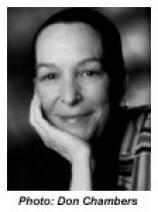
Pearl Cleage is the author of MAD AT MILES: A Black Woman's Guide to Truth and Deals with the Devil and Other Reasons to Riot. An accomplished Playwright, she teaches playwriting at Spelman College, is a cofounder of the literary magazine Catalyst and writes a column for the Atlanta Tribune. Her first novel, WHAT LOOKS LIKE CRAZY ON AN ORDINARY DAY, was Oprah book of the month. Ms. Cleage lives in Atlanta with her husband.


INTERVIEW

August 10, 2001

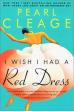
On September 25, 1998 Pearl Cleage's debut novel, WHAT LOOKS LIKE CRAZY ON AN ORDINARY DAY was named as an official Oprah Book Club selection. Several years later Cleage, a poet/essayist/playwright, has once again returned to fiction with I WISH I HAD A RED DRESS. Join Bookreporter.com's Jana Siciliano's as she chats with Cleage about the decision to include only certain characters, the meaning behind the book's title and, of course, Oprah.

BRC: Your first novel, WHAT LOOKS LIKE CRAZY ON AN ORDINARY DAY, concentrated on the character of Ava, who is the younger sister of Joyce, the protagonist of this novel. Why did you not have Ava enter into this story?


PC: I loved Ave, but I felt like I had told her story completely in WHAT LOOKS LIKE CRAZY... and that the story I wanted to tell was Joyce's. Ava is such a strong character that I thought her presence might be distracting in I WISH I HAD A RED DRESS. I do include a paragraph in the book that explains that Ava and Eddie and Imani (all characters from the first book) are doing fine and are simply on an extended road trip to San Francisco. I wanted readers who liked Ava to know that she was fine and not to worry!

BRC: Why, also, did you exclude the crack baby that Joyce adopted from this story?

PC: The baby, Imani, is on the trip with Ava and Eddie, who, Joyce explains, "are as much her parents as I am." As a writer, her absence allowed me to tell Joyce's story without having to consider her childcare arrangements!

BRC: Why a red dress? Red is a color that comes with such specific symbolism (blood, mostly).

PC: Joyce is a hard working woman. Her True Love died five years ago and she has had no sensuality or sexual passion or romance in her life since that time. When we meet her at the start of the book, she looks into her closet and wishes for a red dress, which symbolizes all those things she's missing.

BRC: Why did you decide to include so many pop culture references, about actors and movies and musical groups from our contemporary entertainment world?


PC: One of the things I was trying to do was suggest avenues for cross generational communication. Joyce finds that contemporary movies are a great way for women to talk across generational lines, especially if the discussion is structured in a way that allows for validation of all female experiences. As a writer, I am always looking for common references in order to communicate with readers. I find that the popular culture creates a body of information that we can use to think about things even if that was not the intention of the piece in question. For example, the movie "Booty Call" is not a masterpiece of cinema, but it can generate some lively discussion about safe sex. "Set It Off" can be a way to talk about homophobia in the black community and the specificity of Queen Latifah's character within the world the film creates.

BRC: Your first novel was an Oprah Book of the Month in 1998. How did being an Oprah author change your life? Your writing styles or habits?

PC: The commercial gift that Oprah's Book Club gives a writer is to introduce your work to her audience all at one time. That means a lot of folks who might not have found me as quickly were exposed to my book because Oprah recommended it. That's a wonderful thing and I've been pleased to find that a number of people who come to the signings for I WISH I HAD A RED DRESS found me through Oprah's Book Club. But it didn't change my writing styles or habits at all. I've been writing professionally for all of my adult life. My style and my habits are pretty much set by now. I'm always trying to figure out what I know and then find a story that will help me pass that information on. That hasn't changed at all.

BRC: As a reporter, did you ever cover a place like the Sewing Circus or was it completely a fabrication for this novel?

PC: I was never a reporter. For many years, I wrote columns for several newspapers in Atlanta, including The Atlanta Tribune, The Atlanta Gazette and an occasional guest column for the Atlanta Constitution. The Sewing Circus is completely a creation of my own imagination.

BRC: You've worked in a number of different literary forms. How does this affect the way you write a novel?

PC: I've published a book of poetry; two books of essays; a book of performance pieces; an anthology of my plays (ten of which have been performed nationally and internationally); and now two novels. I hope that working in a number of forms brings my work and my ideas forward to the widest number of people possible. I'm sure they all influence each other and overlap in many ways. I don't think too much about that, however, outside of knowing that being a playwright influenced my decision to write my novels first person. Somebody once described my columns as being "first person passionate." I can't deny it.

BRC: What is your writing life like? When do you write and what is your process for putting a novel together?


PC: I work at home and I try to write every day. Beyond that, I don't think it's a good idea to talk too much about how a writer writes. Makes you too self-conscious, which takes all the fun out of it.

BRC: What made you decide to give each chapter a name? That's a choice you don't see very often in novels these days.


PC: I found myself coming upon words or phrases in the chapters that seemed like titles for the chapters so I wrote them down just to keep me on track while I was writing. Once I started doing it, I liked the way it sort of gave you something to anticipate and then the pleasure of discovering what the title meant. It made it fun for me and I thought it might be fun for other people reading the book, too.

BRC: What is your next work and have you already begun putting it together?

PC: I'm working on another novel, but I won't be writing full time again until I finish my tour and get back home in the fall. The fun part of the tour for me is getting to actually meet the people who read my books. I don't want to miss any of that exchange.

Thanks for your thoughtful questions. Peace.

Back to top.


ARTICLE

It was August 1995, on St. Simons Island, when author Pearl Cleage first gave me her 213-page manuscript entitled TUNNELS OF LOVE.  Pearl is an accomplished writer, a beautiful, brilliant, and sensitive woman --- not to mention a feminist and a "black revolutionary."  It was a good, easy read, but also a compelling tale because her perceptions of the human condition are exceptional, and her grasp of the central plot --- love in the time of HIV/AIDS --- is as fresh as today's headlines.  

In 1979, Pearl and I occupied adjacent offices of a "prestigious" --- and often totally insane --- Atlanta public relations/advertising firm. Pearl came from the Mayor's office as a press secretary, and I was licking my wounds as President of a failed Birmingham PR agency. In those early days, she lived in an apartment downtown with her young daughter.  My wife and I lived in a Buckhead condo with our two sons.  During my first week at the agency, Pearl and I sealed our friendship by "telling the truth" over Bloody Mary's. We've never stopped the habit and we have become Black Sisters, if you will.  Of all the human beings I have ever known, Pearl is the only one who loves me unequivocally. She is my best friend

After making a few rounds, the novel I read on St. Simons Island was picked up by Hearst's AVON with a new title: WHAT LOOKS LIKE CRAZY ON AN ORDINARY DAY.

When the hardback bowed last November, I wrote about Pearl and she made a stop in Savannah to sign stock at Margaret Conner's The Reading Edge (RIP, the community bookstore concept!), Regina Cobb's Regina's Books and Books on Bay.  When the novel hit, it was an immediate winner with Pearl's primary audience, Black Women.  What has happened, however, is that the novel has "crossed over" as the expression goes, and become a word-of-mouth best seller as America has fallen in love with Ava Johnson as a heroine and her T'ai chi, dreadlocked "hand-kissing" beau, Mr. Jefferson. They have become beloved characters.  Pearl traveled from Boston to D.C. to Houston to Savannah and eight other cities in her book tour, charming audiences with her quiet, straightforward appeal.  

After the novel went into its fifth hardback printing, Oprah Winfrey discovered CRAZY and like others, fell in love with Ava and Eddie. So much so, that at September's close, Oprah "picked" Pearl's novel as "THE book to read this fall." Today the book has moved to number 3 on USA Today's Best Seller list and enters The New York Times Paperback Best Seller list at number 15 on October 11th.  

Pearl called me the morning of Oprah's Friday show.  "You sitting down?"  

"This good news or bad?"

"Good."

Then she told me.  I screamed, she screamed and we carried on for about an hour on long distance the way we are wont to do in person, one speaking over the other, laughing, and yes, a few tears of absolute joy.  It has only begun.  

Suddenly the Internet is replete with my friend's name and novel.  And this November, Avon's paperback version hits the stands.  Pearl will be returning to Savannah to sign stock, but she's also on a special mission --- she's bringing a load of books, compliments of Avon, to Project Azuka which is Pandora Singleton's brave and noble effort to support primarily Afro-American women in these parts who are living with HIV or AIDS.  I should note that in the United States, the fastest growing population with AIDS is Afro-American women, not gay men as is often thought.

Pearl tells me now that Simon and Schuster has picked up the recorded book rights and Pearl is expected to be reading her own work for release next month.

There is an additional, interesting point that Pearl now has to deal with --- last winter, POZ magazine in New York, a glossy publication aimed at HIV/AIDS individuals, asked me to review Pearl's novel. That "glowing" review appeared in their February issue. This past week, I received an e-mail from the magazine, asking me if Pearl was OUT about her HIV/AIDS status.
     
I laughed.  It is not uncommon for people who know we're best friends to ask me the most personal questions about Pearl.  I normally refer their questions to the woman in question.  But not in this case.

Pearl Cleage is blissfully married to Zaron (Zeke) Burnett, Jr. and they have their permanent home in Southwest Atlanta and will soon, I'm told, be looking for a place on Tybee Island, which they both love.  And, Pearl Cleage is HIV negative and quite well, thank you.  Her novel comes from her friendships with gay men and black women who are HIV/AIDS people, a category in which I also happen to fit.

Read Pearl's dedication of her novel on the first page.  You'll see what I mean. And, by all means, pick up a copy. Millions of Americans now are!

   --- Bill Bagwell

Back to top.

© Copyright 1996-2009, Bookreporter.com. All rights reserved.