Bookrepoter.com Click Here Click Here Click Here
Home Reviews Features Authors Quote Books Into Movies Book Clubs Awards Coming Soon
Search Contests WOM Bestsellers New in Paperback Newsletter Bibliographies Blog


Interviews

May 26, 2000

January 29, 1999

Books by
Chris Bohjalian


THE DOUBLE BIND

BEFORE YOU KNOW KINDNESS

THE BUFFALO SOLDIER

MIDWIVES

TRANS-SISTER RADIO

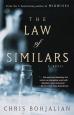
THE LAW OF SIMILARS

Reading Group Guides

BEFORE YOU KNOW KINDNESS

MIDWIVES

THE LAW OF SIMILARS

Christopher Bohjalian

BIO

Chris Bohjalian is the bestselling author of nine novels, including MIDWIVES (a Publishers Weekly Best Book and an Oprah's Book Club selection), THE BUFFALO SOLDIER, and TRANS-SISTER RADIO, as well as IDYLL BANTER, a collection of his magazine essays and newspaper columns. His work has been translated into seventeen languages and published in twenty countries. He lives in Vermont with his wife and daughter.

Back to top.   


PAST INTERVIEW

May 26, 2000

We revisit one of our favorite authors, Chris Bohjalian, in honor of his latest novel, TRANS-SISTER RADIO. A clever title combined with many plot twists and turns, this book will be sure to entertain old fans and win over new ones. The premise is simple, yet complex --- what happens when a woman falls in love with a man...who wants to be a woman? Does love transcend gender? Bookreporter.com's Jana Siciliano delves into this touchy topic with author Bohjalian in our latest interview.

TBR: Your latest novel, TRANS-SISTER RADIO, is about a middle-aged divorcee school teacher finding new love as her daughter prepares to leave home for college --- her new life creates unexpected jealousy by her ex-husband. What heats up matters is that her new boyfriend, Dana, is about to undergo a sex change. Exactly how did you come about such a complicated and unusual story?

CB: I grew interested in the idea of a novel about a transsexual because I have a divorced, female friend in New York City who fell deeply in love with a man who was planning to have a sex change. For a while they dated, but she didn't believe their love could endure her partner's sex change. And so they broke up, and her ex-boyfriend had his sexual reassignment and became female. Some years later, however, when my friend and I were chatting, she told me that she had never loved anyone, other than her own daughter, as much as she had loved that transsexual. She doubted a day had gone by when she hadn't thought about this other person, and wondered what if...

Unfortunately, my friend couldn't bring herself to pick up the phone and call this other woman --- despite the fact she believed with all her heart this other person was her soul mate --- because of all the issues that she brought to gender and sexual preference, and her own sense of herself as "straight."

In some ways, TRANS-SISTER RADIO is that wistful "what if." What if my friend and the transsexual had stayed together? Could their love have transcended the biologic imperatives of their bodies, as well as their ingrained notions of sexual preference? I think these are very interesting questions, because they get to the heart of who we are as people and how we want to be viewed by the world around us.

TBR: What kind of research did you do for this novel?

CB: It was important to learn as much as I could about the transgendered community, as well as about male to female sexual reassignment.  And so I spent time with transsexuals (pre- and post-op), and I interviewed some of the surgeons (and their staff) who do sexual reassignment surgery.  I spent a week, for example, in Trinidad, Colorado, because there is a surgeon there who did much of the pioneering work in sexual reassignment in this country.

And I tried to be very thorough with my research --- so thorough that another transsexual surgeon who read a rough draft of the manuscript for me assumed I was a transsexual myself (preoperative, I should add --- the doctor had read Midwives and seen my author's photo). I assured the doctor I wasn't. But I was very flattered.

TBR: Four narrators tell the story in TRANS-SISTER RADIO. How exactly did you manage to tell one story through four individual people without losing their specific voices?

CB: My books are, in a way, fictional memoirs.  They usually have a narrator chronicling the seminal event in his or her life, that before-and-after moment that changed everything.  Once I know that voice --- Connie Danforth in MIDWIVES, or Leland Fowler in THE LAW OF SIMILARS --- I am ready to write.

In TRANS-SISTER RADIO, I knew well how Dana, the transsexual, sounded ("How do you speak like a woman?  I've read all the books and I don't know how many articles."), and the book might have been simply her version of the events.  But I cared very deeply about the other characters as well --- especially Allison Banks, the schoolteacher who falls in love with Dana.  I knew them and I understood them (at least I think I did), and it seemed to me that they deserved equal time, too.

TBR: Why is Dana such a special character? Does he represent the idea that love can transcend sex?

CB: Dana is very special to me, too. Thank you for that. Yes, I think that's a very nice interpretation of what Dana represents.

TBR: Your books often take place in small towns and the plot usually simmers under all the small town scrutiny. The same goes for TRANS-SISTER RADIO, Dana and Allison are up against not only Allison's husband, but also the fear and prejudice of the entire town. Why do you think small communities are so afraid of anything different?

CB: I live in a small town, and one of the dynamics that fascinates me is that they engender both great comfort and great paranoia. On the one hand, there is the support they offer: Everyone knows everyone's name, and there will always be someone there for you if (when) you're in need. On the other hand, there is no anonymity and little privacy: Don't even think of doing something clandestine!

I explored this notion a great deal with Leland Fowler in THE LAW OF SIMILARS: The community is there for him and his daughter after his wife dies, but he believes his neighbors are scrutinizing his every illicit move with Carissa Lake a little later on.

That point noted, I'm not sure that I would say small communities are afraid of anything different: But I believe you're absolutely correct that change does tend to come a tad more slowly than in larger, more diverse worlds.

TBR: Allison's daughter Carly seems pleased at her mother's new found happiness at the beginning of her relationship with Dana. Why do you think children are so much more accepting than adults?

CB: I can think of three transsexuals I met who commented in one way or another that children were infinitely more tolerant of them than grown-ups.  (Children also, they said, were more likely to detect that they may have been born a different gender.)

Perhaps it's because children haven't yet so firmly divided the world into neat little boxes: Male, female.  Gay, straight.  They're more comfortable with fantasy and make-believe, and they're still viewing the world as place of endless possibility and change -- not a regimented place where men are men and women are women, and one shouldn't even think about exploring an impulse that might exist somewhere in between.

TBR: Your title, TRANS-SISTER RADIO, is very clever. How did you come up with this title and radio theme?

CB: The answer is fairly prosaic. Forgive me.

First of all, I used the radio to help provide the reader with relevant background about the transgendered community and sexual reassignment, without slowing (or stopping) the plot's linear momentum.

Then I wanted the word "trans" in the title somehow, because this is a book about transformation -- and I don't mean simply Dana's.  All three adults in the novel are transformed in some meaningful way.

And so from there it was a small step to TRANS-SISTER RADIO.

TBR: Is there any subject you would like to tackle through your fiction but haven't quite figured out how?

CB: Oh, I'm sure there are many subjects.  But I've always had at least one subject in which I was passionately interested to help fuel a novel: Midwifery. Dowsing. All that baggage we bring to gender and sexual preference.

TBR: When you were developing your craft, were there writers whose work influenced you?

CB: Joyce Carol Oates and John Irving have been among my favorite writers for two decades now.  I will never forget the first time I read Oates' novel, Expensive People, with that cryptic first line: "I was a child murderer."  The narrator asks you to ponder what that means: A child who happened to murder, or an adult who murdered a child.  I imagine Oates is comfortable with all manner of ambiguity in her fiction.

I believe I cherish Irving's work because he consistently offers us such wondrously vibrant and idiosyncratic characters.

TBR: How do you battle the twin evils of self-criticism and self-editing while you are working on a new book?

CB: I rewrite constantly, and my books always take at least a half-dozen drafts.

And still I can't reread them.  Never have, never will.  I pick the few passages I will read aloud at public readings, and then I don't dare go near any other sections: I fear I'll see sentences that will appall me, and I'll find dialogue that will ring false when I hear it in my head.

As for the process of writing, I'm usually having too much fun to agonize much.  I really enjoy the work itself.

TBR: Has Hollywood come a-knocking? If so, what happened?

CB: My 1992 novel, PAST THE BLEACHERS, became a lovely Hallmark made-for-TV movie. It first aired in 1995, and is available on video.

My 1997 novel, MIDWIVES, will start filming this autumn as a Columbia-Tristar movie for Lifetime, starring Sissy Spacek as midwife Sibyl Danforth.

TBR: Which of your books would you most like to see adapted to film?

CB: MIDWIVES (which will happen) and TRANS-SISTER RADIO.

TBR: Does your writing process change depending on the type of book you are doing or does it just evolve generally over time?

CB: I am very compulsive. I write fiction every day from 5AM to 10AM, and that routine never changes. I write in my library in an 1898 Victorian village house that looks up at Vermont's Mount Abraham, and I watch the sun rise as I work.

TBR: Any hints on what your next book is about?

CB: It's about a foster child and his foster parents (whose marriage is falling apart), and a horse named Mesa. It will be called THE BUFFALO SOLDIER.

TBR: What advice would you give to aspiring writers?

CB: Read lots and write often. And, truly, savor the process of writing.  I had amassed over 250 rejections before I sold my first short story (to Cosmopolitan) when I was 24, so it's important to enjoy those moments when you are, literally, crafting sentences.

Back to top.   


PAST INTERVIEW

January 29, 1999

TBR's Judith Handschuh, who read both of Chris Bohjalian's novels, MIDWIVES and LAW OF SIMILARS, had an opportunity to interview him by e-mail while he was on vacation. Chris was kind enough to take time out of his holiday to answer our questions --- twice --- his computer crashed the first time. We are so glad he did because this interview reveals a truly charming person with the rare ability to capture the beauty and poignance of life on paper. Find out how instant Oprah fame changed his life (he vacuumed a lot) and what inspired his latest novel, LAW OF SIMILARS (a cold that led him to a homeopath). Don't miss this inside look at one of today's most talented writers --- who also happens to be quite a nice guy.

TBR: When did you realize that you wanted to be a writer?  When did you actually start writing?

CB: I think, like many poets and novelists, I've wanted to be a writer for as long as I've been able to write.  I know, for example, that when I was seven and eight years old, I was writing one- and two-page short stories --- ranging from horrendous little baubles about ghoulish hands emerging from stone wells, to preadolescent rants about siblings on the elementary school safety patrol. My father still has many of the stories in a cardboard banker's box under his bed in Florida.  Whenever I'm visiting him and I say something flip, he threatens to unveil them for the world as the "apprentice fiction of Chris Bohjalian." In any case, it's now been roughly three decades since I starting writing, and I still can't imagine doing anything else with my life.

TBR: Do you feel a different kind of pressure as this book is published than you did when MIDWIVES came out since MIDWIVES was so in the spotlight?

CB: I always feel enormous amounts of pressure when I have a book coming out.  I worry about whether it will receive good reviews, whether it will disappoint people who've enjoyed my earlier novels, and whether I have indeed written the best book I possibly can.  (To this day, I have never reread one of my novels once it has been published. I'm always fearful I'll find sentences that demanded one more draft, or I'll discover secrets about one of my characters that I should have explored in the story.)

Fortunately, THE LAW OF SIMILARS was already in prepublication galleys when MIDWIVES was selected to be a part of Oprah's Book Club.  That meant that at least some of the pressure was gone because the book was completely out of my hands.

TBR: MIDWIVES (which is the story of a midwife who loses one of her patients) and THE LAW OF SIMILARS (which is about a homeopathic practitioner) explore alternative forms and practices of medicine.  How did you become interested in this subject?

CB: Often, it's the little things that will trigger a novel.  Meeting a midwife at a dinner party.  Seeing a photograph of an elderly dowser --- or water witch --- in a newspaper.  Having a cold.

The fact is, THE LAW OF SIMILARS was inspired by a cold.

It was one of those colds that lingered --- not unlike the cold that would eventually beleaguer Leland Fowler, the novel's narrator.  My daughter was in a new day care, which meant I was making contact with every single cold germ medical science has catalogued. Nothing was able to keep me cold-free for more than a day or two, not even that workhorse of over-the-counter New Age wonder drugs, Echinacea. And so I finally decided I'd visit a homeopath.  I wasn't exactly sure what homeopathy was, but the remedies sounded exotic: Tarantula and arsenic and gold.  Belladonna.  Pulsatella.  The black widow spider. Moreover, there actually is a homeopath in the little village in which I live.  (My corner of rural Vermont, apparently, is a small mecca of sorts for holistic healing.  We have here a homeopath, a naturopath, a pair of midwives, and two meditation centers --- including one of some international renown.)

I don't think I imagined there was a novel in homeopathy, however, until I met the homeopath and she explained to me the protocols of healing. There was a poetry to the language that a patient doesn't hear when visiting a conventional doctor:

"Herring's Law of Cure."

"Succussing the remedy."

And, of course, the foundation for treatment, "The Law of Similars."

In essence, I liked the words.

On my second visit, I was given my remedy, and I was surprised to discover it worked.  Or, perhaps, the timing was right and the colds went away on their own.  I'll never know.  Either way, the colds indeed disappeared, and they didn't come back for almost a year. Does this mean I'm a convert to homeopathy, a passionate, proselytizing, fully swayed "homey-disciple?"

Not completely --- although I do think the world of my homeopath.  But I still see a conventional physician as well, and I take prescription medications.  I am still more likely to take an Advil for a headache than Ignatia, (the St. Ignatius bean) or Aconite (wolfsbane).

But I am convinced that the bridge between body and mind is more sturdy than I'd once believed.  That link may be invisible, but it is profound.  I wasn't sure if there was any real magic in those tiny homeopathic pills that I had swallowed, but there was certainly something alluring and seductive in the art itself.

Make no mistake, however, THE LAW OF SIMILARS is not a novel about homeopathy.  It is simply a novel in which homeopathy --- or, actually, the miracles in all medicine that seem always to be just beyond our reach --- plays a role.

TBR: Did you have to do much research on these subjects before you could write about them?

CB: My books demand massive amounts of research.  I interviewed over 65 people while researching MIDWIVES, watched a pair of trials, and spent two days with the Medical Examiner for the State of Vermont so I could understand exactly how much blood would be in the peritoneal cavity of the woman in the novel who dies in a home birth.  For THE LAW OF SIMILARS, I had to learn the basics of homeopathy, of asthma, and exactly what sort of minutia and desiderata fill the day of a state's attorney --- or criminal prosecutor.

Research is critical to my novels, because I never want to wake the reader from the fictional dream I'm striving to create with a detail that doesn't ring true, (and is, in fact, implausible).  I want my fiction to have the emotional resonance of memoir, and that means getting the details right.

TBR: Did you have any preconceived notions about either midwifery or homeopathic medicine before you wrote these novels?  Did your ideas change as a result of writing these books?

CB: No, I had neither notions nor agendas. But good fiction demands conflict and change.  It demands a transformation of some sort.  And the margins of our culture right now are rich with both conflict and change.  Consequently, I tend to be drawn to the margins for subject matter, simply because there are stories there that are worth exploring: The struggle between environmentalists and developers in so many resort areas.  The conflict between the medical community and independent midwives over home birth.  The clash between conventional medicine and New Age healing. This is all terrific fodder for fiction, and a wonderful way to explore character.

TBR: Do you find yourself becoming attached to your characters?  Do you think about them after you have completed your books?

CB: I don't think about characters with particular (or unnatural) frequency once I've finished a book. But I think about them all the time when I'm writing about them, and I do indeed become attached to them. They are also, in their own ways, a bit like a litter of kittens.  I try my best to herd them in the general direction of the story I have in mind, but half the time they're going to do exactly what they want. As a result, I often have only the vaguest notion where a book is going as I'm writing it.  I honestly did not know whether midwife Sibyl Danforth would be convicted or acquitted in MIDWIVES until I was four-fifths of the way through the novel.  I honestly didn't realize just how far lovers Leland Fowler and Carissa Lake might fall in THE LAW OF SIMILARS until I was two-thirds of the way into a first draft.

TBR: MIDWIVES was chosen by Oprah for her book club.  Can you comment on how that event affected you personally and professionally?

CB: What Oprah Winfrey has done for books in this country is truly astonishing.  She has helped bring people back into bookstores and libraries, and she has returned reading to our daily conversation.  This is a monumental accomplishment, and I am grateful to her as both a reader and as a writer. Professionally, the selection of MIDWIVES has meant the great blessing that more people will read that novel --- and, perhaps, some of my other books.  That's a a huge gift to give any writer. Personally, my life hasn't been altered dramatically.  And I'm glad. For a few weeks after the announcement I had to vacuum everyday because there were always people coming by the house.  But that really was the biggest change.  I had to vacuum a lot.

The truth is, I liked my life before the selection.  And I like it now.

TBR: Are there any writers that you feel have influenced your work? What writers do you admire?

CB: I have enormous respect for the way Joyce Carol Oates plumbs moral ambiguity in her fiction, and I will always cherish the idiosyncrasies in John Irving's characters. Ironically, perhaps my two favorite novels were both written by writers who only offered the world one book each: HOMEBOY by Seth Morgan, and TO KILL A MOCKINGBIRD by Harper Lee.

TBR: What is your writing process like? Can you take us through one of your typical days of writing?

CB: I write seven days a week, beginning at 5 a.m.  My library in my home faces a mountain to the East, and so I watch the sun rise over the summit as I work. I emerge most days for about 15 minutes to have breakfast with my kindergarten-aged daughter before she leaves for school, and then return to work.  I usually write until 10 or 11 a.m., and then focus upon whatever research my books demand until early afternoon. Most days, I'm done by a few minutes before 3 --- so I can meet my daughter's school bus when it arrives at the stop near my home.

TBR: What are you reading right now?

CB: Last night I finished Patrick McCabe's new novel, BREAKFAST ON PLUTO --- which I savored.  It's a wonderful book.  Tonight I'll be starting THE GIRL IN THE FLAMMABLE SKIRT --- a collection of short stories by Aimee Bender.

TBR: Are you working on anything new at the moment? If so, can you tell us a little about it?

CB: I'm finishing what I hope will be an honestly moving love story between a 42-year-old heterosexual female and the transsexual lesbian with whom she falls in love.

TBR: What are your thoughts on the millennium?

CB: My computer crashed last night, and so I'm scared. I'm very scared.

© Copyright 1996-2008, Bookreporter.com. All rights reserved.

Back to top.


Home - Reviews - Features - Authors - Daily Quote - Books to Movies - Book Clubs - Awards - Coming Soon
Search - Contests - Word of Mouth - Bestsellers - New in Paperback - Newsletter - Author Bibliographies - Blog
For Librarians - Submitting a Book - Become a Reviewer - FAQ - Contact Us - About Us - Privacy Policy

© Copyright 1996-2008, Bookreporter.com. All rights reserved.
The Book Report, Inc. • 250 West 57th Street • Suite 1228 • New York, NY • 10107

Bookreporter.comReadingGroupGuides.comAuthorsOnTheWeb.comAuthorYellowPages.com
Teenreads.comKidsreads.comFaithfulReader.com