|
Linwood Barclay
BIO
Linwood Barclay is a former columnist for the Toronto Star. He is the author of several critically acclaimed novels, including TOO CLOSE TO HOME and NO TIME FOR GOODBYE, a #1 bestseller in Britain. He lives near Toronto with his wife and has two grown children. His website is www.linwoodbarclay.com.
Back to top.
INTERVIEW
August 14, 2009
SPOILER ALERT: If you haven't read TOO CLOSE TO HOME yet, you may want to proceed with caution as some plot details are revealed in this interview.
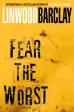
Linwood Barclay is the author of several critically acclaimed novels, including TOO CLOSE TO HOME and NO TIME FOR GOODBYE, a #1 bestseller in Britain. In this interview with Bookreporter.com's Joe Hartlaub, Barclay explains what sets his latest effort, FEAR THE WORST, apart from his earlier works of fiction and shares the surprising discovery he made while researching the topic of human trafficking, which plays an important role in the book's plot. He also compares and contrasts being an author with his previous jobs as a newspaper columnist and editor, names the biggest influence on his career, and muses on what he might be doing if he weren't writing.
Bookreporter.com: FEAR THE WORST explores the world of human trafficking. What got you interested in this as a plotline?
Linwood Barclay: I needed something going on in the background that was nasty enough to give the story some resonance, and it’s pretty hard to find anything more despicable than human trafficking. What surprised me as I looked into this issue was that people who are born and raised here --- not only people from beyond our shores --- are open to exploitation.
BRC: I enjoyed the dialogue in the opening pages of FEAR THE WORST. Timothy Blake is a car salesman and single parent trying to raise Syd, his teenage daughter, while doing a delicate emotional balancing act with Susanne, his ex-wife. The reader meets Tim and Syd through a dialogue wherein Tim is doing the dance many parents do, attempting to walk the line between not butting into their child’s not-quite-adult line and yet still fulfilling their duties as a parent. Tim’s questions to Syd, and her answers, were pitch-perfect. How did you get this dialogue so dead-on right?
LB: Well, my children are now 25 and 22, but I haven’t forgotten the teenage years. You’re always walking on eggshells. Sometimes, when you know there’s something you need to put on the table and talk about, there’s a kind of delicate dance getting there.
BRC: By the time the prologue of FEAR THE WORST is concluded, Syd is missing and Tim has gone to her place of employment to look for her, only to be told that no one there has ever heard of her. Tim then reports her missing to the police, but the case, at least initially, is treated as that of simply another runaway. How do you think cases like this should be handled by law enforcement? Understanding that there are a number of complicated issues involved, should more be done to investigate such incidents? Or do you think that, for better or worse, law enforcement is doing all that it can?
LB: Law enforcement agencies simply don’t have the resources to launch an investigation every time some kid doesn’t come home when he’s supposed to, certainly when you are talking about kids who are 16 and 17 years old. Suppose the police had been called every time we failed to meet curfew? And when there’s no evidence of foul play, I think it’s a tough call for the police as to how much manpower to devote to a missing kid. In most cases, I think they’re doing the best they can.
BRC: On a related note, one of the most interesting segments of FEAR THE WORST concerns the Second Chance Shelter in Seattle where Syd was apparently staying. Is there such a place? Did you visit runaway shelters either in Seattle, Toronto, or elsewhere as part of your research?
LB: I made it all up.
BRC: There is a prickly, uneasy relationship between Tim and Bob, who is living with Tim’s ex-wife Susanne. At times they tiptoe around each other; at others they are at loggerheads. Ultimately, they find themselves teaming up to work toward a common, if dangerous, goal. These encounters were for me some of the best written parts of the book. Were these difficult scenes for you to write? And what point in your development of FEAR THE WORST did they begin to take shape for you?
LB: I knew from the beginning I was going to be working in these conflict-ridden relationships. Far from being difficult to write, these parts were among the most fun to write --- not because I take pleasure in family dysfunction --- but because there was so much going on. There are all these different dynamics going on, the sparks seemed to be flying off in all directions. What could be more fun to write about than that?
BRC: Kate Wood, who might best be described as Blake’s on-again, off-again girlfriend, was one of the more interesting characters in FEAR THE WORST. I've dated that woman myself, and more than once, unfortunately. Understanding that you’ve been out of the game for quite a while, is Kate based on someone you used to know?
LB: I am pleased to report that Kate is not someone I have gone out with, but she is something of a composite of people I have known and observed. I think we all know people who believe they are the center of the universe.
BRC: One of the issues that the book deals with is human trafficking. This is an issue not only in the United States but around the world. Based on what you've learned, if you had unlimited power for a month or two, how would you attempt to deal with the problem?
LB: Help raise the standard of living around the world so that people would find opportunities at home and wouldn’t be prey to those promising them a so-called better life elsewhere. Now, how one goes about that, I wish I knew.
BRC: I have noticed that your novels are getting progressively darker, and that while your work continues to contain some humorous elements, the overall tone, particularly in FEAR THE WORST, is grim. Has this been intentional or just something that has evolved?
LB: It’s evolved. With each book I’ve tried to raise the stakes a bit, and they’re very high in FEAR THE WORST. I was also looking for more of an emotional wallop, and I’m hoping I got it this time.
BRC: Those who have read FEAR THE WORST ahead of its publication seem to believe that it is your best novel to date. What, if anything, did you do differently while writing this book?
LB: I wrote the first draft of FEAR THE WORST in only seven weeks --- the fastest I’ve ever done a book. I think it’s because this story moved more quickly, and more urgently, than anything I have done before. I couldn’t seem to write it quickly enough.
BRC: Your career trajectory has moved from newspaper editor and columnist to novelist. What did, and do, you like best about each of these occupations? And what elements of each were less than ideal?
LB: I loved all my jobs for various reasons. As an editor, it was great fun to be part of a team that put together a big city daily. It’s so immediate. Being a columnist was a very privileged position --- my editors left me alone and I did what I wanted to do. And if it didn’t work, you had no one to blame but yourself. It’s a bit like a drug. You write something, and a few hours later, it’s in print. You get that hit right away. Writing books is tremendously satisfying work, but you hand in a manuscript and it can be 12 months before you hold that book in your hands. You think, if you write the book really fast, they’ll bring it out sooner, but it doesn’t work that way. But I’m now doing what I wanted to do when I was in my teens.
BRC: You only recently retired from the newspaper business to write novels on a full-time basis. What would you be doing if you weren’t writing for a living, either as an author of novels or for a newspaper?
LB: I can’t imagine. Sometimes I think I’d like to do what Jim Cutter, my hero in TOO CLOSE TO HOME, does. He cuts lawns. It’s one of those great jobs where you constantly see what you’re accomplishing. But seriously, I don’t know. I enjoyed being a newspaper editor, shaping material and getting it ready for presentation. Maybe I’d go back to that.
BRC: The best authors are usually also the most vociferous readers. What books have you read in the last six months in any genre that you would recommend to our readers?
LB: SHATTER by Michael Robotham, THE WAY HOME by George Pelecanos, several books by Richard Yates, whom I had never heard of before REVOLUTIONARY ROAD, BRIDGE OF SIGHS by Richard Russo, ROAD DOGS by Elmore Leonard, DRIVING LIKE CRAZY by P. J. O’Rourke.
BRC: How has your work schedule changed since you’ve begun to write novels on a full-time basis? Was it a major adjustment for you to suddenly have more time for your own writing? And are you spending more time on writing, more time on researching, or both?
LB: I thought, when I left my newspaper job, I’d have six months to a year off, but it’s not working out that way at all. First, I’m spending more time on the books themselves, particularly the time spent on revisions. As my readership grows, there’s a greater sense of ‘I really better get this right.’ And the time spent on promotion has grown exponentially. I’m doing three book tours this year --- one of which is taking me to Hong Kong, Australia and New Zealand. But I’m also having the time of my life.
BRC: Which authors, of any genre, have most influenced your careers as a journalist and as an author?
LB: No writer has had a more profound effect on me that Ross Macdonald, who wrote the Lew Archer novels. I discovered his work in my teens, and was impressed with how someone could take the conventions of the mystery novel and use it to explore social issues, like teenage alienation and divorce and general family dysfunction. I was fortunate enough to get to know him --- his real name was Kenneth Millar --- and he was very supportive and encouraging.
BRC: What will we see next from you? Do you have any long-range projects planned, or do you take things book by book?
LB: At the moment, it’s book by book. I’m signed up for a novel a year until at least 2013, and I just want to get better with each one.
Click here now to buy this book from Amazon.com.
Back to top.
INTERVIEW
June 4, 2004
Bookreporter.com's Suspense/Thriller Author Spotlight Team (Carol Fitzgerald, Joe Hartlaub and Wiley Saichek) recently interviewed Linwood Barclay, author of BAD MOVE. In their discussion Barclay explains his character choices and his decision to venture into the mystery genre. He also talks about life in suburbia and the challenges of juggling the jobs of humor columnist and fiction writer.
BRC: You are very well known in your native Ontario as a columnist for the Toronto Star. You have also previously published nonfiction. What made you turn to a life of crime --- a.k.a. writing a mystery as diverting as BAD MOVE?
LB: Writing mysteries, in many ways, is what I've always wanted to do, but it was more practical, in the four books I've had published since 1996, to write the type of thing I was known for in my column. There are three mystery novels in my bottom drawer written when I was in my late teens and early twenties.
BRC: As a journalist, what was the biggest challenge in writing fiction? The biggest surprise?
LB: Well, as a journalist, it has to be right; in fiction, it has to feel right. You can bend things the way you want them to bend in fiction, although if you bend them too far, it snaps and comes apart.
BRC: Tell us how you developed the character of Zack Walker. Who was your inspiration for him? We have noted that in your acknowledgments you mention that you "are a lot more like Zack than you would like to admit." How much of your own family was an inspiration for the Walkers?
LB: I think Zack is basically me unchecked. I share many of the same worries and anxieties, but I don't act on them in the way Zack does. I don't picture my own family when I write about Zack's, but hearing how my own kids talk, for example, was wonderfully helpful in making these fictional teenagers seem real.
BRC: The experience of moving the family out of the city and into the "more healthy" suburbs is common. In BAD MOVE you write with great detail about the ramifications of that decision on all the family members. And you discuss, with hilarious results, the problems found in some of the suburban residential subdivisions in the U.S. --- communities that suddenly appear to spring up out of nowhere. We felt you'd depicted it so accurately that it must be based on actual experience. So --- is it?
LB: Oddly enough, I've never lived in a big city. As a child I grew up in the suburbs, and spent my entire teen years living way out in the country, where my family ran a lakeside cottage resort (something I wrote about in my book LAST RESORT). My first newspaper job was in a suburban town, and my wife and I have always lived in so-called suburbs. But back in 1987, we did buy a house in a brand new subdivision --- we moved in before the sod went down --- and it's that particular neighborhood that I picture in BAD MOVE. Unlike so many families that go to the beach on holidays, we usually go to big cities --- New York, Chicago, San Francisco, Paris --- and I suspect one day we'll move to one.
BRC: More on Zack: you made him a work-from-home novelist, specifically a science fiction novelist. Why? Why not a mystery writer? Is Zack's passion for his genre and toys from his favorite series also your passion?
LB: I thought making Zack a mystery novelist, in a mystery novel, seemed too clichéd, overdone. I didn't want mysteries to be his area of expertise. I share his interest in science fiction to a degree. I read very little of it, but I enjoy SF movies, and the gadgets and models featured in them. And the shelves of my study where I write are decorated with many of the toys that are in Zack's study, including a Batmobile, a Supercar, a Seaview submarine, and several Marvin the Martian figurines. I'm not well. And if all that weren't bad enough, I have trains in the basement.
BRC: Let's discuss the number of fascinating ways Zack found to do anything around the house --- or neighborhood --- except write. What was your routine and environment when working on the novel? Did the neighbors come to call? And were these visitors the basis for Zack's own neighbors? Readers will want to know just what inspired the characters who live near Zack.
LB: Zack's neighbors weren't inspired by any of mine, but were inspired in part by stories my own paper carried of some of the shenanigans that have been going on in the suburbs that ring Toronto.
As for my routine, I work from home as well, but I'm more focused than I pretend to be. I start work --- my newspaper column is always the priority --- first thing in the morning. We get three daily newspapers to the door each morning, and the first job is to go through all of them looking for items worthy of satirizing, or tucking away for future use. When my duties for the Star have been taken care of, I turn my attention to other obligations, which can include working on speeches (I'm with a speakers agency) or, if I have one on the go, a book.
Once I start a book, I find it hard to tear myself away from it until the first draft is done. Since I have to write three columns a week, it takes me about four or five months to do a book.
BRC: Wit and crime seem to go together, from the urbane witty dialogue of Dorothy Sayers's Lord Peter stories to today's wisecracking practitioners, like Carl Hiaasen on one hand, and Janet Evanovich on the other. What writers influenced you? Does humor infuse all your writing? Could BAD MOVE have happened without this comic touch?
LB: I write a humor column for the Star, and three of my four books were straight humor books. LAST RESORT was a memoir, and while some of it was quite sad, much of it was very funny. I find being earnest for long periods a bit of a strain.
In BAD MOVE a lot of the humor comes out of everyday situations, I think: the interactions between family members, our everyday anxieties.
I've been influenced by a great many writers --- some funny, some not. I had the good fortune to have two highly respected writers as mentors. Margaret Laurence, a famous Canadian author, encouraged me and became a friend after I got to know her when she was a writer-in-residence at Trent University, where I obtained an English degree. And in my late teens I became a huge fan of the Lew Archer novels by Ross Macdonald (whose real name was Kenneth Millar). I ended up having a long correspondence with him, met him, and he was very encouraging with regard to my writing. His work convinced me that mysteries, often looked down upon, could be literature.
As a kid, I started out with The Hardy Boys, moved on to Agatha Christie, read every Nero Wolfe novel I could find, then discovered Lew Archer and thought, wow.
Today, I read all sorts of things, from John Irving to Al Franken, Tim O'Brien to Dave Barry, Maureen Dowd to Joey Slinger (another columnist at the Star). Crime writers I particularly enjoy include Lawrence Block, Ed McBain, George Pelecanos, Elmore Leonard, Tony Hillerman, Carl Hiaasen, James Lee Burke, and the late Charles Willeford. Among the humorists I think are brilliant: Calvin Trillin, Bruce McCall, Garrison Keillor, and Ian Frazier.
BRC: Do you plan on writing more novels featuring the Walker family?
LB: A second one is finished. I could certainly be persuaded to do one a year if I thought there were people out there who'd like to read them.
BRC: You've told us how BAD MOVE came to be --- but are there any words of wisdom that you want to pass along to someone writing his/her first novel and looking to get it published? Any stories --- funny or not --- you want to share about the process as you experienced it?
LB: Don't give up. If you count the ones I wrote when I was younger, BAD MOVE is my fourth novel and the first to get published. So hang in. Develop a thick skin (easier said than done) and be open to the ideas of others. My book is a lot better than it might have been because my agent and editors offered suggestions. I've spent a lot of time as a newspaper editor and know that tweaking something, making it better in small ways, doesn't diminish what the author has done.
BRC: What are you working on now and when can readers expect to see it?
LB: As I mentioned, the second Zack Walker novel is done and due to come out sometime in the spring or early summer of 2005. And a third adventure is starting to take shape in my head. Plus, I have a couple of book ideas that don't involve my friend Zack. One of them actually borders on science fiction.
Click here now to buy this book from Amazon.com.
© Copyright 1996-2009, Bookreporter.com. All rights reserved.
Back to top.
|